

Both squirrels and chipmunks play an important role in the local ecosystem. They carry and hoard seeds and nuts. As they move around hiding food, they help forests grow. They also spread the spores of underground fungi.
Squirrels and chipmunks both belong to the family Sciuridae. Both are small rodents that eat nuts, fruits, seeds, green plants, fungi, and insects. The Sciuridae family includes tree squirrels, ground squirrels, chipmunks, marmots, flying squirrels, and prairie dogs. Chipmunks are commonly called "striped squirrels," but they are not squirrels. Comparing these two animals (looking at their bodies, habits, and homes) reveals some clear differences.
There are three main types of squirrels: ground, tree, and flying squirrels. Both chipmunks and ground squirrels live in underground burrows. These burrows can be up to 30 feet long with several tunnels. Tree squirrels build their nests (called dreys) high up in trees. Flying squirrels are nocturnal and live in nests or tree holes. Squirrel colors vary by species. They can be gray, brown, or reddish brown.
Distinguishing Features
Chipmunks
Chipmunks always have stripes on their backs, tails, and faces. The stripes run all the way from their heads to their tails.
Squirrels
Not all squirrels have stripes. Many ground squirrels do have stripes (like the thirteen-lined and golden-mantled ground squirrels) but the stripes do not extend onto their faces.
Cheek Pouches
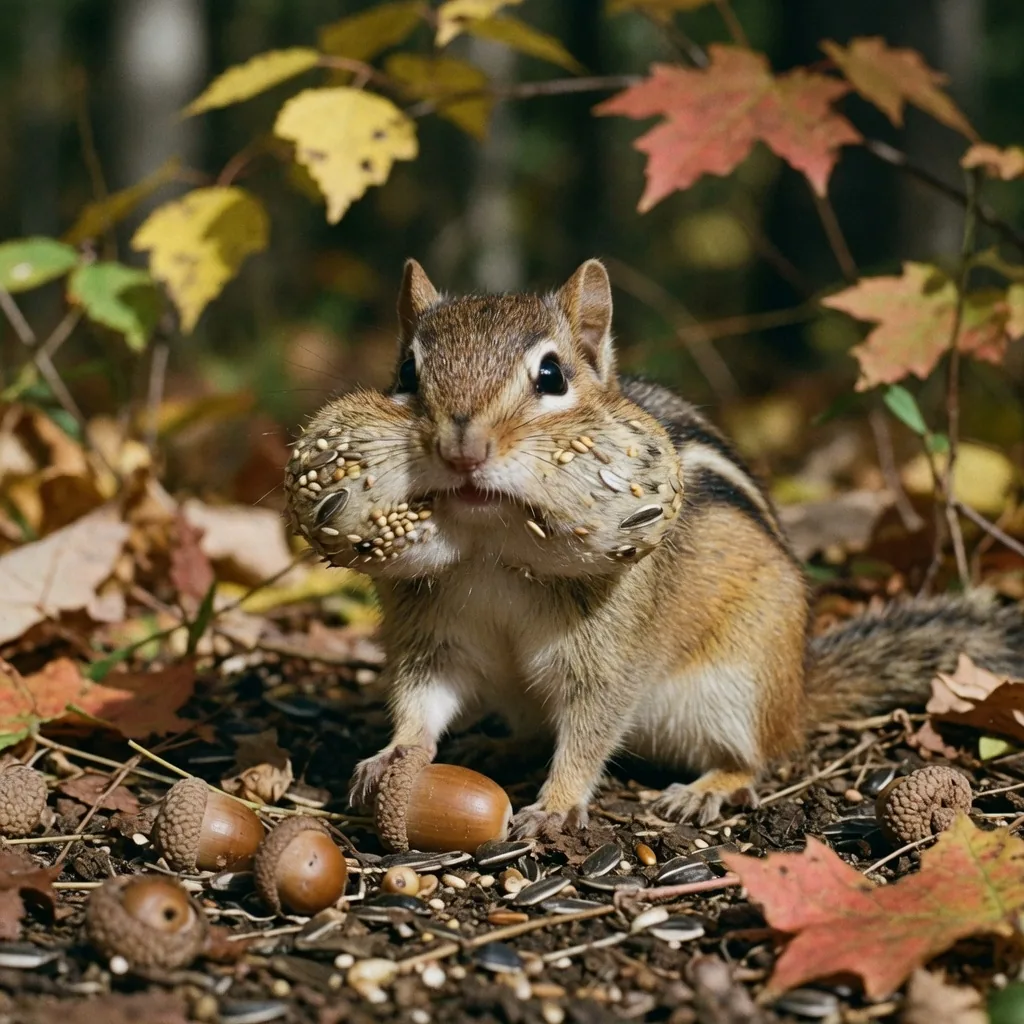
Chipmunks
Chipmunks have pockets on both sides of the face, between the jaw and the cheek. These pouches let them collect food quickly. The pouches work like temporary storage, so a chipmunk can carry lots of food items to its burrow in one trip, either to eat or to store for later.
Squirrels
Most ground squirrels have cheek pouches, but flying and tree squirrels do not. African ground squirrels also do not have the pouches.
Tail
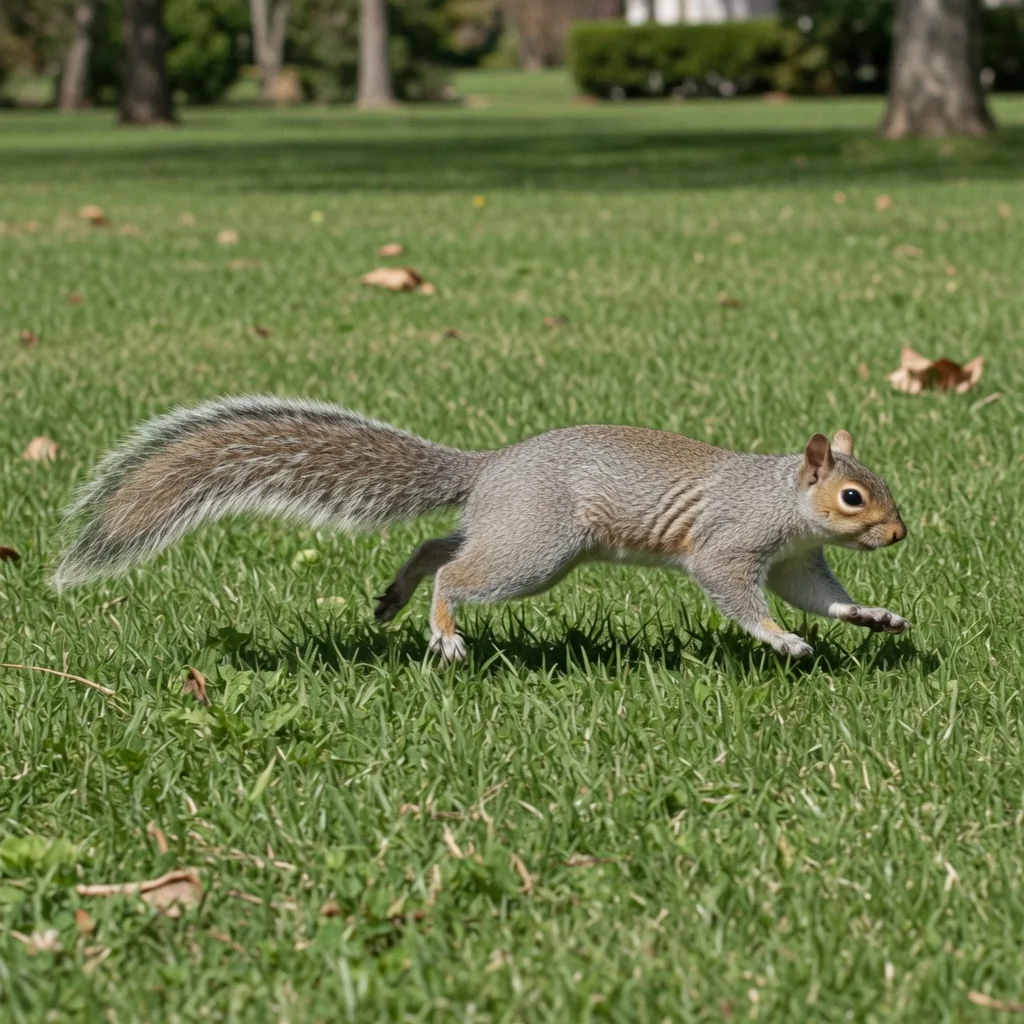
Chipmunks
A chipmunk runs with its tail straight up in the air. Its tail is not as bushy as a squirrel's.
Squirrels
A squirrel has a big bushy tail and runs with it held at a horizontal angle.
Eye Ring
Chipmunks
Chipmunks do not have an eye ring.
Squirrels
Some striped ground squirrels look a lot like chipmunks. You can tell them apart by the white eye ring that ground squirrels have around their eyes.
Take the Chipmunk vs. Squirrel Quiz!
5 quick questions. How well do you know these two furry cousins?
Size and Weight
Chipmunks
Chipmunks are generally smaller and lighter than squirrels. They range from 6 to 12 inches (16-30 cm) in length. The Least chipmunk (Tamias minimus) can be 7.2 to 8.5 inches long and may weigh as little as 1.1 to 1.8 ounces. The Eastern chipmunk can be 11 inches long and may weigh as much as 4.4 ounces.
Squirrels
Squirrels are usually larger and heavier than chipmunks. Size varies by species. Ground squirrels range from 8 to 12 inches (25-30 cm) in length. Tree squirrels are 12 to 20 inches (38-52 cm) in length. The African pygmy squirrel is only five inches long from nose to tail, while the Indian giant squirrel is three feet long.
Number of Species
Chipmunks
There are 25 species of chipmunks. Some researchers put them all in a single genus, Tamias. Others split them into three genera: Tamias (the eastern chipmunk), Eutamias (the Siberian chipmunk), and Neotamias (the 23 remaining mostly western species).
Squirrels
Scientists have identified more than 200 squirrel species. They live all over the world.
Lifespan
Chipmunks
Chipmunks typically live for about three years in the wild, but they can live up to nine years in captivity.
Squirrels
Most squirrels die in their first year of life. Adults that survive usually live 3-5 years on average, though some live up to 10 years in the wild. In captivity, squirrels may live up to 20 years.
Diet
Chipmunks
Chipmunks eat grass, nuts, buds, seeds, fruits, vegetables, worms, insects and other arthropods, small frogs, and bird eggs, plus many other forms of plant matter.
Squirrels
Squirrels eat nuts, seeds, conifer cones, fruits, fungi, roots, leaves, caterpillars, and green plants. They store acorns for winter. When food is scarce, a squirrel may eat meat. Some squirrels eat only insects, while others eat eggs, small birds, smaller rodents, and even young snakes. You can read more about what squirrels eat and how they find food.
Foraging
Chipmunks
Chipmunks can climb trees to get nuts, but they mostly collect food on the ground. Look for them in areas with underbrush, rocks, and logs. They are quick to hide behind rocks and trees to stay away from predators like hawks, foxes, and snakes.
Squirrels
Squirrels are mostly found in trees, but they also come down to run on the ground and collect food.
Hibernation
Chipmunks
Chipmunks hibernate during the winter. Unlike many hibernating animals, they do not store fat. Instead, they slowly eat the nuts and seeds they collected and stored during summer.
Squirrels
Some ground squirrels hibernate during winter. Tree squirrels do not hibernate, they stay active all year.
Social Life
Chipmunks
Chipmunks are solitary and independent. They usually ignore each other, except in spring when mating takes place.
Squirrels
Ground-dwelling squirrels are quite social. Red and gray squirrels, on the other hand, lead solitary lives.
Breeding
Chipmunks
Eastern chipmunks mate in early spring and again in early summer. They give birth to 4-5 babies twice every year. Western chipmunks breed only once a year. The gestation period is about 30 days. Young chipmunks start collecting their own food after about 8 weeks.
Squirrels
Squirrels breed once or twice a year and give birth to 2-8 kittens after three to six weeks, depending on species. Kittens are born blind and depend on their mothers for 2-3 months.
Sound
Chipmunks
Chipmunks make clucking sounds and high-pitched chirps. Their calls can sound just like bird chirps. They probably got their name from the "chip-chip" sound they make.
Squirrels
Squirrels make a "que, que, que" sound, or they warn their family of danger by making rapid clicking sounds, kuk, kuk, kuk. They flick their tails while calling.
Nuisance Value
Chipmunks
Chipmunks are much less likely to enter your house or cause damage.
Squirrels
Squirrels may enter your home to find or store food. They may move into your chimney or attic, spreading filth. They can eat peanuts from bird feeders, dig up bulbs, eat buds and shoots, and strip tree bark to build nests. Installing chicken wire as a barrier is a good way to keep them out of your garden.
Both chipmunks and squirrels are small, cute animals that look quite similar. Both have adapted well to life in suburban neighborhoods.
Explore More Animals
 Sleeping and Nesting Habits of SquirrelsSquirrels sleep up to 14.9 hours a day! Discover how flying, tree, and ground squirrels build their nests, where they sleep, and how baby squirrels grow up.
 Facts About SquirrelsSquirrels are small tree animals, with a very cute bushy tail and sharp teeth. They are fast, really intelligent, and always alert! It is fun to watch them and
 26 Burrowing Animals (With Pictures)Meet 26 burrowing animals with pictures, from foxes, meerkats and aardvarks to tortoises, tarantulas and toads. See how each one digs, and the dens they call ho
 Animals That Hibernate: The Complete Kids' Guide to Winter SleepThe complete guide to animals that hibernate, bears, bats, frogs, snakes, bees and more. Learn how winter sleep works inside the body, and how hibernation diff

 Fun fact for today!Chipmunks are often called striped squirrels, but they're actually in their own group within the same family!