

Emus and ostriches both belong to a group of flightless birds called ratites. You might wonder why both birds look so similar and behave in similar ways, even though they live on different continents.
The answer goes back millions of years. Long ago, all the continents we know today were part of one single landmass, before they broke apart. Scientists believe an ancient flightless bird (the common ancestor of emus and ostriches) lived on this landmass. When the continents split up, some of these ancient birds were trapped in different places. Over time, they evolved separately into the emu and the ostrich.
Both birds are built to be strong runners, with slender legs, a long neck, and a well-balanced body. Their diet is also pretty similar, leaves, grass, berries, and the occasional insect or lizard. As farming of these birds has become more popular, many people want to know the difference between them. So, which is bigger, faster, and taller, the emu or the ostrich? Let's find out.
| Feature | Emu | Ostrich |
|---|---|---|
| Height | 4-6 ft | 7-9 ft |
| Weight | 90-150 lb | 250-400 lb |
| Top Speed | 30 mph | 43 mph |
| Toes | 3 | 2 |
| Native Home | Australia | Africa |
| Lifespan | 20-30 years | 40-70 years |
The Emu
Size
The emu is the second-largest bird in the world, and the largest in Australia. It stands between 4 to 6 feet tall and weighs between 90 and 150 lb.
Native Habitat
The emu is native to Australia, where it lives in the open country, avoiding thick forests and populated areas.
Appearance
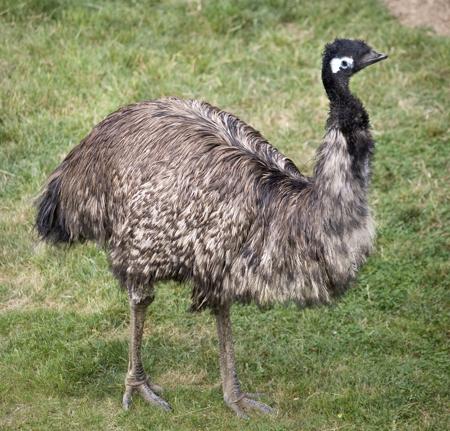
Both male and female emus have a similar dense-brown plumage. During the breeding season, females develop black feathers and blue patches on their heads. Unlike ostriches, the female emu is actually larger than the male.
Speed
Emus are strong runners and can reach speeds up to 30 mph.
Toes
Like many flightless birds, emus have three toes on their feet.
Posture
Emus carry their heads below the level of their body most of the time.
Breeding
During the breeding season, emus form pairs that mate. Each hen lays around 20 eggs, which are cared for solely by the male, while the female moves on to look for another mate.
Eggs
Emu eggs are oblong, about the size of a grapefruit, and greenish-black in color. They weigh around 1½ lb and have thin shells.

Life Span
Emus live anywhere between 20 to 30 years and reach their full size at the age of 12 to 14 months.
Behavior
Emus are curious by nature and are friendly towards humans on farms, though they can attack other livestock. They are easier to domesticate than ostriches.
Farming
Emus are reared less frequently. Each bird produces between 20 and 30 lb of meat. Having more fat deposits, they produce 5 to 7 liters of oil, which is popular for medicinal and cosmetic uses. Other products include meat, skin, feathers, and eggs. Emu skin is less popular for leather because it is thinner and has a low-quality, pinhole appearance.
Take the Emu vs. Ostrich Quiz!
5 quick questions. How well do you know these giant flightless birds?
The Ostrich
Size
The ostrich is the world's largest bird. It can be anywhere between 7 to 9 feet tall, with a weight between 250 to 400 lb.
Native Habitat
The ostrich is native to Africa, where it is found in the savannas and arid regions.
Appearance
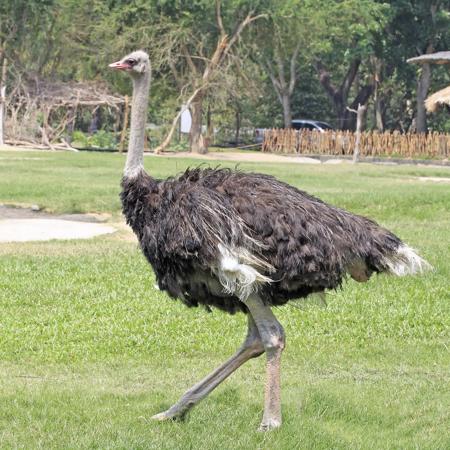
There is a clear difference between male and female ostriches. Male ostriches have black feathers with white-tipped wings and tails, while the females have a grayish-brown plumage. The males are larger in size.
Speed
Ostriches are the fastest two-legged runners, clocking up to 43 mph, even faster than a horse. This makes them the speedier of the two giant birds.
Toes
Ostriches have two toes and are the only birds with this characteristic. Having just two toes helps them run faster.
Posture
Unlike emus, ostriches walk with their head held high above their body.
Breeding
Ostriches form groups, with each male mating with 6 to 7 females. Around 40 eggs are laid, which are cared for by the females during the day and the males at night, in turns.
Eggs
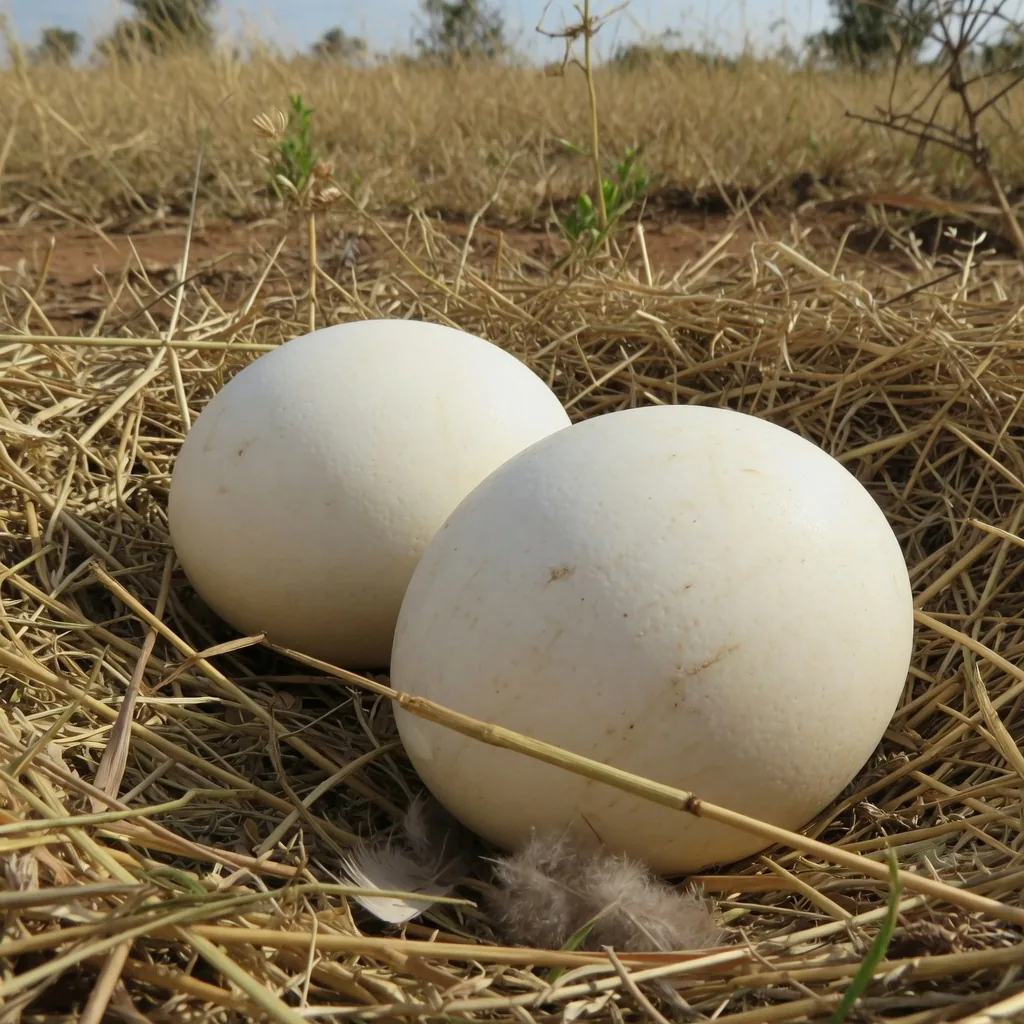
Ostrich eggs are the largest of any animal. They are round with thick, white shells. They weigh between 3 to 4 lb and are about the size of a medium cantaloupe.
Life Span
An ostrich can live as long as 40 to 70 years, though 50 is more common. They reach their full size at 10 to 14 months.
Behavior
Ostriches are more aggressive than emus. They can bite with their beaks or lash out with their strong legs when they feel threatened. This is a major risk during the breeding season.
Farming
Ostriches produce around 60 to 70 lb of meat, with less fat than emus. Their larger feathers are more suited for fashion and decorative items. They produce a small amount of oil, but their feathers and skin are in high demand, especially because ostrich skin produces high-quality leather. However, ostrich chicks have a higher mortality rate, and their eggs have lower hatchability than those of emus.
The Bottom Line
To sum up, the emu is the second-largest bird in the world, native to Australia, and is farmed less frequently (mostly for oil). The ostrich is the largest bird on Earth, native to Africa, and is commonly farmed for its skin, feathers, and meat.
Explore More Animals
 How is a Possum Really Different from an Opossum?Although possums and opossums are similar-looking animals, opossums are commonly found in the United States, while possums are native to Australia. The possum v
 How Is a Wallaby Different from a Kangaroo?Well, one of them is smaller than the other, but is it the wallaby or the kangaroo? AnimalSake gives you easy-to-spot differences between the wallaby and the ka
 How to Differentiate Between a Donkey, Horse, and a MuleHave you been confused on how to distinguish between a donkey, horse, and a mule? AnimalSake lists out the differences and similarities between the three equine
 Really Astonishing Facts About African ElephantsGentle to some, threatening to others, African elephants continue to be a subject of interest for many animal lovers. This AnimalSake post provides some interes

 Fun fact for today!Both the emu and ostrich can kill with a single kick, the emu can rip wire fences, and an ostrich kick is strong enough to kill a lion!