

Opossums are the only North American marsupials, females have pouches on their bellies to carry and nourish their babies. Possums are common in the Eastern hemisphere, but opossums make up the largest order of marsupials in the Western Hemisphere. There are more than 103 species of opossums, while there are only 70 species of possums.
In many parts of the southern United States, opossums are commonly called possums. However, possums are native to Australia, New Guinea, and Sulawesi. They probably got this name because they look like the opossums of the Americas. Possums are arboreal marsupials (meaning they live in trees) while opossums are semi-arboreal.
Opossums and possums look a bit like rats, but they are not related to rats at all. In fact, they are related to koalas and kangaroos. Both animals live in different parts of the world and can thrive in very different conditions. Opossums are also known by the scientific name Didelphimorphia, which comes from the Greek word didelphys, meaning "double-wombed." The scientific name for Australian possums is Phalangeridae.
Appearance
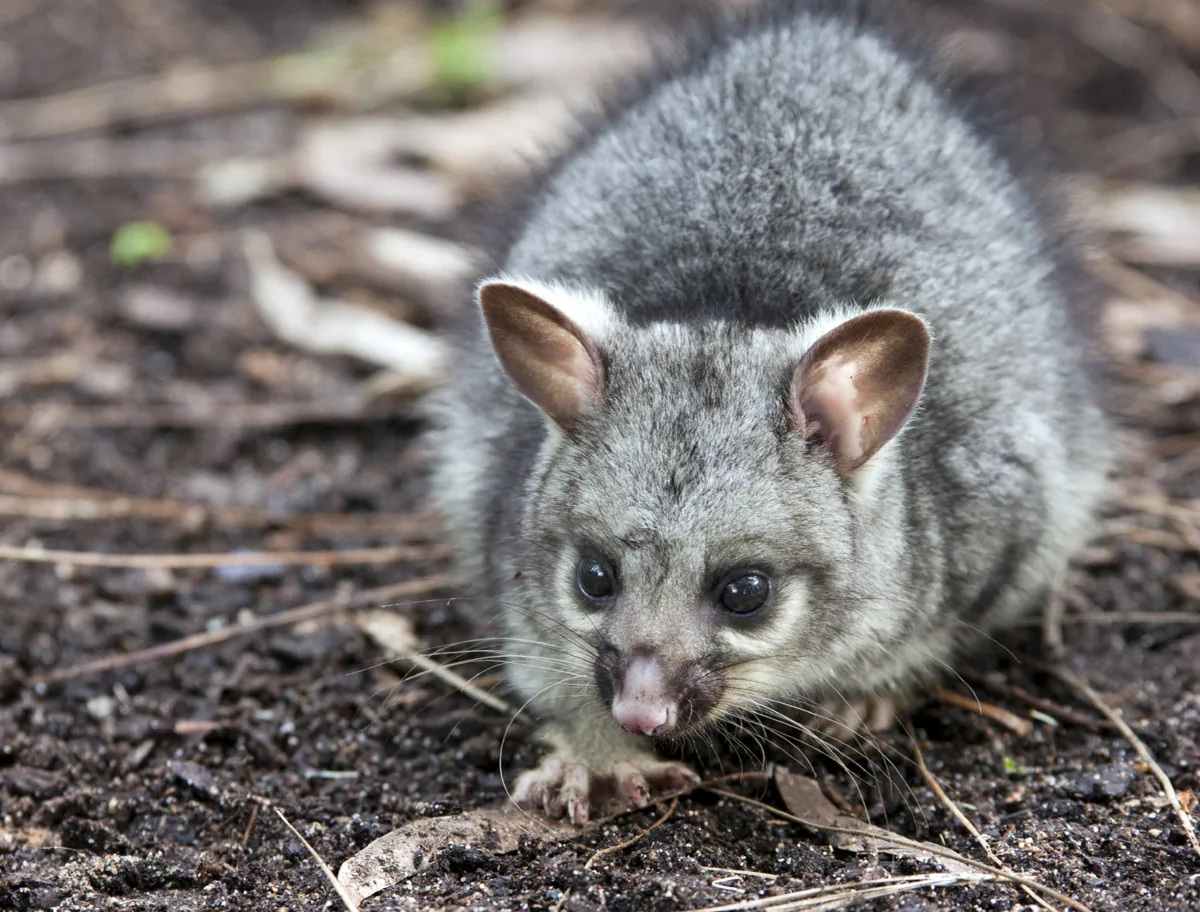
The sharp-toothed American opossum looks scary, while the Australian possum looks cute. The possum is a nocturnal tree-dweller with a thick, bushy, furry tail (unlike the opossum's bare tail), a pointed face, protruding eyes, and large, long, fox-like tapering ears. Its long claws help it hold and grip branches.
Possums come in various shades of gray and black, and may have white patches on their bodies, behind the eyes and ears and on their underbellies. Black possums are found mainly in Tasmania. The fur on the throat and chest is often dark rusty red, especially in gray male possums from Queensland. Possum fur is a medium-length (5-10 cm) plush type, known for its softness.
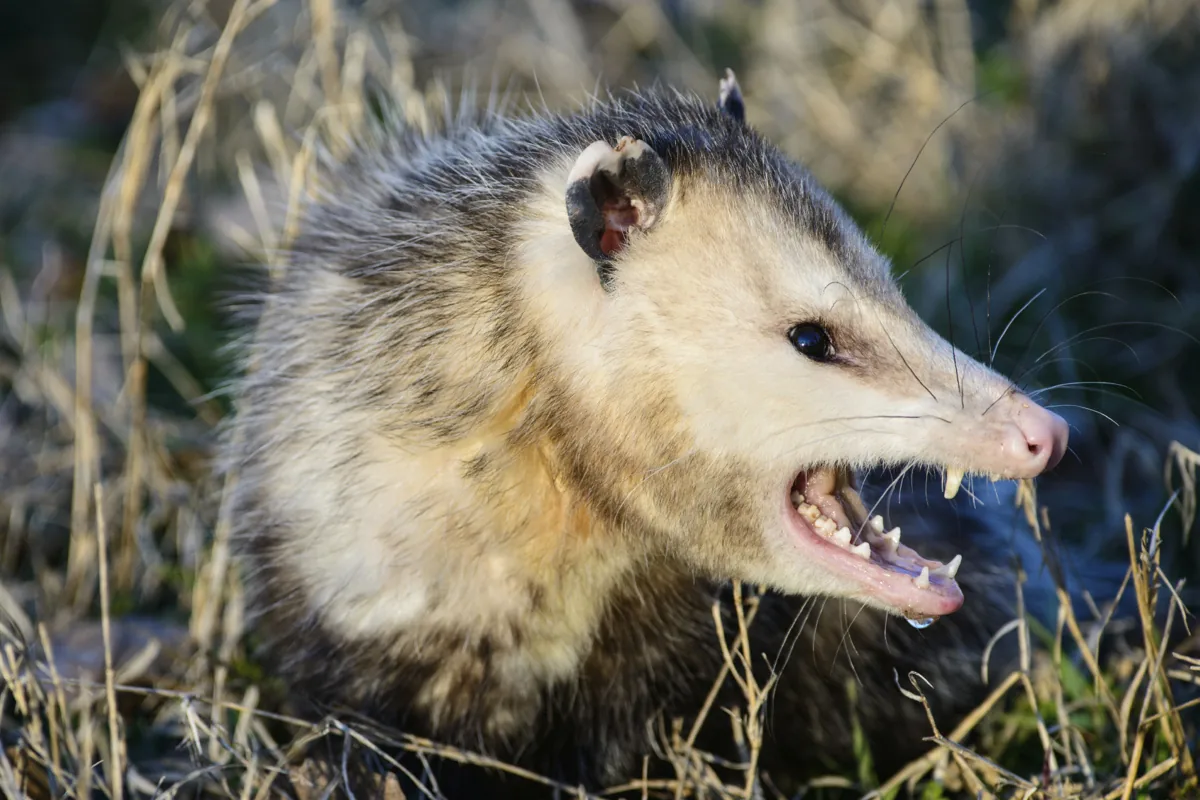
Opossum fur is made of coarse, long, flat hair and is not suitable for clothing or home decor. Opossums have hairless, rounded ears and pink noses. Their coat is usually a grayish-white color, though some opossums in the southeastern United States are darker. An opossum's face is white, with a triangular head, long pointed pink nose, and whiskers.
An adult opossum has about 50 teeth (small incisors, large canines, and tricuspid molars) and it bares them when scared or angry. The tail is about a foot long and is prehensile, with very little hair on it. The tail is used to grip objects like nesting material and tree branches while hanging upside down. Their feet look like small hands, with five widely spread fingers. All the toes have a claw except for the opposable thumb on the rear foot.
Size and Weight
Size and weight of possums vary greatly depending on the species and habitat. In New Zealand, adult possums typically grow between 65 and 95 cm in length and can weigh anywhere between 3.09-14.11 pounds (1.4-6.4 kg).
The smallest possum, the Tasmanian pygmy possum, has an adult head-body length of 70 mm (2¾ in.) and a weight of 10 g (3/8 oz.). The largest possum, the bear cuscus, may weigh more than 7 kg (15 lb. 6 oz.).
The opossum is about the size of a house cat. It is about 60-90 cm (2 to 3 feet) long, including the tail, and may weigh up to 15 pounds (6.80 kg).
Diet
Possums feed mainly on leaves, but they also eat buds, flowers, fruits, ferns, bark, fungi, invertebrates, native birds (like young kea parrots) and their eggs, land snails, and carrion. Although they are nocturnal, in winter they may be seen searching for food in the afternoon because food is scarce. They prefer fresh leaves and ignore old ones. In some areas, possums eat whole canopies (the top layer of new growth) of rata, totara, titoki, kowhai, and kohekohe trees.
Opossums eat a much wider range of food: insects, earthworms, slugs, snails, crayfish, lizards, frogs, small rodents like mice and rats, young rabbits, small birds, eggs, grasses, vegetables, fruits, berries, grains, human garbage, and carrion. Their powerful jaw muscles let them eat tough things like snail shells and bones.
The most surprising fact is that opossums eat snakes, even poisonous ones. They have a strong immune system and show partial or total immunity to the venom of rattlesnakes, cottonmouths, and other pit vipers. Scientists have found that a protein called Lethal Toxin-Neutralizing Factor (LTNF) in their bodies helps neutralize the venom.
Take the Possum vs. Opossum Quiz!
5 quick questions, do you know which is which?
Defense Mechanism in Opossums
Opossums are not fast runners, their top speed is only 7 miles per hour. So they have developed some amazing strategies to protect themselves from predators. If they cannot enter burrows or climb trees quickly to escape danger, they may bare their teeth, growl, and hiss.
A unique habit called "playing dead" is found only in opossums. When an opossum is attacked and has almost no chance of escape, it will "play possum." It rolls over on its side, with a curled body, open drooling mouth, hanging tongue, and closed eyes, and becomes completely limp, giving the appearance of being dead. The heartbeat slows down, and the opossum may also release a repulsive, foul-smelling fluid from its anal glands. This condition can last for several minutes or even several hours.
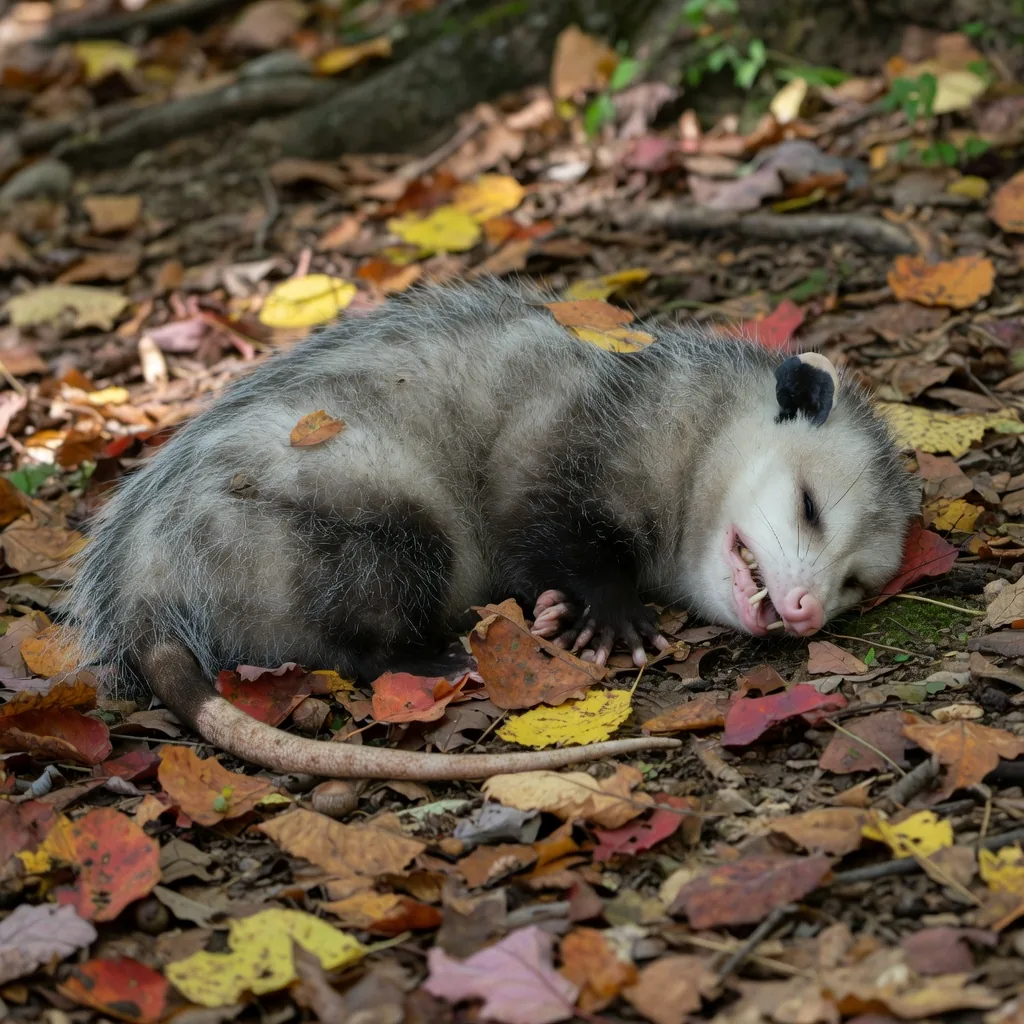
Poking or pushing the opossum produces no response at all. This type of defense is more commonly seen in insects, it's quite unusual for a mammal to use it so effectively.
When the animal senses the danger has passed, it will first wiggle its ears to catch sounds. If it feels safe, it raises its head and looks around. If danger persists, it will play dead again, otherwise it will run away. Predators usually prefer to catch running prey, but they may still bite, injure, or kill an opossum acting dead.
According to a study published in the Journal of Wildlife Diseases, opossums have a much higher rate of healed fractures than many other animals. This shows they have an exceptional ability to heal themselves.
Reproduction
Female possums reach sexual maturity at one year old, and males at the end of their second year. Females usually give birth to one young per year, though they may sometimes produce two. With a gestation period of just 17-18 days, the newborn weighs about 0.2 grams. It is born blind and without fur. Right after birth, it crawls into its mother's pouch and attaches itself to a nipple for about 70 days.
A ring-tailed possum, which has a prehensile tail, may give birth to 1-4 young ones. The newborn brush-tailed possums (Trichosurus vulpecula) develop and stay inside the mother's pouch for four to five months. Young babies then sit in the den or ride on their mother's back until they are seven to nine months old.
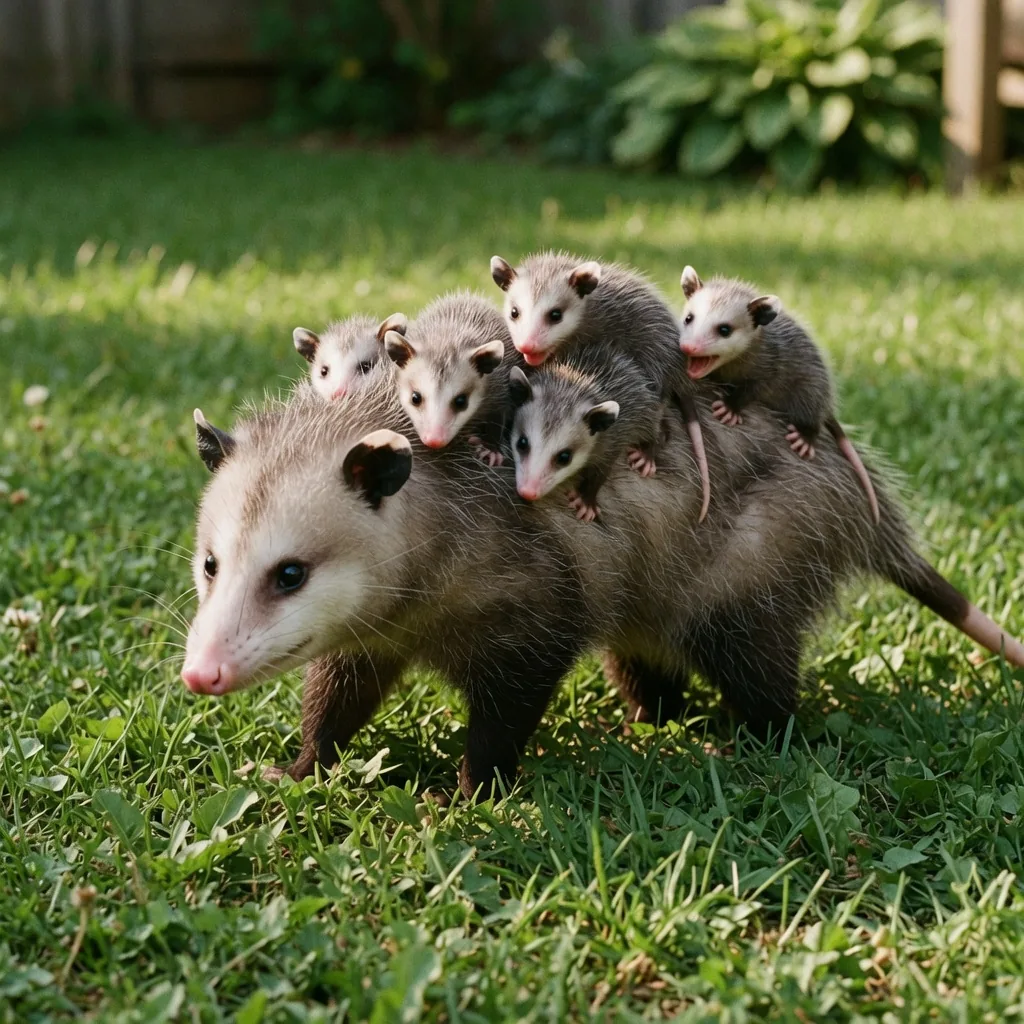
Male opossums have bifurcated penises, while females have bifurcated vaginae. Apart from the marsupium (abdominal pouch), females have two ovaries, two oviducts, two uteri, and two cervices. With a gestation period of only 12-14 days, the babies are born at a very early stage, as tiny as honeybees. After birth, they find their way into the marsupium to hold on to and nurse from a teat. After about 70-125 days, they are weaned. They detach from the teat and leave the pouch. Even after weaning, they continue to ride on their mother's back.
Although female opossums give birth to a large number of young (an average of 23), most fail to attach to a teat. Studies have also revealed another fascinating fact: male opossums have incredibly low sperm counts. To overcome this, opossum sperm fuse their "heads" together in a process called sperm pairing, found only in American marsupials. This gives them the advantage of increased straight-line velocity, they swim faster and live longer.
Lifespan
The average natural lifespan of a possum is 5-6 years. The opossum lifespan is unusually short for a mammal of its size (usually only two to four years) due to rapid aging.
Explore More Animals
 How to Take Care of a Baby PossumAs cute as they are to look at, baby possums are not too easy to care for. It involves a lot of delicate handling, patience, and a working knowledge of these ma
 Marsupials List: 334 Pouched Mammals of the WorldFrom the red kangaroo to the tiny long-tailed planigale: meet the marsupials, the pouched mammals. A photo guide plus a full list of 334 species with ranges and
 Deciduous Forest Animals: A Mind-Boggling VarietyA wide variety of mammals, birds, insects, and reptiles can be found in deciduous forests. Discover 18 remarkable species with facts, photos, a quiz, and more.
 Coyote vs. Wolf vs. Fox: A Complete ComparisonCoyotes are often known to be the smaller cousins of gray wolves, and the foxes of the coyotes. This AnimalSake article does an analysis to put an end to the ag
Population Growth and Control
The Australian brush-tailed possum was introduced in New Zealand in 1837 to start a fur trade. Today, there are about 30 million possums in New Zealand, about 7 per person! In the 1980s, there were about 70 million possums there, so people took strong measures to control their numbers. Possums have no natural enemies in New Zealand, and plenty of food is available, which is why their numbers grew so quickly.
In New Zealand, the possum is considered a pest and is not a protected animal. Possums destroy native trees and wildlife. They also carry bovine tuberculosis and can spread this disease to cows, cattle, and deer. In some Australian states, however, possums are protected. In Australia, the Leadbeater's possum is listed as endangered.
Despite their numbers, Americans rarely get a chance to see this nocturnal animal. These docile, non-aggressive animals usually do not attack pets. Domestic dogs can injure or kill an opossum, though during fights opossums can injure domestic animals. They can also spread diseases like leptospirosis and tuberculosis. They often eat pet food left outside, get into garbage, and can even climb stairs easily. They can kill and eat poultry and small birds.
In various states, people are allowed to control troublesome opossums by any legal means if they are destroying crops or property. Opossums were once commonly eaten. In Georgia and many other states, they are considered a game animal. Opossums are often killed in road accidents, and they are likely to be infested with fleas, ticks, mites, and lice. They act as hosts for cat and dog fleas, especially in urban areas.
Possums are generally disliked in New Zealand because they destroy native forests and seriously affect wildlife. They also make a horrible crackling, growling territorial call at night. Opossums are disliked in the United States mainly because of their appearance. Both animals can be a nuisance in urban areas.

 Fun fact for today!Opossums lived during the age of dinosaurs, fossil evidence shows they were around 70 million years ago!