

A Similarity to Begin With
Both kangaroos and wallabies belong to a group of mammals called marsupials. What makes marsupials special? The mothers give birth to tiny, undeveloped babies called joeys. A newborn joey crawls straight into its mother's pouch, where it stays and grows for up to a year.
Kangaroos and wallabies are native to Australia and neighboring Papua New Guinea. They both belong to a family called macropods. Why macropods? The word means "big foot", and it fits perfectly, because these animals have large back feet and back legs that are much bigger than their front limbs. Their long, muscular tails help them balance when they hop.
These two animals share a lot in common. But there are some clear differences too, and once you know what to look for, they are easy to spot.
Wallabies Are Smaller Than Kangaroos
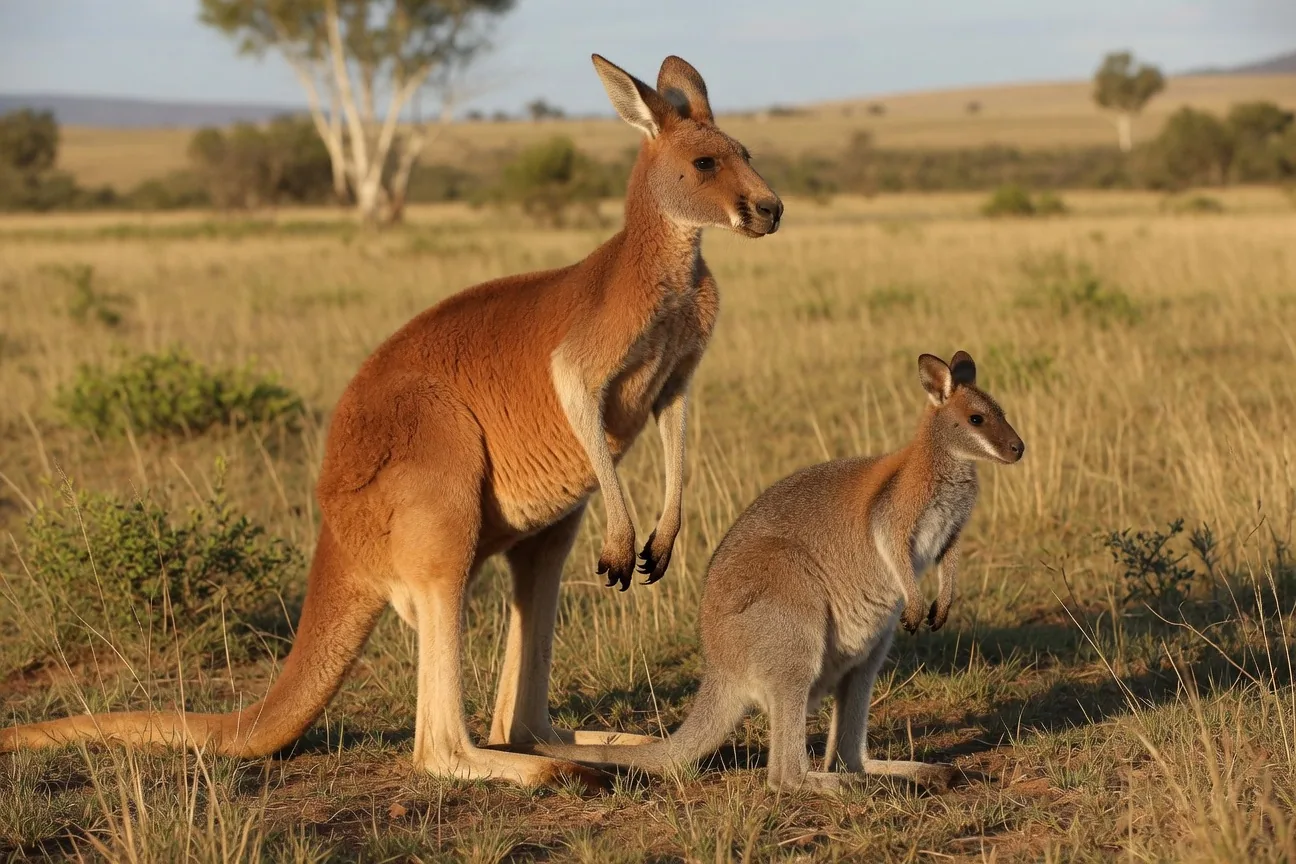
Wallabies are small. Their body measures an average of 12 to 41 inches, not counting the tail. Add the tail in, and the largest wallaby reaches up to 1.8 meters. Their weight ranges from 4 to 53 lbs, depending on the species.
Kangaroos are much bigger. The red kangaroo is the largest marsupial on the planet, easily measuring 2 meters tall. Other species (like the eastern gray and the western gray kangaroo) are slightly smaller. But even they tip the scales at around 200 lbs.
Both Are Colored Differently Too
Wallabies have brighter, more colorful coats, often two or three different shades. The red-necked wallaby, for example, has a grayish body with reddish markings around its shoulders.
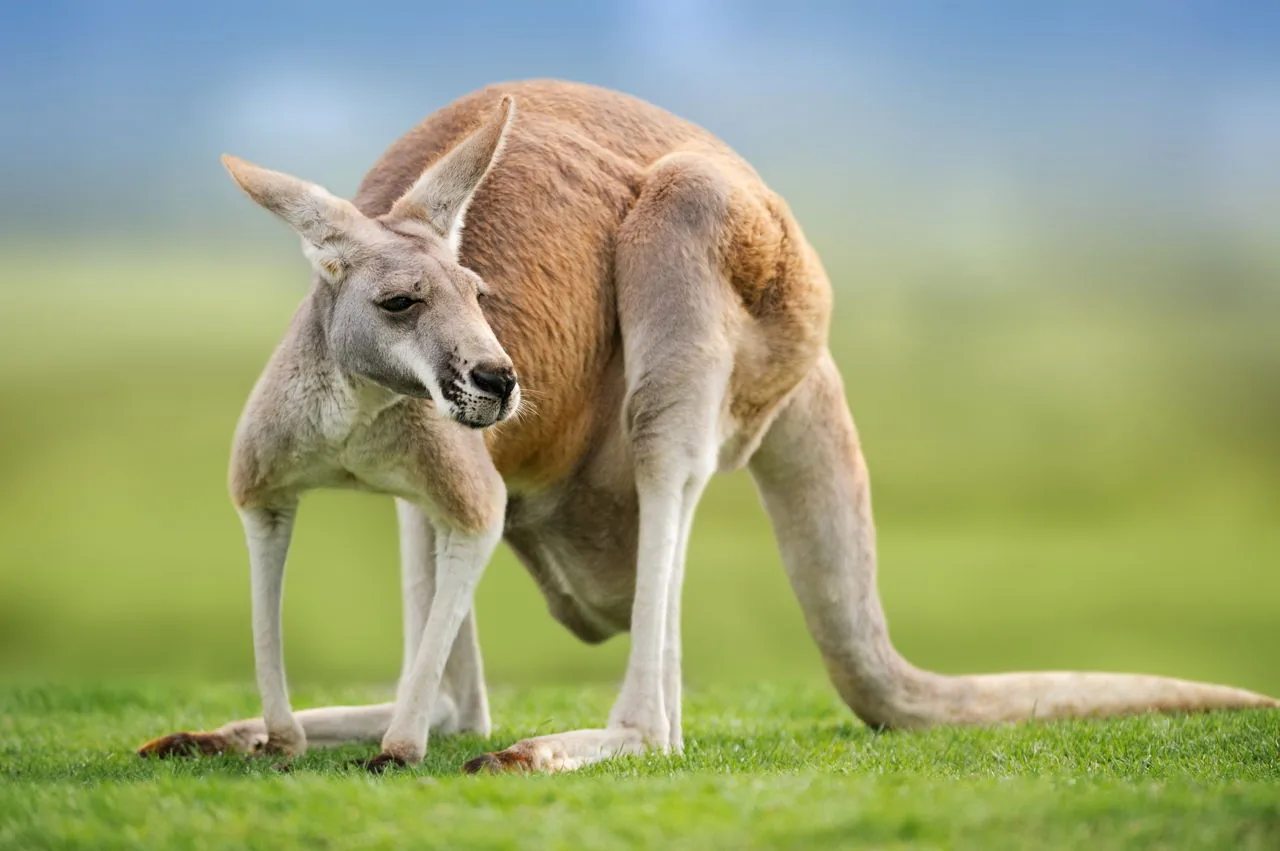
A kangaroo's coat is more plain. It is one solid color all over the body. The red kangaroo has the brightest coloring of all the kangaroo species, but even it lacks the multicolored shading you see on a wallaby.
They Do Not Inhabit the Same Areas
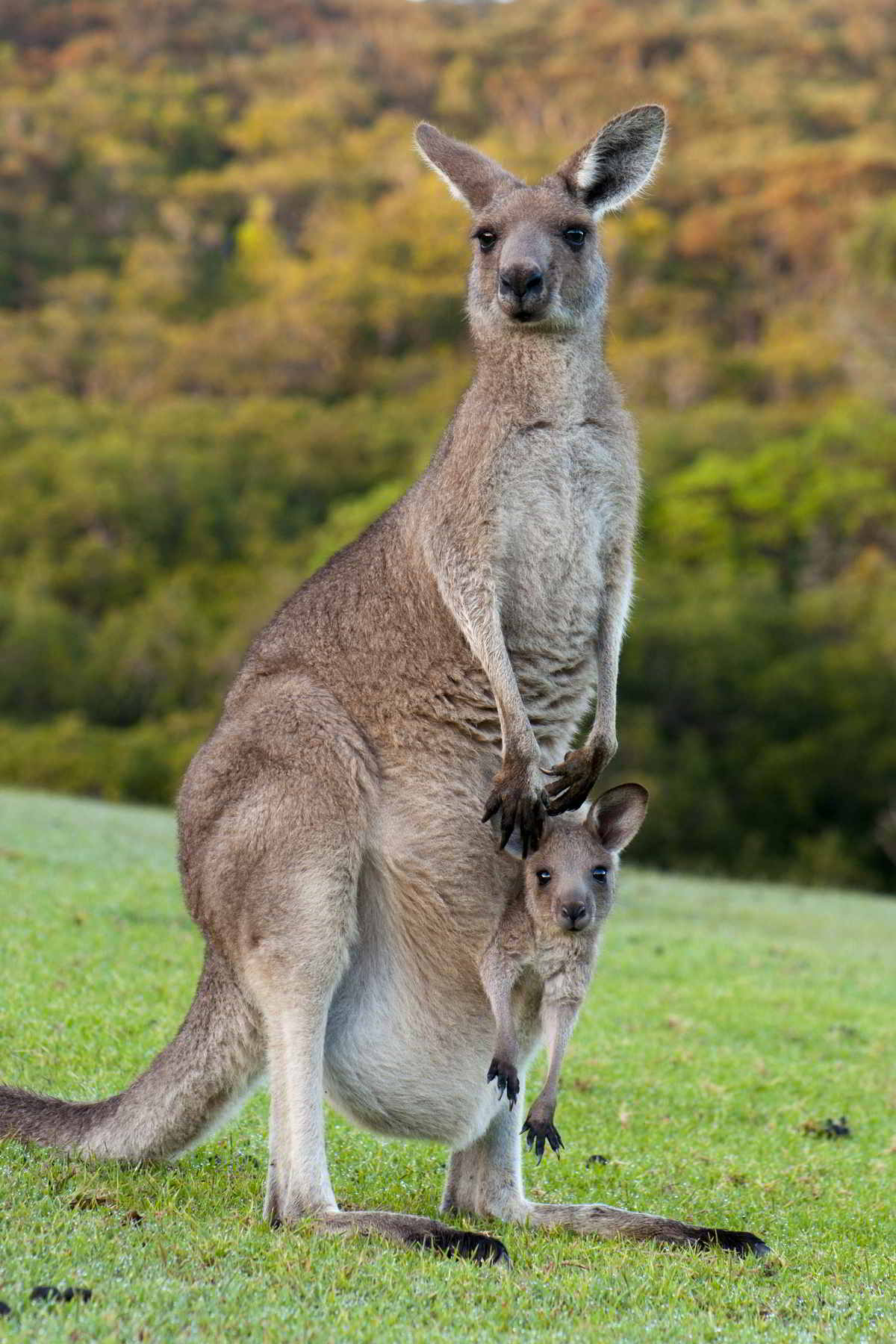
Wallabies prefer the forested regions of Australia. In fact, wallaby species are grouped by the type of forest they live in, shrub wallabies, brush wallabies, and rock wallabies.
Kangaroos, on the other hand, mostly live in open areas, treeless savannas and woodlands. They are very adaptable animals, and different subspecies are found all across Australia.
Test Your Knowledge: Wallaby vs. Kangaroo!
5 quick questions. Can you tell these Aussie animals apart?
Their Teeth Are Not Alike
Because wallabies live in forests, they eat leaves. Leaves need a lot of crushing and grinding, so wallabies have developed flatter molars and premolars, perfect for the job.
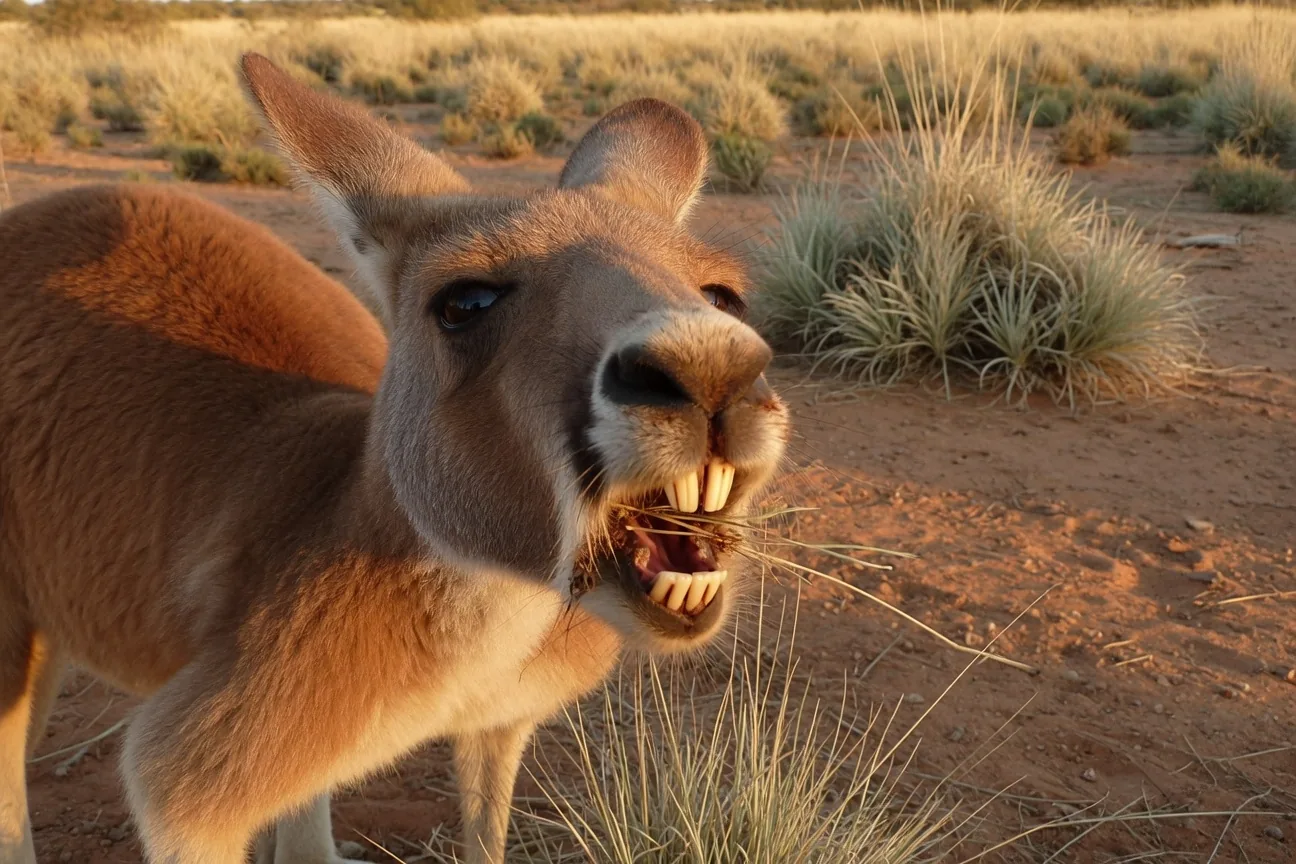
Kangaroos mostly eat grass. Grass needs to be cut and sheared rather than crushed, so a kangaroo's teeth are curved and ridged, just right for slicing through tough blades of grass.
And So Are Their Legs
A wallaby's legs are shorter and more compact, they match the wallaby's smaller, stockier body.
A kangaroo's legs are notably long between the knee and the ankle. Their knees also stick out much more than a wallaby's, giving them that powerful, spring-loaded look.
Putting It All Together
Both wallabies and kangaroos have many species, so some of these differences may not apply to every single one. But they are a solid guide for spotting the main differences between the two.
Want to learn about more amazing marsupials from around the world? There are over 300 species, from tiny pygmy possums to the giant red kangaroo!
Explore More Animals
 Random Facts About Tree Kangaroos You Really Can't IgnoreFound in rain forests, mountains, and lowlands of Australia, Papua New Guinea, and Indonesia, tree kangaroos have adapted to the arboreal life.
 Marsupials List: 334 Pouched Mammals of the WorldFrom the red kangaroo to the tiny long-tailed planigale: meet the marsupials, the pouched mammals. A photo guide plus a full list of 334 species with ranges and
 Tasmanian Devil Characteristics and HabitatThe Tasmanian devil is Australia's largest surviving marsupial. Learn about its powerful bite, unusual habitat, facial tumor disease, and conservation status.
 Canadian Lynx vs. Bobcat: How to Tell Them ApartLynx or bobcat? Learn the easy clues (paws, ears, coat, tail, size, and range) that tell these two look-alike wild cats apart, with a side-by-side chart, real

 Fun fact for today!The word macropod means "big foot", and it describes both wallabies and kangaroos perfectly!