

About Snapper Fish
Snappers belong to the Lutjanidae family of perciformes fish, and are of the genus Lutjanus. These saltwater fish are caught not only as a food source, but also as pets and as a form of sport. Most species grow at a very fast pace, and this makes them unsuitable for keeping in an aquarium.
They are found in abundance in the Atlantic, Indian, and Pacific Oceans. However, due to recent overfishing, the natural population is dwindling. To bring numbers back up, fisheries now release fixed quantities of farmed fish into the wild at regular intervals. Also, when fishing for snappers, caught fish are kept only if they meet certain specific size requirements. If a fish does not meet those dimensions, it is released back into the wild.
Snappers dwell at depths of around 450-500 feet. These fish prefer tropical and sub-tropical climates, and are carnivorous in nature. They mostly feed on crustaceans and smaller fish, but have also been observed to feed on plankton occasionally. They can grow to reach a length of up to 2-4 ft.
Almost 70 species of this fish have been recognized, but only 17 are popularly known and found commercially. Learn more about the wide variety of different types of fish found across the world's oceans.
17 Popular Snapper Varieties and Identification Pointers
Schoolmaster Snapper (Lutjanus apodus)
- Olive-grayish color
- Reddish coloration near head
- Elongated triangular snout
- Yellowish vertical stripes on the body
- Yellow-colored fins
- Blue-interrupted stripe below the eye
- Absence of lateral black spot
Red Snapper (Lutjanus campechanus)
- Vivid red body color
- Silver-white underbelly
- Long triangular snout
- Pointed anal fin
- Absence of lateral spot
- Dark red eye
Yellowtail Snapper (Ocyurus chrysurus)
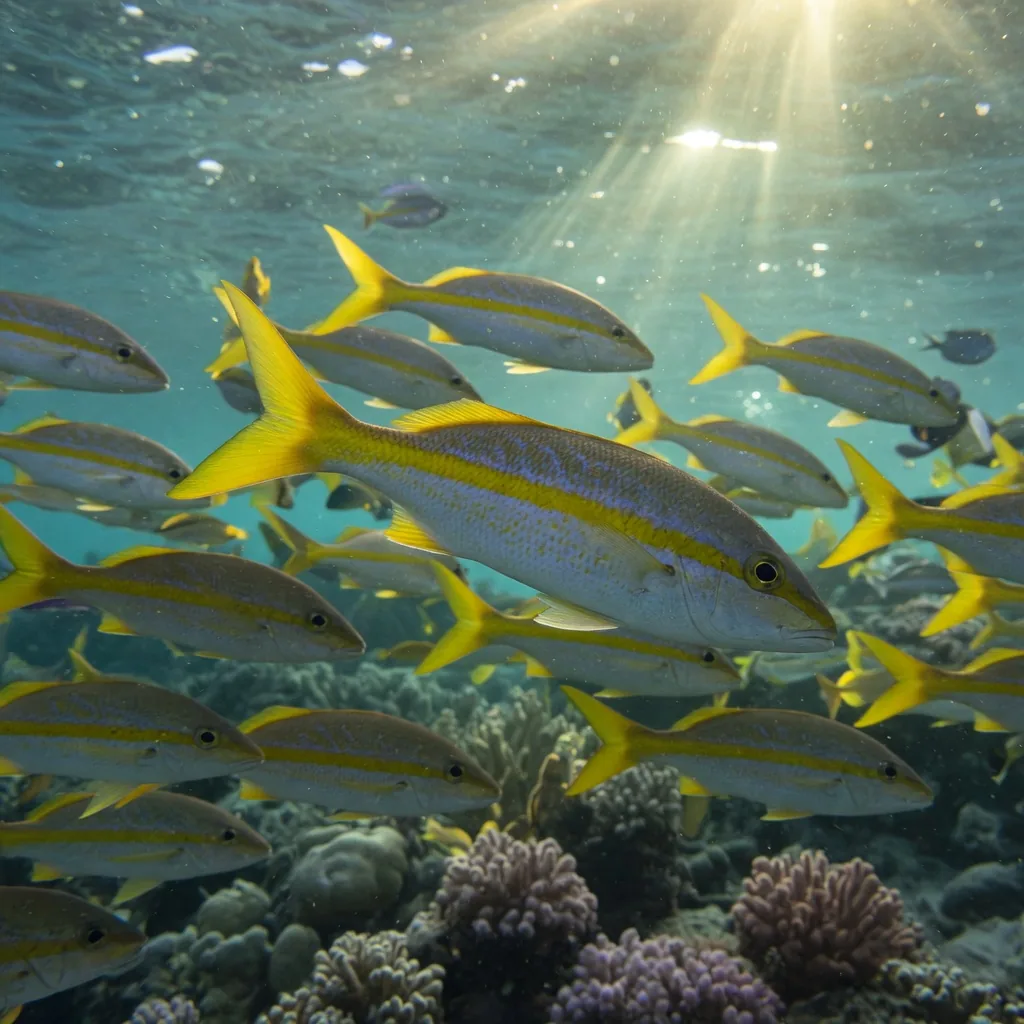
- Bluish olive color and yellow spots on top
- Pink and yellow longitudinal stripes
- Prominent yellow stripe across the side from snout to tail
- Bright yellow and forked tail
- Absence of lateral spot
Mutton Snapper (Lutjanus analis)
- Olive green color on top
- Red-colored lower fins
- Contoured blue line below the eye
- Pointed anal fin
- Tiny lateral dark spot below the dorsal fin
- V-shaped tooth arrangement on the roof of mouth
Cubera Snapper (Lutjanus cyanopterus)
- Body is dark brown with reddish hue
- Broad triangular tooth arrangement on the roof of mouth
- Slight blue tinge on the fins
- Presence of protruding canine teeth on both jaws
Vermilion Snapper (Rhomboplites aurorubens)
- Reddish body with whitish underbelly
- Short, irregular, and diagonal blue lines on top
- Absence of canine teeth
- Appears as if looking upward
- Absence of lateral dark spot
Twinspot Snapper (Lutjanus bohar)
- Yellow-colored eye
- Bluish green color on top
- Gray-white-colored underbelly
- Dark-colored fins
- Presence of white spots in lateral linear formations on the body
- Triangular snout
- Absence of lateral dark spot
- Appears as if frowning
Take the Snapper Fish ID Challenge!
5 quick questions. Can you tell your Red Snapper from your Bluestripe?
Dog Snapper (Lutjanus jocu)
- Brown body color with bronze accents
- Sharp canine teeth, with one pair enlarged and protruding
- Yellowish-orange tinge on the fins
- Pale triangle along with a blue interrupted line below the eye
- Absence of dark spot laterally and below the dorsal fin
Mangrove Snapper (Lutjanus griseus)
- Also known as Gray Snapper
- Dark brown gray body color
- Red and orange spots in the form of vertical stripes
- Two canine teeth on the upper jaw
- Reddish tinge on the fins
- Absence of lateral and dorsal dark spot
Emperor Red Snapper (Lutjanus sebae)
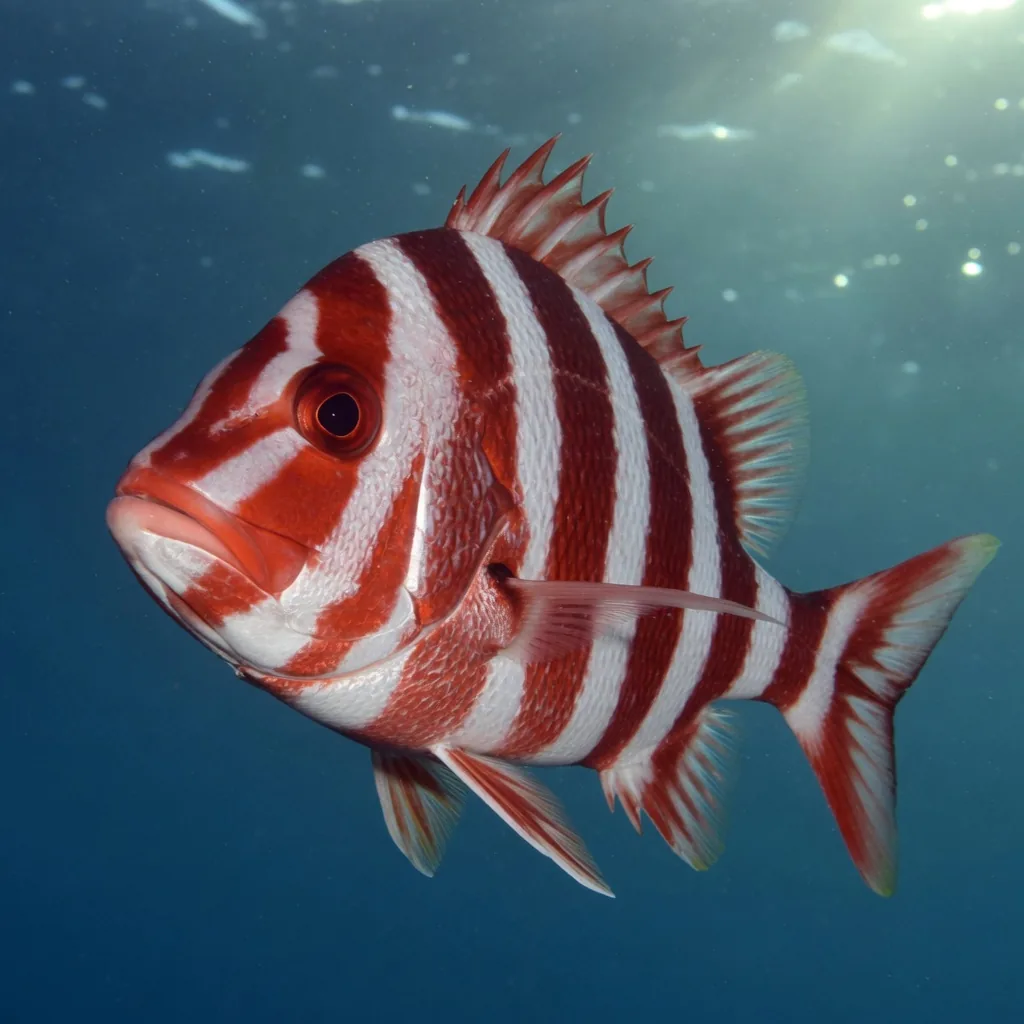
- Dark red eye
- Alternating thick stripes of white and dark red throughout body
- Spiny fins
- Slightly forked tail fin
- Triangular snout
- Absence of lateral and dorsal dark spot
Queen Snapper (Etelis oculatus)
- Bright red color on top
- Elongated body
- Silver sides and underbelly
- Notch on dorsal fin
- Big and prominent eyes
- Deep fork in the tail fin
- Absence of lateral and dorsal spot
Silk Snapper (Lutjanus vivanus)
- Body has shades of pink, orange, and red
- Sides are silver and show yellow lines
- Yellow pectoral fins
- Pointed anal fin
- Edge of tail fin is black
- Absence of lateral and dorsal dark spot
Lane Snapper (Lutjanus synagris)
- Pinkish red body color
- Alternating longitudinal dashed lines of pink and yellow
- Blackish edge of the tail fin
- Large, faded black spot present laterally
Bluestripe Snapper (Lutjanus kasmira)
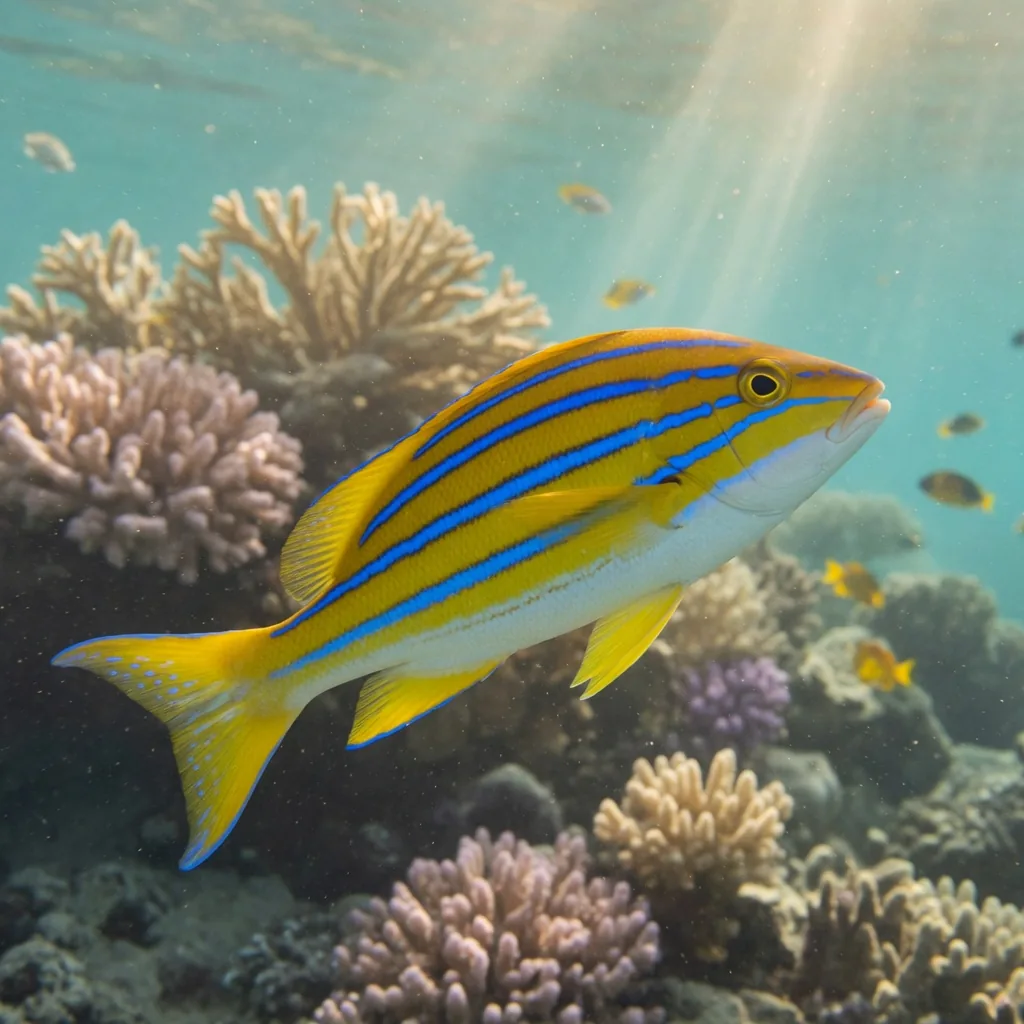
- Bright yellow body color
- 4-5 bright blue, lateral longitudinal stripes
- White-colored lower body and underbelly
- Lateral lower part shows pale gray lines
- Yellow fins
- Absence of lateral and dorsal dark spot
Papuan Black Snapper (Lutjanus goldiei)
- Greenish body color
- Broad snout
- Black fins
- Dark spots and patches along the body
- Presence of prominent scales
Blackfin Snapper (Lutjanus buccanella)
- Red body color and yellow fins
- Dark crescent shape at base of pectoral fins (the "blackfin")
- Rounded fins
- Absence of lateral and dorsal dark spot
Mahogany Snapper (Lutjanus mahogoni)
- Grayish-green body color with a red tinge
- Lateral diffuse dark spot
- Eye and tail fin are bright red
- Spines along the fins are prominent
Each snapper is unique in its appearance. By observing the key characteristics of a variety, identification of the type of snapper can be possible. Curious about other ocean predators? Check out these interesting facts about swordfish for more.
Explore More Animals
 Types of FishThere are over 32,000 species of fish, more than all other vertebrates combined. Discover how fish are classified by species and habitat, plus the fish we keep
 A List of Different Types of Barracuda Fish, With PicturesThe barracuda is nicknamed the 'Tiger of the Sea'. Meet the Great, Yellowtail, Blackfin, Yellowmouth and Mexican barracuda, plus the full list of more than 20
 Perch Fish FactsPerch fish are colorful freshwater fish found around the world. Discover their species, appearance, habitat, diet, and reproduction in this easy guide for kids.
 Fluke vs. Flounder: How to Tell These Flatfish ApartFluke or flounder? Learn the quick clues (which side the eyes are on, mouth and teeth, size, and taste) that tell these two look-alike flatfish apart, with a

 Fun fact for today!Almost 70 species of snapper have been recognized, but only 17 are popularly known and found commercially!