

"Playing possum" is an involuntary reaction of a possum when it feels threatened. In such situations, it pretends to be dead, showing all the traits of a sickly, dead animal, with the purpose of tricking its attacker. The possum takes about 1-4 hours to regain consciousness.
Most of us have come across opossums in typical places, under the hood of the car, on the porch eating from your dog's food dish, or even in the garbage can. Sometimes you may spot them on the road as unfortunate victims of speeding cars. People often want to help, and rescue such animals if they are found to be alive.
However, it is not as easy as picking up an injured opossum off the road and nursing it back to health. Laws on rescuing possums vary from state to state, and it is never a good idea to ignore the rules. The best and most sensible thing to do is to contact the National Opossum Society and seek advice. If that isn't possible, carry the injured animal to the nearest animal shelter. Whatever you do, make sure you are following state laws regarding the treatment of possums.
If, for some reason, it does fall on you to take care of orphaned opossums, below is a list of things you need to be mindful of.
Before You Take Them Home
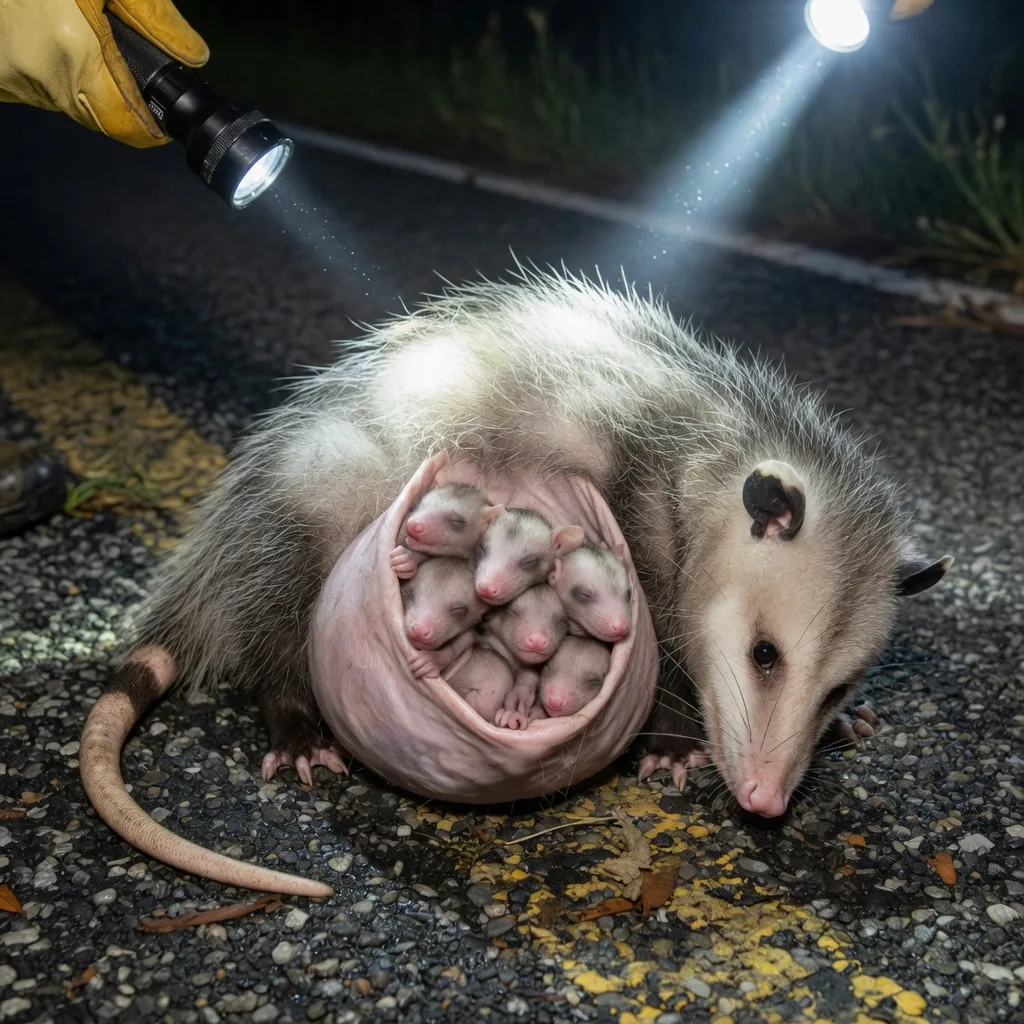
If you find a dead or injured female possum on the road, check her pouch for infants. This is also a good way to tell the animal's gender, since male possums do not have a pouch on their bellies. There can be up to 13 babies in a female's pouch.
If the female is dead and the babies are alive, carry the female along instead of removing the babies from the pouch one by one. Being marsupials, possum babies have their mouths stuck to their mother's teat, and it can be difficult to dislodge them.
If you are inexperienced with handling small animals, wear gloves while picking up the injured animal, as it may get aggressive and try to bite you. In such cases, it is best to carry them to the nearest shelter.
Caring for Orphaned Opossums
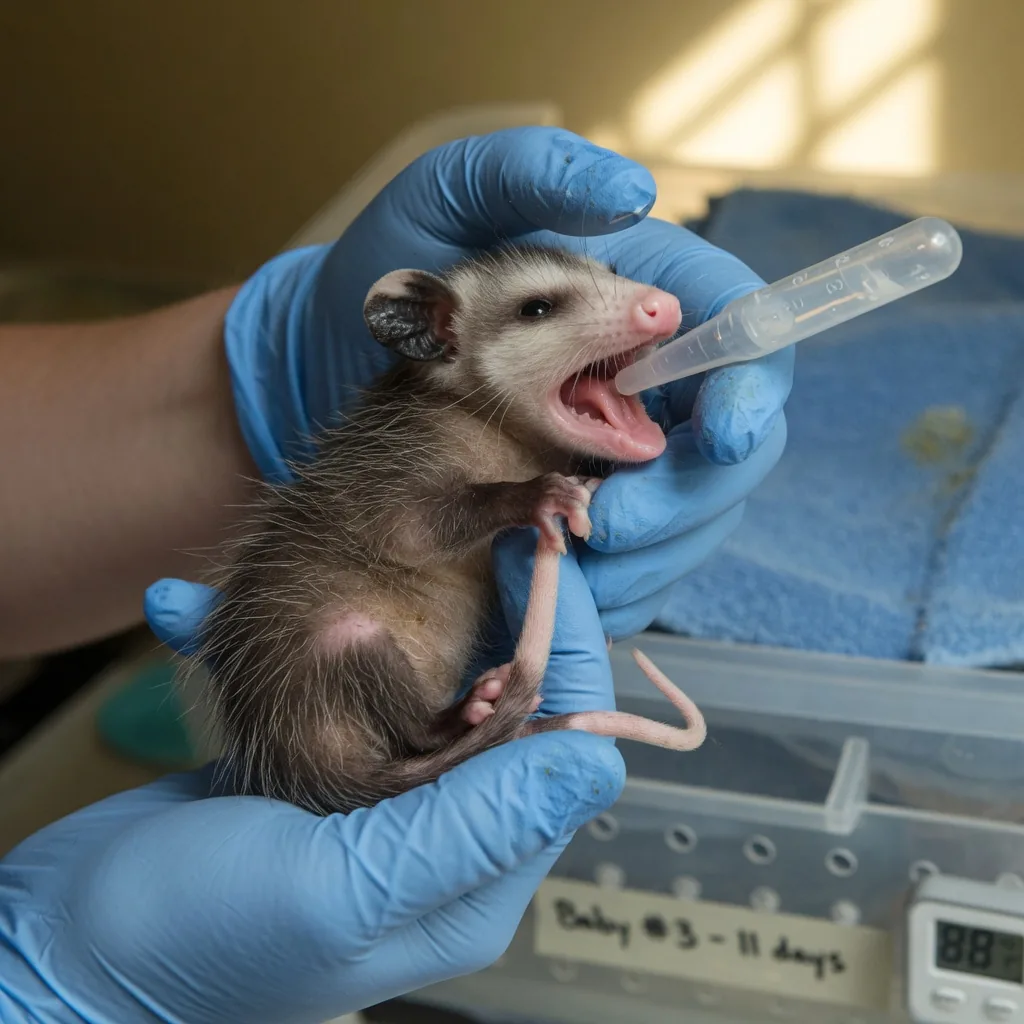
Use an eye dropper to feed them infant formula (Esbilac) or soy milk as soon as you get them home. Make sure the milk is slightly warm, but not too warm. Feed them water in the same manner.
The feeds should happen once every 2-3 hours, done carefully, drop by drop.
You can keep the babies in a cardboard box lined with paper and a soft cloth. Place a hot water bottle inside to keep them warm. Remember, too much heat is not good for them, so do not place them close to heat lamps.
You will notice that the possum babies do not lick milk or water from a bowl or a spoon, as they are not mentally equipped to do so. Keep feeding them with the dropper, dripping the liquid straight into their mouths. Remember, this takes a long time and a lot of patience.
Toilet training is next. Baby possums need a little help to do their business. Use a moist ball of cotton or a soft tissue to rub them very gently on their belly and abdomen. This gives the necessary stimulation for them to go. They will continue needing this assistance until they reach the age of about 2 months and over.
Take the Baby Possum Care Quiz!
5 quick questions. How much do you know about rescuing baby opossums?
Points to Remember
Possums are not the best of pets, they belong to the outdoors. It is in their best interests that you contact the National Opossum Society and take their advice regarding opossum welfare.
Possums have a tendency to bite whenever they feel threatened. This happens even when they are used to your touch, they will bite you even if they are startled, and this does happen a lot. Their mouths are a haven for bacteria, and a bite is very likely to cause a serious infection, especially in those who have a weakened immune system.
The best thing to do is care for them, but only until they reach the age of 12-13 weeks, or are 12-14 inches in size excluding the tail. This is when they are fully grown and ready to be released in the wild. Don't be afraid to release them, their instincts are strong enough to help them flourish out there. Possums are not to be kept in captivity for their own good.
Remember that possums enter yards and houses looking for food. It is wise to keep the trash cans covered at all times. Also, do not leave pet food out for long, especially at night.
As cute as they may seem, possums are not your conventional pets. If you are unsure about how to handle them, call for assistance rather than attempting to care for them yourself.
Explore More Animals
 How is a Possum Really Different from an Opossum?Although possums and opossums are similar-looking animals, opossums are commonly found in the United States, while possums are native to Australia. The possum v
 Sleeping and Nesting Habits of SquirrelsSquirrels sleep up to 14.9 hours a day! Discover how flying, tree, and ground squirrels build their nests, where they sleep, and how baby squirrels grow up.
 How to Care for Pygmy Goats: Believe Us, It's Not DifficultA pygmy goat is a smaller breed of the dairy or meat goat. Caring for this goat is no different from caring for other pets. Here are some tips you can follow to
 Animals With Prehensile Tails: Gripping Facts and PicturesThe term 'prehensile' is derived from the Latin word 'prehender', which means 'to grasp'. Discover which animals use their tails to grip, hang, and climb, from

 Fun fact for today!"Playing possum" is an involuntary reaction, the possum can't choose to do it. It takes 1-4 hours to wake up!