

What Exactly Is a Spider?
Contrary to popular belief, spiders are not insects. They do belong to the phylum Arthropoda (the same phylum as insects and scorpions) but they have some distinct features that set them apart.
Only those arthropods belonging to order Araneae of the class Arachnida are classified as spiders. Simply put, arthropods are members of kingdom Animalia that are characterised by an exoskeleton, a segmented body, and jointed appendages.
Alongside these typical arthropod traits, the members of order Araneae (the spiders) are identified by their eight legs, their ability to breathe air, and their fangs in the chelicerae, which are modified to inject venom.
How to Identify Spiders
At times, spiders are confused with species like harvestmen, which look like spiders but belong to a different order of arthropods. There is also a great deal of diversity within order Araneae. For example, some spiders have eight eyes, while some have none.
All this makes it difficult to identify spider species or tell them apart from other similar-looking arthropods, unless you know the basic characteristic traits of these eight-legged, air-breathing invertebrates.
1. Look at Overall Appearance
The first thing to observe is the overall appearance of the spider. Doing this will often make it clear whether the spider is a mature one. It becomes difficult to determine the gender of young spiders, so they are harder to classify at an early age.
2. Count the Body Parts
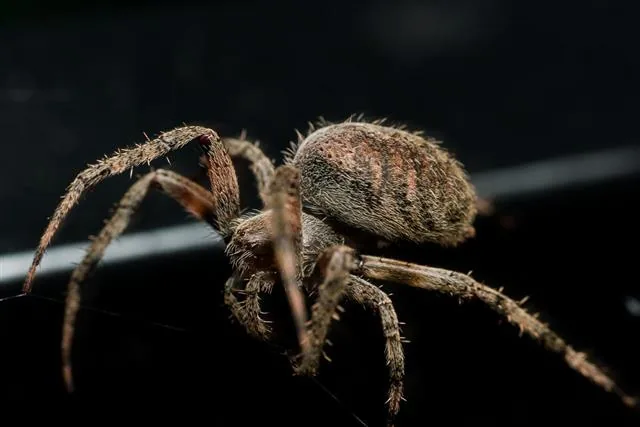
A spider's body is divided into two main parts: the cephalothorax and the abdomen. These two parts are connected by a narrow stalk. The cephalothorax is made up of the head and mid-body, where the legs are attached. A spider has four pairs of legs.
3. Check for Fangs and Venom
A spider's jaw has fangs with a duct that contains venom. They use this venom when hunting or when threatened. Some spiders are considered very dangerous because of their aggressive nature and poisonous fangs.
4. Count the Eyes
The location and number of eyes is also an important marker of a spider's identity. Some spiders have more eyes in addition to the main pair. Fishing spiders, for example, are known for having eight eyes arranged in two rows.
5. Look at the Palps
If it is an adult spider, there should be differences in the appearance of male and female spiders. This is known as "sexual dimorphism." Adult male spiders have their "palps" (leg-like structures at the front) modified for mating. The "palps" of female spiders remain short.
6. Look for Spinnerets
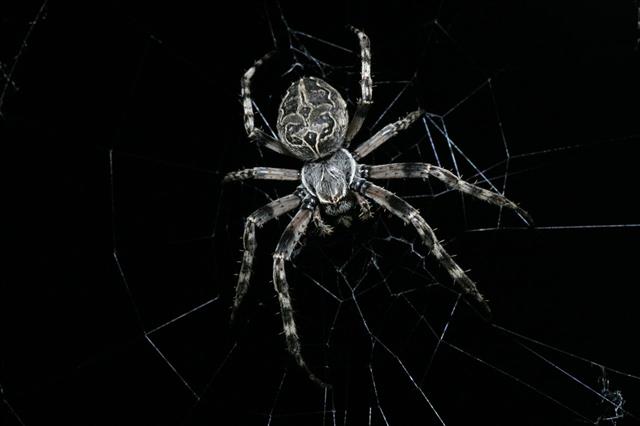
One of the most distinctive features of a spider is its ability to spin webs. The organ that helps with this is called the spinneret, which is present at the end of the abdomen. Some spiders spin their webs in unique ways. For example, the Funnel spider spins its web in the shape of a funnel.
Test Your Spider Knowledge!
5 quick questions. How well do you know your arachnids?
Some Popular Species of Spiders
Now that you know the general traits to look for, here are three well-known species that show how those features play out in the real world.
Brazilian Wandering Spider
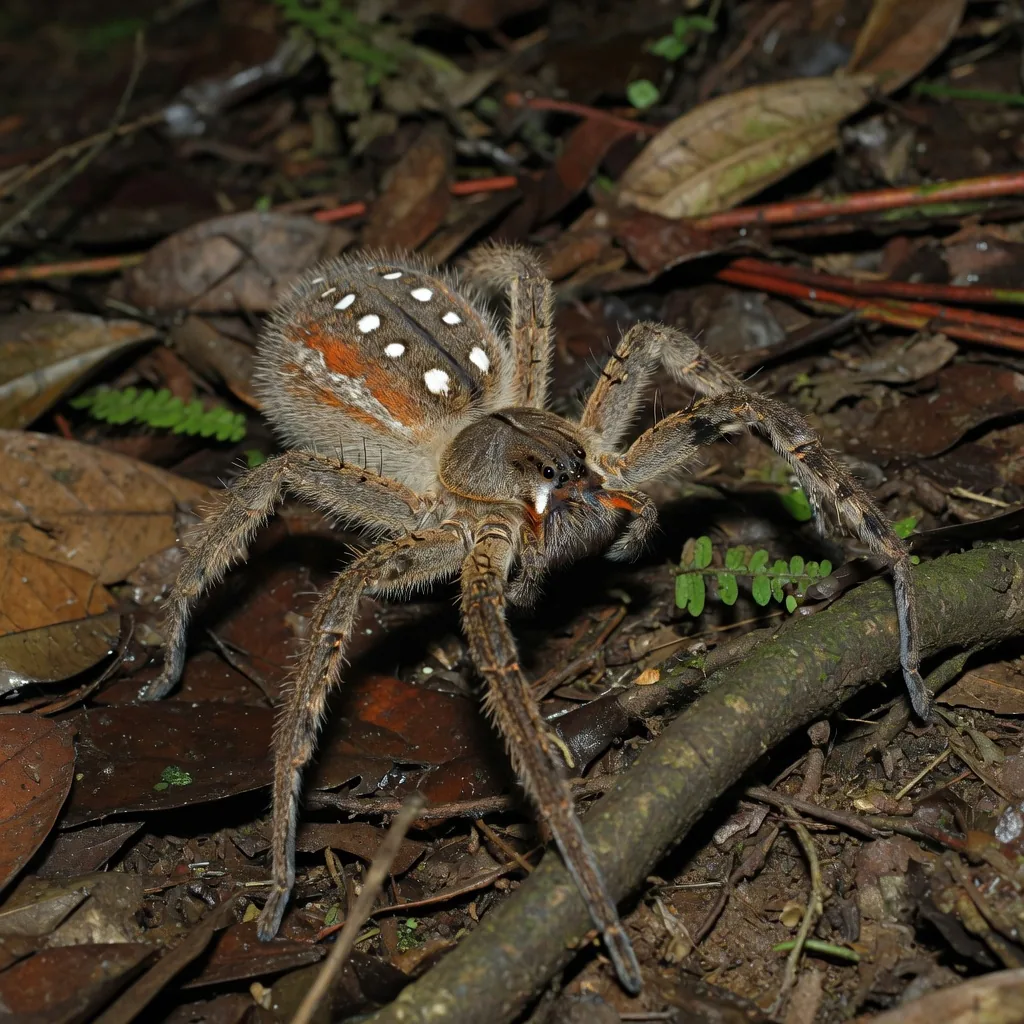
The scientific name for the Brazilian Wandering Spider is Phoneutria nigriventer. It is also known as the Banana spider or armed spider. It is among the world's most venomous spiders and is commonly found in Central and South America. It can be found in different shades of orange, black, white, and brown.
It is known as a wandering spider because it wanders the jungle floor at night. During the day, it hides in banana trees, logs, rocks, or termite mounds. It also has white patterns on its abdomen, which act as the main feature for identifying this spider. The fangs of this spider do not have much hair on them, except for the spines.
Redback Spider
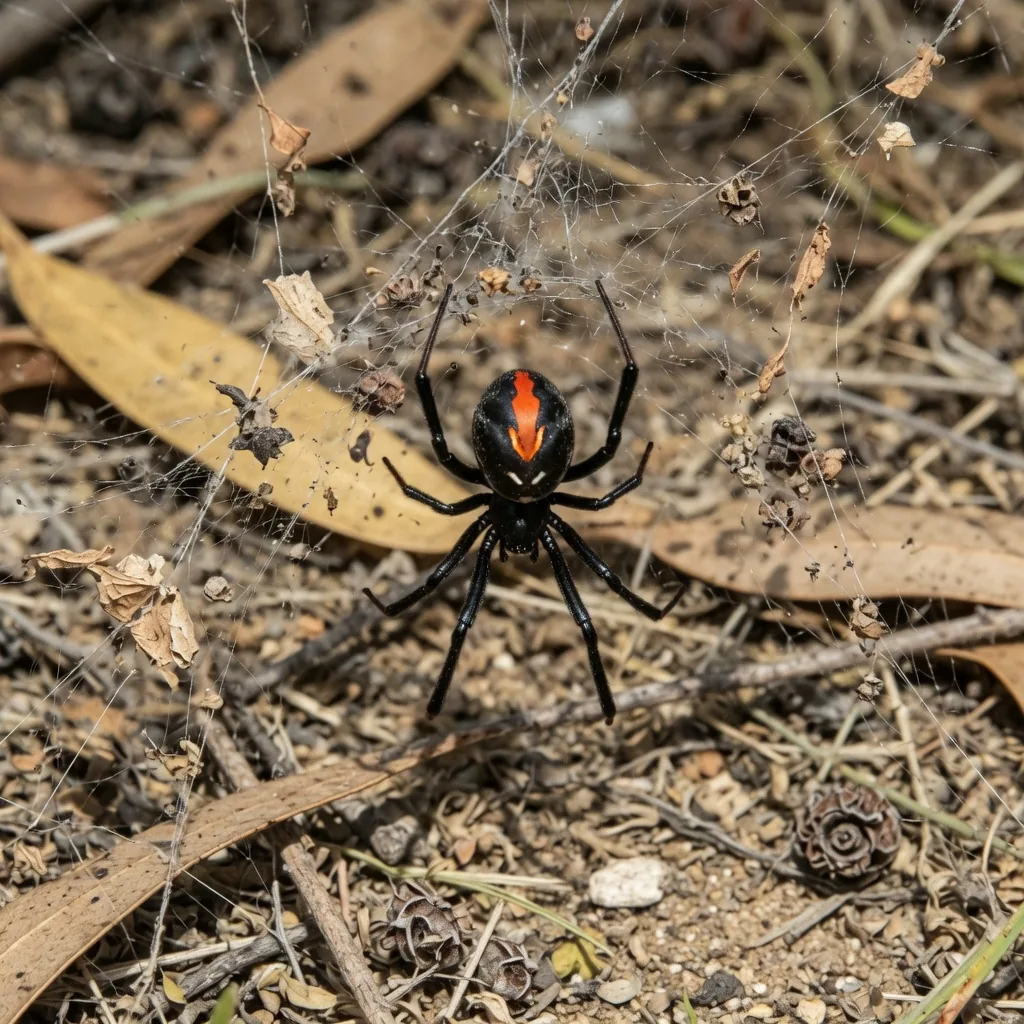
The Redback Spider's scientific name is Latrodectus hasselti. It is also known as the Jockey spider or Kapara spider. They are mostly found in arid regions and are common in Australia. They are black in color with either an orange or red longitudinal stripe.
They live in cool places and do not spin a web in the usual sense. Female spiders are more aggressive than the male. They are about 1 cm in length, while the males are smaller than the females. After mating, the female eats the male. These spiders are very dangerous and venomous.
Black Widow Spider
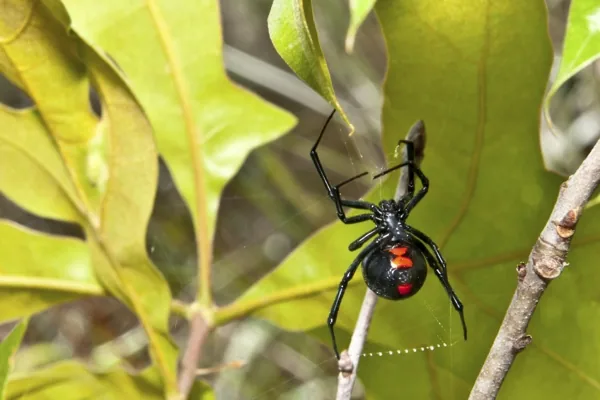
The scientific name of the Black Widow spider is Latrodectus mactans. These spiders are black but have a very distinctive mark on their underbelly in the shape of an hourglass. This mark is red, orange, or yellow in color.
The male spiders of this species are smaller than the female (almost half the size) but the male spiders have long legs. The clue to identifying the female Black Widow is her glossy and smooth texture, which makes her stand out among other spider species. This spider gets its name from the ritual it follows of sexual cannibalism, where the female spider eats the male after mating.
Many More Species
Apart from the above-mentioned spiders, there are thousands of species that have been discovered, and many which are still unknown. Some of the most famous spiders include Funnel Web spiders, Brown Recluse spiders, Hobo spiders, Camel spiders, Wolf spiders, and Barking spiders. There are many species that are harmless too.
If you want to get rid of a spider in your home, just slide it lightly into a jar and release it outside, then remove the web. Do not kill them, they are an important part of our ecosystem.
Explore More Animals
 Tiny But Deadly: The World's Most Poisonous SpidersAlmost all spiders possess venom, but only a few can seriously harm humans. Meet the Brazilian Wandering Spider, Sydney Funnel-web, Black Widow, Brown Recluse,
 Unexpectedly Shocking Facts About Black Widow SpidersThe black widow spider is considered the most venomous spider in North America. Discover how to identify them, where they live, how they hunt, and what to do if
 20 Species of Spiders Found in GeorgiaMeet the 20 spider species found in Georgia, from fishing spiders that walk on water to venomous black widows. Explore their habits, sizes, and habitats, plus
 Gripping Facts About the Largest Spiders in the WorldTwo spiders share the title of world's largest: the Goliath birdeater (heaviest) and the giant huntsman (longest leg span). Discover the facts, quiz, and more.

 Fun fact for today!There are over 40,000 species of spiders on the planet, and that's only the ones we've found so far!