

How Periwinkles Came to North America
The common periwinkle snail (Littorina littorea) is not a native species of North American and Canadian shores. It was introduced to these waters in the mid-19th century from Western Europe and quickly spread along the Northeast coast.
There are many theories about how they got here. They may have been carried across the Atlantic in the ballast water of ships. Or colonists may have released them on purpose, wanting a familiar coastal food from back home.
Their arrival has had a big impact. Periwinkles have drastically changed the amount and types of algae on rocky shores. They have altered the relationships between organisms in their habitat. They have also displaced some native species, like the mud snail. Their heavy feeding is even responsible for the disappearance of larger seaweeds.
Scientific Classification
Here is where the common periwinkle fits in the animal kingdom:
| Rank | Name | What It Means |
|---|---|---|
| Kingdom | Animalia | Multicellular, eukaryotic organisms |
| Phylum | Mollusca | Sea animals with soft bodies; some have an outer shell, e.g., snails, clams, and oysters |
| Class | Gastropoda | Snails, slugs, and sea butterflies |
| Order | Prosbranchia | Breathe through gills (which sit in front of the heart) |
| Family | Littorinidae | Periwinkles |
| Genus | Littorina | Small sea snails that live in tidal zones |
| Species | Littorea | Common periwinkle |
How to Identify Them
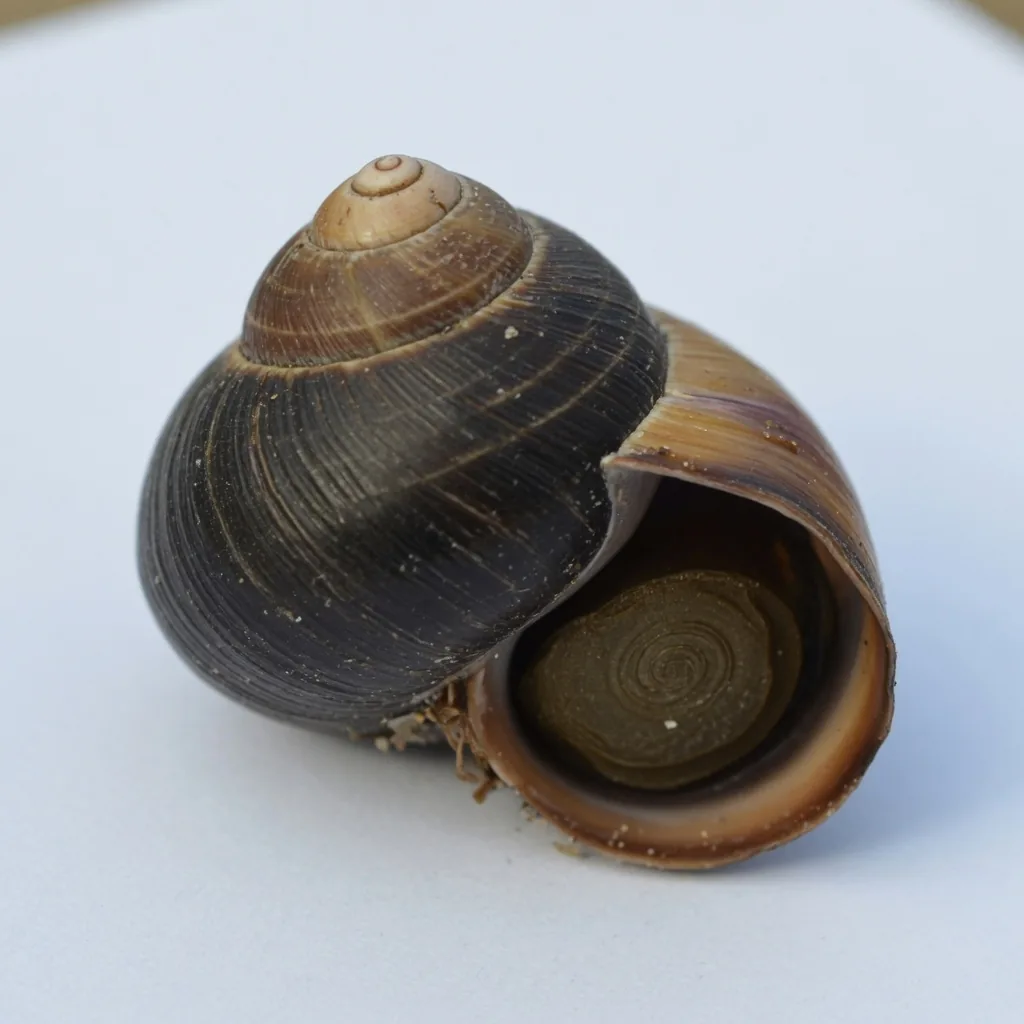
The common periwinkle is one of the largest periwinkle snails. Its shell can grow to a height of about 52 mm. It has a spiraled shell which is usually about 2 cm long, and is solid enough to stand up to turbulent waves.
Adult shells are smooth. Young ones may have ridges that spiral up towards the apex. The shell color ranges from gray to black to brown, usually black or dark gray-brown, often lighter towards the apex. The color can blend right in with the rocks they cling to.
Periwinkles have a sharp organ in their mouth called a radula. It works like a ribbon with rows of sharp, hooked teeth, and is used for scraping algae off rocks. Even if these teeth break off, they are replaced within a day.
Periwinkles can pull themselves into their shells using their tail, to keep from drying out or to hide from predators. They can also stay moist out of water by closing their shell with a trap door-like structure called an operculum, which also acts as a doorway back out of the shell.
They have a snout-like head and two stalked tentacles at their front end. These tentacles are their sensory organs. Young ones have black bars on their tentacles that distinguish them from adults.
The common periwinkle snail reaches maturity within 2-3 years. Its lifespan is thought to be about 5-10 years.
What Do They Eat?
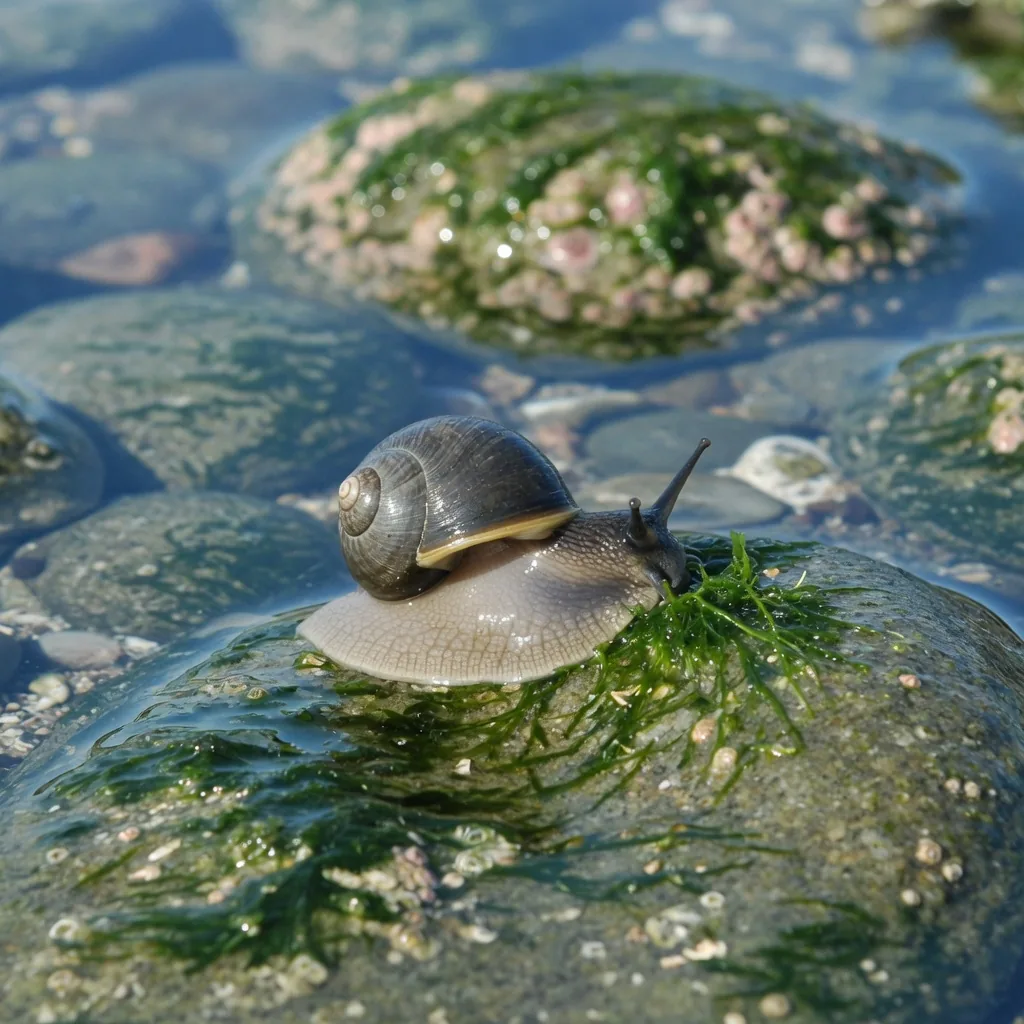
Common periwinkles are herbivores. They feed on many types of algae, mainly fast-growing, short-lived kinds like sea-lettuce, brunslick, and purpurhinnor. They also eat diatoms and small larvae.
They can live for many days without food or water by retaining moisture in their gills. When they do eat, they scrape algae off rocks so intensively that the process can eventually erode the rock itself.
Habitat
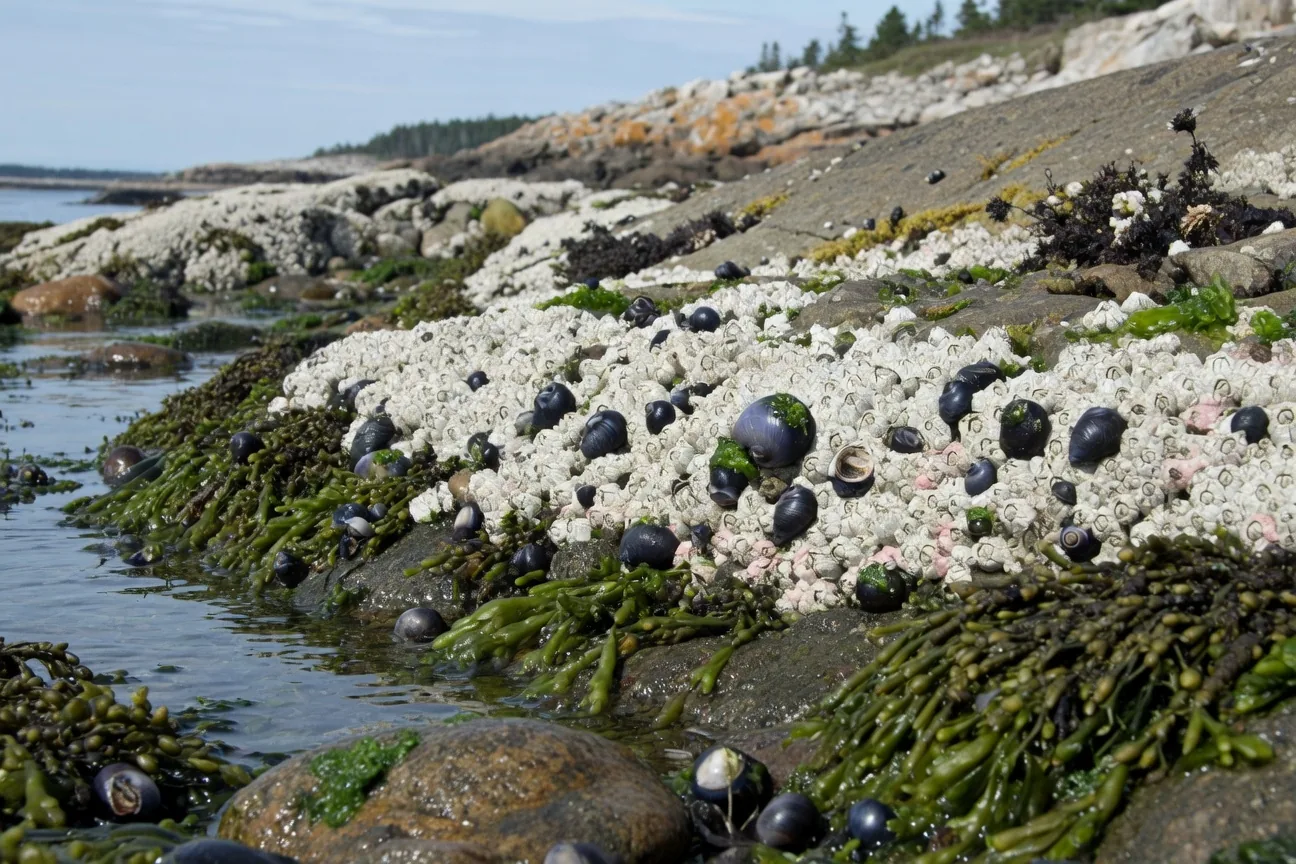
The common periwinkle loves rocky coasts. They live mostly in shallow environments: sand, rocks, and cliffs. They are also common in estuaries, where freshwater mixes with saltwater, because they can handle salinity as low as 10 parts per thousand.
They are even found on soft bottoms, among rocks between high and low tide, underneath docks, and in mud pools.
Their daily routine follows the tide. They travel up the rocks with the rising tide. At night, they move out of tide pools; during the day, they move back in. At low tide, they hide in cracks and crevices. They are remarkable at adapting to tough conditions: heat, wind, low tide exposure, and full submergence at high tide.
In North America, they are found all along the shores of New England and also on the West Coast, from Washington to California. In Canada, they can be found in New Brunswick, Quebec, and Newfoundland and Labrador.
Breeding Habits
The common periwinkle has both sexes, male and female. Reproduction is sexual and can happen at any time of year, though the timing depends on climatic conditions.
Females lay eggs inside floating capsules about 1 mm in size. The timing of egg-laying is synced with the tide. Each capsule holds at least 2-9 eggs. After floating in the ocean, the eggs hatch after a few days and produce larvae. These larvae eventually settle on shore as small, shelled common periwinkles after about six weeks.
Periwinkles as Food
Although the common periwinkle snail is not among the top seafood choices in North America, it is part of British and Irish cuisine. It is even considered a delicacy in Africa and Asia.
Explore More Animals
 Limpet Adaptations: How These Tiny Rock-Clingers Survive the WavesLimpets are soft-bodied molluscs with a hard conical shell, found in the intertidal zone. Discover their remarkable adaptations for surviving waves, drying out,
 What Do Mollusks Eat? A Guide to Gastropods, Bivalves & CephalopodsWhat do mollusks eat? Depending on the species and habitat, they can be plant-eaters, meat-eaters, or omnivores. Explore the diet of cephalopods, bivalves, and
 What Do Snails Eat? Leaves Are Their Best Friends, Perhaps!Although tiny in appearance, a snail does eat a variety of foods when hungry. Discover what land snails, freshwater snails, and sea snails eat, plus a quiz and
 20 Types of Clams You've Probably Never Seen BeforeClams are bivalve mollusks that live in saltwater or freshwater habitats. Discover 20 fascinating types (from the giant Geoduck to the colorful Giant Clam) wi
Test Your Periwinkle Knowledge!
5 quick questions about these amazing little shore snails.

 Fun fact for today!The common periwinkle snail has been an important food in Scotland since at least 7,500 BCE!