

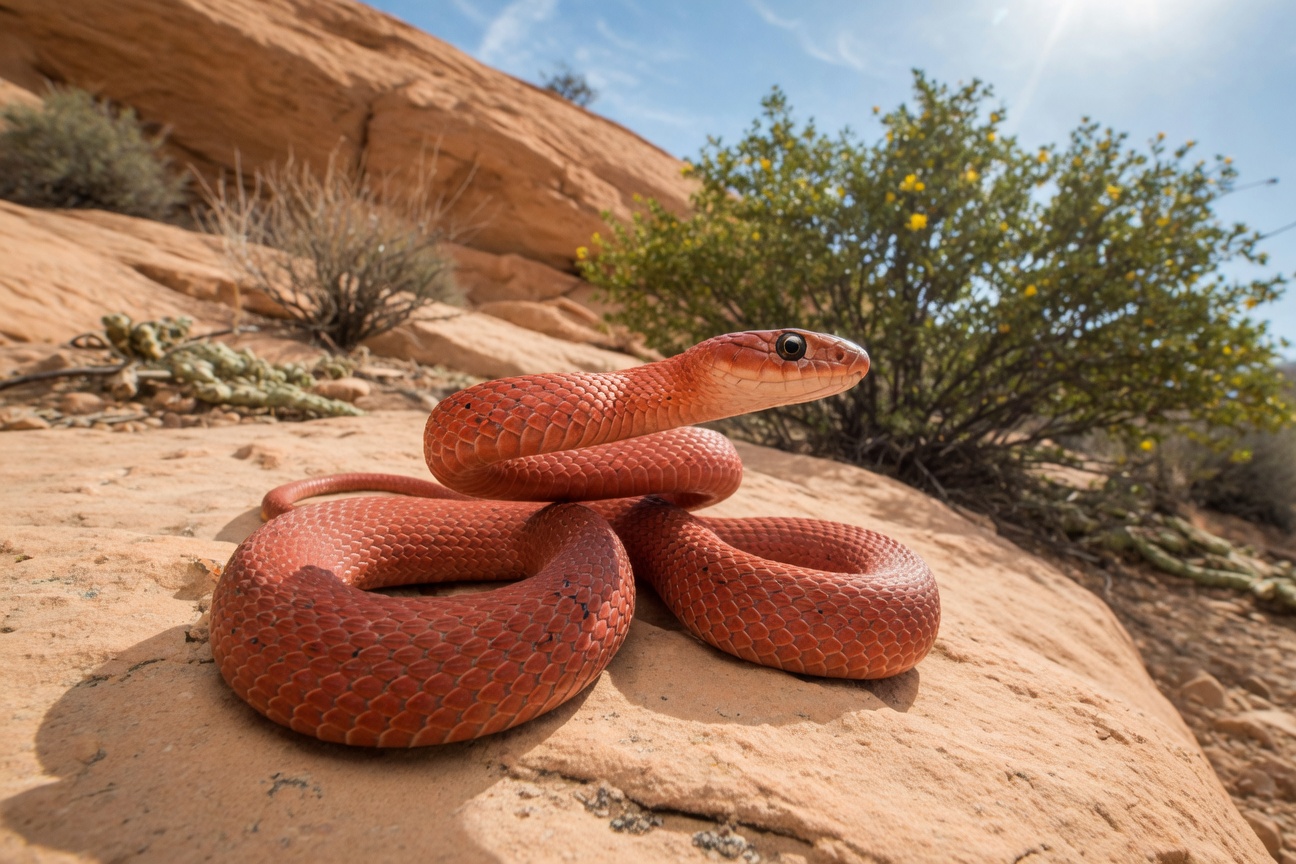
Red racers have prominent round eyes with large pupils. These snakes are easy to spot because they actively hunt during the day. Coachwhip snakes also lift the front third of their body at a ninety-degree angle to the ground, this lets them look out for prey over the surrounding vegetation.
Native to parts of Mexico and the United States, the red racer snake belongs to the Colubridae family. Its scientific name is Masticophis flagellum piceus. There is some disagreement among taxonomists about the genus name. At times, Coluber is used in place of Masticophis, but Coluber is not universally accepted.
The Latin terms 'flagellum' and 'piceus' mean 'whip' and 'pitch black', respectively. The first refers to the whip-like appearance of the snake, while the second refers to the dark-brown or black coloration on the neck. The geographic range includes southern California, Nevada, Arizona, as well as Sonora and Baja California in Mexico.
The snake is commonly called the red coachwhip because of the shades of red on its body. It is one of the subspecies of coachwhip snakes. Other subspecies include the Sonoran coachwhip, Eastern coachwhip, Baja California coachwhip, Line coachwhip, San Joaquin coachwhip, and Western coachwhip. Besides being slender, these snakes are known for their speed.
Classification
- Kingdom: Animalia
- Phylum: Chordata
- Class: Reptilia
- Order: Squamata
- Suborder: Serpentes
- Family: Colubridae
- Subfamily: Colubrinae
- Genus: Masticophis/Coluber
- Species: Flagellum piceus
- Scientific Name: Masticophis flagellum piceus
- Common Name: Red coachwhip, Red racer
Physical Characteristics
Red racer snakes can be red, rusty red, orange-tan, or olive-brown in color. The front section of the body has dark brown or black cross bands.

Their large eyes give them sharp vision. The name 'coachwhip' comes from the braided, whip-like appearance of its tail.
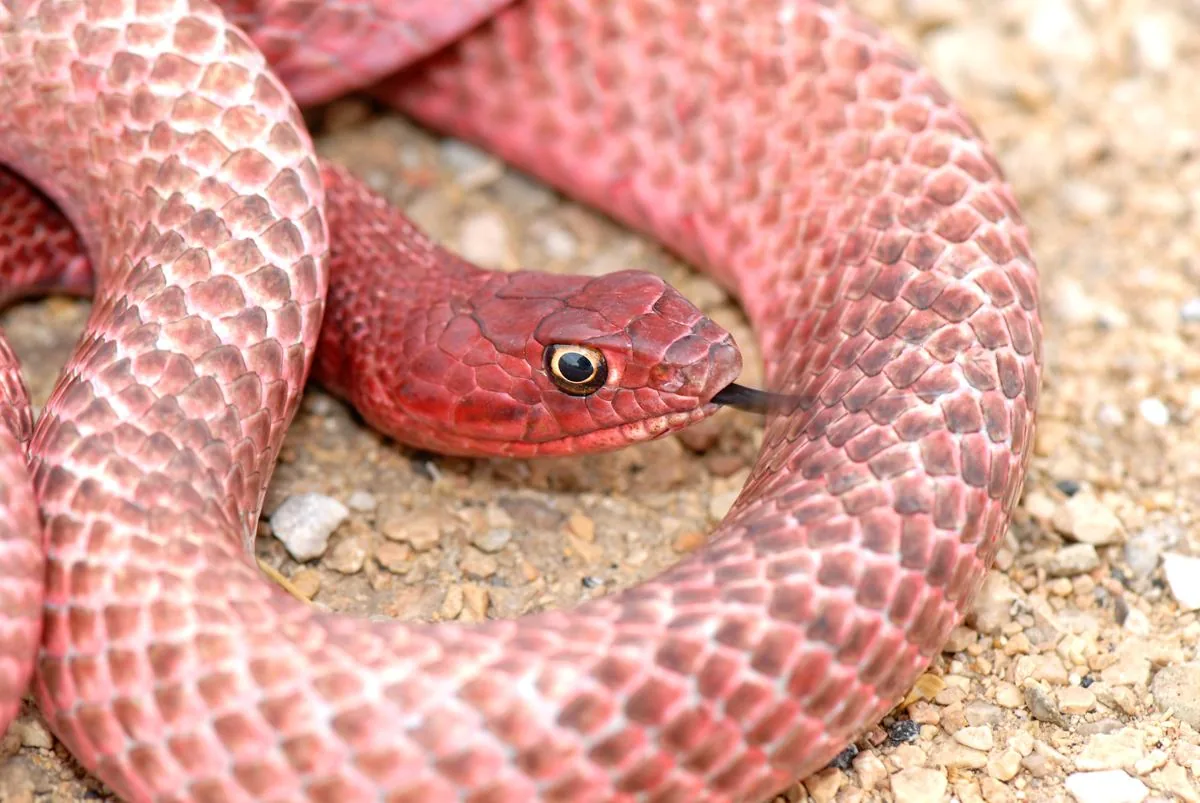
These snakes are slender. An adult red racer can grow up to 100 inches in length and weigh up to 4 pounds.
They are alert and aggressive hunters. They can move at the speed of 4-7 miles per hour. Because they are ectothermic (cold-blooded), they have no internal way to adjust to changes in temperature. So they move faster when it is warm outside, and may come out to bask in the sun to heat up.
Habitat
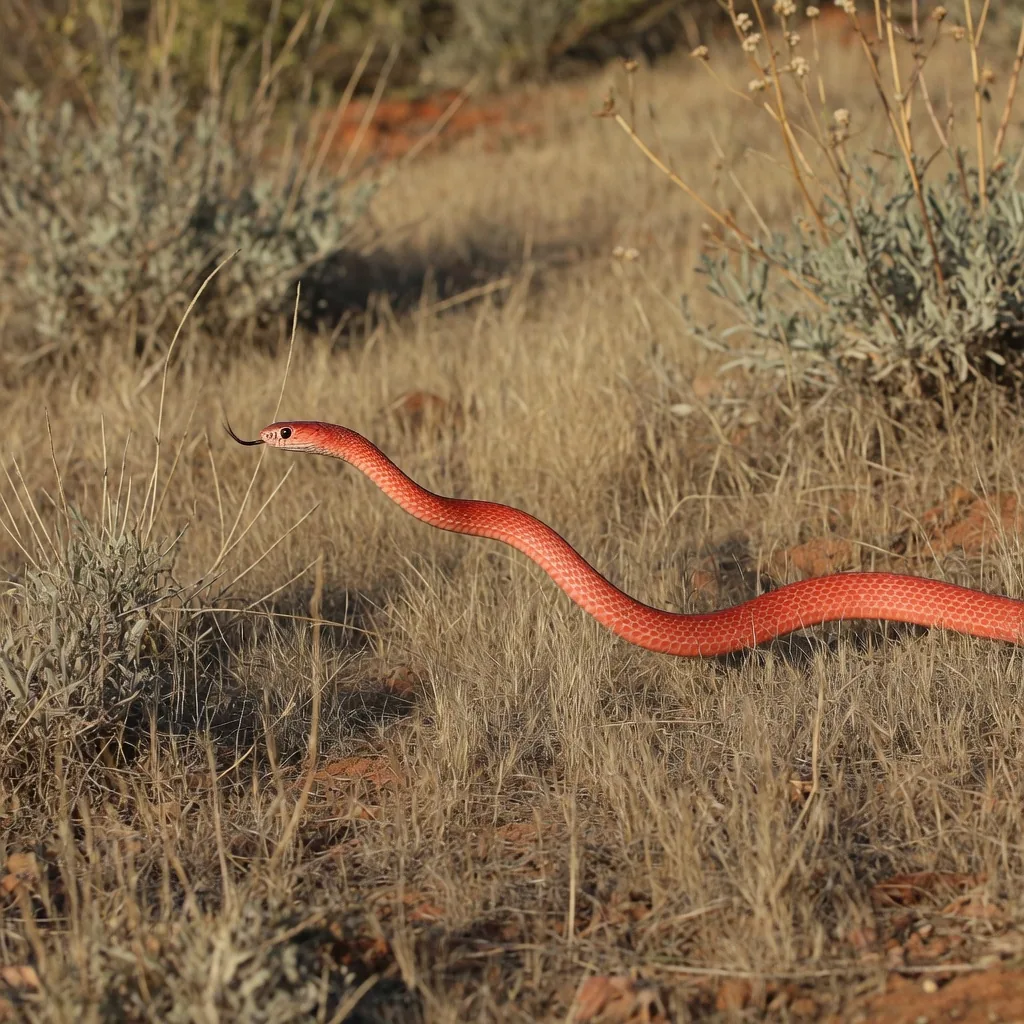
Red racers can be found in many habitat types, including grasslands, deserts, coastal scrub, chaparral, and creosote scrub. They are most common in deserts and coastal southern California. They prefer open areas and avoid places with dense vegetation.
You can spot them crawling around during the day. At night, they hide in crawlspaces, vegetation, gaps beneath rocks, or rodent burrows.
Diet
Red coachwhips eat bird eggs, birds, lizards, snakes, amphibians, small rodents, and small mammals. They prefer live prey, but may also eat carrion (dead animals). Baby red racer snakes (also called hatchlings) feed on insects, spiders, or scorpions.
These snakes are mostly seen on the ground, but they can climb trees or shrubs to catch prey or escape predators. After catching its prey, the snake uses its jaw to crush it or pins it under its coils. It is important to know that this snake is not a constrictor, it does not squeeze its prey to death.
Take the Red Racer Snake Quiz!
5 quick questions. How much do you really know about the red coachwhip?
Breeding
Unlike some reptiles where eggs hatch inside the mother's body (called ovoviviparous), the red racer snake is oviparous, meaning it lays eggs. The eggs are laid in early summer. The clutch size ranges from 4 to 20 eggs, and they hatch within 45 to 70 days.
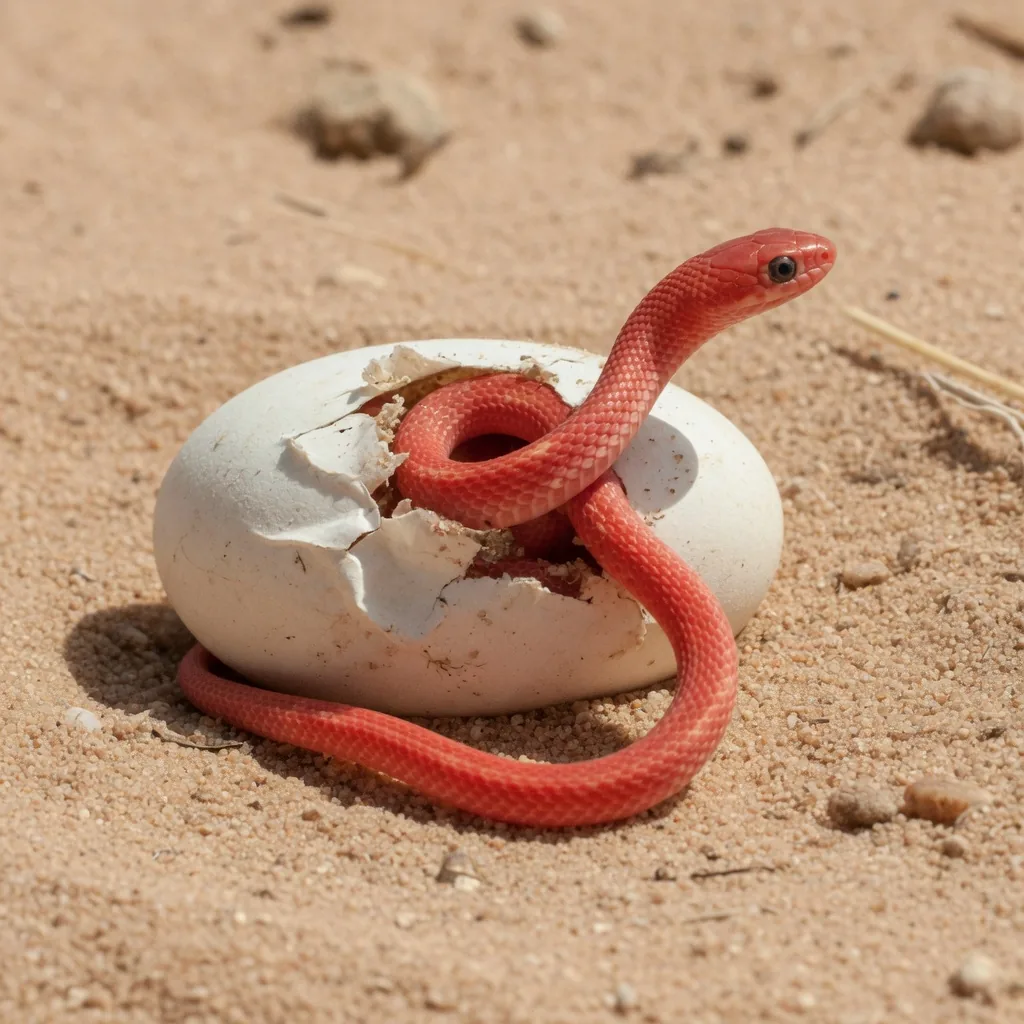
A hatchling (baby red racer snake) is around 13 inches (33 cm) long. Its weight may range from 6.3 to 23.8 ounces. The characteristic black stripes or marks are not present on a newborn.
Frequently Asked Questions
Is the red racer snake venomous?
No. The red coachwhip is non-venomous, but it can become aggressive when threatened and its bite can be painful and draw blood.
How fast can a red racer snake move?
Red racer snakes can move at 4-7 miles per hour. They move faster in warm weather because they are cold-blooded.
What does a red racer snake eat?
Adult red racer snakes eat bird eggs, birds, lizards, other snakes, amphibians, small rodents, and small mammals. Hatchlings eat insects, spiders, or scorpions.
How big do red racer snakes get?
An adult red racer snake can grow up to 100 inches in length and weigh up to 4 pounds.
Behavior and Defense
The red coachwhip is non-venomous, but it can become quite aggressive when threatened. It may sometimes seem aggressive just because it moves at such a fast speed. Red racers can attack and bite, drawing blood. Their bite can be painful, and problems can arise if the bite gets infected. So take precautions if you spot one in the wild.
Curious about how snakes compare to each other? Check out our guide to the blue racer snake, a close relative with some fascinating differences.
Explore More Animals
 Interesting Facts About Blue Racer SnakesThe blue racer snake is found in many parts of the United States, and a limited area of Canada. AnimalSake features some must-know blue racer snake facts.
 Insanely Killer Facts about the Red Spitting CobraA brilliant display of colors is a characteristic feature of the red spitting cobra. However, be warned! When threatened, it spits venom which is aimed at the a
 45 Snake Species That are Found in LouisianaLouisiana is home to 45 snake species, 7 venomous and 38 non-venomous. Discover each one with descriptions, photos, and a Louisiana Snakes quiz.
 Facts about Copperhead SnakesCopperhead snakes are venomous pit vipers found across the eastern US. Learn how to identify them, where they live, what they eat, and what makes their venom so

 Fun fact for today!Red racer snakes lift the front third of their body at a ninety-degree angle to the ground, so they can scan for prey from a higher vantage point!