

Winter Forecaster!
There is a myth in the Eastern region of the United States and Canada. It says that the amount of black or brown on a woolly bear caterpillar's skin tells you how bad the coming winter will be. If the brown or black patch is thick, winter will be mild. If the patch is narrow, winter will be very severe.
If you found a black and brown fuzzy caterpillar in your backyard or on the road, chances are you saw a woolly bear caterpillar. Woolly bear caterpillars are mostly found in cold regions, including the Arctic. Pyrrharctia isabella is the scientific name, and this species belongs to the Arctiidae family of moths. There are around 250 species that inhabit North America. This family is part of the order Lepidoptera. It is a brown and black banded caterpillar that spends the winter in hibernation.
Woolly bear caterpillars are the larval form of the Isabella Tiger Moth. They normally don't live inside houses, but they might occasionally wander into your garage. They are a little unusual compared to other caterpillars because of their fuzzy larval form and because they can produce sounds, which helps attract mates and repel predators.
Woolly bear caterpillars are not poisonous at all, and they don't inject any venom. They do not cause disease or irritation. Still, handling them is not advised, because their hairy bristles may cause itching and dermatitis in people who have sensitive skin.
Appearance
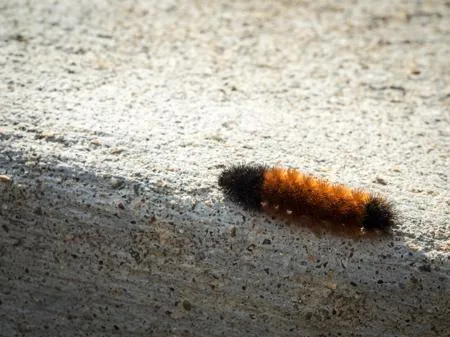
Woolly bear caterpillars are covered with warm and fuzzy bristles. The larva has black patches at both ends. It sometimes has a reddish-brown patch in the middle, but that's not always the case.
The caterpillar is entirely covered with bristles, but it does not feel like wool, it has a spiky feel to it. The red or brown band in the center is the main feature that sets it apart from other caterpillars. The width of the band can vary. Woolly bear caterpillars grow to an average of 2 inches long.
Habitat
Woolly bear caterpillars are familiar in many parts of the United States, except Alaska and Hawaii, and in the southern region of Canada. They mostly live in open, dry, and somewhat moist areas. Fallow croplands, weedy fields, and roadsides are their favorite places to live. You can also find them in woods that have herbs along roads or sidewalks.
Eating Habits
Woolly bear caterpillars feed on weeds, grass, and herbs. They eat a wide variety of herbaceous plants and small trees. They are not considered garden pests because they rarely thrive on crops or garden plants.
Clover is said to be their favorite meal. But at the very start of their life, they devour the plant they are born on, that's the plant where the female moth deposited her eggs. They also like to eat plants such as maple, aster, sunflower, or birch. They eat dandelions, nettles, and herbs as well.
Take the Woolly Bear Caterpillar Quiz!
5 quick questions. How much do you really know about this fuzzy autumn wanderer?
Life Cycle
Woolly bear caterpillars start their lives as eggs deposited by tiger moths during the summer months. Once the eggs hatch, they begin eating. They are not picky eaters and will eat whatever they can find.
Unlike most other caterpillar species, woolly bear caterpillars don't pupate during winter. Instead, they stay in caterpillar form and produce an antifreeze chemical known as cryoprotectant. This helps them keep their normal body temperature and prevents their body from freezing. As winter approaches, they come out in large numbers to search for a safe, warm place to spend the winter. This is when they enter hibernation mode.
When spring arrives and the sun shines again, they start eating until they are ready to pupate. When that time comes, they surround themselves with a cocoon. They stay in this state while they form their adult body parts and transform from caterpillars into Tiger moths.
Once they are ready, they quickly search for a mate to lay eggs. Tiger moths usually have two generations each year, but some are recorded to survive 14 winter cycles. Adults usually stay in the cocoon for about a month. The eggs take at least two weeks to hatch, it all depends on the climate.
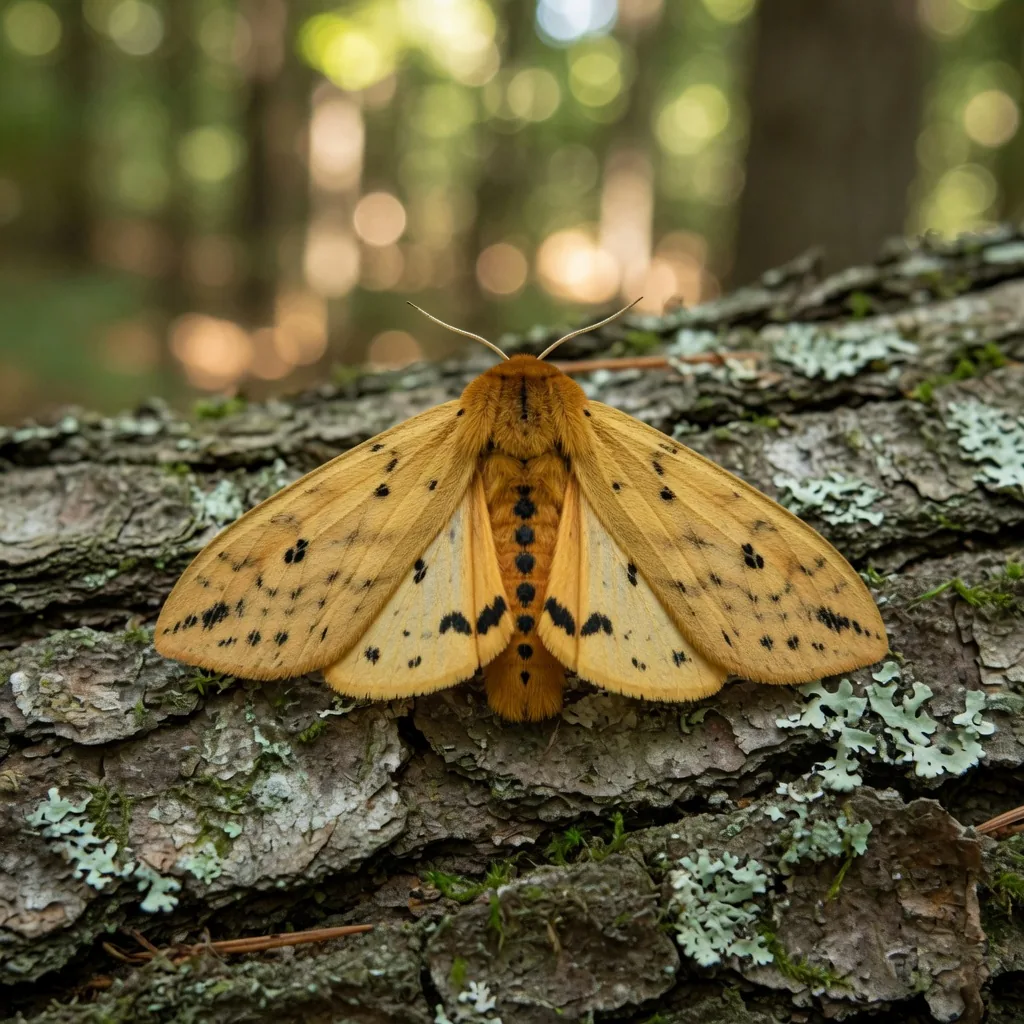
They develop into beautiful Isabella Tiger Moths, and each one has a unique look. Their wing size is almost 2 inches. Some have yellow wings with tiny black dots over them. Some are white with colored bodies, while others have patterned wings with stripes or dots. These moths continue to eat by sucking the nectar from plants instead of chewing them.
Frequently Asked Questions
Are woolly bear caterpillars poisonous?
No, woolly bear caterpillars are not poisonous and do not inject venom. Their bristles may cause mild itching or dermatitis in people with sensitive skin.
What does a woolly bear caterpillar turn into?
A woolly bear caterpillar becomes an Isabella Tiger Moth (Pyrrharctia isabella) with wings of about 2 inches.
How do woolly bear caterpillars survive winter?
They produce a cryoprotectant antifreeze chemical and hibernate in caterpillar form, rather than pupating like most other species.
Can woolly bear caterpillars predict winter?
There is a folk myth in the Eastern United States and Canada that the width of their brown band predicts winter severity, but this is not scientifically supported.
Defense Mechanism
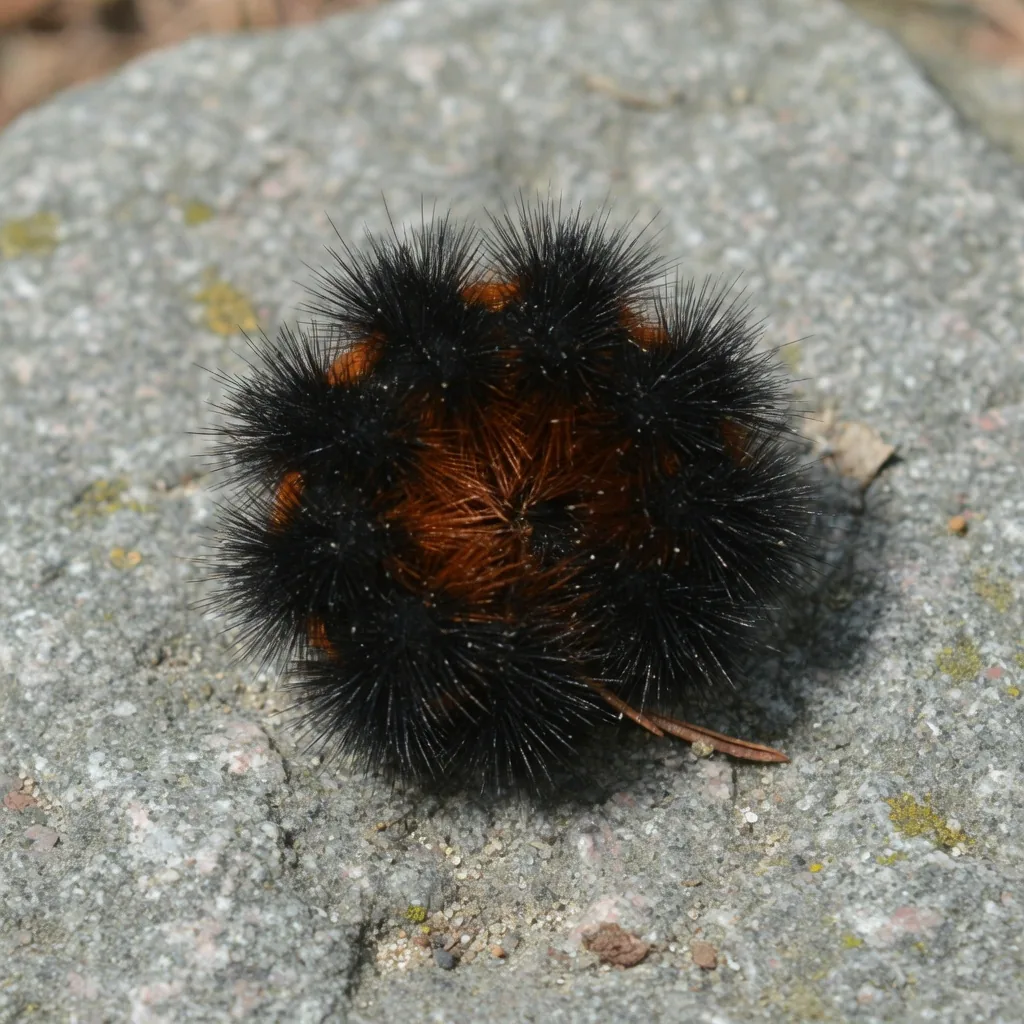
The fuzzy, spiked outer cover makes woolly bears less vulnerable to predators. The layers of spikes act like a barrier between the caterpillar and anything that wants to eat it. Animals such as skunks roll them until the hair is gone before consuming them. Others gulp them down directly to avoid the feeling of the hair.
The defense mechanism stops working once they turn into a moth, because they lose their hair. If you pick them up or disturb them, they will coil up and play dead until you leave them alone.
Woolly bear caterpillars are known to consume several plant families during their lifetime. The population of these caterpillars also varies. Many of them are seen crossing roads, but many are hit by vehicles, so they can be plentiful one year and almost absent the next.
Explore More Animals
 A Visual Guide to Caterpillar IdentificationIdentify caterpillars by family, loopers, hornworms, woolly bears, swallowtails and more. A visual field guide to common moth and butterfly larvae and their te
 Types of Moths: A Guide to the 9 Major FamiliesMoths make up 90% of Lepidoptera, and most species are still unnamed. Meet the 9 major moth families, from silk-spinning Bombycidae to the hovering hawk-moths
 An Awesome Explanation of the Life Cycle of a CaterpillarThe caterpillar life cycle is explained in short in this article, along with some interesting facts about caterpillars.
 Animals That Hibernate: The Complete Kids' Guide to Winter SleepThe complete guide to animals that hibernate, bears, bats, frogs, snakes, bees and more. Learn how winter sleep works inside the body, and how hibernation diff

 Fun fact for today!Woolly bear caterpillars are not poisonous, but their bristles can cause itching in people with sensitive skin!