

It was thought to be endangered until a few years ago, but reviews in the U.S. Northern Rocky Mountains found that fishers do not warrant protection under the Endangered Species Act in Idaho, Montana, or Wyoming.
Physical Characteristics
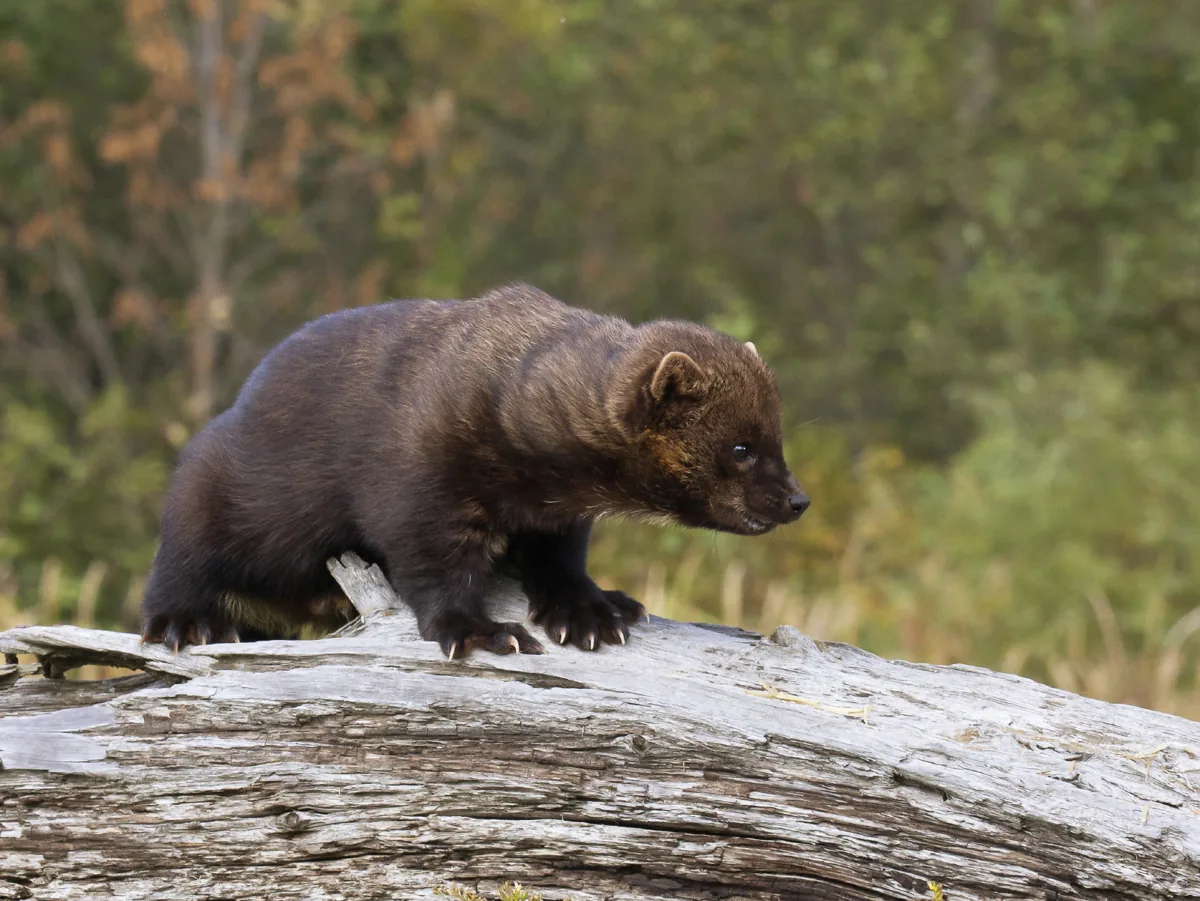
Fishers have a long body, and it always looks stockier than most other mustelids because of its long fur. The fur is the color of dark chocolate and is coveted by hunters. A fisher has a broad head, a pointed snout, and small ears. The tail is quite bushy, and the paws are tipped with long talons. Male fishers are larger than females.
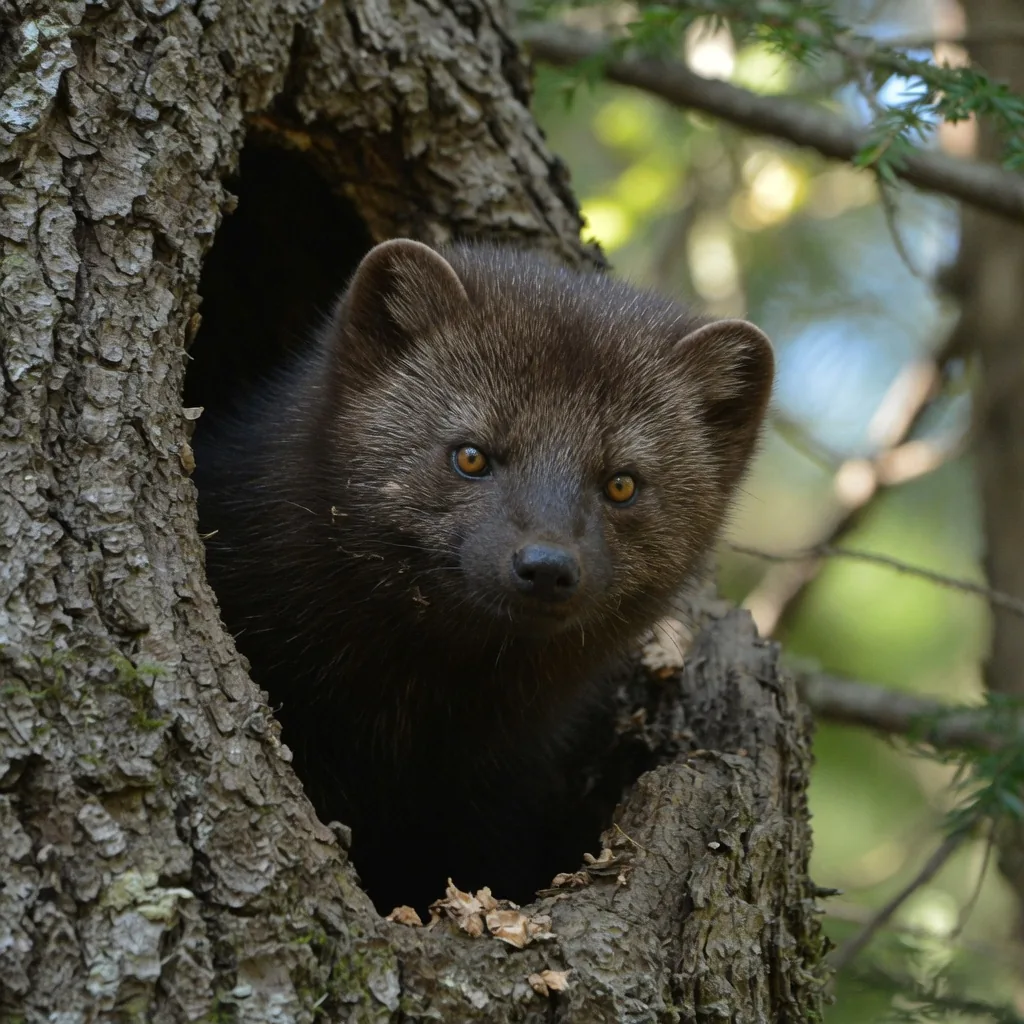
They are about 3 feet long, with a tail that extends to about 15 inches. Males weigh around 12 lbs, and females weigh around 8 lbs.
Food Habits
Fishers are skilled hunters, they are among the few animals that can kill porcupines. They attack the porcupine's face and bite it, which is how they get past those piercing quills. Fishers are not fussy about food and will eat anything they catch: small rodents, rabbits, hares, and birds. They also eat carrion. When prey is scarce, they will eat berries, nuts, and insects.
Take the Fisher Facts Quiz!
5 quick questions. How much do you know about this elusive forest hunter?
Behavior
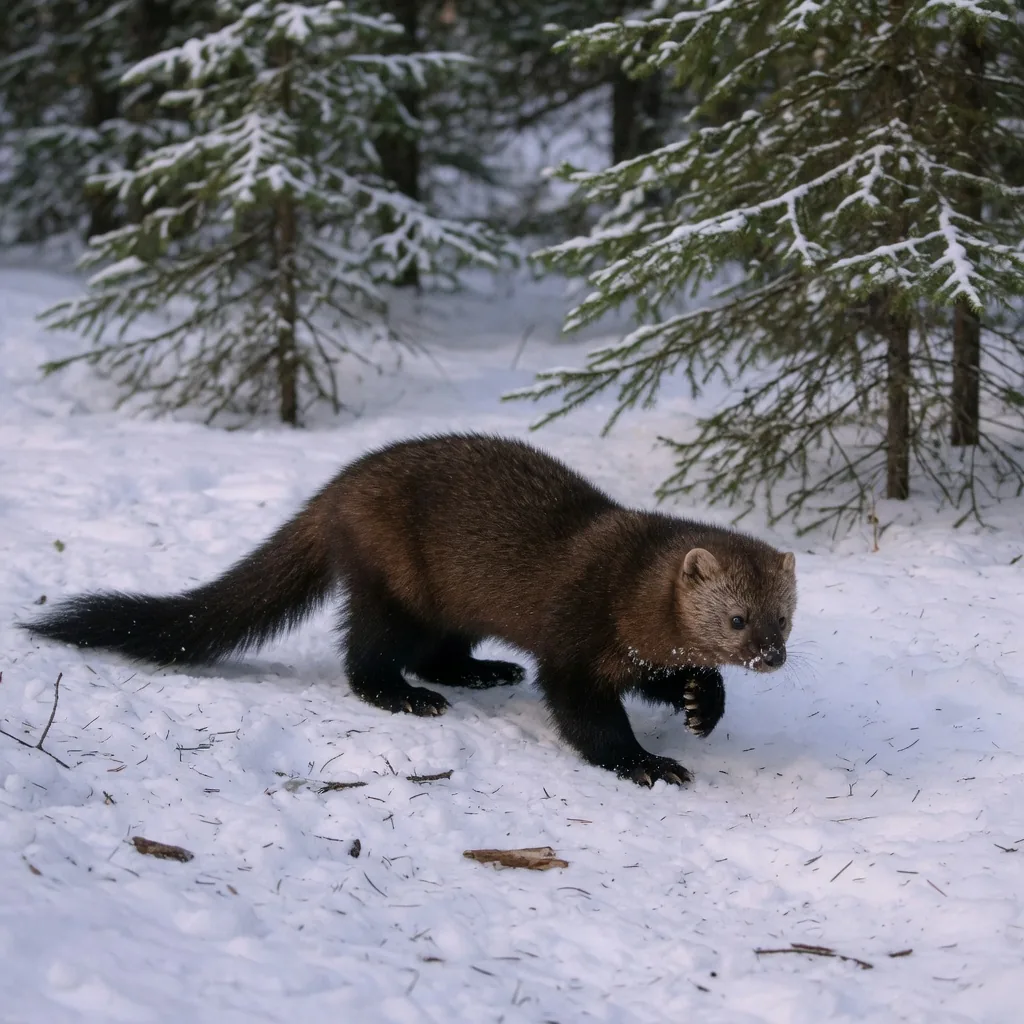
Fishers are quite agile, expert climbers, but mainly terrestrial. They prefer large areas of dense, mature coniferous or mixed forest and are known to be solitary hunters. They are mostly nocturnal, though they can be active during the day. Fishers trek several miles in search of prey and find shelter in hollow trees, logs, rock crevices, and abandoned dens.
Fishers avoid areas with dense human settlements and little forest cover. They mark their territory with scents, following well-used trails around their home range.
Life Cycle
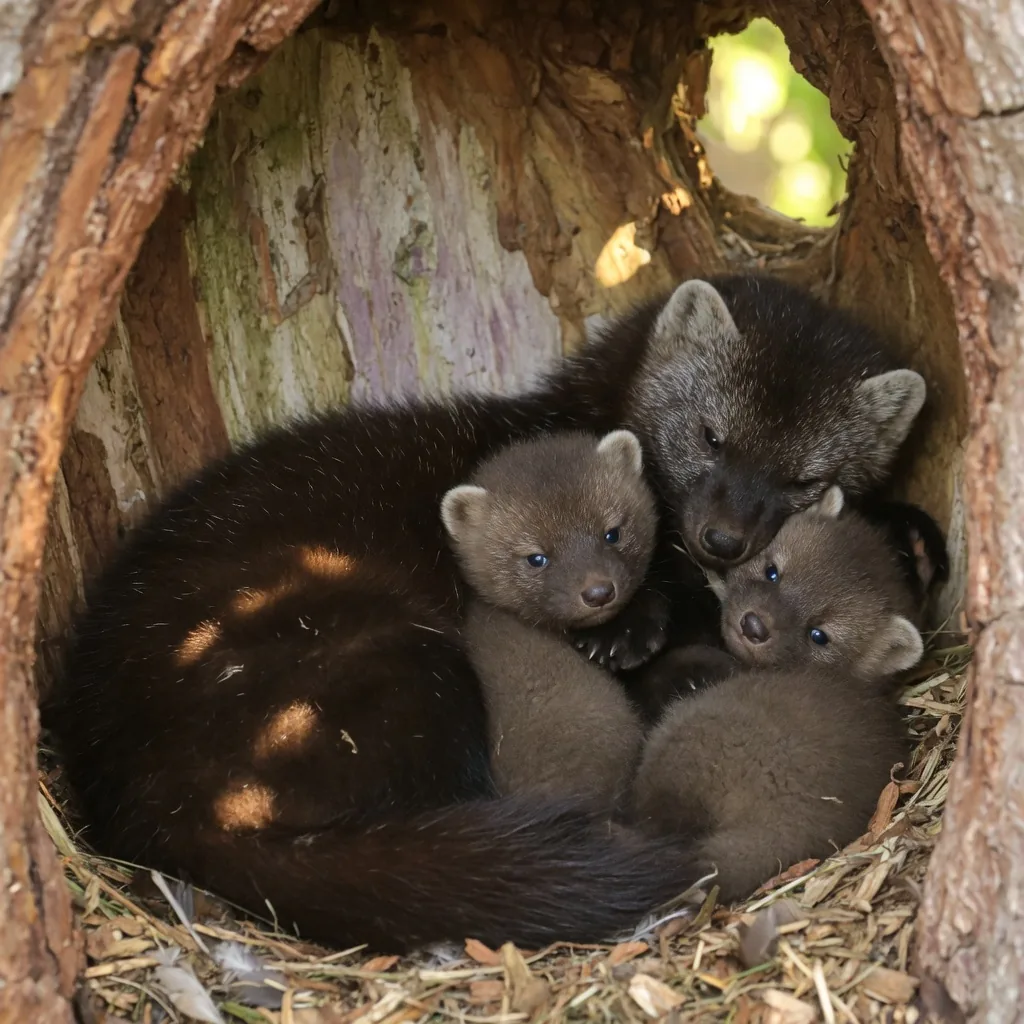
Fishers mate in the early spring months of March and April. The gestation period is between ten to eleven months. A female can have anywhere between one to six kits, the chosen place of birthing is usually a nest built in the hollow of a tree. Fisher kits are blind at birth, and the mother takes care of them until they are five months old. She then encourages them to live on their own, after which they take around a year to establish their own territory.
Frequently Asked Questions
Is a fisher cat actually a cat?
No, the fisher is a mustelid (weasel family), not a feline.
Does a fisher eat fish?
Not usually. Fishers mainly eat rodents, rabbits, birds, and carrion. The name does not reflect their diet.
Can fishers kill porcupines?
Yes, the fisher is one of the very few predators that can kill a porcupine, attacking its face to avoid the quills.
How long is a fisher?
About 3 feet long, with a tail that extends to around 15 inches.
Are fishers endangered?
Fishers are no longer considered endangered in the U.S. Northern Rocky Mountains, but they continue to face threats from pelt trapping and habitat loss.
Interesting Facts
Fishers have been a popular target of trappers because their lustrous fur fetches a decent sum in the market. Their population shrank a great deal (especially in the northern United States) but protective measures have ensured that fishers are no longer considered endangered here.
However, fishers continue to be under threat from over-harvesting of pelts and from the loss of forest habitat due to logging and road building. The growing frequency of forest fires throughout the fisher's range also destroys the older, cavity-bearing trees they need for denning.
Fishers are not ideal animals to keep in captivity. You won't find them in most zoos: being nocturnal, solitary, and shy, they tend to hide from humans and don't make good exhibits. Although they avoid human contact, there have been rare cases of fishers raiding chicken coops and preying on small pets.
Explore More Animals
 Weasel FactsWeasels are the smallest carnivores on Earth, fast, fearless hunters found across North America, Europe, Asia, and Africa. Discover 17 species, their habits, d
 Wolverine Animal FactsResembling a small bear, the wolverine is actually the largest species of the weasel family. Discover 10 fascinating facts about this feisty, tough-as-nails cre
 Brilliant and Interesting Facts About BobcatsDid you know there are 12 subspecies of the bobcat, and over a million in the wild? Discover fascinating bobcat facts about habitat, diet, hunting, territory, a
 Facts About the Raccoon DogRaccoon dogs have a distinct and rare genealogy, which makes them unique from all other canines. Discover their surprising habits, biology, and why they're the

 Fun fact for today!The fisher is one of the very few animals that can kill a porcupine, by attacking its face!