

The giant clam, Tridacna gigas, is one of the many clam species living in the coral reefs of the South Pacific and Indian Oceans. As the name suggests, these are truly enormous clams, they are the largest living species of bivalve molluscs on Earth. Because they live in the sea, giant clams belong to the family Cardioidea, the same group as all other saltwater clams. These creatures were first documented by an Italian explorer as early as 1521. Since then, scientists have studied them in great detail.
The largest known giant clam, found in 1817 off the north-western coast of Sumatra, was 4.49 ft. long, and its shells weighed 510 lbs. In 1956, another giant clam about 3.77 ft. long was found in Japan, with its shells weighing about 730 lbs. These figures show just how big and heavy these mollusks can actually be.
Description and Anatomy
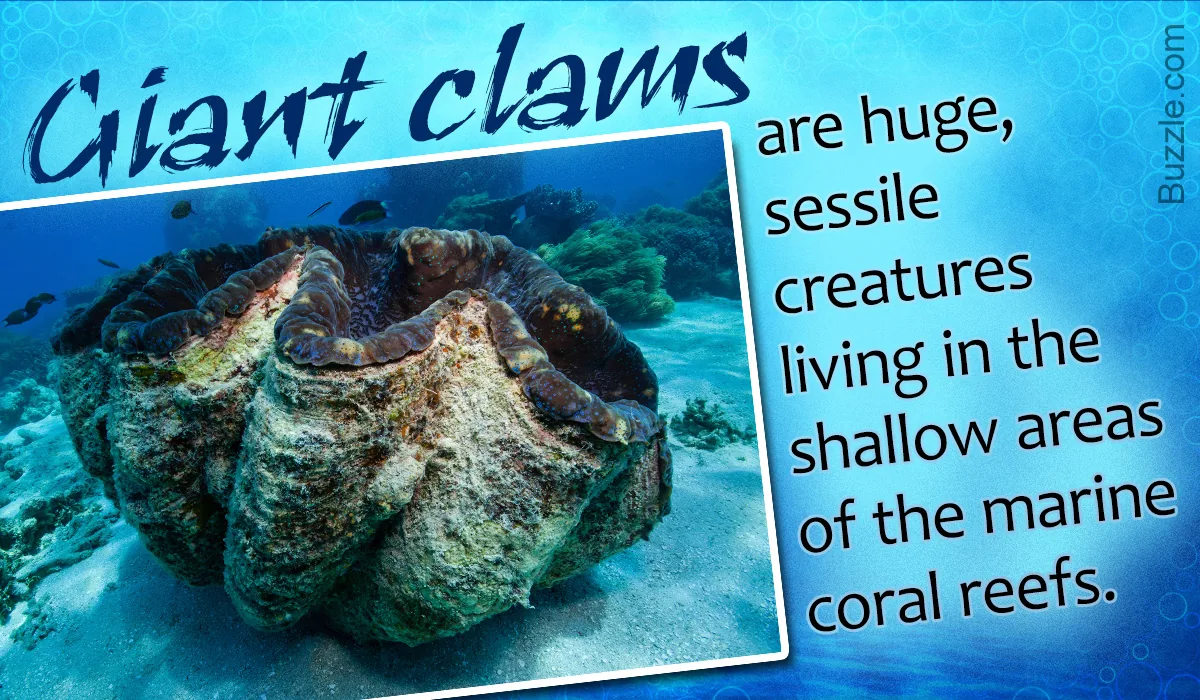
Giant clams are huge, sessile creatures that live in the shallow areas of marine coral reefs. Sessility means an animal cannot move around. Once a giant clam chooses a spot as its "home," it fastens itself there and cannot go anywhere else for the rest of its life.
Adult giant clams cannot close their shells completely. This makes them the only species of clam unable to do so. Through the gaps in their partly closed shells, you can see their retracted mantle. The shell of a giant clam bears four or five vertical folds.
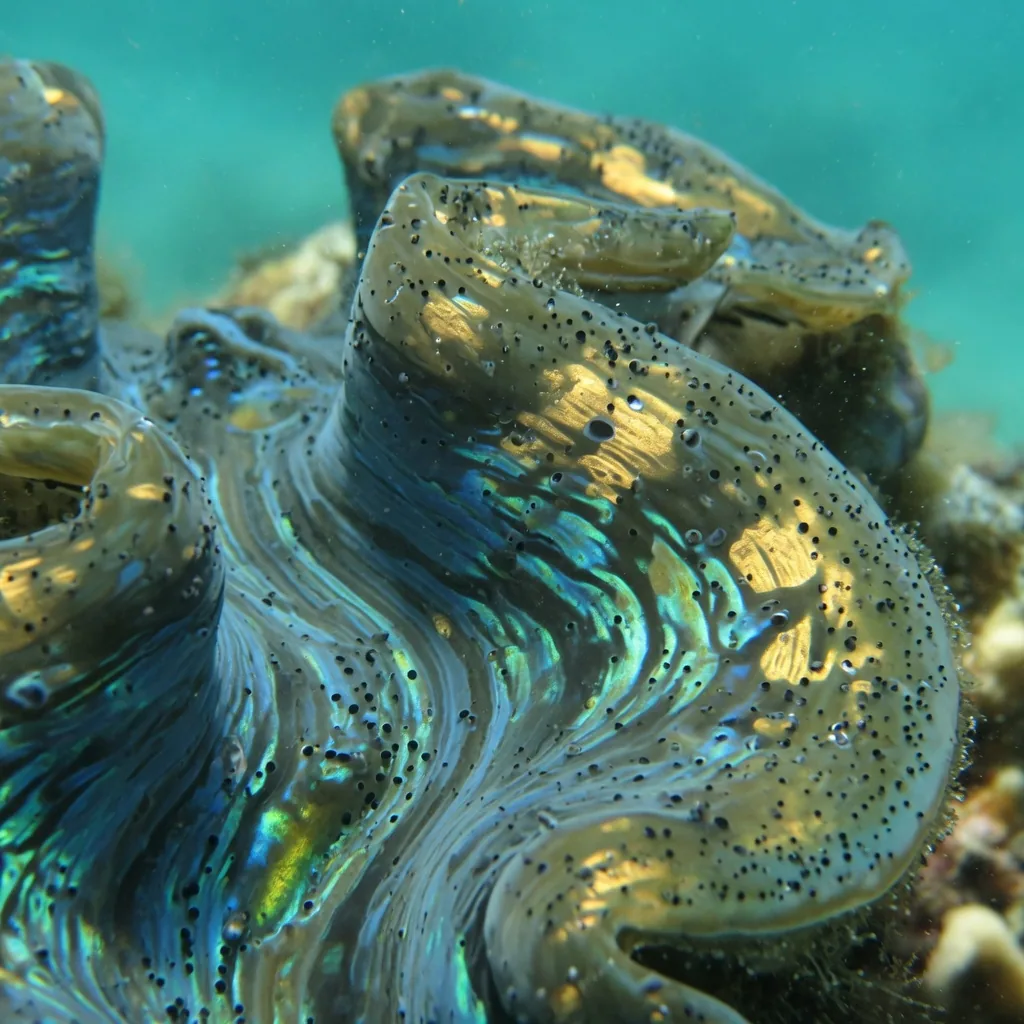
With the help of zooxanthellae (unicellular algae that grow within their shell valves) giant clam shells can produce large amounts of calcium carbonate. Giant clams look spectacular not just because of their size, but also because of the bright colors of their mantles. The zooxanthellae are responsible for producing these vivid, attractive color patterns, which are unique to each individual clam.
Habitat
Giant clams are marine animals found in shallow coral reefs. They prefer a warm ocean environment. In the Philippines, giant clams are known as the taklobo and are a major local delicacy. They are also found in the coral reefs of Malaysian Borneo in the South China Sea. Tridacna gigas is generally found fastened to flat coral sand, at a depth of around 66 feet. The average lifespan of a giant clam in its natural habitat is more than 100 years.
Feeding, Prey, and Predators
Giant clams are omnivorous, they feed on both plant and animal material. The algae growing within their mantle tissue are their main food source. Giant clams absorb the sugars and proteins that these algae produce through photosynthesis. This rich nutrition is what allows them to grow to such enormous sizes.
Like many other marine organisms, giant clams also filter feed. Through filter feeding, they collect small food particles floating in the water, along with tiny animals in their surroundings.
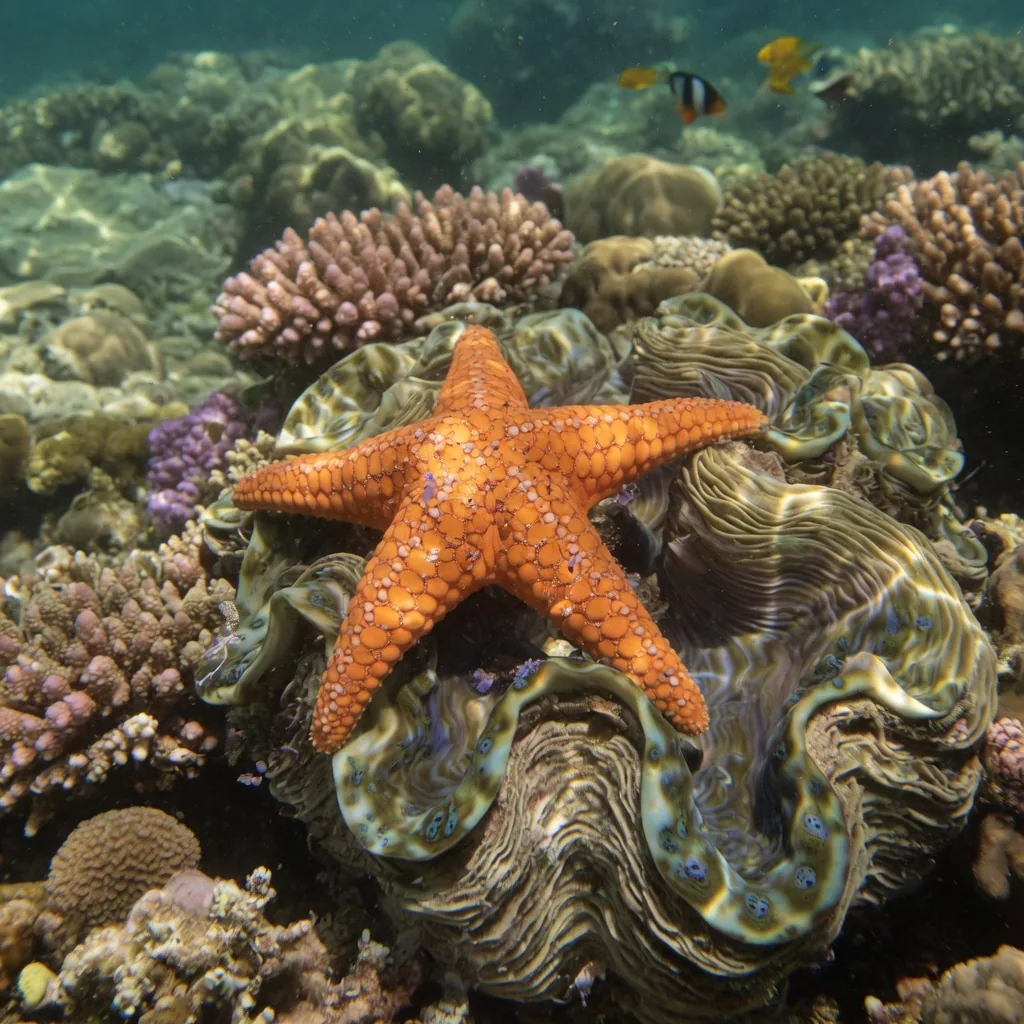
Despite their immense size, giant clams are preyed upon by several predators, and those predators are often much smaller than the clam itself. Main predators include snails, eels, and starfish.
Take the Giant Clam Quiz!
5 quick questions. How much do you know about the world's largest bivalve?
Reproduction
By nature, giant clams are hermaphrodites, they possess the reproductive organs of both sexes. Despite this, they cannot reproduce on their own. Instead, they release sperm and eggs into the water. When the eggs meet sperm from another giant clam, they get fertilized. The fertilized eggs float in the water for around 12 hours before they hatch.
A single giant clam can release over 500 million eggs at one time. The larvae that hatch from these eggs are planktonic, unlike the sessile adult, they float in the water but cannot swim against the current. Within a few days, the larvae start producing shells around themselves. They grow quickly and soon fasten themselves to the floor of the reef.
Frequently Asked Questions
What is the scientific name of the giant clam?
Tridacna gigas
How long can a giant clam live?
More than 100 years in its natural habitat
What do giant clams eat?
Their main food comes from zooxanthellae algae living inside their mantle tissue. They also filter feed on tiny food particles in the water.
Are giant clams endangered?
The giant clam is classified as Vulnerable on the IUCN Red List, not yet endangered, but at risk due to overexploitation.
Can a giant clam trap a diver?
This is a myth. Adult giant clams cannot even close their shells completely, so they pose no threat to divers.
Relationship with Humans
In Japan, France, South East Asia, and many Pacific islands, the giant clam is considered a culinary delicacy. The adductor muscle is regarded as the tastiest part of the clam and is a rather expensive food item. In China, the adductor muscle is believed to act as an aphrodisiac, so it commands a high price. The shells of the giant clam also have a large market as decorative objects, and they are sometimes sold illegally on the black market.
Because of the clam's sessile nature, it can be easily exploited by humans. As a result, populations have been declining at an alarming rate. According to the IUCN Red List of Threatened Species, the giant clam falls in the list of vulnerable animals. This means that, though the giant clam is not endangered today, it is likely to become one in the near future. Overexploitation by humans is a major reason. However, efforts are being made to conserve the species by breeding giant clams artificially.
Explore More Animals
 20 Types of Clams You've Probably Never Seen BeforeClams are bivalve mollusks that live in saltwater or freshwater habitats. Discover 20 fascinating types (from the giant Geoduck to the colorful Giant Clam) wi
 Truly Incredible Facts about CuttlefishThe cuttlefish is not a fish. In fact, it is a mollusk, and is well-known for its chameleon-like behavior. Discover the anatomy, camouflage, ink, diet, mating,
 What Do Mollusks Eat? A Guide to Gastropods, Bivalves & CephalopodsWhat do mollusks eat? Depending on the species and habitat, they can be plant-eaters, meat-eaters, or omnivores. Explore the diet of cephalopods, bivalves, and
 Squid vs. Octopus: What's the Difference?Squid or octopus? Both are clever cephalopods with three hearts and blue blood, but their bodies, homes, and habits are different. Here's a clear side-by-side

 Fun fact for today!Giant clam shells contain high amounts of zinc, researchers have found this aids in the production of testosterone!