

Classification
Hercules beetles belong to the scarab beetle family (Scarabaeidae), which also includes Japanese Beetles, June Beetles, and Dung Beetles. They are found in the tropical rainforests of Central and South America, and belong to a subclass of Rhinoceros beetles. There are about 13 known species in the Dynastes genus. These beetles are known for enormous strength, which is exactly why they are named after the mythical hero Hercules.
Their full scientific classification is: Kingdom Animalia, Phylum Arthropoda, Class Insecta, Order Coleoptera, Family Scarabaeidae, Subfamily Dynastinae, Genus Dynastes, Species D. hercules.
Physical Characteristics
Hercules beetles are typically green, gray, or tan-colored with black or brown spots. They have horny front wings called elytra, which cover and protect the functional hind wings underneath. Despite their large size and relatively more weight, these beetles can fly.
One of their most remarkable traits is color change. The exoskeleton of the Hercules beetle can change its color from green to black with increasing humidity. This moisture-sensing ability is rare among insects.
Adult males have two large horns (pincers) that protrude from their thorax and head. The size of the pincers depends on how much nutrition the grub received while it was growing. Sometimes they can grow longer than the male's body itself.
The beetle can be easily identified thanks to its impressive size. Adult males can measure 5.9 to 6.7 inches (150 to 170 millimeters) in length. Females, though actually longer than the males in body size, appear shorter because they lack horns.
Life Cycle
The lifespan of a Hercules beetle is about 18-20 months. It undergoes complete metamorphosis with four distinct stages.
Egg stage: This is the first stage of the life cycle, lasting about a month. After this stage, the egg hatches into a larva.
Larval stage: This stage lasts from 6 months to a year. The larva goes underground and survives on decaying wood. After this stage is complete, the larva transforms into a pupa.
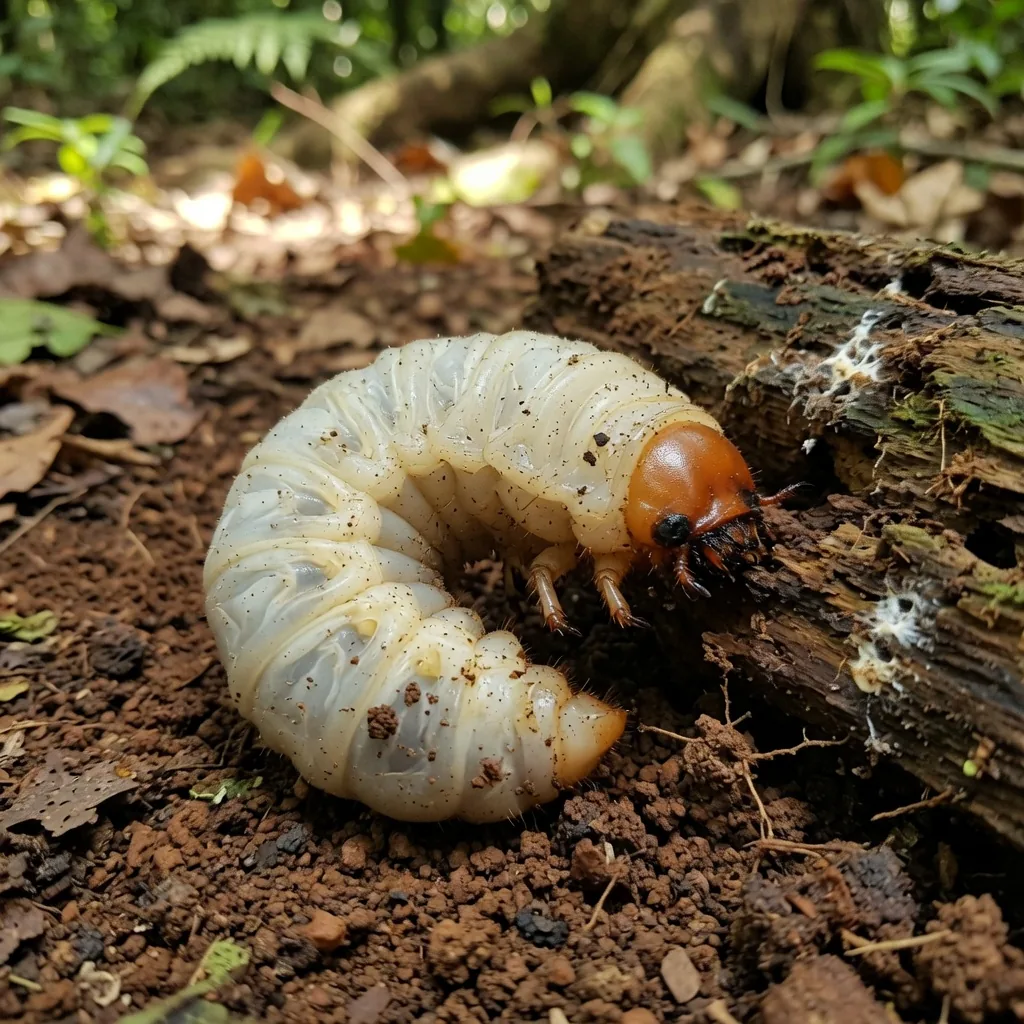
Pupal stage: This stage lasts for 2-3 weeks. A shell-like exoskeleton forms over the body, and inside it the pupa transforms into a fully grown adult beetle.
Adult stage: This final stage lasts about 3-4 months. The adult beetles emerge from the soil during springtime and spend the rest of their lives above ground searching for a mate.
Behavior and Reproduction
Adult Hercules beetles emit a foul odor to discourage predators. They also make a hissing or squeaking sound when disturbed or picked up. They mate during the rainy season.
During mating time, males have fierce fights with each other. They use their pincers to pick up and thrash the opponent onto the ground. The winner gets to mate with the female.
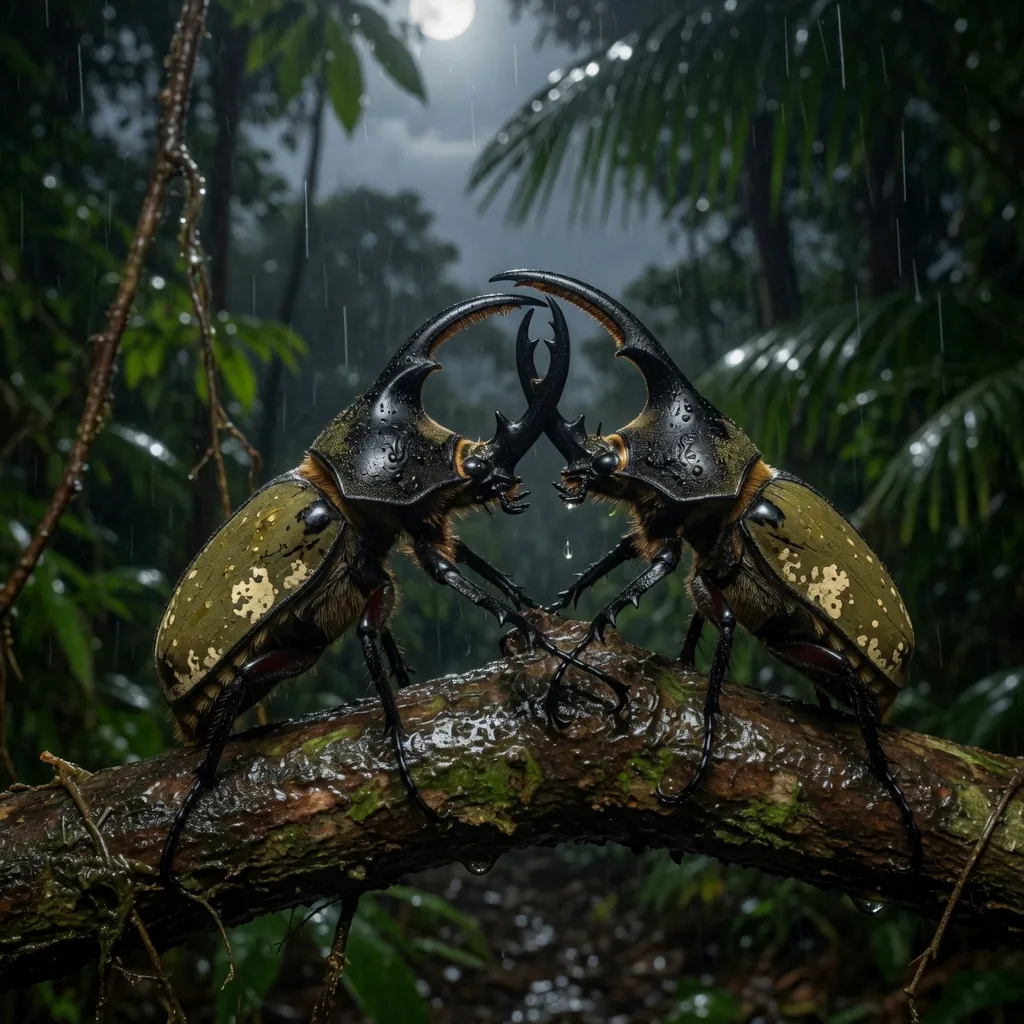
The females attract the males by releasing pheromones. After mating, the females burrow into the ground to lay eggs. They can lay up to 100 eggs at a time.
Take the Hercules Beetle Quiz!
5 quick questions. How much do you know about the world's mightiest beetle?
Geographical Distribution and Habitat
Hercules beetles are mainly found in the tropical rainforests of Central and South America. They can be found in large numbers in the jungles of Costa Rica, Brazil, and Bolivia. Some are also found in the southernmost portion of Mexico. They are even seen in parts of the Caribbean, namely Guadeloupe and the Dominican Republic.
Most commonly, they are found in tree stumps that they have entered from the soil below. The Amazon rainforest and surrounding lowland forests provide ideal habitat, dense, humid, and rich in the decaying wood larvae need.
Diet
Hercules beetle larvae live underground for a major part of their lives. These larvae feed on decomposing wood. When fully mature, the adult beetle comes out onto the soil surface and goes in search of food.
Adults, unlike the larvae, consume both rotting and mellow fruits. They sometimes eat tree sap, tiny bugs, and plants too.
Frequently Asked Questions
How big is a Hercules beetle?
Adult males can measure 5.9 to 6.7 inches (150 to 170 mm), making them one of the longest beetles on Earth.
Why does the Hercules beetle change color?
Its elytra (shell) changes from green to black as humidity increases, a unique moisture-sensing ability.
How many species of Hercules beetle are there?
There are about 13 known species in the Dynastes genus.
Where do Hercules beetles live?
Mainly in the tropical rainforests of Central and South America, including Costa Rica, Brazil, Bolivia, and parts of the Caribbean.
Conservation Status
At present, the Hercules beetle is listed as an endangered species. Their numbers have been declining due to threats from both natural predators and humans.
Predators: Since the eggs and larvae remain underground, they become easy prey for soil-burrowing animals, mites, and arthropods. Adult beetles are hunted by bats, birds, rats, and reptiles.
Humans: Deforestation and pollution (both air and water) has damaged much of the Hercules beetle's natural habitat. These beetles are also consumed by some people who believe the superstition that eating the horns of male beetles makes one stronger.
Hercules beetles are harmless though they look dangerous owing to their size and horns. However, if you try to pick one up, its sharp claws might hurt you. Like many rainforest insects, they need healthy forest to survive, protecting the rainforest is the best way to protect them.
Explore More Animals
 Outstandingly Interesting Facts About Rhinoceros BeetlesRhinoceros beetles are among the largest insects on Earth, and the strongest animals alive relative to their size. Discover their horns, life cycle, and jaw-dr
 Types of Beetles: 8 Species You Should KnowBeing the largest insect order, there are over 350,000 species of beetles found across the world. Meet 8 different species, from glowing fireflies to armoured
 Delightfully Unbelievable Facts About the Blue Morpho ButterflyMorpho butterflies are among the most amazing creatures seen in tropical rainforests. This post brings you some interesting facts about the Blue Morpho butterfl
 Jaw-dropping Facts About Japanese BeetlesJapanese beetles are gorgeous but destructive insects that devour leaves, flowers, and fruits. Discover facts about their appearance, life cycle, feeding habits

 Fun fact for today!The Hercules beetle is one of the strongest creatures on Earth, and it can even fly!