

The Luna Moth (Actias luna) is a lime-green, Saturniid moth from the family Saturniidae, subfamily Saturniinae. This insect can be spotted right from the plains of northern Mexico to Quebec and Nova Scotia in Canada.
Adult Luna Moths typically begin to emerge in early spring, which is their mating season. Also called "Moon Moths," they get their name from the fact that they are most active during nighttime. They are fascinating to look at, and thankfully, also pretty harmless.
Appearance
These moths are quite large, with a wingspan of around 4-7 inches wide. The wings are light green or lime green in color, and have markings in the shape of transparent spots and a pink-purple or yellow forewing margin. Their hind wings bear long twisted tails.
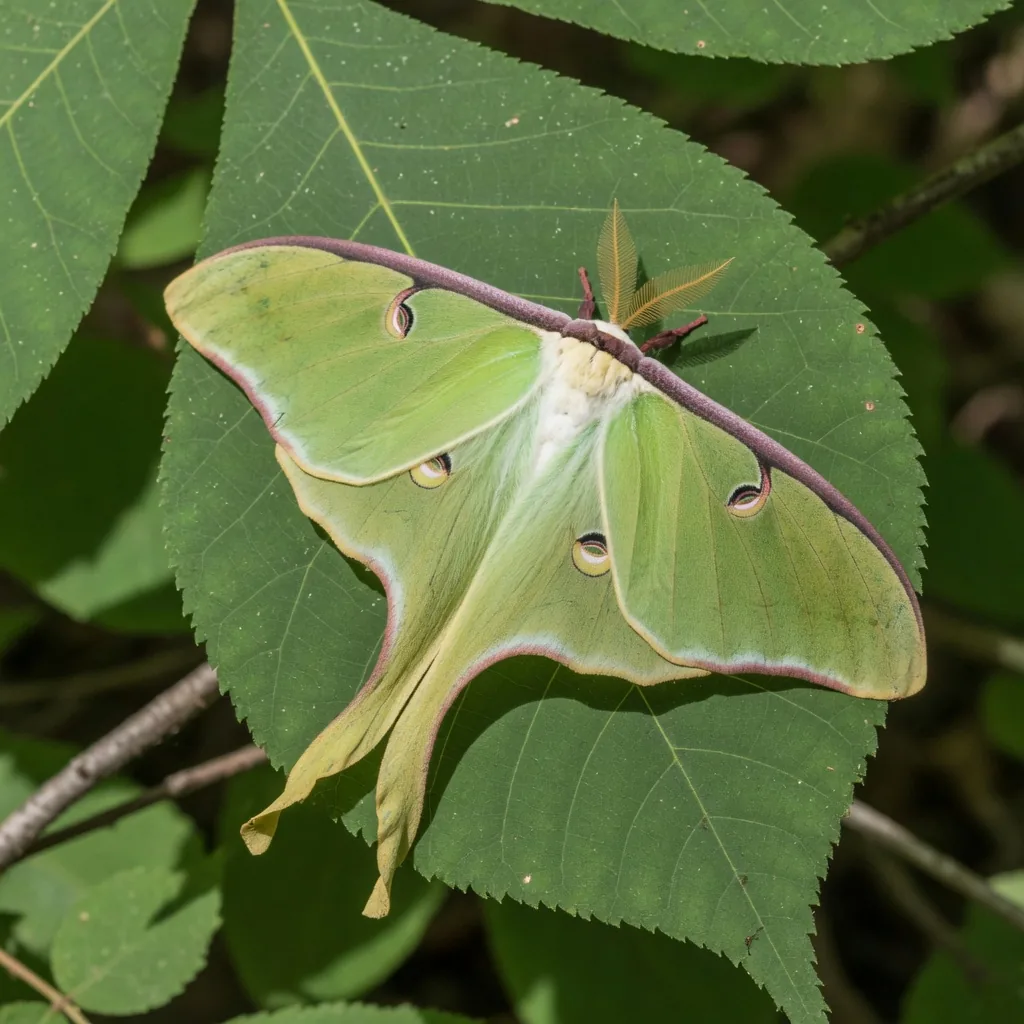
The tails may be yellowish-green to bluish-green in color. Antennae are feathery, with those of males being more feathery compared to the females'. Sexual dimorphism is observed in Luna Moths, females are noticeably larger. Males also appear to have a lighter shade of green compared to the females.
Behavior and Habitat
The Luna Moth is found in forested areas throughout North America. They prefer deciduous woodlands, with trees such as hickory, walnut, sumacs, and persimmon.
These moths are nocturnal, and are quite difficult to spot during the daytime. With their unusual coloring, these insects can mimic living and dead leaves on the ground by remaining motionless. They are also nearly impossible to spot during the day when resting on the bark of sycamore trees.
Diet
Luna Moths are herbivores. As a caterpillar, the moth feeds on the foliage of various species of hickory, walnut, sweet-gum, persimmon, and birch trees.
Being silk moths, they do not eat any food as adults. The energy needed during the adult phase is built up during the caterpillar stage. This is why adults have no proboscis, the feeding tube found on most other species of butterflies and moths.
Take the Luna Moth Quiz!
5 quick questions. How much do you know about North America's Moon Moth?
Reproduction
Female Luna Moths release pheromones to attract males, even over a significant distance. A female mates with the first male to approach her.
Being nocturnal, mating usually happens in the first hours after midnight. If the pair is undisturbed, they stay together until the next evening, but the slightest disturbance may cause a separation.
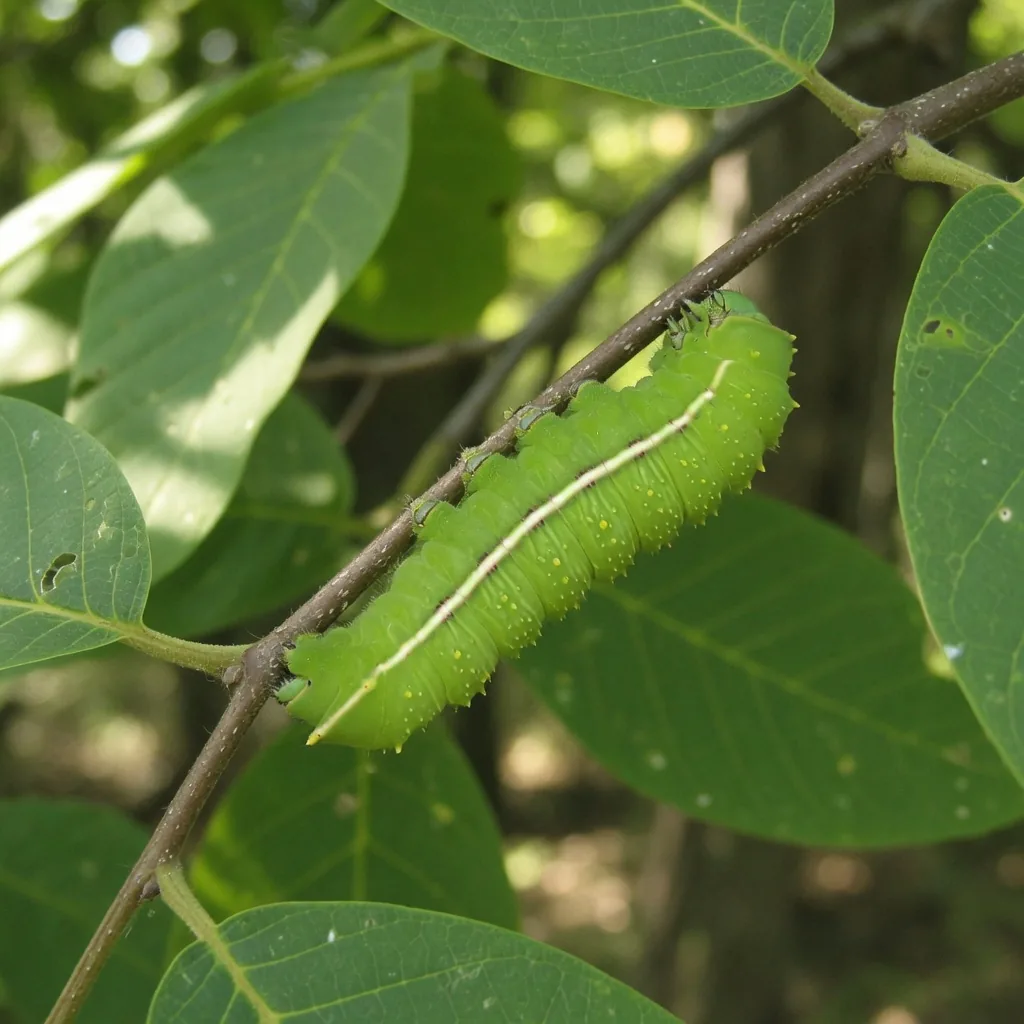
After mating, the female seeks a host tree to lay her eggs. Eggs are laid in small groups or singly on both surfaces of host plant leaves. The eggs take about one week to hatch, after which the caterpillars emerge. Caterpillars are solitary feeders that stay mostly in one place. They use leaves and silk to spin papery brown cocoons in the leaf litter under the host plant.
Luna Moths produce one or two generations per year. Their lifespan as adults is quite brief, extending no more than a week.
Explore More Animals
 Intriguing Facts About Inchworms You Probably Didn't KnowMany of you may have come across inchworms in your garden. However, these small creatures have many interesting facts that are worth knowing.
 Green Caterpillar IdentificationHow to identify a green caterpillar by its shade, body pattern, hair and unique features, with pictures of the luna moth, hornworms, swallowtails and more.
 An Awesome Explanation of the Life Cycle of a CaterpillarThe caterpillar life cycle is explained in short in this article, along with some interesting facts about caterpillars.
 These Facts About Tobacco Hornworms Will Simply Leave You BaffledTobacco hornworms are 70-millimeter caterpillars that can defoliate an entire tobacco plant. Discover their life cycle, habitat, diet, and how to tell them apar

 Fun fact for today!The Luna Moth's head is hard for predators to find, it uses its eye spots and twisted tails to confuse attackers!