

A Unique Canid Unlike Any Other
The maned wolf has a black-brown mane on its neck. This mane stands erect when the wolf is provoked, senses danger, or shows aggression. The animal looks like a red fox, but it belongs to a completely different genus, Chrysocyon, which means "golden dog." It is the only species in this genus. The International Union for Conservation of Nature (IUCN) lists the maned wolf as "near threatened," while Brazil's federal environment agency, IBAMA, considers it "vulnerable."
The maned wolf is not related to any other living canid. It is neither like a wolf nor like a fox. It does not have the elliptical pupils that foxes have. It cannot be labeled as a coyote, dog, or jackal. It is simply a distinct and unique canid. Its closest living relative is thought to be the bush dog (Speothos venaticus).
Appearance
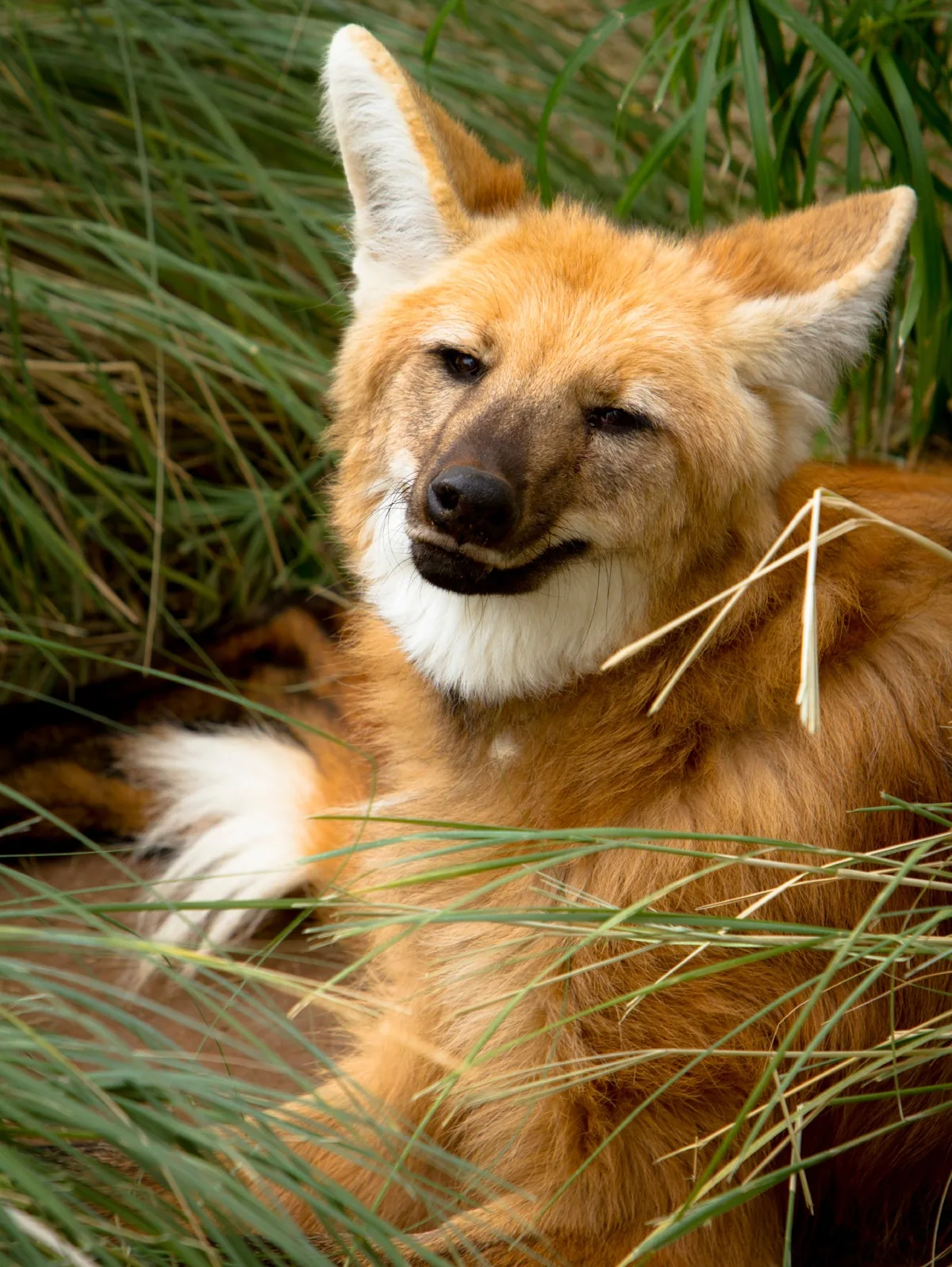
Maned wolves have a long reddish-brown or golden-orange coat. Long reddish-brown fur covers the neck, back, and chest, giving the animal the look of a mane. The front part of the erectile mane is black. Their ears are large, long (7 inches), and erect. The throat, chin, and tip of the tail are typically white. The long, slender legs are dark brown or black, and black fur runs along the legs, tail, feet, back, and muzzle. The muzzle is long and pointed. Head-body length reaches 100 cm (39 in), and with the tail the animal measures 145 cm (57 in) total.
The maned wolf looks like a red fox (Vulpes vulpes). A white "bib" beneath the throat is a key feature. The teeth match its food habits. Because maned wolves do not kill or eat large prey, they have short upper carnassial teeth and relatively weak upper incisors, but long and slender canines.
Where the Maned Wolf Lives
This wolf is mainly found in Central and Southeastern Brazil, Paraguay, eastern Bolivia, north of the Andes, far Southeastern Peru, and Northern Argentina.
Habitat
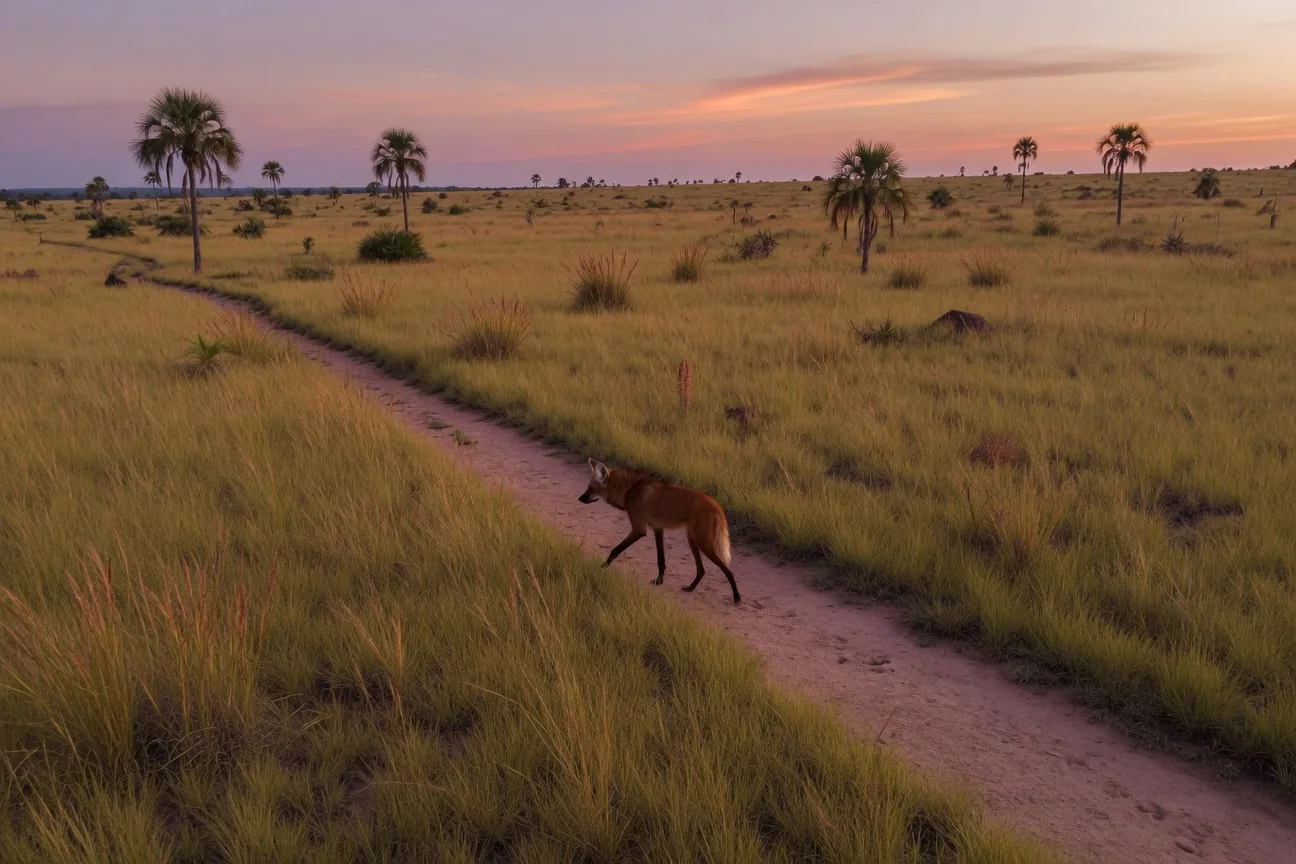
The maned wolf lives in open forest, dry shrub forest, swampy areas, savanna, forest-edge habitat, marshland, and river areas. It thrives in both open and semi-open habitats.
It prefers grasslands with scattered bushes and trees. Its long legs let it see above the tall grass while running and help it hide behind bushes. Those long legs are a classic example of adaptation to the tall grasslands it calls home, such adaptations are essential for survival in this environment.
Diet
Maned wolves are omnivorous. They eat small mammals (especially rodents and rabbits), insects, reptiles, fish, frogs, birds, and bird eggs. About 50% of their diet consists of fruits like bananas and other plants. They also eat tubers, a tomato-like fruit called wolf apple, lobeira fruit (Solanum lycocarpum), and sugarcane.
Health
The maned wolf is particularly prone to kidney infection. The giant kidney worm (Dioctophyma renale, a parasitic roundworm) attacks its kidneys and can cause death. Interestingly, lobeira fruit acts as a natural medicine against this infection.
Take the Maned Wolf Quiz!
5 quick questions. Find out how much you know about the fox on stilts.
Reproduction and Life Span
Other wolf species live in cooperative breeding packs, but maned wolves are solitary by nature. They are monogamous. Both male and female live alone, but they share their territories (typically between 25 to 50 square kilometers). They only come together during the breeding season.
Little is known about the life span and breeding patterns of wild maned wolves. Those in captivity mate between October and February in the Northern Hemisphere, and between August and October in South America. Every year, the female gives birth to a litter of 2-6 pups after a gestation period of about two months.
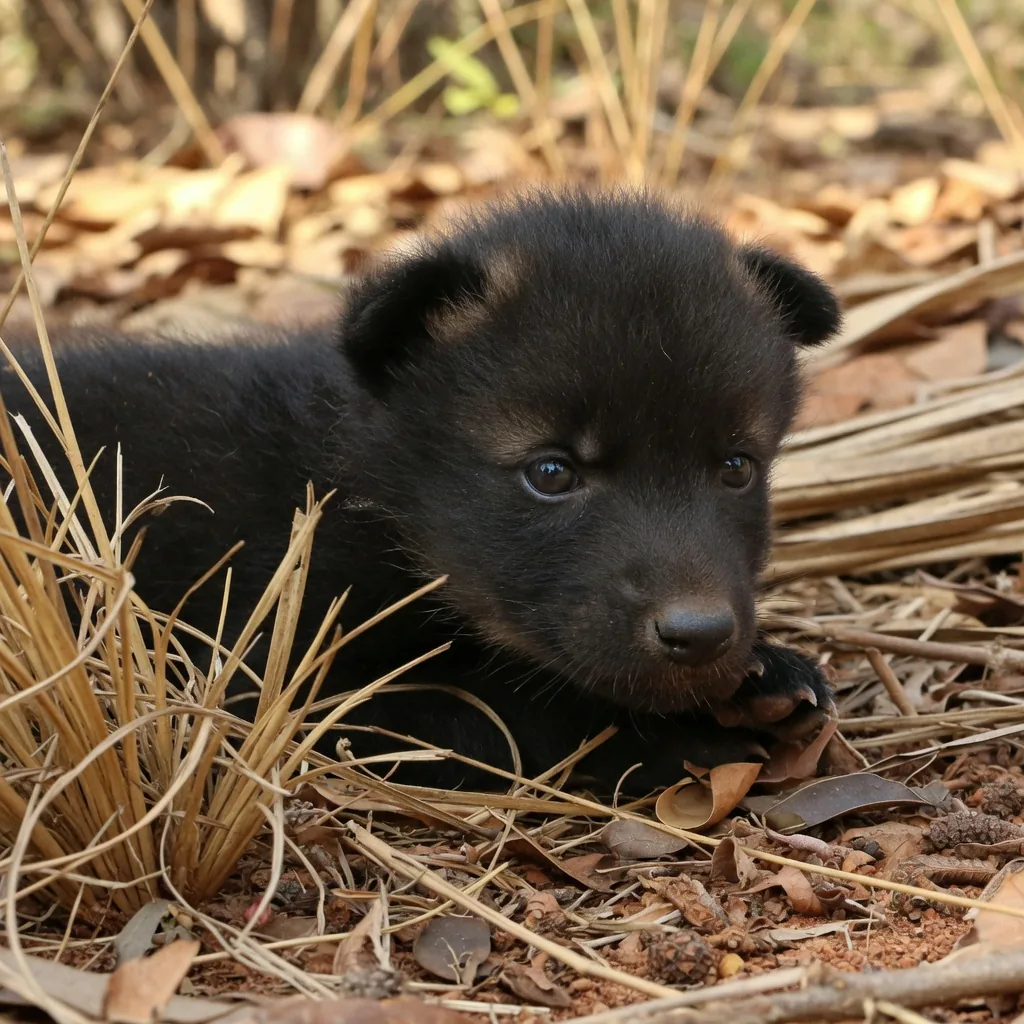
Newborn pups are black, but they later gain their reddish-orange coloring. Newly born babies weigh 340 to 430 grams (15-16 oz), but they grow fast. They start eating regurgitated food by week four. In captivity, males are seen grooming and defending pups, and feeding them by regurgitation. Within one year, the pups reach sexual maturity and look like fully grown adults.
Preservation of the Ecosystem
Because these wolves eat fruits and plants, they help spread seeds across a wide territory. Their droppings on the nests of leafcutter ants act as a nutritional substrate for the ants' fungal gardens. The ants later discard the seeds outside their nests, which naturally increases the rate of seed dispersal across the cerrado.
Hunting Habits
Maned wolves are nocturnal. They hunt mainly at night or during dusk and dawn. During the day, they stay hidden in thick vegetation. They patrol at night and use their urine to mark hunting paths, to communicate, or to mark the places where they have buried prey. The urine has a distinctive smell, somewhat like hop flowers or cannabis.
This distinctive odor has earned the maned wolf its nickname "skunk wolf." They move their ears and listen carefully for sounds made by prey hiding in tall grass nearby, then pounce to catch it.
By tapping the ground with a front foot, they try to flush prey out. These wolves are shy and timid. They run away when alarmed and do not pose a direct threat to humans.
Threats and Predators
Although maned wolves have no natural predators, only a few thousand remain. Farmers often kill them in the belief that they take poultry and livestock, but these wolves cannot catch or eat large prey. In some areas, they are killed for their organs, which are sold for supposed medicinal use.
Many people believe certain organs carry magical healing properties. Some wolves die from diseases, and some are attacked by feral dogs. The main threat, however, is loss of habitat. Maned wolves need wide, uninterrupted territories. Today, grasslands across their range are being converted into farmland, and this drastic shrinkage of habitat has seriously reduced their population.
Conservation
Various zoos and wildlife organizations have been working to protect maned wolves for nearly 30 years. After studying them in the wild, these groups breed maned wolves in zoos and educate people about the importance of protecting their habitat.
It is our duty to save such rare and little-known species. By supporting conservation programs (including zoo adoption programs) we can help ensure the survival of this rare and wonderful animal.
Explore More Animals
 Where Do Wolves Live?Wolves are intelligent animals that have lived on the planet since many centuries. This article will answer the question where do wolves live.
 Jaw-dropping Facts About the Red FoxBuilt for speed and known for its clever opportunistic behavior, the red fox is one of the world's most widespread mammals. Discover its habitats, diet, amazing
 Facts about Coyote - Prairie WolfThe interesting facts about coyotes go well beyond the depiction of this species in popular culture. While there is no questioning that, what is even more inter
 Coyote vs. Wolf vs. Fox: A Complete ComparisonCoyotes are often known to be the smaller cousins of gray wolves, and the foxes of the coyotes. This AnimalSake article does an analysis to put an end to the ag

 Fun fact for today!The maned wolf is not closely related to any other living canid, not wolves, not foxes, not coyotes. It's in a genus all by itself!