

What Is a Warthog?
The warthog's scientific name is Phacochoerus africanus. The name "warthog" comes from the four large wart-like protuberances found on the animal's face. Warthogs are also called Vlakvark, meaning "Pig of the Plains," by local people. Normally they pose no threat, but if provoked, warthogs can fight back bravely with their tusks or teeth, and can even seriously injure a predator twice their size.
Four species of warthogs live in the wild across Africa:
- Central African Warthog, found in Kenya and Tanzania.
- Eritrean Warthog, found in Eritrea, Ethiopia, Somalia, and Djibouti.
- Nolan Warthog, found in the Democratic Republic of the Congo, Ivory Coast, Burkina Faso, Chad, Ethiopia, Nigeria, Ghana, Guinea-Bissau, Mauritania, Senegal, and Sudan.
- Southern Warthog, found in Botswana, Namibia, South Africa, and Zimbabwe.
Appearance and Body
An average male warthog weighs anywhere between 132 to 330 pounds. Females are quite a bit lighter, weighing about 99 to 170 pounds. An adult female is called a "sow" and an adult male is called a "boar." In both sexes, the tusks and two sets of warts are the most noticeable features on the face. The large head is covered with a mane that runs down the spine and ends at the middle of the back.
The face is flat and has a long snout. Warthogs don't have great eyesight, so their eyes sit high on their head, this way, they can watch for predators even when they lower their heads to graze on short grass.
Behavior and Social Life
Females are usually found in groups with their piglets. A group of warthogs is called a sounder. Males prefer to roam alone, though young males do hang out in bachelor groups.
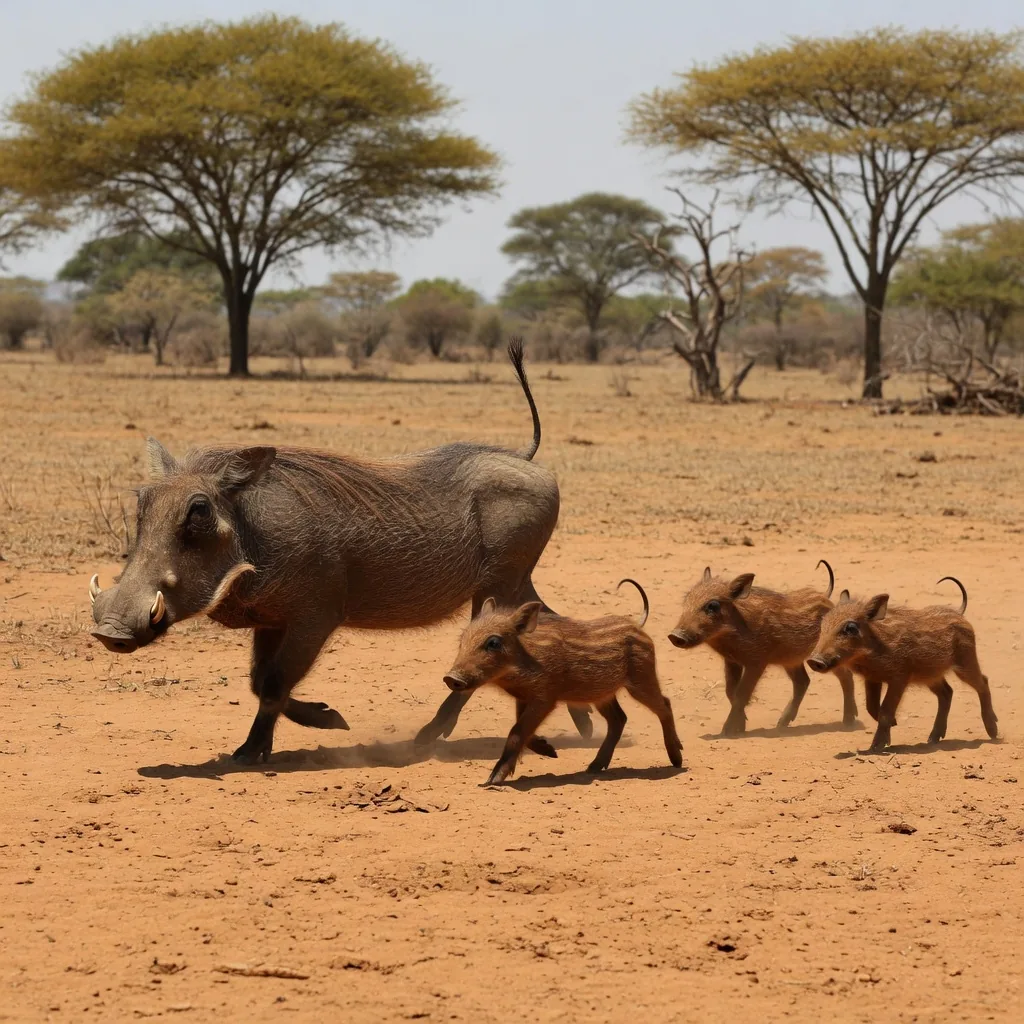
When a warthog runs, its tail stands straight up, and young ones always run in a line right behind their mother. Warthogs aren't territorial by nature and share their home ranges with many other animals.
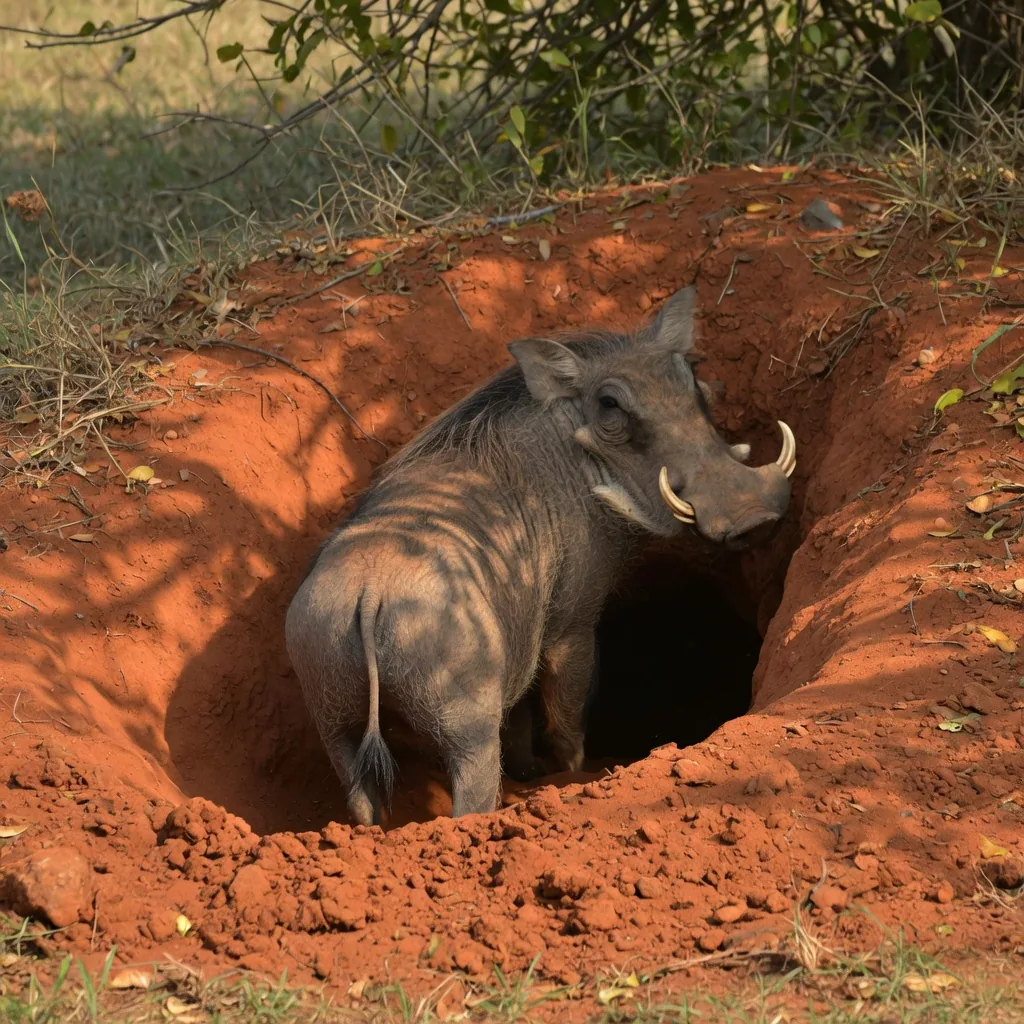
Despite their fierce looks, warthogs would rather avoid danger. They can run at nearly 33 miles per hour, and they have a clever trick for escaping predators: they run backwards into burrows, so if a predator follows, it runs straight into their sharp tusks.
Diet
The warthog is an omnivorous animal. Its diet consists of grasses, roots, bulbs, berries, various fruits, insects, eggs, and carrion. Grass makes up the biggest part of their meals, but wildlife experts have also seen them kill and eat snakes.
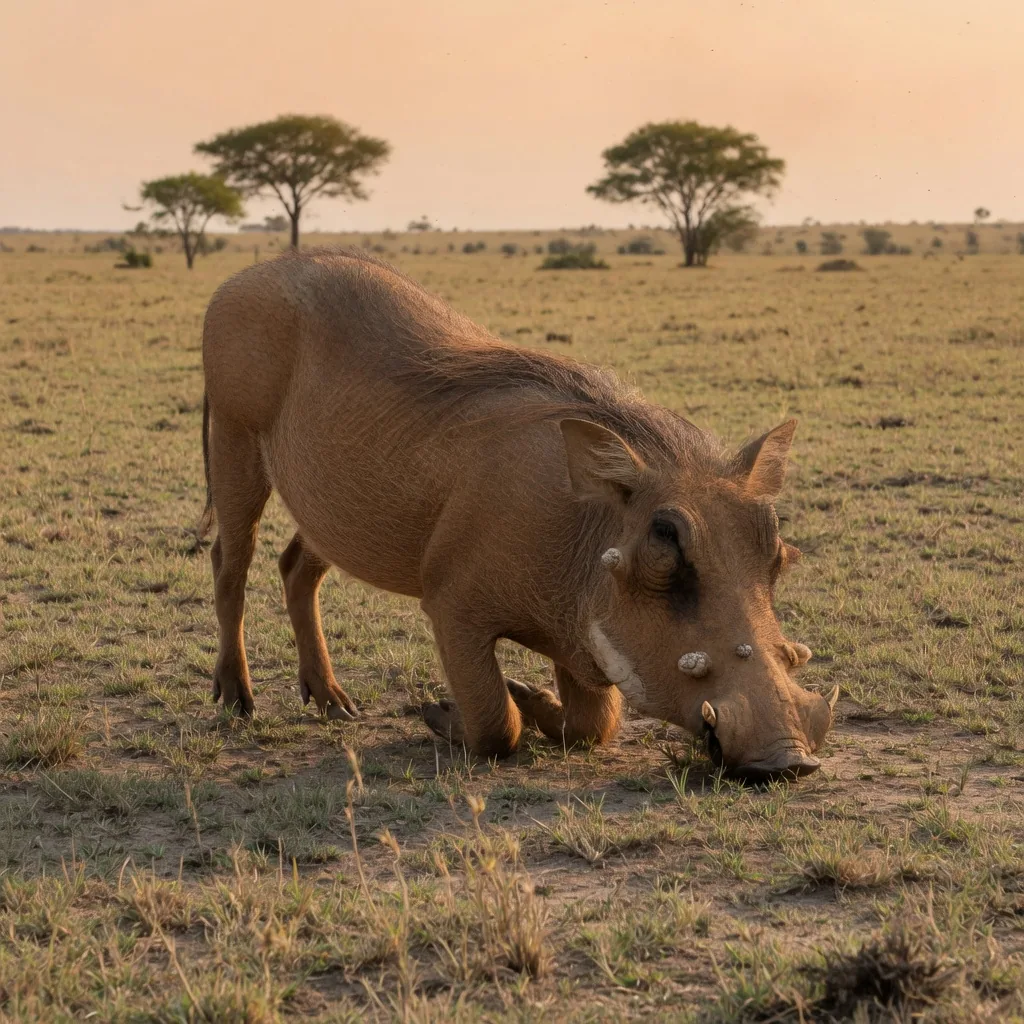
Their tusks aren't just for defense, they also double as powerful shovels. Warthogs use them to dig burrows and to pull up the bulbs and roots of plants. They prefer living in burrows or areas with plenty of vegetation.
Take the Warthog Facts Quiz!
5 quick questions. How well do you really know Africa's toughest pig?
Lifespan
Warthogs can survive 15 years in the wild, and almost 22 years in captivity.
Mating and Raising Young
The mating season always lines up with the rains. When a female is in heat, the male will follow her everywhere, make various grunting noises to attract her, and chase off any rivals. The gestation period is 5 to 6 months. When a sow is ready to give birth, she temporarily leaves the sounder to give birth in a separate burrow. The litter has two to eight piglets, with two or four surviving to adulthood.
Something touching has been observed: sows who have lost their own litter often nurse foster piglets. This behavior is called allosuckling. Females only have four teats, and each piglet claims its own teat to suckle from. If one piglet dies, the others will not use its teat.
Predators and Defense
Adult warthogs are threatened by humans, lions, cheetahs, leopards, crocodiles, and hyenas. The main predators of piglets are snakes, foxes, eagles, owls, and vultures.
A female can become extremely aggressive if anyone tries to approach or harm her young. She can inflict serious wounds to protect herself and her litter. Despite their fierce tempers, warthogs have been observed letting banded mongooses and tick birds pick insects right off their bodies, a classic example of mutualism in the African savanna.
Frequently Asked Questions
What is the scientific name of the warthog?
Phacochoerus africanus
What is a group of warthogs called?
A sounder
How long do warthogs live?
15 years in the wild; up to 22 years in captivity
How fast can a warthog run?
Almost 33 miles per hour
What is the IUCN status of warthogs?
Least Concern
Survival Secrets
Warthogs are the only pigs that can survive in hot, dry areas without water for several months. Their bodies are very good at conserving moisture that other animals would lose through cooling. They also have a unique ability to adapt to new threats and environments, which is why they remain one of Africa's few large mammals with a stable population.
Explore More Animals
 African Lion FactsThe numbers of African lions are sadly on a rapid decline. These vulnerable species face constant threat due to loss of habitat and poaching. Here are some inte
 Really Astonishing Facts About African ElephantsGentle to some, threatening to others, African elephants continue to be a subject of interest for many animal lovers. This AnimalSake post provides some interes
 Zebra Adaptations & Facts: How Zebras SurviveAfrican savannas are full of predators, and zebras have remarkable adaptations to survive them. Meet all three zebra species and discover how stripes, speed, he
 Facts About the Astoundingly Colorful MandrillsMandrills are the largest and most colorful monkeys in the world. Natives to central Africa, these fascinating primates are listed as vulnerable. Discover their

 Fun fact for today!Warthogs back into their burrows (tusks first) so predators get a nasty surprise!