

What Are Adaptations?
An adaptation is a physical or behavioral trait that helps an animal survive in its environment. Physical adaptations are structural changes to the body, like a thicker coat or stronger jaws. Behavioral adaptations are changes in the way an animal acts, like hunting at night or sleeping in trees.
The cold regions of Alaska may not be suitable for humans, but species like the caribou and Arctic fox survive there easily, thanks to their amazing adaptations. All animal species need some form of adaptation to survive, and the jaguar is no exception.
Meet the Jaguar
Native to the Americas, jaguars are big cats that belong to the genus Panthera in the family Felidae (the family of cats). Though "big cats" is not a scientific classification, the term is used to describe larger felines compared to smaller ones. Usually, the members of the genus Panthera are called big cats. They are the tiger, lion, jaguar, and leopard. Sometimes the cougar, cheetah, snow leopard, and clouded leopard are also included in this group.
The jaguar (Panthera onca) is one of the four big cats found on the planet. The other three are the tiger (Panthera tigris), the lion (Panthera leo), and the leopard (Panthera pardus). Though the jaguar is the third largest of these felines (with the lion and tiger being larger) it is the largest cat in the western hemisphere of the world.
The Feline Family
Tigers, lions, jaguars, and leopards are the largest felines. While the tiger is the largest big cat, lions are the second largest, followed by jaguars and leopards. In short, the jaguar is the third largest big cat in the world. Unlike other felines, those in genus Panthera have the ability to roar. So jaguars can roar, though their roar sounds like a repetitive cough.
Panthera Onca, the Only Living Species
There is only a single species of jaguar in the world, and that is Panthera onca. According to fossil evidence, two more species of jaguars existed on the Earth thousands of years ago. The extinct jaguar species are the European jaguar (Panthera gombaszoegensis) and the American lion (Panthera atrox). Even the extant (living) species is facing extinction and is classified as 'near threatened' by the IUCN.
The Leaping Jaguar (and the Car)
When it comes to hood ornaments, the leaping jaguar (of Jaguar cars) is very popular. During the 1930s, the manufacturers were searching for a unique name for their new line of cars. They were looking for the name of an animal that is sleek as well as fast, and jaguars fit the bill perfectly. A leaping jaguar is the mascot of this luxury car brand. This hood ornament may not be seen on the new models.
Where Jaguars Live
The jaguar's range spans the tropical rainforests of South America, as well as some parts of the southern United States and Mexico. These rainforests are typically characterized by continuous rainfall and very little sunlight reaching the ground. Like many other rainforest species, the jaguar has developed both physical and behavioral adaptations to thrive here.
Jaguars are mostly found in the rainforests of South and Central America. They are also found in swamps, deserts, and dry grassland terrain, though the most preferred habitat is dense forest. They are often found near sources of water and tend to make dens in caves. Jaguars are rarely seen in mountainous regions or at elevations of more than 4000 meters. They are mainly found in Mexico, Guatemala, Guyana, Peru, Panama, Ecuador, Venezuela, and certain parts of the United States, like Texas and Arizona.
Size & Body
The jaguar is a big cat with a compact and strongly muscular body. This feline has a large head, a broad muzzle, and powerful jaws. A full-grown jaguar may weigh up to 150 kilograms and reach a height of around 67 to 76 centimeters at the shoulder. The length of a jaguar can range from 1.62 to 1.83 meters, with an extra tail length of around 30 inches. The short and stocky limbs help the animal climb, swim, and crawl. Jaguars living in rainforests can be smaller and darker than those living in open areas.
Spotted Coat: Master of Camouflage
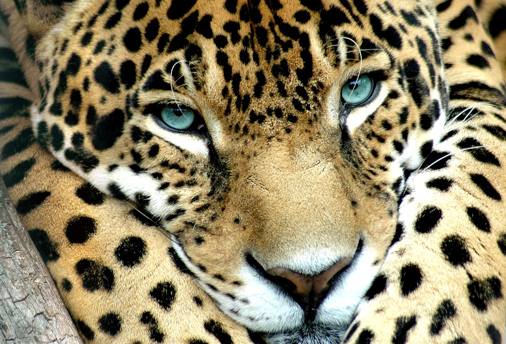
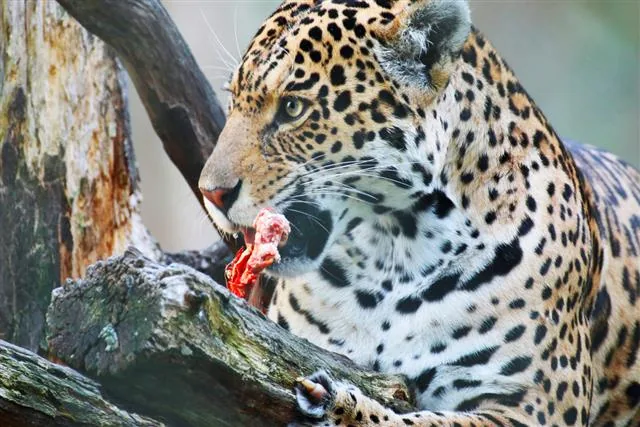
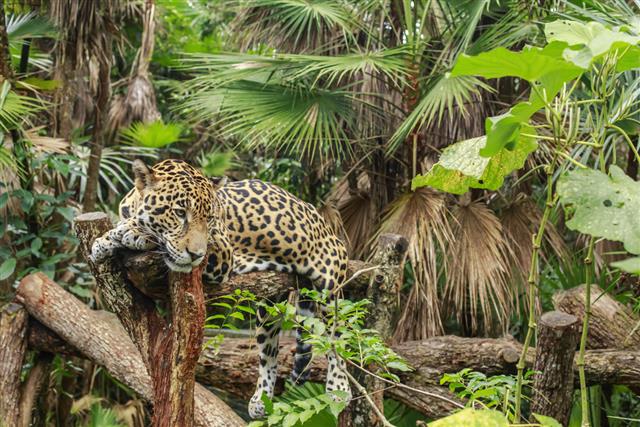
A description of the jaguar is incomplete without mentioning its yellow coat with dark spots. This spotted fur plays a crucial role in camouflage. The jaguar's rainforest habitat is full of dense trees, so very little sunlight reaches the forest floor. What light does filter through arrives in small, scattered patches. The jaguar's spotted coat blends perfectly with these patches of light and shadow, making it nearly invisible to prey.
The most striking feature of jaguars is this spotty coat. Generally, they have a base coat of tawny yellow color, but in some jaguars the color may range from reddish-brown to black. They have black rosettes on the base coat that serve the purpose of camouflage. These rosettes may be like single rings or formed of several spots. The shape of the spots varies from one rosette to another and from one jaguar to another. The rosettes may have inner spots or small lines. The spots on the head and neck are solid, and those on the tail merge to form rings. Some parts of the body (like the throat, underbelly, and outer surface of the legs) can be of a lighter shade or whitish.
Black Panthers and White Panthers
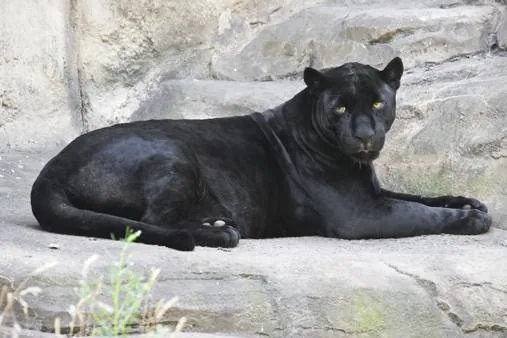
Some jaguars have a black coat due to a condition called melanism. Such jaguars are called black panthers. However, black panthers do not make up a separate species, they are actually melanistic variants of Panthera species such as jaguars and leopards. Though they appear black, a close look will reveal the rosette pattern on their coat. According to statistical studies, black panthers amount to six percent of the total jaguar population. Albino jaguars are very rare, they are sparingly found and are called white panthers.
Skull-Crushing Jaw: A Unique Killing Technique
While the spotted coat is one of the jaguar's most important adaptations, its large head, modified jaw, and extremely sharp canines are equally vital. Jaguars are occipital crunchers, they kill their prey by grabbing it by the head and crushing its skull. Their sharp claws help hold the prey, while the raw power of the jaw drives the canines straight through the skull.
This method of killing is not seen in any of the other four big cats. Lions, tigers, and leopards all kill by strangulation, grabbing prey by the neck. The jaguar's skull-bite is uniquely its own.
Their jaws are extremely powerful, and the same power applies to their bite. It is said that jaguars are twice as strong as lions in terms of their bite. Among all felines, jaguars have the strongest bite. They can easily bite through turtle shells and the skulls of other animals. Their jaw structure is so strong that a single jaguar can drag a heavy animal (with more than 300 kilograms body weight) with its jaws, to a distance of around 25 to 30 feet.
Swimming and Water Hunting
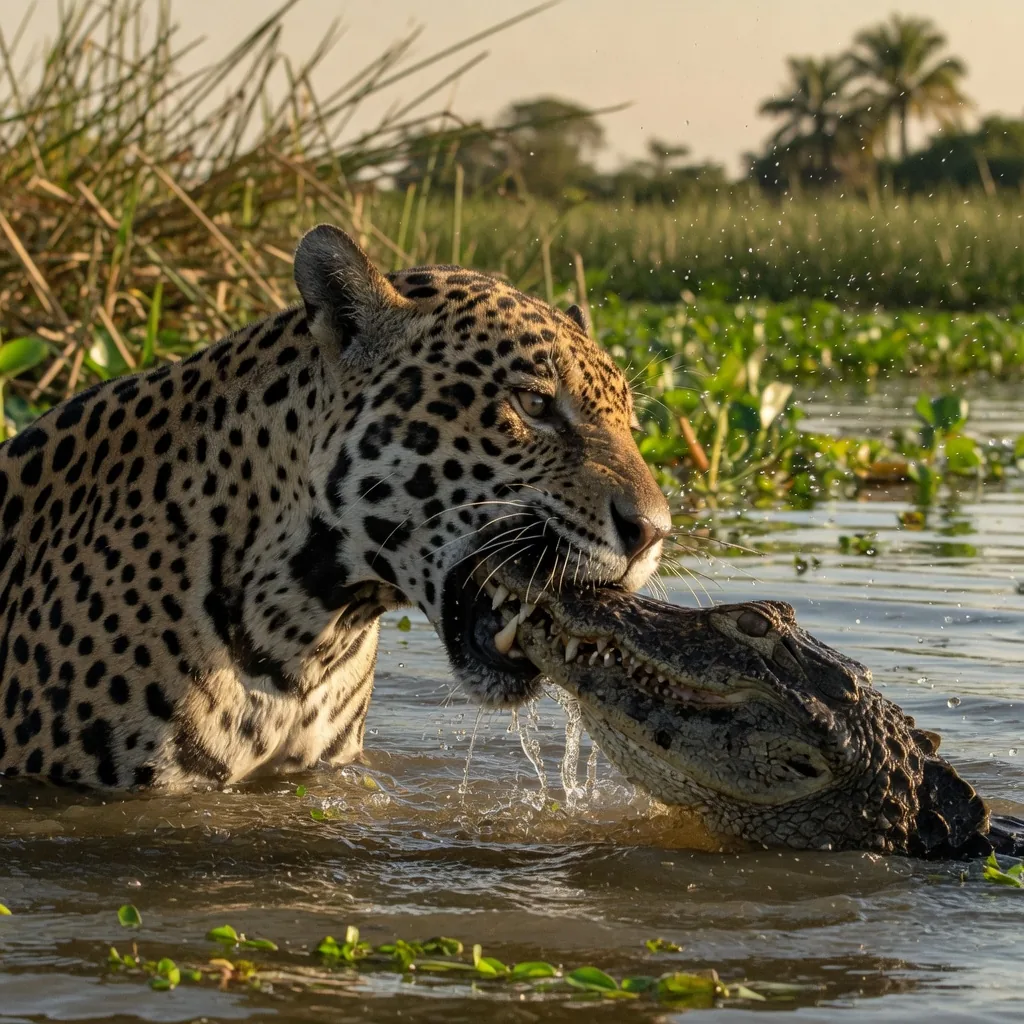
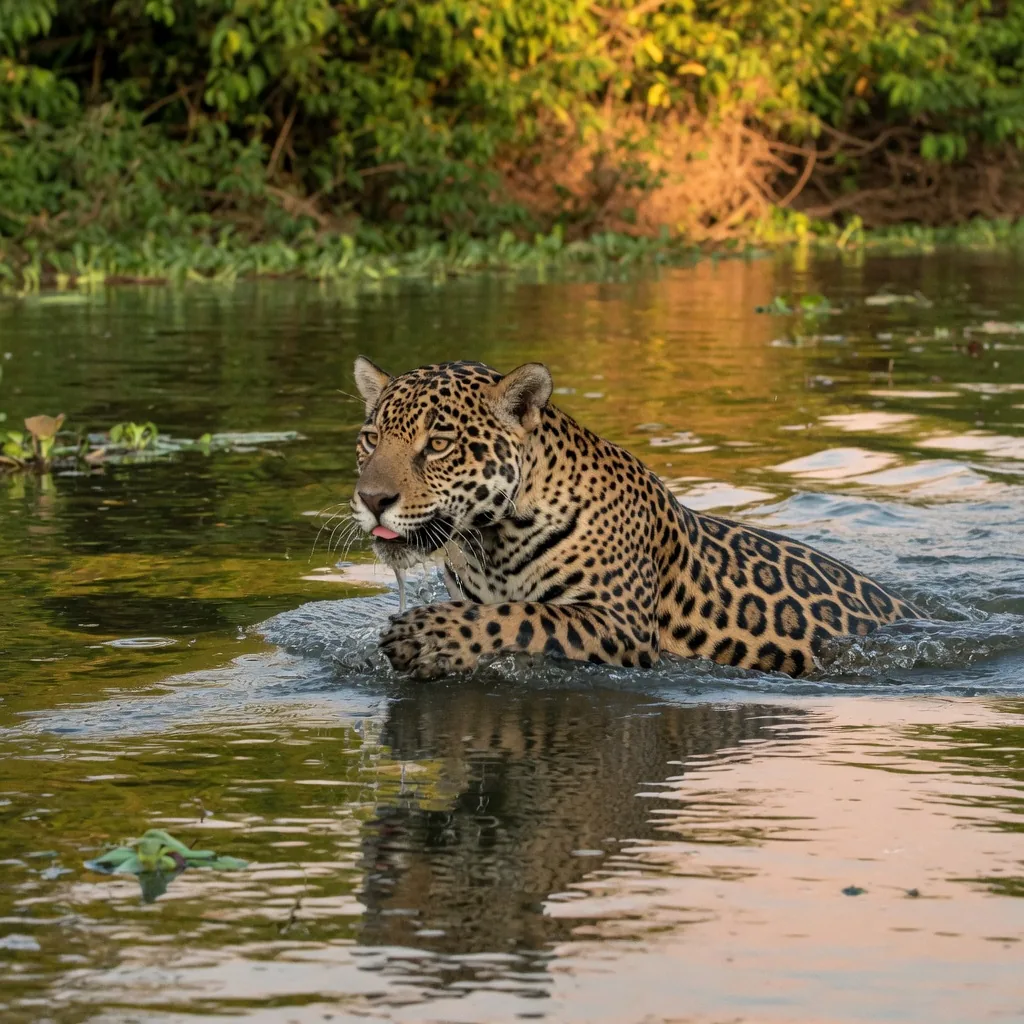
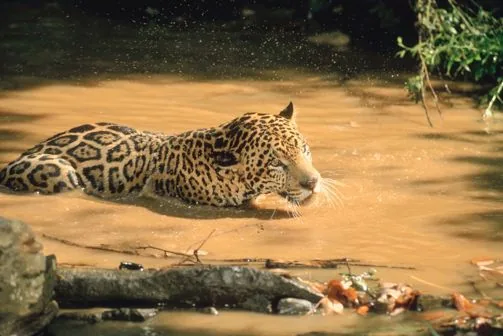
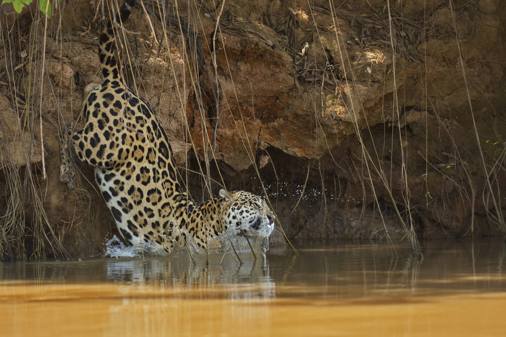
Jaguars are amazing swimmers, a behavioral adaptation that works perfectly in a habitat filled with rivers, streams, and swamps. They also actively hunt in the water, feeding on fish, turtles, and baby alligators.
In one of the most unusual hunting methods in the animal kingdom, jaguars wade through shallow water, swipe fish out with their paws, and catch them mid-air. The jaguar's paws are well-cushioned, which also helps it move silently on land when closing in on prey.
Take the Jaguar Adaptations Quiz!
8 quick questions. How much do you know about the jaguar's survival secrets?
Size Differences and Tree Climbing
Open areas have plenty of large herbivores to eat, so hunting there is relatively easy. That is why jaguars living in open areas grow larger than those living in forests. Forest jaguars face a more limited food supply.
Being smaller is actually an advantage for forest-dwelling jaguars. It helps them survive on less food, and it also helps them climb trees. When the forest floor floods with rainwater, jaguars can climb into the trees and stay there for weeks at a time.
Jaguars are highly skilled at climbing trees. This arboreal nature helps them in hunting and feeding. They hide between tree branches and pounce on prey below. These animals may also find prey (like monkeys and birds) up in the trees. They may even climb trees carrying their prey when water levels rise on the ground.
Maneuvering Skills and the Tail
Jaguars are also known for their impressive maneuvering skills, which are useful when chasing fast animals like antelopes and deer through dense forest. Like many other animals, the jaguar's tail plays an important role here, it acts as a counterbalance, helping the jaguar stay steady and change direction quickly at full speed.
With all these adaptations combined, the jaguar does not just survive the harsh conditions of the rainforest biome, it thrives at the very top of the food chain as the apex predator.
Frequently Asked Questions
What is the jaguar's scientific name?
Panthera onca, the only living jaguar species.
How does a jaguar kill its prey?
Jaguars are occipital crunchers, they kill prey by grabbing the head and crushing the skull, unlike lions and tigers which kill by strangulation.
How large is a jaguar?
A full-grown jaguar can weigh up to 150 kilograms and stands 67 to 76 centimeters at the shoulder. Body length ranges from 1.62 to 1.83 meters, plus a tail of around 30 inches.
Is the jaguar the largest cat in the Americas?
Yes, the jaguar is the largest cat in the western hemisphere, though it is the third-largest big cat globally after the tiger and lion.
How many jaguars are left in the world?
Around 15,000 jaguars remain, and the species is classified as Near Threatened by the IUCN.
Can jaguars swim?
Yes, jaguars are strong swimmers and actively hunt in rivers, feeding on fish, turtles, caimans, and baby alligators. They are said to be the most water-loving felines.
Jaguar vs. Leopard: How to Tell Them Apart
Both jaguars and leopards look similar, so telling them apart can be tricky. Compared to leopards, jaguars are heavier and sturdier, with a rounder head, a shorter tail, and stocky limbs. Another feature that helps to tell these two species apart is the pattern of their rosettes. Jaguars have fewer rosettes, which are larger and darker with spots or lines inside.
Jaguar Behavior
A Solitary Life
Jaguars are solitary animals with distinct territories. The only exception is the group of mother and cubs. Individual territories of male jaguars are much larger than those of females and do not overlap at all. These animals mark their area with urine, faeces, or claw marks on tree trunks. Jaguars roar to ward off other jaguars from their territories.
Adults
Adults meet each other only during mating, which is a brief affair. Female jaguars reach sexual maturity at the age of two, whereas in males it is three to four years. There is no particular season for mating. They mate throughout the year, and the pair separates after mating.
Young Ones
The gestation period is around 93 to 105 days, and the litter consists of two to four cubs. The young ones are taken care of by the mother only. Though they are weaned within three months of birth, the young ones accompany their mother for around two years before establishing their own territory.
Explore More Animals
 Captivating Facts About the Food Jaguars Eat and Their HabitatJaguar is the third-largest feline after the lion and tiger. Discover where jaguars live, what they eat, and how they hunt, plus a quiz, glossary, and did-you-
 Spectacular Rainforest Animal Adaptations You Simply Gotta SeeInterested in exploring the animal world of rainforests? This article deals with rainforest animal adaptations. Read on, to know how animals in rainforests stru
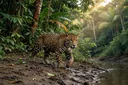 Jaguar Animal FactsDiscover fascinating jaguar facts: how the Americas' largest cat hunts, swims, raises cubs, and why it's near extinction. Quiz inside!
 Amazing Physical and Behavioral Adaptations of African LionsAfrican lions are one of the biggest cats in the world. To ensure survival, their body has been going through several changes to fight difficult situations and
Jaguar Diet & Hunting
Prey
Jaguars are meat-eaters and are considered apex predators. They prefer animals like dogs, deer, and foxes as their prey. Sometimes they attack and kill anaconda too.
Hunting Technique
They hunt for prey in the dark (especially during dawn and dusk) and may bury their prey for later use. The hunting technique of jaguars is somewhat similar to that of other members of the Panthera family. They bite through the skull (between the ears) of the prey and pierce the brain. Such bites make the prey almost immobile. This method is usually used while attacking mammals. Another method is to pounce on the prey in a single leap and suffocate the prey with a deadly bite on the throat.
Freshwater Prey
Jaguars are also good swimmers. These animals are very fond of water and are often found living near water sources. Their territory may include swamps and forest lands that are flooded seasonally. Water sources provide them with prey like fish, caimans, and turtles. They can also catch and carry large prey while swimming. Jaguars are said to be the most water-loving felines.
Culture & Conservation
Jaguars have a very long association with the mythology and culture of the Americas. During ancient times, this animal was a symbol of power and strength. While the Mayan rulers had names associated with jaguars, the elite members of the Aztec military were referred to as jaguar warriors. These warriors had an attire made of jaguar skin.
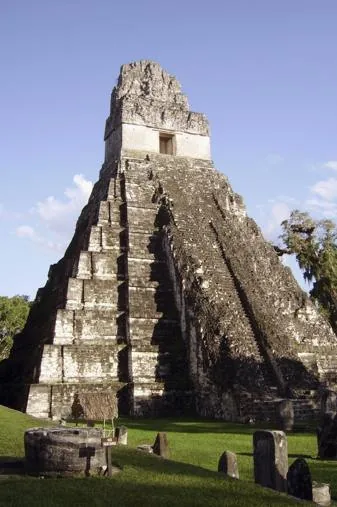
The Temple of the Great Jaguar
The Temple of the Great Jaguar (otherwise known as Tikal Temple I) stands in Tikal, in the northern region of Guatemala. The city was the capital of one of the most powerful kingdoms of ancient Mayan civilization. This is supposed to be a funeral temple with a lintel that depicts the king on a jaguar throne.
Jaguars are classified as 'Near Threatened' by IUCN (International Union for Conservation of Nature and Natural Resources). In other words, this species may become extinct in the near future if proper and timely measures are not taken. Habitat loss and poaching are mainly responsible for the dwindling population of these animals. According to estimates, there are around 15,000 jaguars left in the world as of now.
Though they are strong and powerful, jaguars are threatened with extinction, and conservation efforts are still underway. You can learn more about the threats facing endangered rainforest animals and what is being done to protect them.

 Fun fact for today!The jaguar is the largest cat in the western hemisphere, bigger than any other wild cat in the Americas!