

Jaguar Classification
The jaguar, or Panthera onca, belongs to the Panthera genus, the same group as lions, tigers, and leopards. Here is where it sits in the animal kingdom:
- Kingdom, Animalia
- Phylum, Chordata
- Class, Mammalia
- Order, Carnivora
- Family, Felidae
- Genus, Panthera
People often confuse jaguars with leopards because both have spotted coats. Look closely, though, and the difference is clear: jaguar spots form rosette shapes where smaller dots are surrounded by larger ones, while leopard rosettes are simpler and smaller.
Size and Lifespan
A jaguar is one of the three big cats that can roar, the others being the lion and the tiger. It is also the largest feline in the Americas.
- It weighs between 50 and 100 kilograms. A full-grown jaguar is 5.5-6 ft long and stands 25-30 inches tall.
- Jaguars are solitary animals with a lifespan of 12 years in the wild. In captivity, they can live up to 20-23 years.
Coat Color and Markings
The jaguar's coat is usually yellow or reddish-brown with dark rosette spots. However, coat color can vary in two unusual ways:
- Sometimes, because of a condition called melanism, jaguars are born with black skin and black spots. These animals are often called black panthers.
- Albinism can also occur, though it is extremely rare. These individuals are called white jaguars (or white panthers) and have a white coat.
Habitat
Jaguars are found in rain forests, swamp areas, pampas grassland, and deciduous forests. Their range covers northern Mexico, the north and central parts of South America, and the rain forests of the Amazon Basin. They live alone and mark their territory with their waste.
Hunting and Diet
A jaguar usually hunts at night and is a carnivorous animal. Deer, monkeys, cattle, peccaries, and reptiles are its main prey. What makes the jaguar's hunting style unique is its killing method: rather than chasing prey over long distances like a cheetah, it hides and waits, then pounces. Its typical killing technique is piercing the skull in a single powerful bite, something no other big cat does.
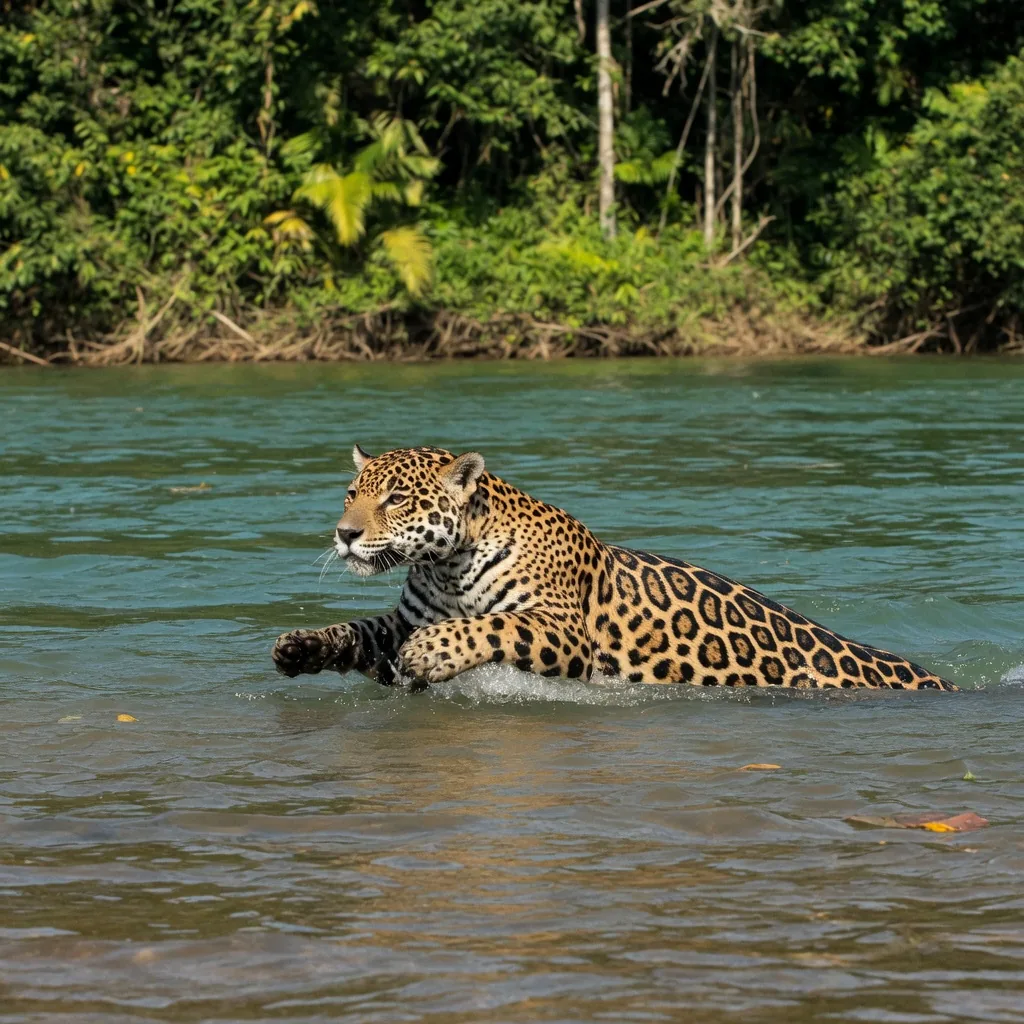
This feline also enjoys swimming and often lives near water. The jaguar even has the ability to carry its prey while swimming, something that helps it move a kill to safer ground.
Take the Jaguar Quiz!
5 quick questions. How much do you really know about the jaguar?
Reproduction and Cubs
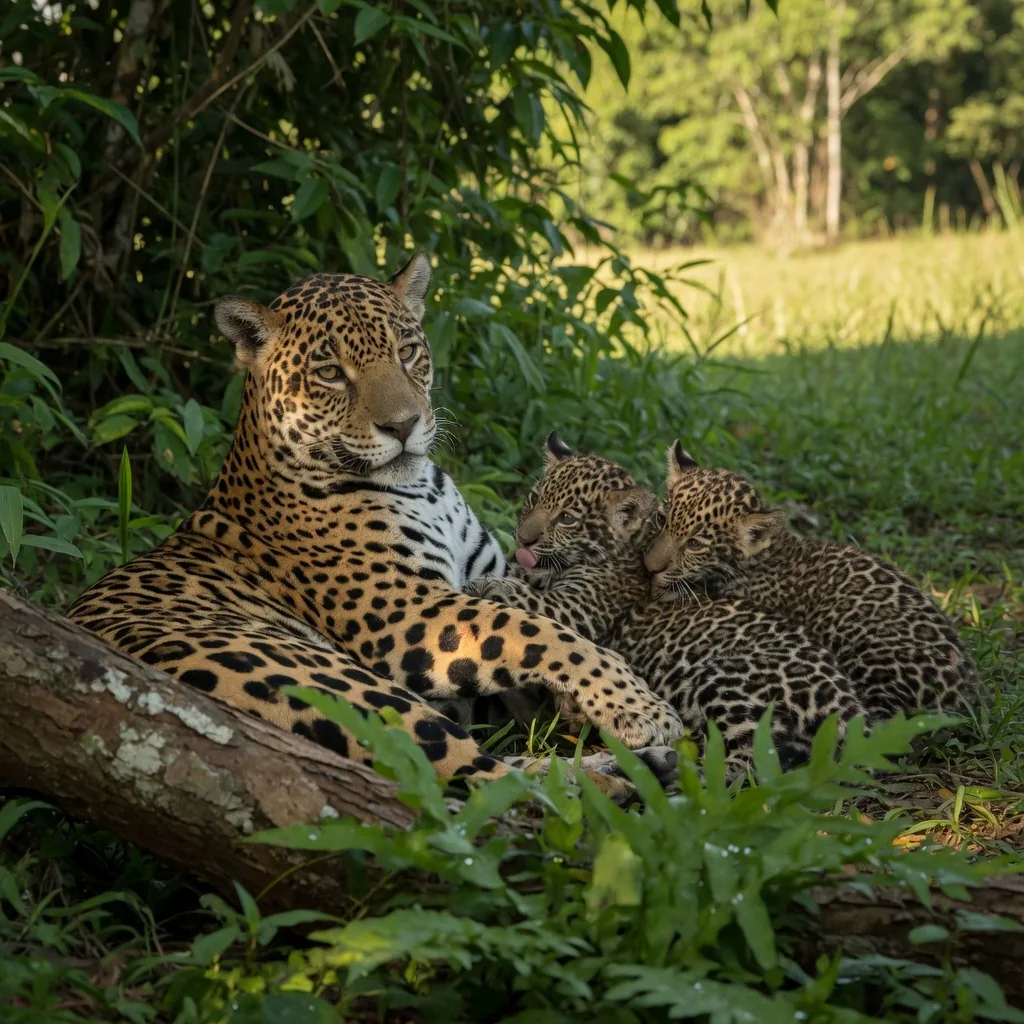
Jaguars mate throughout the year and separate after the birth of the young. Only the female raises the cubs.
- The gestation period is 90-105 days, after which the female gives birth to 2-4 cubs.
- Male jaguars are kept away from the young, as they have a tendency to kill the cubs.
Roar and Communication
These animals can roar like other members of the big cat family and have a hoarse, deep roar. Males generally roar more deeply than females. Jaguars also use their waste to mark and communicate territorial boundaries.
Conservation Status
Because there is heavy demand for jaguar skin, these animals are considered an endangered or threatened species today. Unfortunately, humans are the jaguar's biggest predator. According to the IUCN Red List of Threatened Species, jaguars are near extinction. Protecting this remarkable animal (and the forests it depends on) is one of the most important wildlife challenges in the Americas.
Explore More Animals
 Captivating Facts About the Food Jaguars Eat and Their HabitatJaguar is the third-largest feline after the lion and tiger. Discover where jaguars live, what they eat, and how they hunt, plus a quiz, glossary, and did-you-
 Jaguar AdaptationsDiscover the jaguar (Panthera onca), the rainforest's apex predator. Its skull-crushing bite, swimming skills, spotted camouflage, size, coat, habitat, hunting
 Interesting Facts about Cougars (Mountain Lions)An impressive cat of the Americas, the cougar is known for its amazing adaptability. It has over 40 names, and despite being a skilled hunter it is usually not
 Astonishing Facts About Amur Leopards, the World's Rarest Big CatsOne of the rarest animals on the planet, the Amur leopard is actually a subspecies of the leopard; in fact, it is one of the nine subspecies of leopards.

 Fun fact for today!The jaguar is the only big cat native to the Americas, and it can bite straight through a skull!