

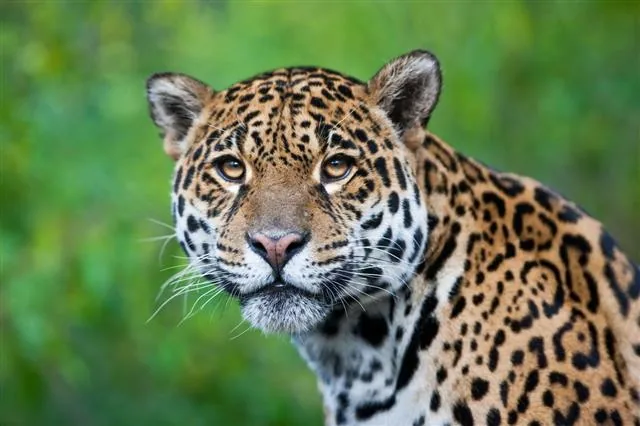
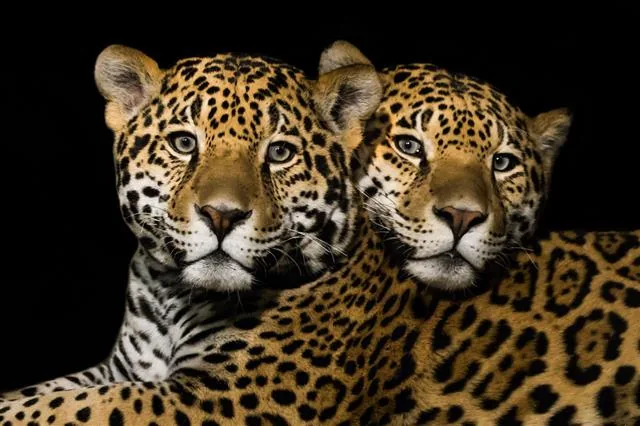
Jaguars are well known for their close resemblance to leopards, both share a similar spotted pattern on their body and are equally beautiful in appearance. But jaguars have larger and fewer spots compared to a leopard. They also have a broad head and an extremely powerful jaw. Typically, jaguars weigh between 100 to 250 pounds and live for 12 to 15 years in the wild. An adult is 5 to 8 feet in length including the tail.
Jaguar Distribution
Location
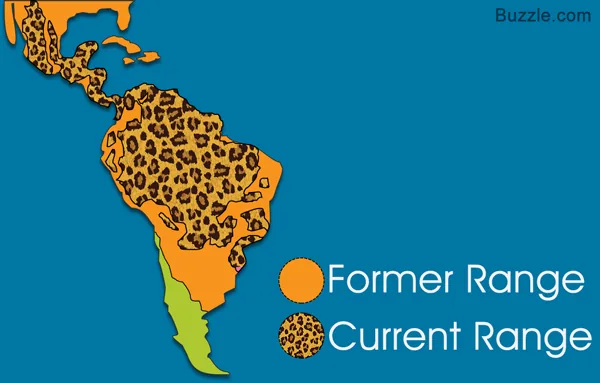
The current range of the jaguar spans the southern part of North America (United States and Mexico), across Central America, and into almost half of South America, north of Argentina and south of Paraguay.
Subspecies of Jaguar
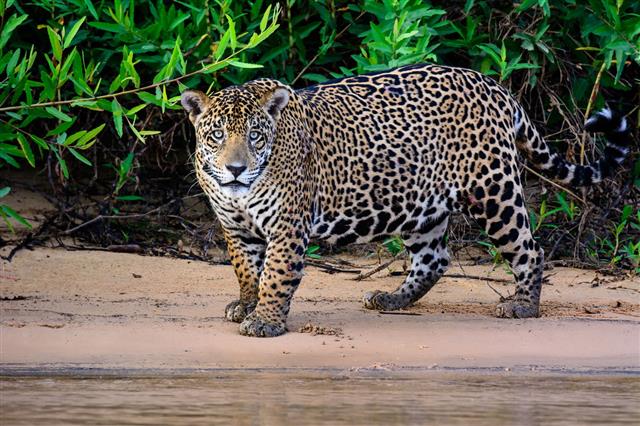
Jaguars are divided into 9 subspecies. Their names and ranges are listed below.
- Arizona jaguar (P. onca arizonensis), Arizona, New Mexico
- Central American jaguar (P. o. centralis), El Salvador south to Colombia
- Goldman's jaguar (P. onca goldmani), Yucatán Peninsula south to Belize
- Mexican jaguar (Panthera onca hernandesii), West Mexico
- Paraguay jaguar (P. onca paraguensis), Mato Grosso in Brazil to northern Argentina and Paraguay
- Panthera onca onca, Venezuela
- Peruvian jaguar (P. onca peruviana), Coastal Peru
- Vera Cruz jaguar (P. onca veraecrucis), Eastern and southeastern Mexico to Texas
- Panthera onca palustris, Mato Grosso in Brazil to Paraguay along the Paraguay River and NE Argentina
Home Ground
Jaguar Habitat
Broadly speaking, the jaguar is found in Mexico, Central America, and South America. It lives in a variety of habitats: tropical rainforests, rocky terrains, seasonally flooded wetlands, and dry grasslands. It was once thought these animals had disappeared completely from the southwestern United States; however, recent occasional sightings have changed that view. Their largest population is found in the moist Amazon basin.
Dense Forest Suitable for Hunting
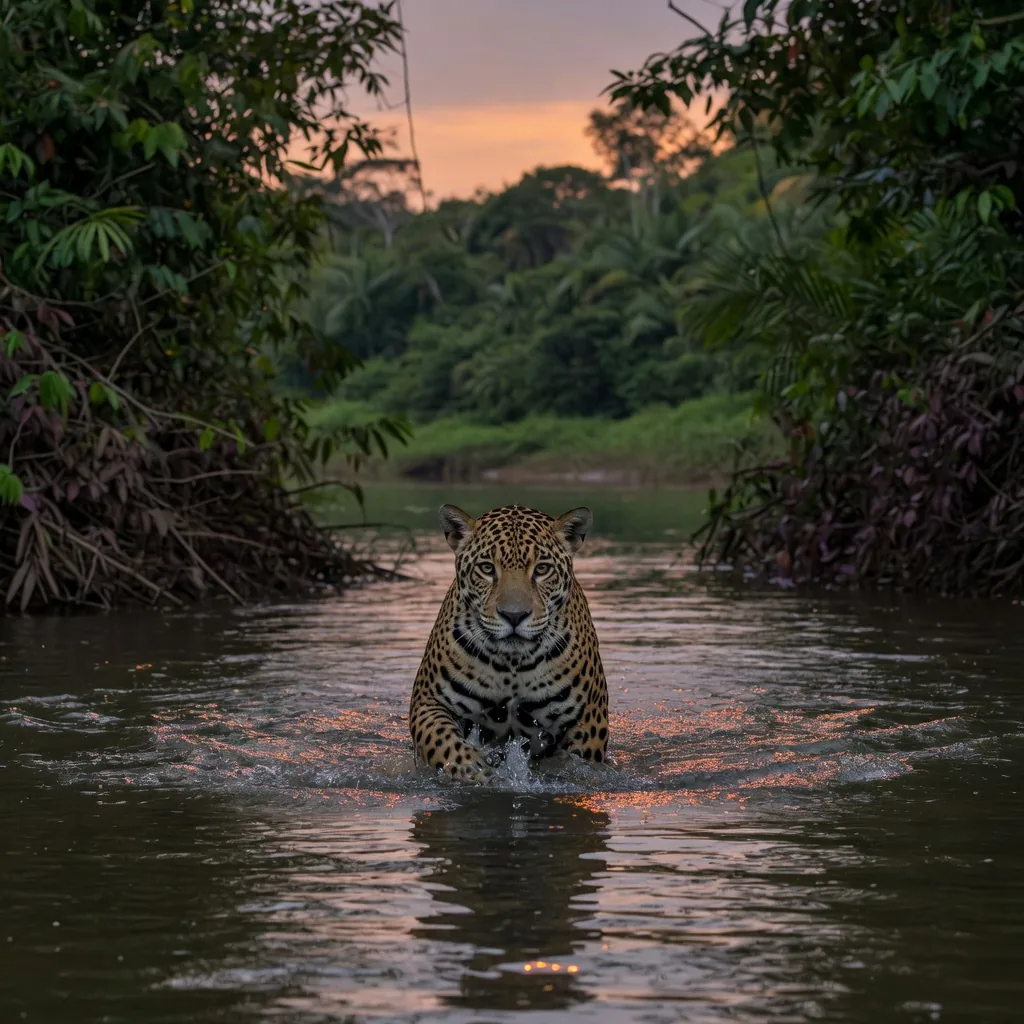
To catch prey easily, jaguars prefer dense forests that offer ample cover for a perfect ambush. They love water and are often found near rivers and swamps in dense forests. They are fairly good swimmers and often hunt and kill small-sized crocodiles. This feline is rarely found in mountainous areas and at elevations of 4000 meters and above.
Rapidly Decreasing Habitat
Like most wild animals, jaguars also face serious risks from the rapid destruction of their habitat, mainly due to deforestation. The population of jaguars is receding at an alarming rate. As human settlement expands, forests and grasslands are being cleared. This animal has now become extinct from countries like El Salvador and Uruguay, in addition to many other areas where it was once frequently spotted.
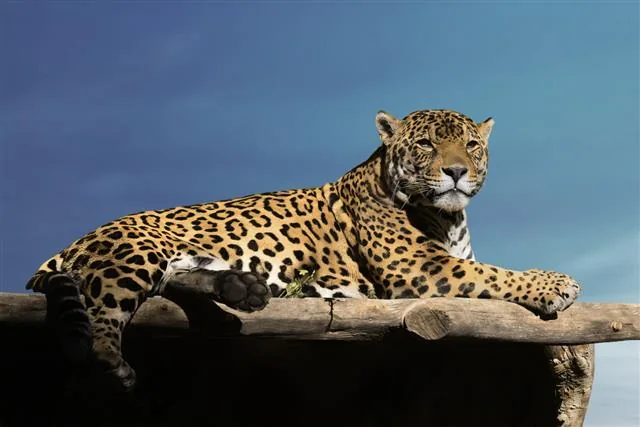
Diet
Take the Jaguar Habitat & Diet Quiz!
5 quick questions about the Americas' most powerful big cat.
Food Intake
For a jaguar weighing 34 kg (75 lb), the daily food intake varies between 1.2 to 1.5 kg (2.6-3.3 lb). Since these animals spend more energy in the wild compared to those in captivity, jaguars in captivity are heavier, around 50-60 kg (110-130 lb), and their food requirement is close to 2 kg (4.4 lb) per day.
Food Palate
Jaguars are apex predators. They prefer large prey and are particularly fond of meat. The food palate of a jaguar is wide, covering at least 87 species, ranging from tapirs, birds, sloths, turtles, rodents, and reptiles, to monkeys, frogs, and deer.
Unlike other big cats, jaguars are not primarily man-eaters, but are known to make an exception when provoked or threatened. They also eat livestock, which can pose a threat to humans living in the same region.
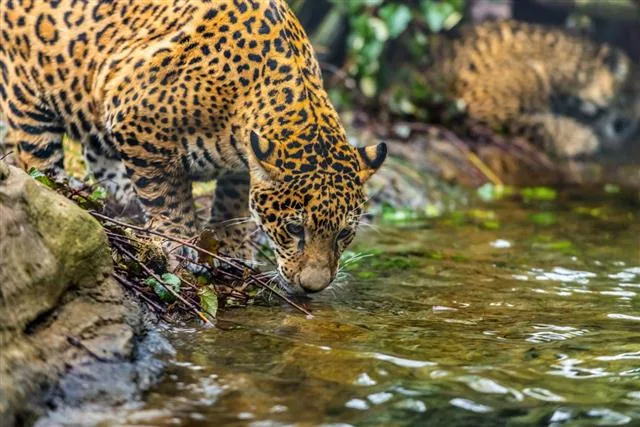
Hunting Technique
A powerful jaw and very strong teeth enable this cat to kill its prey with ease. Jaguars are also known to take on sea turtles, their strength makes it possible to pierce even the hard shells of turtles. The typical method used by big cats for killing prey is to grip the prey's throat in their jaws until it suffocates. But jaguars have a unique hunting method: they bite through the skull of the prey between the ears, piercing the brain and making the prey immobile instantly.
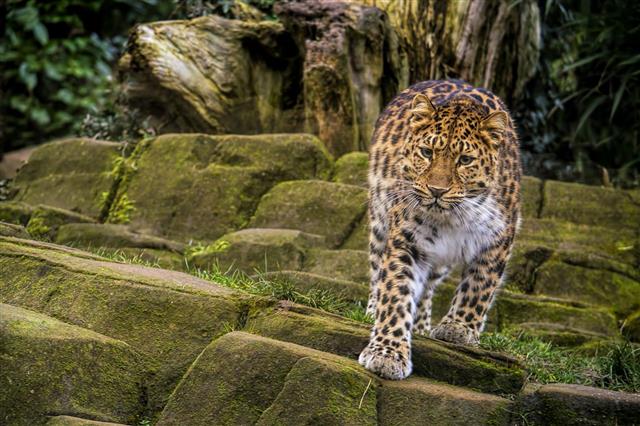
Jaguar Stalks Its Prey
Another key hunting strategy is that jaguars never chase their prey. They make their kill by stalking the prey before attacking or ambushing it. They mostly drag the prey away into the dense forest or a secluded area before feasting. Unlike tigers, jaguars never hide their prey after killing it.
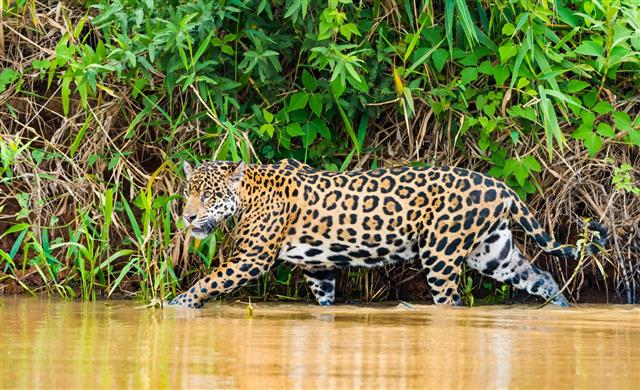
The Dire Need for Conservation
The hunt for jaguar skin still continues today. It is time we wake up and do our part for their conservation, or else a time may come when these majestic big cats will only remain as a pretty picture in books.
Explore More Animals
 Jaguar Animal FactsDiscover fascinating jaguar facts: how the Americas' largest cat hunts, swims, raises cubs, and why it's near extinction. Quiz inside!
 Jaguar AdaptationsDiscover the jaguar (Panthera onca), the rainforest's apex predator. Its skull-crushing bite, swimming skills, spotted camouflage, size, coat, habitat, hunting
 Tiger's Habitat: What do Tigers Eat?Royal in their appearance, tigers are one of the most majestic animals seen in the wild. Here is some information about their habitat and food habits.
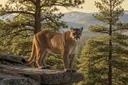 Cougar (Mountain Lion) HabitatWhere do cougars live? Explore the remarkable range of the mountain lion (from Canadian forests to South American pampas) and learn what makes a habitat perfe

 Fun fact for today!The jaguar is the only Panthera species found in the Americas, making it the New World's apex big cat!