

A jungle, by definition, is an area of dense plants where there is fierce competition and a struggle to survive. More than half of all the animal species on the planet live in jungles, and that makes a full list of jungle animals nearly impossible. Such a list would take a long time to put together — and even then it would only be 'near perfect', not perfect, because several species out there are still to be discovered or classified.
Contrary to the popular belief that animals means only mammals, the animal kingdom (the 'kingdom Animalia') also includes birds, insects, and reptiles.
Jungle Animals A to Z List
The jungles on the planet are home to millions of animal species that vary in shape, size, appearance, habitat, and food habits. Knowing what kind of animals live in the jungle matters, because it helps us understand the jungle ecosystem — and why it is so important to protect it. Below is an alphabetical list of animals that live in a jungle, in which we have tried to include some of the most popular species from around the world.
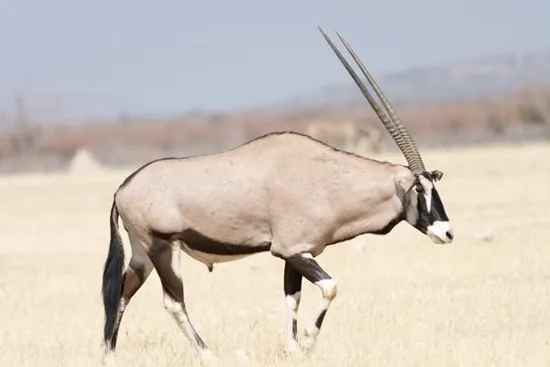
Antelopes
Antelopes are ruminant mammals in the Bovidae family. They are easy to spot by their unbranched horns, which never shed. They are split into different species based on where they live and how they look. About 90 percent of these species are native to Africa alone. Some of the most popular are the Arabian oryx and Dorcas gazelle of the Arabian peninsula, the Chinkara and Blackbuck of India's lush green forests, and the Tibetan antelope and Saiga of Russia and Southeast Asia.
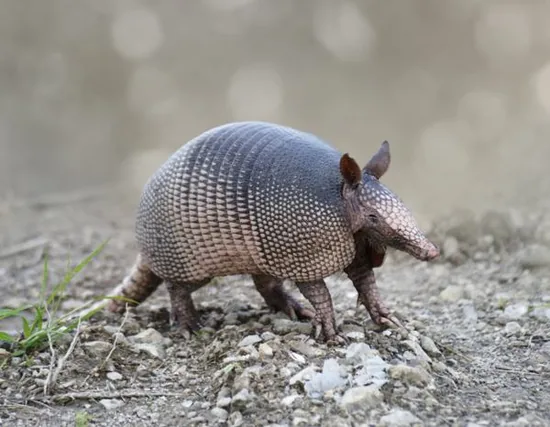
Armadillos
Armadillos are placental mammals found mainly in South and Central America. Their leathery armor shell makes them easy to recognize. ('Armadillo' is a Spanish word that means the 'little armored one'.) There are several sub-species, with lengths from 5–59 in. and weights from 4–120 lbs. Armadillos are lazy animals and spend about 16 hours a day sleeping in their burrows. The rest of the day they hunt and feed on beetles, ants, termites, and other insects.
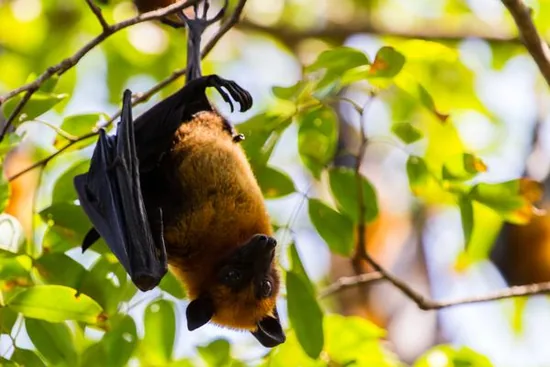
Bats
Bats are the only mammals that can truly fly — that is, sustained flight, not gliding like the flying squirrels. There are somewhere around 1,240 species of bats on the planet, and 70 percent of them eat insects. Bats make up nearly half of all the mammal species in the rainforests, where they do the important job of a pollinator. Some of the most popular bat species are the giant golden-crowned flying fox, vampire bats (which is why bats are often linked with vampires), Kitti's hog-nosed bat, and the Mexican free-tailed bat.
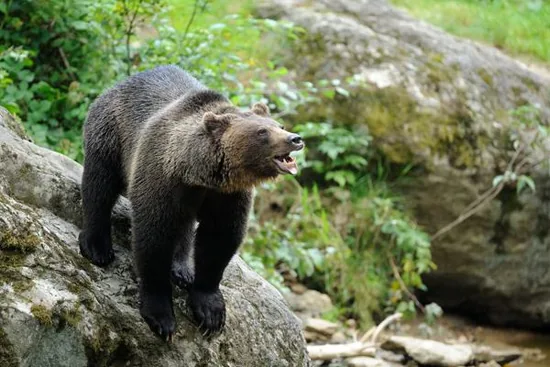
Bears
Bears are mammals in the Ursidae family, found all over the Northern Hemisphere and in some parts of the Southern Hemisphere. There are 8 living species of bears: the American black bear, brown bear, Asian black bear, polar bear, sloth bear, sun bear, spectacled bear, and the giant panda. The polar bear is completely carnivorous, and the giant panda eats a diet that is 90 percent bamboo shoots. All the other species of bears are omnivorous.
Chimpanzees
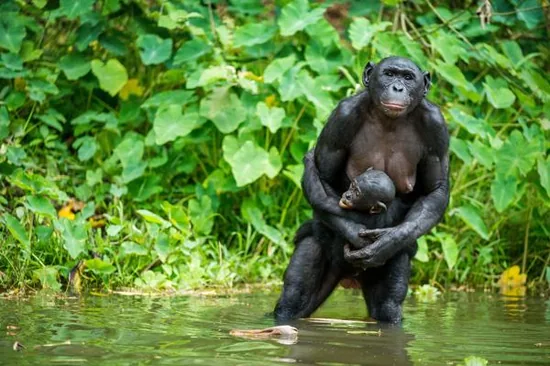
Chimpanzees are highly intelligent and share 98 percent of the genetic blueprint of humans. They live in West and Central Africa. They can adapt to many habitats, from dense forests to open grasslands. Fully grown, they reach a height of 4–5.5 ft. and weigh between 70–130 lbs. Chimps usually feed on plants, but they have also been seen eating insects and carrion. Though they walk on all fours most of the time, they can stand upright and walk that way too.
Cougars
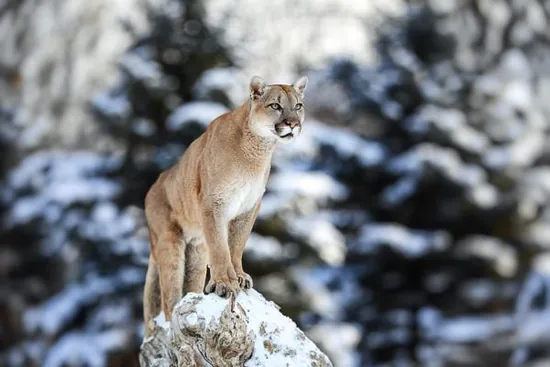
The cougar — also called the puma, mountain lion, or panther — is one of the most powerful predators in the Americas. Cougars live in many parts of the continent, from the dense forests of Canada to the swamps of Florida. They can grow to a length of about 3.25–5.25 ft. and weigh about 136 lbs. These ambush predators feed on large prey such as elk, wild horses, white-tailed deer, and armadillos. Being a non-scavenging animal, it does not feed on carrion; it only eats the prey it has killed.
Deer
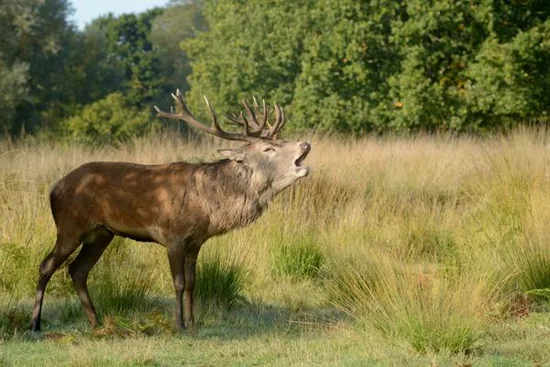
A deer is a ruminant mammal in the Cervidae family. Almost all males grow and shed their horns every year, which sets them apart from animals with permanent horns, like the antelopes. The moose (also called the Eurasian elk) of North America and Europe is the largest species of deer, while the Pudu of South America is the smallest. Other well-known species are the reindeer, sambar, barasingha (swamp deer), spotted deer, fallow deer, red deer, black-tailed deer, and the white-tailed deer.
Elephants
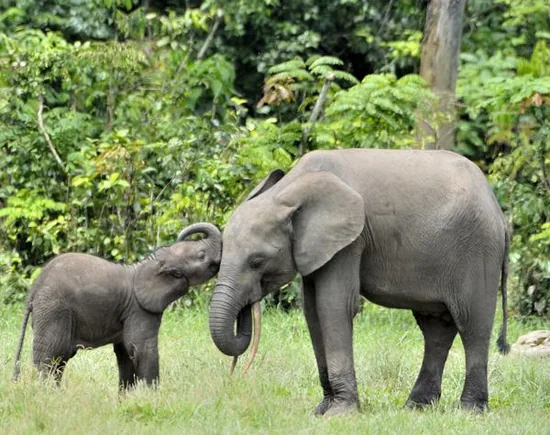
Elephants are usually thought of as the largest land mammals on Earth. It is the African bush elephant — with a height of 8.2–13 ft. and weight of 5,000–14,000 lbs — that is the largest land animal on the planet. It is 1 of the 3 living elephant species; the other 2 are the African forest elephant and the Asian elephant. As their name suggests, African forest elephants live in the dense forests of Africa. Asian elephants are usually found in the forested areas of Asia.
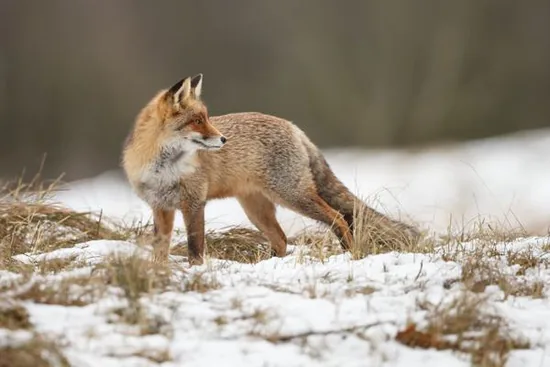
Foxes
Foxes are small to medium-sized canids with a long narrow snout and a bushy tail. There are 37 identified species of this animal spread all over the world. Some of the most popular are the red fox, kit fox, Arctic fox, fennec fox, Darwin's fox, and the crab-eating fox. Found on almost every continent, the red fox is the most common species. The fennec fox is the smallest, growing to a length of about 9.5–16 in. and weighing between 2.2 to 3.3 lbs. Being omnivorous, foxes feed on berries, fruits, fish, birds, rodents, rabbits, and reptiles.
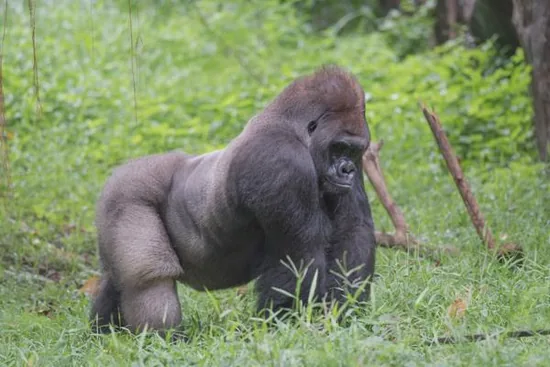
Gorillas
Gorillas are the largest living primates on the planet. There are 2 species of gorillas — the Western gorillas and the Eastern gorillas — and their ranges are separated by the Congo River and its tributaries. The exact number of gorilla sub-species is debated, with some sources stating 4 sub-species and some stating 5. These ground-dwelling primates are herbivores, so the tropical and subtropical moist broadleaf forests make an ideal home for them.
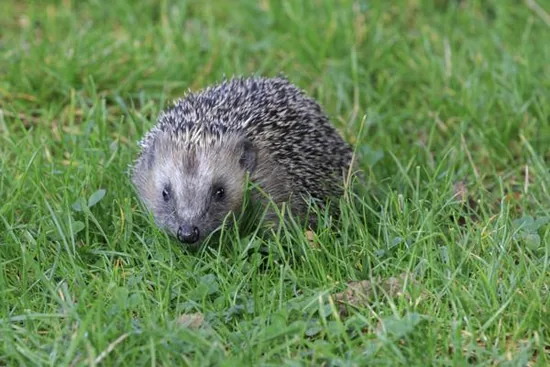
Hedgehogs
A hedgehog is a carnivorous mammal with a coat of stiff, sharp spines, native to Asia, Europe, and Africa. Hedgehogs are also found in New Zealand, where they were introduced. They most often feed on worms, insects, snails, centipedes, mice, frogs, and snakes. Though their eyesight is weak, they have a strong sense of smell and hearing. When attacked, hedgehogs roll into a ball to fool their predators. Some of the best-known species are the European hedgehog, Amur hedgehog, and the Indian long-eared hedgehog.
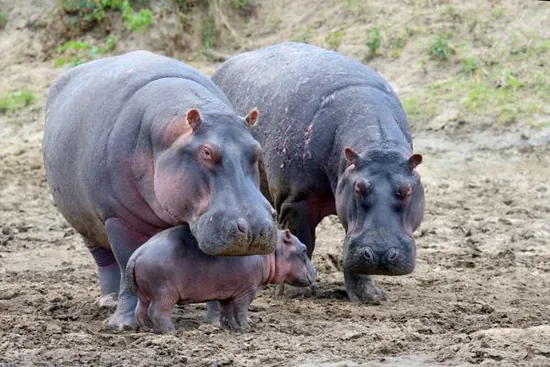
Hippopotamus
The hippopotamus is a herbivorous mammal native to the African continent. It has a large body, an enormous mouth with big teeth, and stubby legs. Hippos rank third in weight, after elephants and rhinoceros. It is the pygmy hippopotamus that usually lives in forested areas. These aggressive creatures are seen as the most ferocious of the African wildlife. Once found in great numbers, today they are battling for survival because of heavy poaching and loss of habitat.
Hyenas
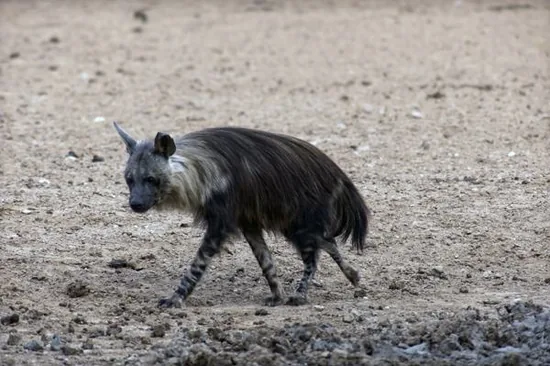
Hyenas are carnivorous mammals found in Asia and Africa. Some of the best-known species are the spotted hyena (also called the laughing hyena), striped hyena, brown hyena, and the aardwolf. Hyenas live in a range of habitats, from grasslands and semi-deserts to dense forests. They are not just skilled hunters; they are also widely known for scavenging. Their strong jaw and equally strong digestive system let them eat and digest even the teeth and bones of their prey.
Jaguars
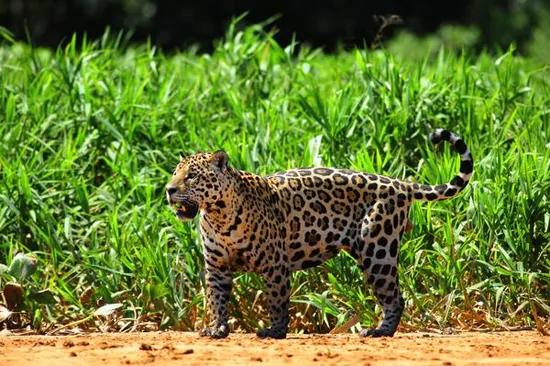
The jaguar is the only species of the Panthera genus found in the Americas. It is the third largest feline in the world and one of the top predators of the tropical rainforest. The animal looks a lot like a leopard, but a close look shows its bulkier build. It has one of the most powerful bites of any feline and can drive its sharp teeth right through the skull of its prey. This solitary stalk-and-ambush hunter has a very large range, often covering the dense forests and open terrain of the Americas.
Koalas
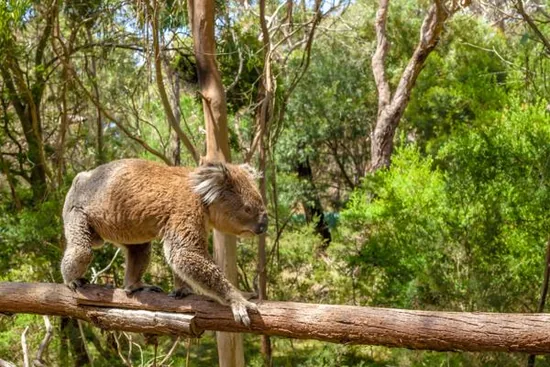
Even though it is called the koala bear, this pouched mammal is not a bear — and it is not related to the bear family. Koalas are actually marsupials native to eastern Australia, and they carry their young in their pouch for six months after birth. Fully grown, they can weigh around 20 lbs. They feed on eucalyptus leaves and spend most of their time in these trees, sleeping for eighteen hours of the day. Koalas can go without water for several days, getting the moisture they need from the eucalyptus leaves they eat.
Lemurs
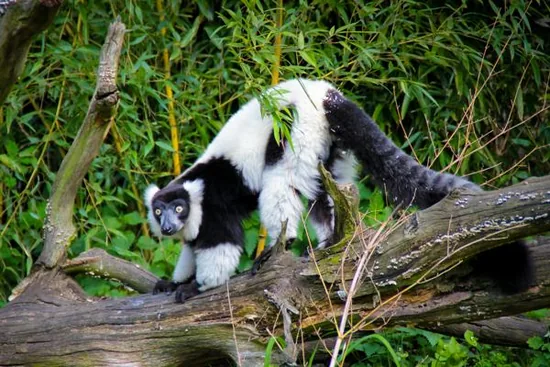
Lemurs belong to a group of primates called the Strepsirrhines, found only on the island of Madagascar. They are known for their large, reflective eyes and wailing cries. The 4 families of lemurs include 99 species and their sub-species. One of these is the Aye-aye, which has rodent-like teeth and a long middle finger. Growing to a length of 12–15 in. and weighing around 5.5 lbs, the Aye-aye is the world's largest nocturnal primate. Other well-known lemurs are the brown lemurs, dwarf lemurs, and woolly lemurs.
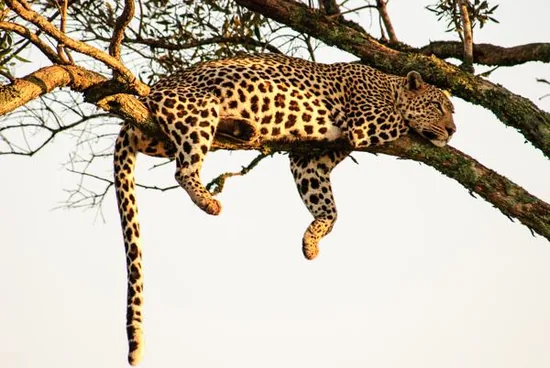
Leopards
The leopard, the smallest of the big cats, is native to southern Asia and Africa. It is best known for its speed and its ability to climb — skills that come in handy when hunting in grasslands, mountains, and rainforests. According to the IUCN, there are 9 species of leopards, the best-known being the Indian leopard, Javan leopard, Amur leopard, and Sri Lankan leopard. Some sources also count the snow leopard and clouded leopard as leopard subspecies, but that is debated.
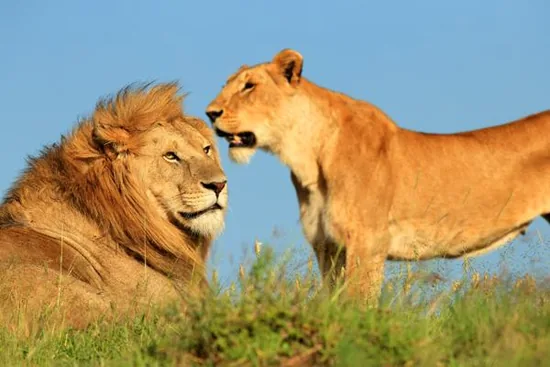
Lions
Lions are usually linked with grasslands, especially the African Savannas. However, a small population of lions does live in the Gir forests of Gujarat, India. Based on where they live, lions are grouped into African lions, native to Africa, and Asiatic lions, native to Asia. In size, the African lion — about 4.5–6.5 ft. and weighing 265–420 lbs — is larger than the Asian lion. Lions usually hunt in groups called a 'pride'; a single pride has around four to six members.
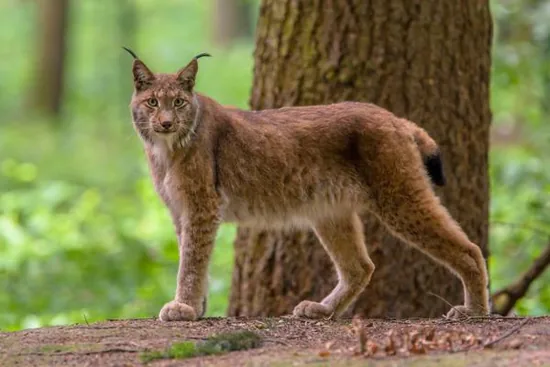
Lynx
Lynx are solitary wildcats found across North America, Europe, and Asia. There are four species of lynx: the Eurasian lynx, found in the dense forests of Europe and Siberia; the Canadian lynx, found in the tundra forests of Canada and Alaska; the Iberian lynx, native to the Iberian peninsula in southern Europe; and the Bobcat, found in Canada, Mexico, and the continental United States. Of these, the bobcat is perhaps the best known, and it lives not just in forests but also in the semi-arid regions of the United States and Mexico.
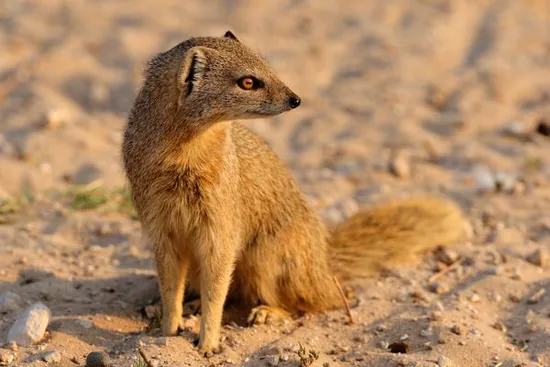
Mongooses
Mongooses are carnivorous mammals native to most parts of Africa, southern Asia, and the Iberian peninsula. As many as 33 species have been identified, the best-known being the common dwarf mongoose, white-tailed mongoose, marsh mongoose, and the Indian gray mongoose. Their size and weight change with the species, with lengths from 7–25 in. and weights from 12 oz to 11 lbs. Most mongoose species are terrestrial, but some are aquatic and some are arboreal.
Monkeys
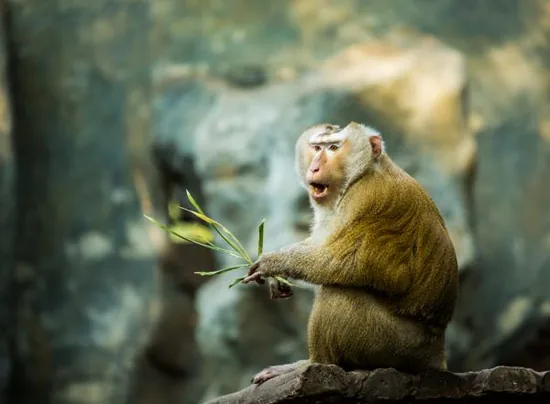
Monkeys are another group of jungle animals, with more than 260 species living in different forests of the world. These include the New World monkeys, like capuchins and marmosets, and the Old World monkeys, like baboons and macaques. Monkeys are usually told apart from the apes by their tails. The Pygmy Marmoset is about 5–6 in. tall and weighs between 4–5 oz, while the Mandrill is 3.3 ft. tall and weighs around 77 lbs. Most of these species are arboreal, which makes the jungle the best home for them.
Red Pandas
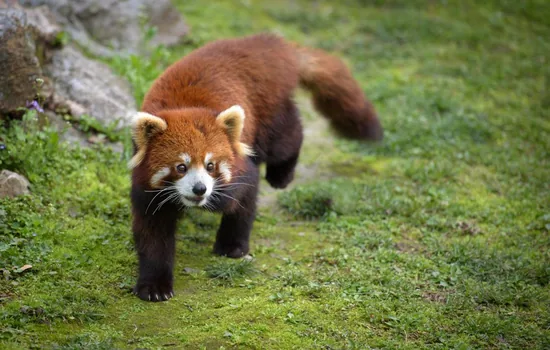
The red panda is a herbivorous mammal found in the Himalayas, in Nepal, Central China, and Burma. (Even though the name makes it sound related to the giant panda, the two are not related to each other.) Red pandas are crepuscular, which means they are mostly active at dusk and dawn. Often seen feeding on bamboo, red pandas also eat fruit, acorns, roots, and eggs. Sadly, the red panda is an endangered animal fighting for survival, with only a few thousand individuals left in the wild.
Rhinoceros
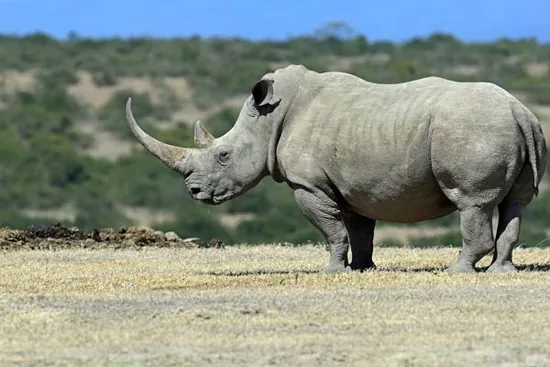
Rhinoceros, often called rhinos, are large mammals native to Asia and Africa. Asia is home to 3 rhino species — the Javan rhino, Sumatran rhino, and the Indian rhino — while Africa is home to 2, the Black rhino and the White rhino. Their habitat covers the Savannas of Africa and the dense tropical and subtropical forests of Asia. Of the 2 African species, the Black rhino — like its Asian cousins — prefers areas with dense plants. The Black rhino, Javan rhino, and the Sumatran rhino are listed as 'Critically Endangered' by the IUCN.
Skunks
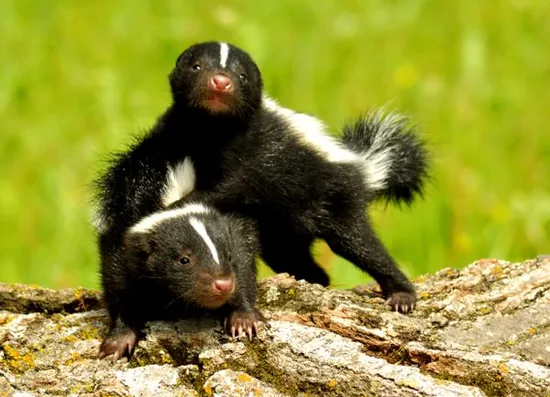
Skunks are omnivorous mammals famous for their unusual self-defense: they spray a foul-smelling liquid from glands under their tail to scare off predators. Nearly all skunks live in the Americas; the only exception is the stink badgers, which are found in Asia. These mammals measure around 8–19 in. in length and weigh between 7 to 14 lbs. Besides the stink badgers, the group includes hooded skunks, striped skunks, hog-nosed skunks, and spotted skunks.
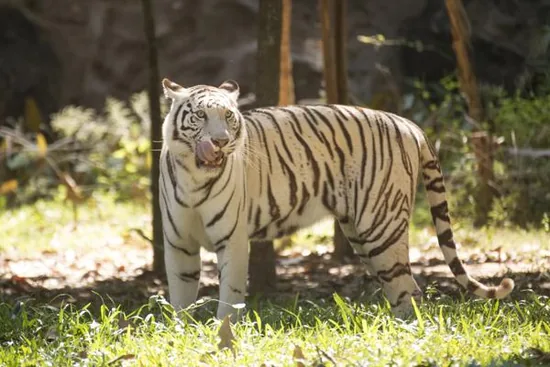
Tigers
The largest of the cat species, the tiger is native to most parts of Asia. There are 6 living sub-species of tiger: the Bengal tiger (India and Bangladesh), the Indochinese tiger (China, Thailand, Cambodia, Laos, and Vietnam), the Malayan tiger (south of the Malay Peninsula), the Sumatran tiger (Sumatra Island), the Siberian tiger (eastern Siberia), and the South China tiger (southern China). A tiger's stripes are key for camouflage in the dense forests where it lives.

Wild Dogs
Wild dogs is a general term for mammals in the Canidae family that resemble dogs but are different from jackals and wolves. African wild dogs and Australian wild dogs usually live on grasslands, while the Asiatic wild dogs — also called Indian wild dogs or Dholes — prefer the forests. They make up for their size by hunting in packs, which, along with their amazing stamina, helps them bring down animals much larger than themselves. In fact, a large pack of dholes can even take on a tiger and kill it.
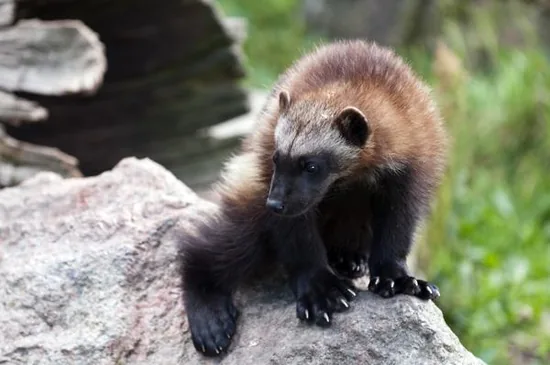
Wolverines
A wolverine is a member of the weasel family — the largest member, to be exact — found in most parts of the northern hemisphere. Being omnivorous, it feeds on plants, berries, rodents, large mammals, and carrion. Though it looks like a bear and its name sounds like 'wolf', the wolverine is not related to either. Measuring around 26–34 in. in length and weighing between 24–40 lbs, the wolverine — thought to be the strongest animal for its size — is a perfect example that 'looks can be deceptive'.
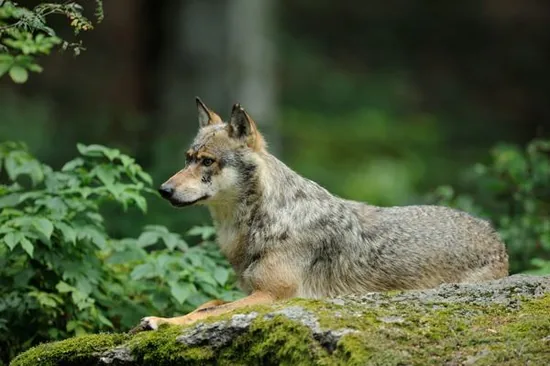
Wolves
The wolf, the gray wolf to be exact, is the largest member of the Canidae family, found across Eurasia and North America. In general, wolves reach a length of about 36–63 in. and weigh between 40–175 lbs. There are 39 subspecies of the gray wolf, the best-known being the Eurasian wolf, Mexican wolf, Eastern wolf, Indian wolf, red wolf, Baffin Island wolf, and the Northern Rocky Mountains wolf. These subspecies live in habitats as different as the arid regions of North America and the dense forests of Asia.
Take the Jungle Animals Quiz!
5 quick questions. Find out how much you really know about the animals of the jungle.
List of Jungle Birds
Around 10,000 species of birds are found on the planet, from the 2 in. hummingbird to the 8 ft. Ostrich. Because the jungle is so varied, many birds choose it as their home. With their colorful plumage, these birds are well suited to the dense forests. Scientifically, birds are sorted into different orders (groups), such as Falconiformes, Galliformes, Strigiformes, Coraciiformes, and Piciformes. Here are some groups of birds that are known to live in jungles (alongside other habitats).
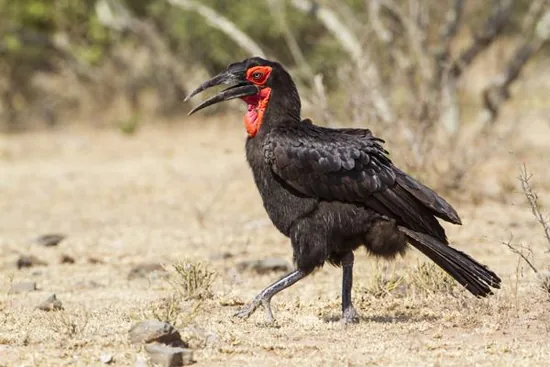
Kingfishers, Hornbills, etc. (Coraciiformes)
While 90 percent of this group is made up of different kingfishers, it also includes bee eaters, toddies, hornbills, and motmots. The Puerto Rican Tody is the smallest bird in this group, weighing somewhere between 5 to 6 g, while the Southern Ground Hornbill is the largest, weighing between 4.8 to 13.6 lbs. Besides these two, the group has many kingfishers (tree, water, and river kingfishers), hornbills, wood hoopoes, bee-eaters, ground rollers, rollers, todies, and motmots.
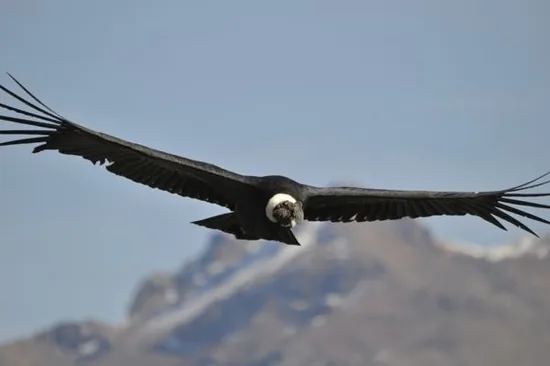
Falcons, Eagles, etc. (Falconiformes)
This group has about 290 species of diurnal birds of prey, such as falcons, eagles, and vultures. The smallest bird in this group is the Black-thighed Falconet, about 5.5 in. long and weighing roughly 1 oz. The largest is the Cinereous Vulture, an impressive 46 in. long and weighing around 31 lbs. The group includes falcons, falconets, New World vultures, Old World vultures, eagles, harriers, hawks, condors, and ospreys. Almost all of them have long, broad wings that help them soar.
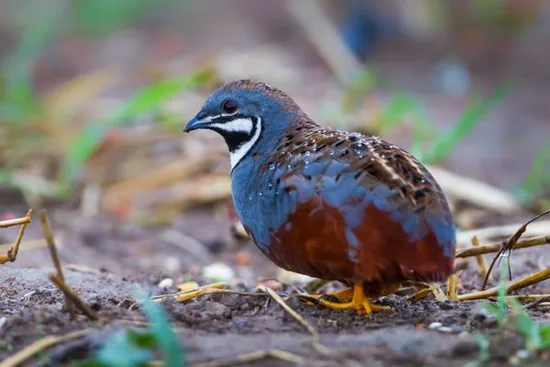
Turkeys, Quails, etc. (Galliformes)
Galliformes are known for their stout build and short, thick bills. There are around 290 living species in this group, including turkeys, quails (both New World and Old World quail), pheasants, partridge, grouse, curassows, and guans. The smallest bird in this group is the Asian Blue Quail, 5 in. long, and the largest is the North American Wild Turkey, 47 in. long. Most of these birds are herbivores and forage on the ground for roots and other plants with their specially shaped bills — which makes the jungle a perfect home with plenty of food.
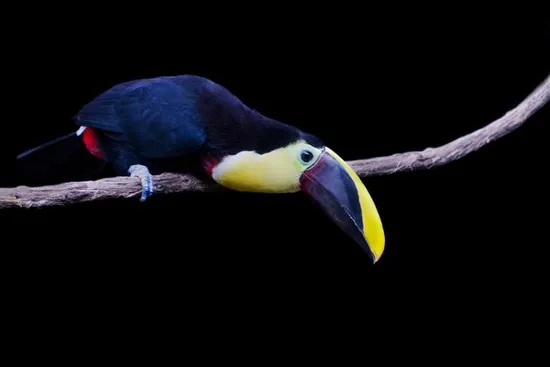
Woodpeckers, Toucans, etc. (Piciformes)
The Piciformes order of jungle birds has around 400 different species of tree-dwelling birds, split into six families. Many rainforest birds known for their colorful feathers belong here. Most are insectivores, though a few prefer fruit. Nearly half of the group is made up of different woodpeckers. Besides woodpeckers, the group includes toucans, barbets, jacamars, honeyguides, puffbirds, and toucan-barbets. At 3.0 in., the Bar-breasted Piculet is the smallest member, while the Black-mandibled Toucan, a rainforest bird measuring 19–24 in., is the largest.
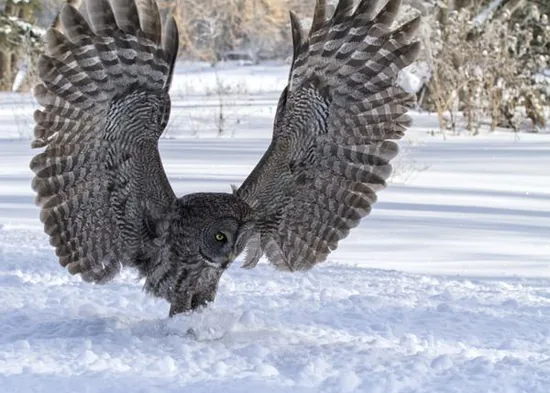
Owls (Strigiformes)
This group has about 200 living species of nocturnal birds of prey, found nearly all over the world. These birds live in a range of habitats, from the Arctic tundra to the tropical rainforests. They usually feed on small mammals, insects, and other small birds. The Elf Owl, 5 in. long, is the smallest member of this group, while the Great Gray Owl, 28 in. long, is the largest. The heaviest title is shared by the Eurasian Eagle-Owl and Blakiston's Fish Owl, both weighing around 10 lbs.
Frequently Asked Questions
What kinds of animals live in the jungle?
Jungles are home to mammals, birds, insects, other arthropods like spiders and centipedes, and reptiles. More than half of all the animal species on Earth live in jungles.
What is the biggest animal that lives in the jungle?
The African bush elephant is the largest land animal on the planet, standing 8.2 to 13 ft. tall and weighing 5,000 to 14,000 lbs.
Which jungle animal is the only mammal that can fly?
The bat. There are around 1,240 species of bats, and they are the only mammals capable of true, sustained flight rather than gliding.
Which group of animals has the most species in the jungle?
Beetles. There are 350,000 known species of beetles, and experts think the real number could be 5 to 8 million.
Insects & Other Jungle Arthropods
Ants
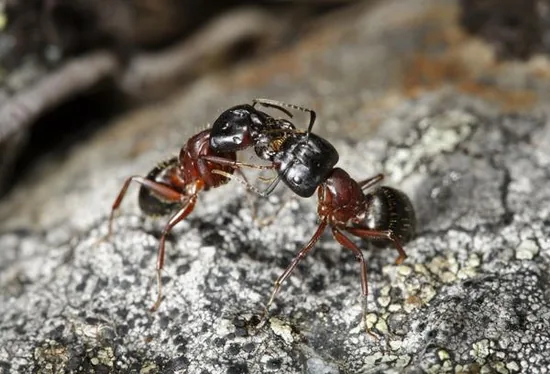
About 12,500 known species of ants are found all over the world. The only places these social insects are not found are perhaps Antarctica and some remote islands. Ant species that live in dense forests include leaf-cutter ants, army ants, carpenter ants, and weaver ants. Some of these ants live in the trees, while others rule the forest floor. Some species build colonies that span several miles beneath the ground.
Bees
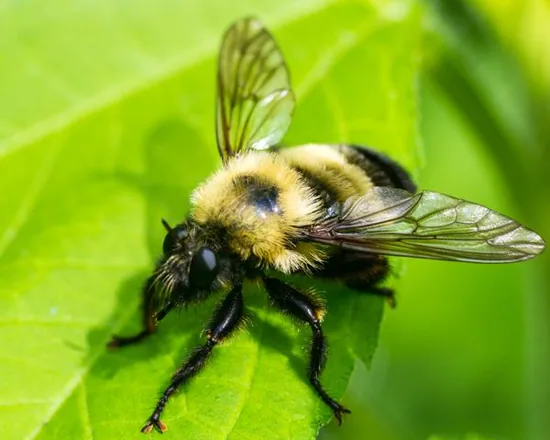
Though they are best known as the makers of honey and beeswax, bees have a crucial job in the ecosystem: pollination. If it were not for these flying pollinators, we would have lost the jungles long ago. More than 20,000 known species of bees are found in every part of the world except Antarctica. Some of the most popular are the honey bees, bumble bees, and killer bees.
Beetles
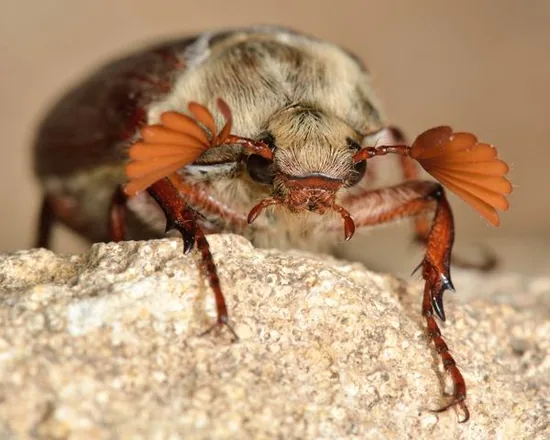
Beetles have the largest number of known species in the animal kingdom. Though there are 350,000 known species, experts estimate the real figure at 5 to 8 million. They make up about 40 percent of all described insect species. Beetles can survive in almost every habitat except the polar regions. The cockchafer, bombardier beetle, Cucujus cinnaberinus, and Asian longhorn beetle are some well-known species.
Butterflies
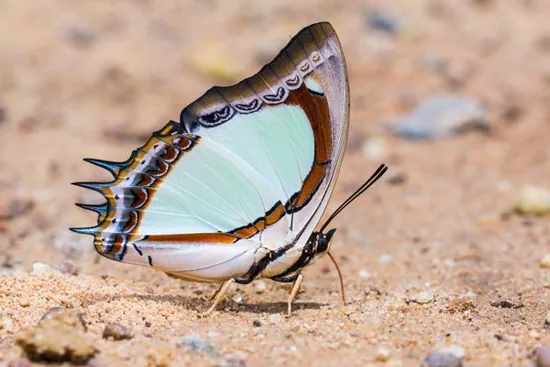
Butterflies are best known for their looks and their unusual life cycle. In their larval form, these insects are called caterpillars. An estimated 15,000 to 20,000 species of butterflies are found on the planet. They fall broadly into three groups: true butterflies, skippers, and moth-butterflies. Swallowtails, whites, monarch butterflies, metalmark butterflies, and brush-footed butterflies are some notable species.
Dragonflies
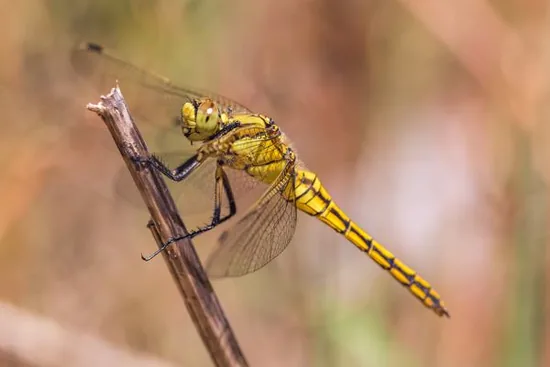
Dragonflies are easy to identify by their long bodies, large many-faceted eyes, and two pairs of see-through wings. Around 5680 known species of dragonflies are found on the planet today, the most popular being the black-tailed skimmer, common hawker, common threadtail, and navy dropwing. These insects usually live near water like ponds and slow-moving streams, and they prefer clean water.
Moths
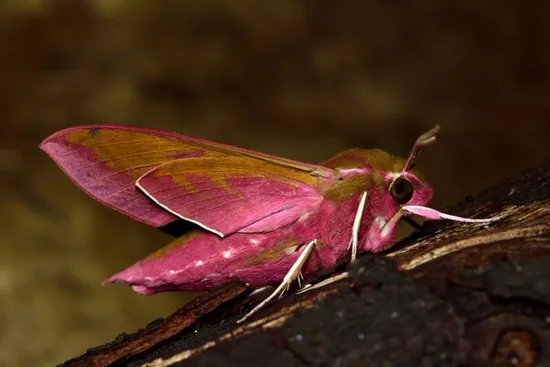
A moth looks a lot like a butterfly, but the two are different insects in the same order — which is why they look alike. There are around 160,000 species of moths in the world. Most of these are nocturnal, but some are crepuscular and some are diurnal. They prefer areas with dense plants, because plenty of plants and trees mean they will not run short of food in their larval stage — the only stage when they eat.
Termites
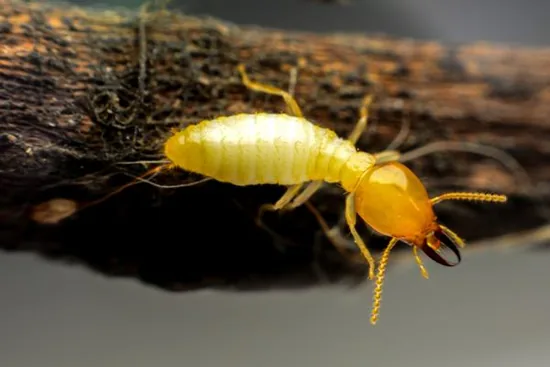
Termites are social insects that feed on dead plant material such as wood and leaf litter. There are 2600 identified species of termites in the world. Like ants, termites live in groups called colonies, in mounds that can be as tall as 30 ft. They usually prefer areas with dense plants where all their needs — food, shelter, and moisture — are met. As detritivores, they play a key role in keeping the ecosystem balanced.
Wasps
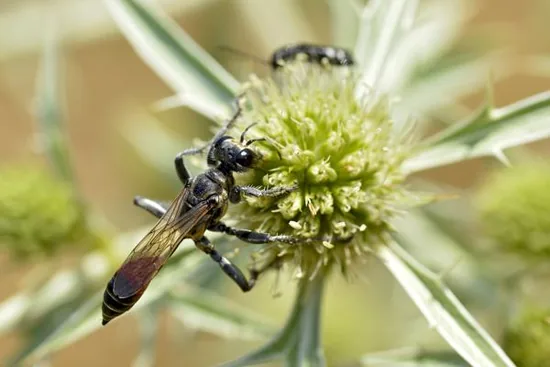
More than 100,000 species of wasps exist on the planet, and they fall broadly into two groups: solitary wasps and social wasps. Except for the polar regions, these insects can survive in almost any habitat. As larvae, wasps are parasitic, but as adults they limit their diet to nectar — which is why they prefer to build their nests in forested areas full of flowers.
Other terrestrial arthropods found in the jungle include centipedes, millipedes, and scorpions. These arthropods are often mistaken for insects because of their exoskeleton, but technically they are not, since they do not have the three pairs (six legs) that insects have.
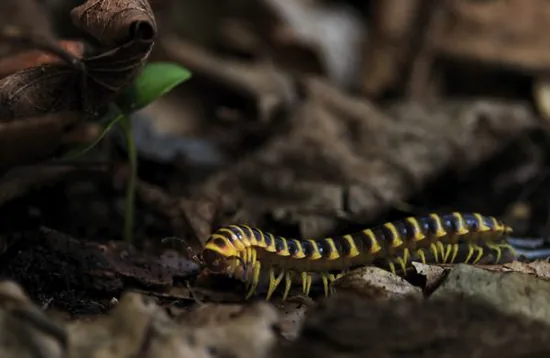
Centipedes
Of the estimated 8000 species of centipedes found throughout the world, only around 3000 have been identified so far. Centipedes range from a few millimeters to around 30 cm and live in many habitats, including the Arctic region. They usually prefer moist places where they can hide easily — and what better spot than the forest floor, with its trees, fallen logs, decomposing leaves, ground burrows, and rocks.
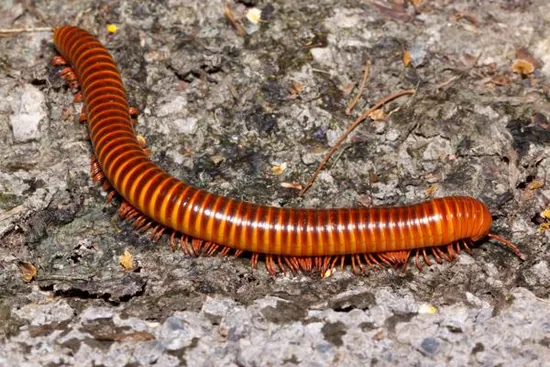
Millipedes
Millipedes look a lot like centipedes, but you can tell them apart by their two pairs of legs on each body segment. There are around 115 families of millipedes, adding up to about 10,000 species spread all over the world. Like centipedes, millipedes prefer a cool, moist place, so they are often found in dense jungles. At 15.2 in., the Giant African millipede is the largest species of millipede in the world.
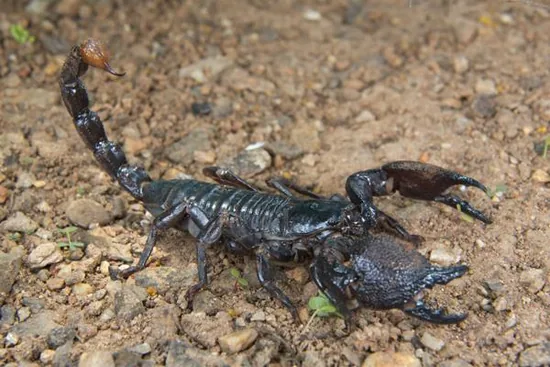
Scorpions
Approximately 1,750 described species of scorpions are found in the world. They live in a range of habitats, including arid deserts and the thick forests of the tropics. They usually live where temperatures range from 68°F to 99°F. The giant forest scorpion, emperor scorpion, and Australian rainforest scorpion are some species found in forests. Some scorpion species prefer trees, while others live on the ground.
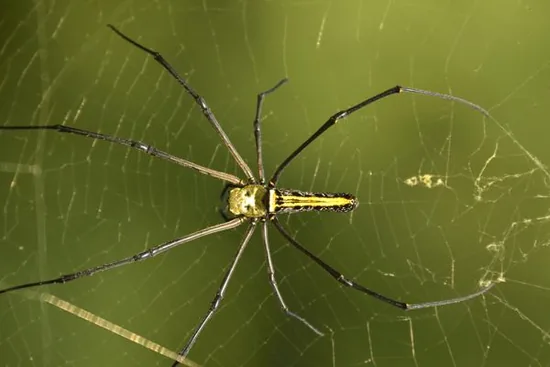
Spiders
Around 40,000 species of spiders, grouped into 109 families, have been identified from different parts of the world. A large number of these live in tropical forests, where the climate suits them and food is plentiful. Spiders are found on trees, on forest floors, in logs, and even along water bodies in these forests. The largest species is the Goliath bird-eating spider, found in South American rainforests, with a leg span of 10 in. and weighing around 4 oz.
Reptiles in the Jungle
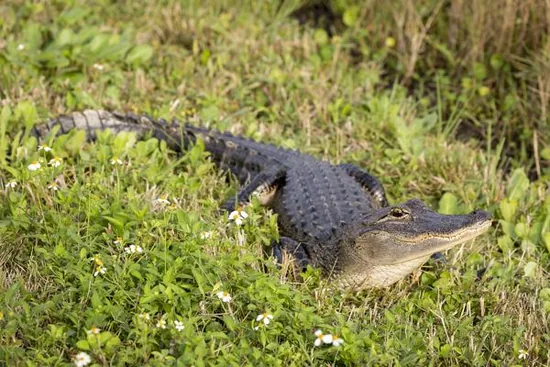
Alligators
Alligators are aquatic reptiles found only in the United States (the American alligator) and China (the Chinese alligator). Both species have a limited range: the American alligator is native to the southeast United States, and the Chinese alligator to the Yangtze River valley. The American alligator is the larger of the two and can reach a length of 13 ft. and weigh about 800 lbs. The Chinese alligator is much smaller, with an average length of 7 to 8 ft. These reptiles feed on deer, smaller alligators, and even large carnivores like panthers and black bears.
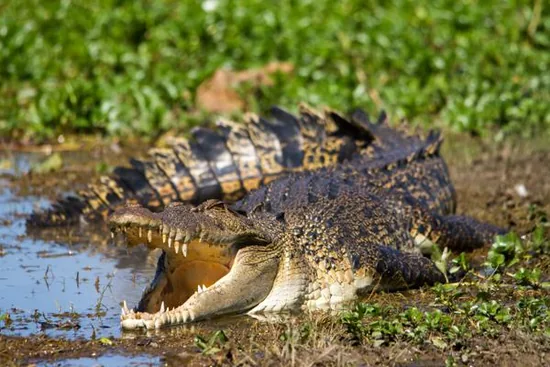
Crocodiles
Unlike alligators, crocodiles live in a much wider area and are found throughout Asia, Africa, Australia, and both the Americas. These aquatic reptiles are most often found in freshwater such as rivers, lakes, and wetlands, but they also live in brackish water. Their average length is 6–15 ft., but some species, like the saltwater crocodile, can grow to 18 ft. or more. One extraordinarily large crocodile was caught in South Asia in 2011. At 20.3 ft. long and weighing 2370 lb., it entered the Guinness Book of World Records as the largest crocodile ever caught.
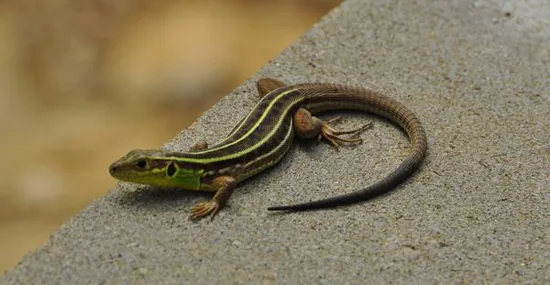
Lizards
Like other reptiles, lizards are found everywhere — from arid deserts to marshlands — except Antarctica. Their special features and behavior have helped them adapt to many habitats. Lizards that live in dense plants, like jungles, often rely on camouflage for hunting and for hiding from predators. There are over 5600 species of lizards, from the leopard gecko, which is only a few centimeters long, to the highly venomous Komodo Dragon of Indonesia, with an average length of 9 ft.
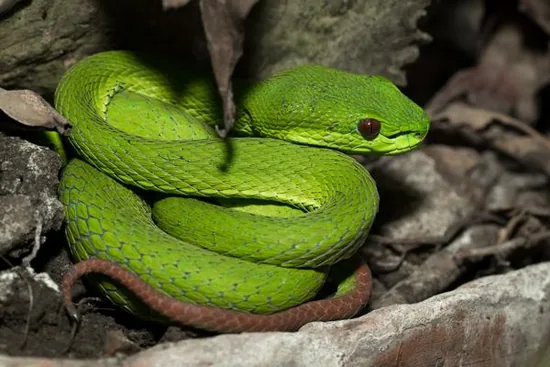
Snakes
More than 20 recognized families, adding up to around 3,400 species — ranging from the 10 cm long thread snake to the 29 ft long Reticulated python — perhaps best show the variety in the world of these legless reptiles. Snakes live in many habitats all over the world, including dense jungles. Most snake species are non-venomous, but species like the black mamba, king cobra, and diamondback rattlesnake are highly venomous. Large forest snakes, like pythons and anacondas, are known for the amazing feat of swallowing animals as big as a deer or capybara.

Turtles
There is a great deal of variety among turtles, with more than 300 living species found across the world. The smallest is the Speckled padloper tortoise, found only in South Africa, which is 3 in. long and weighs about 4.9 oz. The largest is the leatherback sea turtle, 5–6 ft. long and weighing over 600 lbs. Land turtles, more often called tortoises, are found in deserts, grasslands, swamps, and dense forests. The largest land turtle is the Galapagos tortoise, with an average length of 5 ft. and weight of 400 lbs.
Millions of species live on the planet today, but they make up only a small part of all the species that have ever existed. It is estimated that around 99 percent of all the species that ever lived on Earth have become extinct. What is even worse is the length of the list of threatened species. Many animals are listed as endangered — and some as critically endangered — with only a few individuals left in the wild. The need of the hour is to draft careful steps to save these endangered animals and, just as importantly, make sure those steps are strictly followed.
Explore More Animals
 An A-Z List of Herbivore Animals, With Pictures | Animal SakeFrom antelopes and bison to zebras: meet 28 amazing plant-eating mammals in this A-Z herbivore animals list, with their family, diet, habitat and photos.
 Forest Animals List: A Field Guide to Who Lives in the WoodsFrom rainforest to taiga, meet the mammals, birds, reptiles, insects and amphibians of the world's forests, plus the endangered species fighting to survive.
 Tropical Rainforest Animals List: A Guide to the Jungle's WildlifeFrom jaguars and harpy eagles to poison dart frogs, orangutans and sloths, meet the astonishing animals of the world's tropical rainforests, the richest habita
 A List of Endangered Animals From Every ContinentFrom the Bengal tiger and giant panda to the mountain gorilla and polar bear: a continent-by-continent list of the world's endangered animals, with photos.

 Fun fact for today!More than half of every animal species on Earth lives in jungles — so many that scientists say a truly complete list of jungle animals may be impossible to finish!