

About Koalas
Koalas are interesting animals with several amazing features. Native to certain parts of Australia, koalas (Phascolarctos cinereus) are marsupials, females have a pouch on their belly, inside which they raise the newborn. They lead their life in trees. Koalas belong to the genus Phascolarctos in the family Phascolarctidae. In fact, koalas are the only surviving species of this family.
The name of this genus comes from the Greek word phaskolos, meaning "pouch", and the Latin word arktos, meaning "bear". The species name cinereus means "ash colored" in Latin, a nod to the animal's gray coat. Koalas are sometimes called koala bears because of their bear-like looks, but they are not bears at all.
So, koalas are marsupials that belong to certain parts of Australia. Although they share some features with bears, koalas are not even related to bears. These Australian mammals are related to wombats and kangaroos. Whether structural or dietary, koalas have numerous adaptations.
Arboreal Life Adaptations
Because koalas lead an arboreal (tree-dwelling) life, these animals have padded feet and long claws for a better grip while moving on tree trunks. Both the front and hind limbs are strong enough to support them while climbing trees and moving between branches.
Unlike most other mammals, koalas have strong thigh muscles that are among those vital adaptations that help them to lead an arboreal life. Their thigh muscles join the shin at a lower point compared to other mammals, giving extra leverage for climbing.
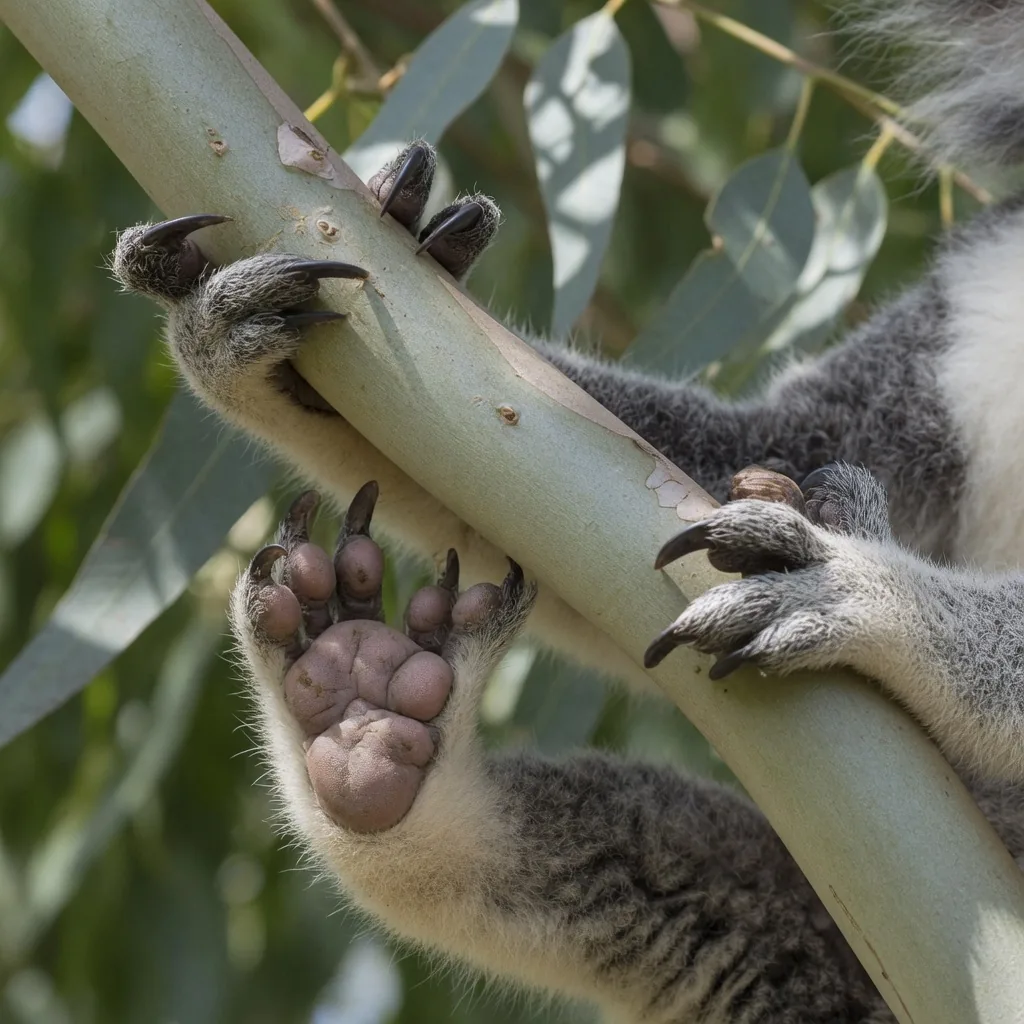
The paws of a koala have five digits each, with sharp claws. On the front paws, two digits act like thumbs and are opposed to the other three digits. This lets the animal grip tree trunks and branches firmly while moving. The second and third digits of the hind paws are fused together, and the claw on this fused digit is used for grooming. The first digit of hind paws lacks claws and is opposed to the other three digits (including the fused one). Koalas also lack a tail, which is one of the main adaptations seen in animals that lead an arboreal life.
The thick fur is one of the koala bear adaptations that makes their arboreal life comfortable. Compared to other parts of the body, the fur on their tail end, or rump, is much thicker. This provides a cushioning effect when the animal sits on trees. The curved spine is also one of the physiological adaptations of koalas. Along with the cartilaginous pad on the rear end, the curved spine helps these animals rest on tree forks comfortably.
The thick fur of koalas also protects them from extreme temperature changes. On top of that, the fur has moisture-repelling properties that help during rain. The scent gland on the chest of male koalas is used for marking their territory on trees.
Test Your Koala Knowledge!
5 questions about koala adaptations. How many can you get right?
Dietary Adaptations
Koalas are among the few mammals adapted to a diet of eucalyptus leaves, which are poisonous to many other animals. They are not usually found drinking water because the moisture content in the eucalyptus leaves is nearly enough to meet their daily water needs. Let us look at the koala bear adaptations that let them thrive on this diet.
Koalas have sharp front incisors used for clipping leaves. The molars cut and chew the leaves to a paste before swallowing. The gap between their teeth lets the tongue move in a way that rotates the leaves inside the mouth for more thorough chewing.
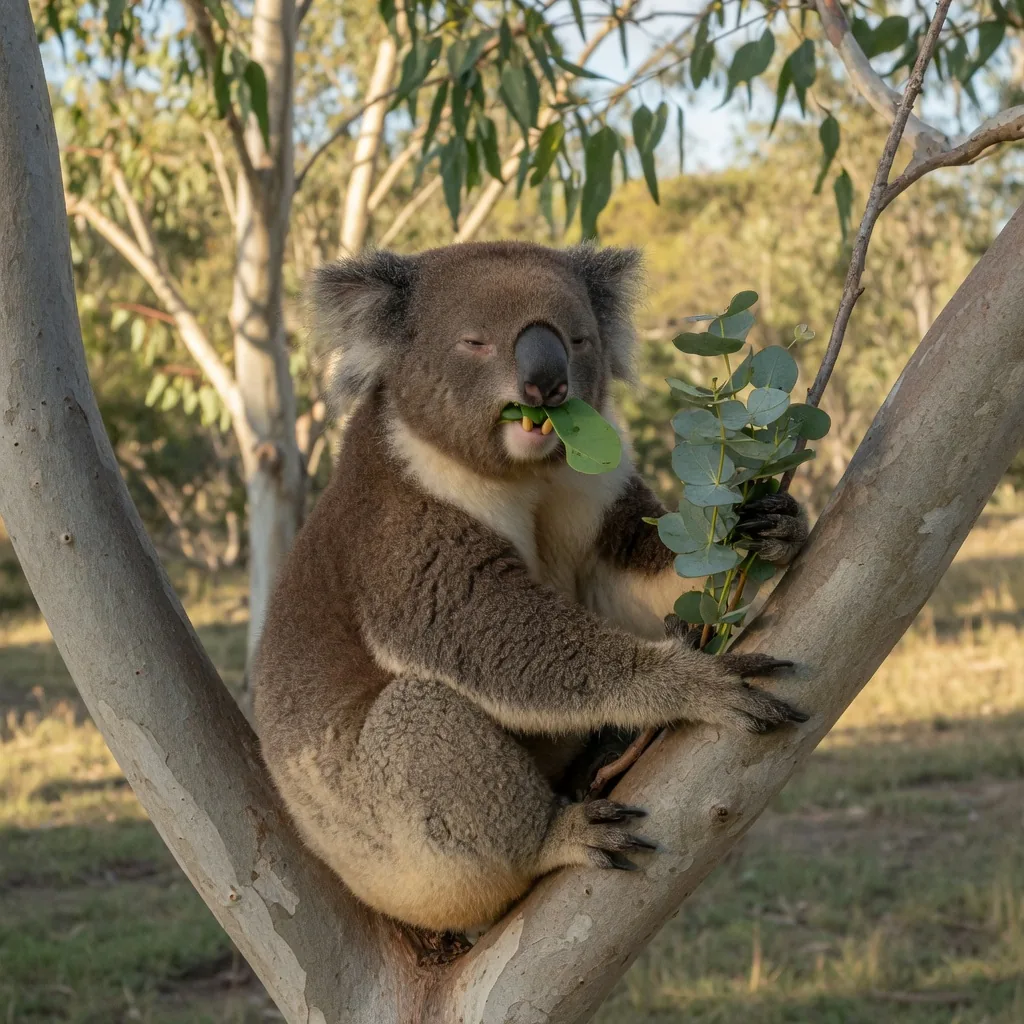
Koalas have a keen sense of smell and use their large nose to decide which eucalyptus leaves are safe to eat. They can even detect the toxicity of leaves through smell, choosing lower-toxin varieties from over 700 eucalyptus species found across Australia.
While the liver neutralises the toxic components in eucalyptus leaves, the cecum absorbs the maximum amount of nutrients from the leaves consumed. The cecum in koalas is one of the longest in the animal kingdom relative to body size, another key adaptation to extract the most from a low-nutrition food source.
Because koalas have a diet that provides very little energy, they are adapted to spend as little energy as possible. Compared to the size of their body and head, they have a very small brain with mostly hollow interiors. The small brain size helps the animal spend less energy.
These animals also have a very low metabolic rate and a low body temperature. They sleep for at least 18 hours a day. For the remaining time, they rest on tree trunks and chew on eucalyptus leaves. All of these factors help them save as much energy as possible.
Frequently Asked Questions
What is the scientific name of the koala?
Phascolarctos cinereus, in the family Phascolarctidae.
Are koalas related to bears?
No, koalas are marsupials related to wombats and kangaroos, not bears.
Why can koalas eat eucalyptus leaves?
Their liver neutralises the toxic compounds, and the cecum extracts nutrients efficiently.
How long do koalas sleep each day?
At least 18 hours, a key adaptation to conserve energy on their low-calorie diet.
Why do koalas have two thumb-like digits on each front paw?
Two opposing digits act as thumbs to give koalas a powerful grip on tree trunks and branches.
Koalas as Pets
It is not legal for an ordinary person to keep a koala as a pet. However, some people (such as research scientists and wildlife carers) are sometimes permitted to raise koalas under licence.
Explore More Animals
 Chimpanzee AdaptationsAnimals are found to be adapted to their surroundings in many different ways. This article will provide you with information about adaptations of chimpanzees.
 Red Panda Adaptations: How This Remarkable Animal SurvivesAlthough born to dwell in a specific habitat, animals have to adapt to the changing environment for survival. The Red panda is one such species, and its adaptat
 Polar Bear AdaptationsDiscover the amazing physical and behavioral adaptations that let polar bears survive Arctic temperatures of -34°F, swim icy oceans, and thrive where few animal
 Spectacular Rainforest Animal Adaptations You Simply Gotta SeeInterested in exploring the animal world of rainforests? This article deals with rainforest animal adaptations. Read on, to know how animals in rainforests stru

 Fun fact for today!Koalas are not bears, they are marsupials, more closely related to wombats and kangaroos!