

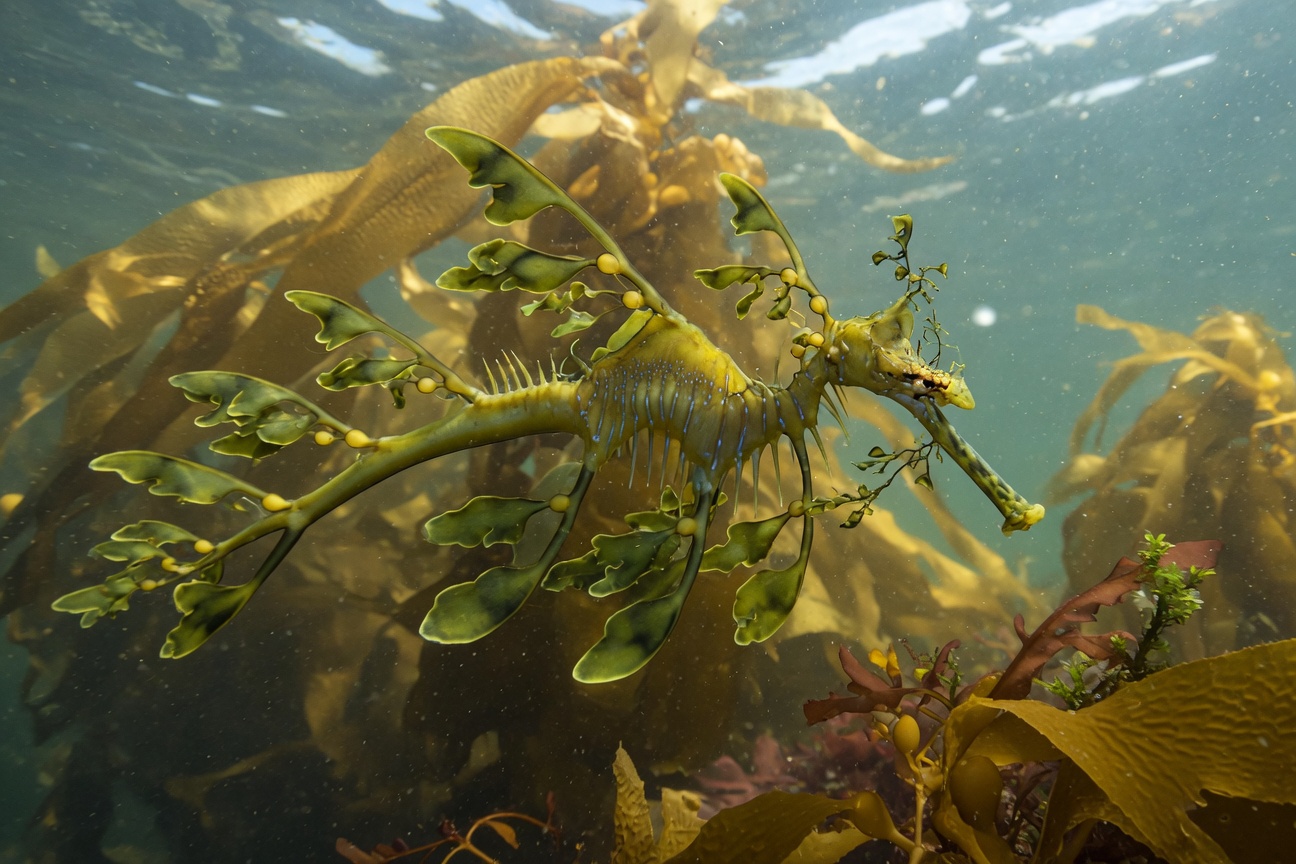
The term "sea dragon" might create a fearsome image in your mind. In reality, sea dragons are marine fish that belong to the family Syngnathidae, which also includes seahorses and pipefish. The features that define this family are long snouts, fused jaws, the absence of pelvic fins, and the fact that males play the key role in fertilization and incubation. This family includes some of the most extraordinary-looking fish in the ocean.
Sea dragons belong to the genus Phycodurus and Phyllopteryx. Each genus has just one species: the leafy sea dragon (Phycodurus eques) and the weedy sea dragon (Phyllopteryx taeniolatus). So when people talk about sea dragons, they mean one of only two species in the world.
So sea dragons are not fearsome animals, they are small, delicate marine fish. The leafy sea dragon, in particular, is one of the most beautiful and delicate of all fish, thanks to its elaborate leafy appendages. Sea dragons are closely related to seahorses, but the two groups are quite different, they belong to different subfamilies and genera.
Why the Name Leafy Sea Dragon?
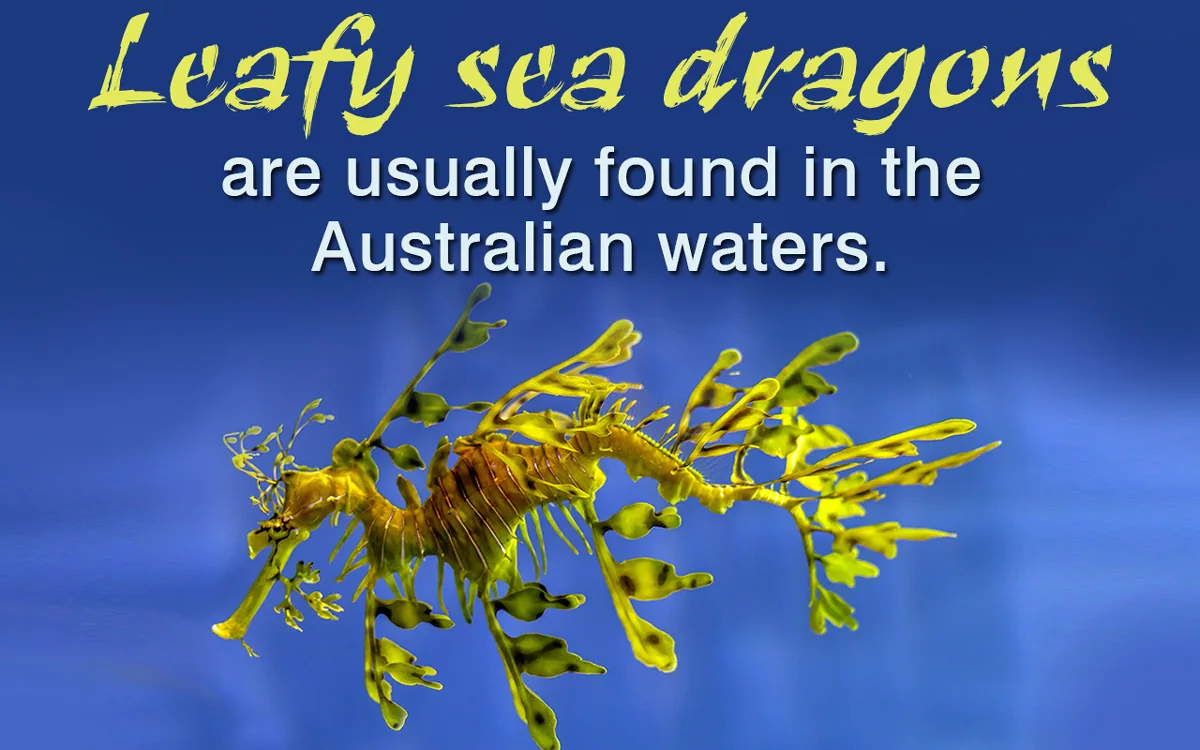
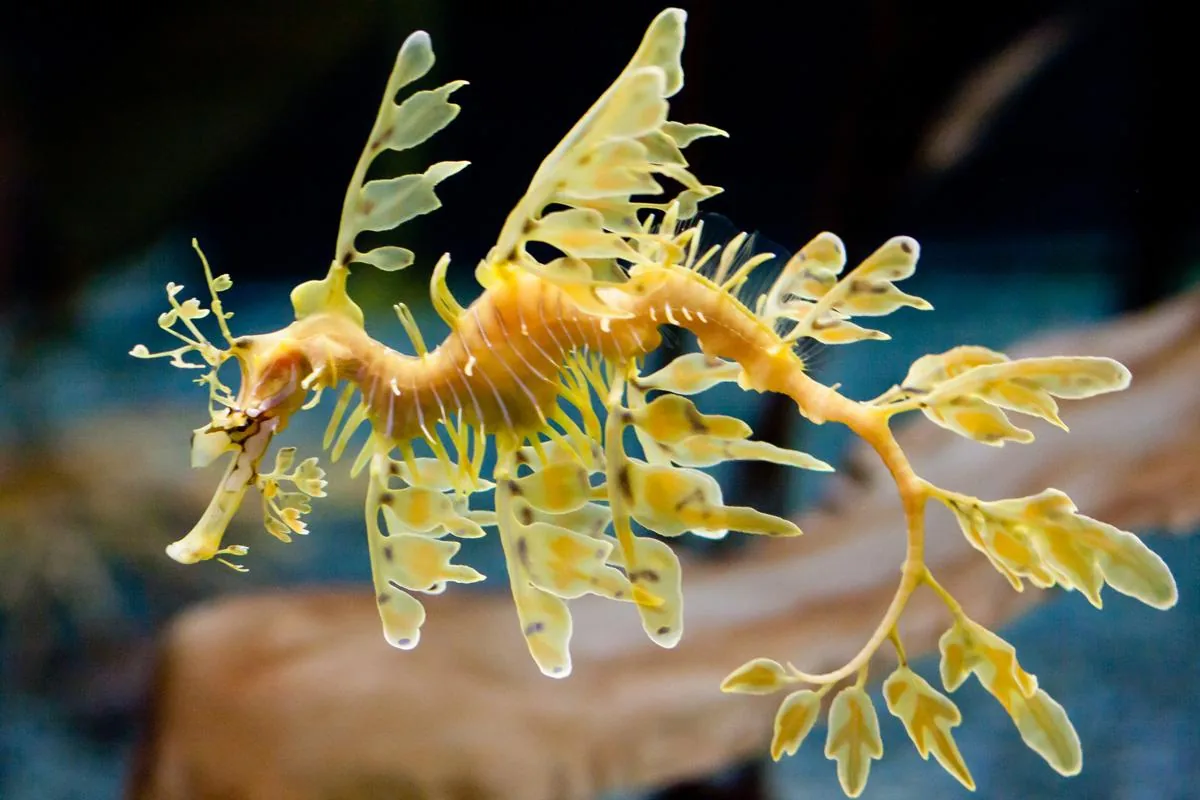
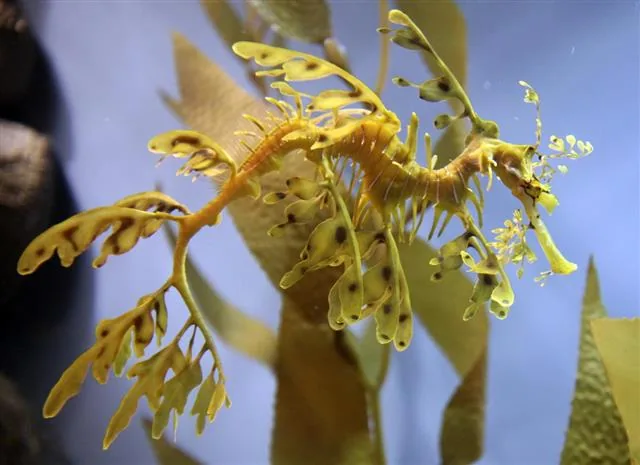
As the name suggests, this sea dragon has leafy appendages all over its body. It looks a bit like a seahorse, but differs from the seahorse in several important ways. The most noticeable differences are the leafy appendages on its body, the absence of a coiled tail, and the absence of a belly pouch for carrying young.
The leafy appendages are so ornate and delicate that the fish looks both beautiful and fragile. However, it is protected by an armor of scales that cover and guard its body. Those leafy appendages have one main job: camouflage. It is very difficult to tell this fish apart from floating seaweed. The appendages are generally green to yellowish-brown in color. They change color depending on their surroundings, and this color-changing ability can vary with factors like age, diet, stress, and location.
Other Features
The leafy appendages play no role in movement. The leafy sea dragon swims using a pectoral fin on the ridge of its neck and a small dorsal fin located near the back of the tail. Both fins are very small and transparent. The fish has two eyes above its snout, and each eye can move independently, meaning it can look in two different directions at the same time.
This amazing creature has no teeth. Instead, it has a long, straw-like snout that it uses to suck in small fish, shrimp, mysids, and plankton. Its camouflage ability helps it sneak close to prey before using its snout like a vacuum.
Habitat and Habits
Leafy sea dragons are found only in Australian waters. They travel to distant regions but return to the same spot they started from. Their habitat includes rocky reefs, seaweed beds, sea grass meadows, and sandy patches near coral reefs covered with seaweeds.
They are slow-moving animals, and as they drift through the water they look exactly like drifting seaweed. This makes the leafy sea dragon unique, it is the only animal in the world that hides by moving. Even with their excellent camouflage, they also have long, sharp spines on their body for defense.
Take the Leafy Sea Dragon Quiz!
5 quick questions about the ocean's greatest master of disguise.
Reproduction
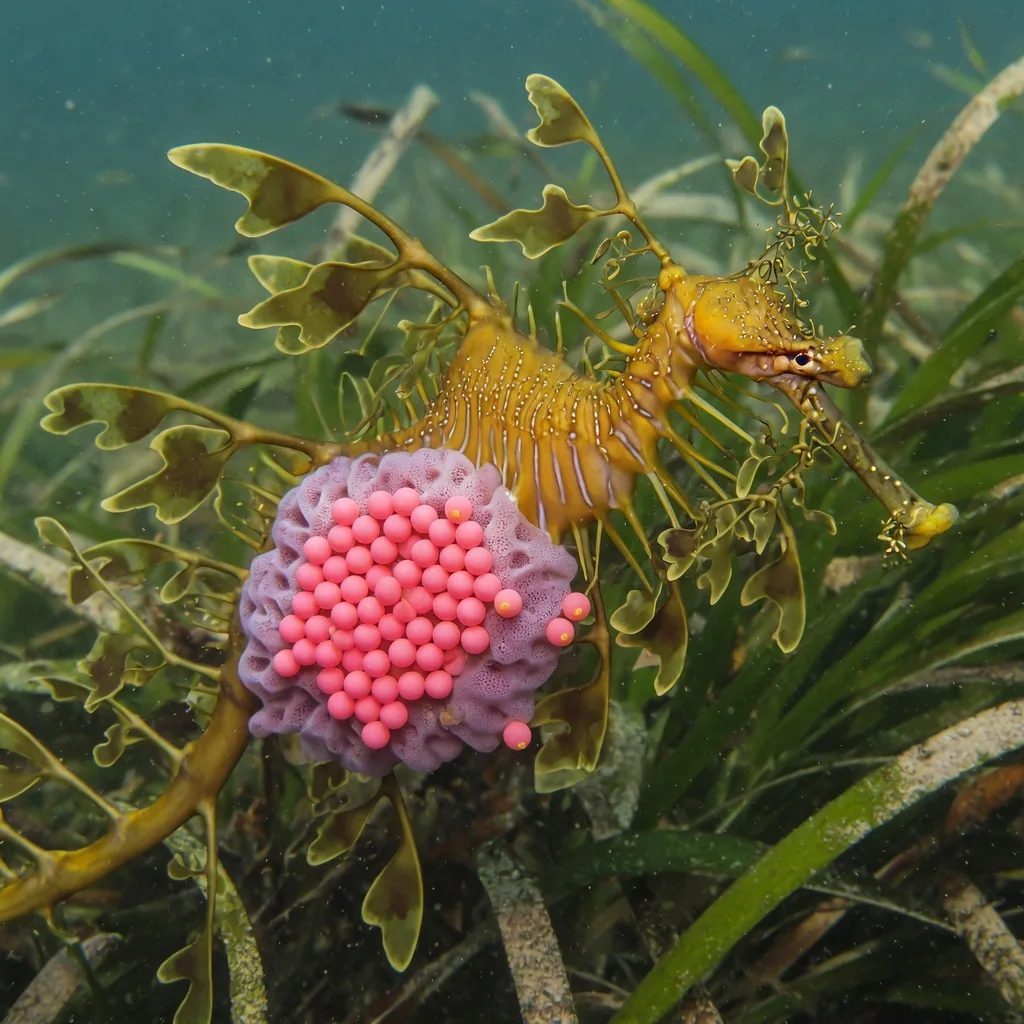
The males are responsible for caring for the eggs and carrying the young. It has been observed that the tail of the male turns deep yellow during the mating season. A female can produce up to 250 pink-colored eggs, which she deposits onto the male's tail through a tube-like appendage. The eggs attach to a special brood patch on the male's tail, which supplies them with oxygen and fertilizes them.
The eggs hatch after nine weeks, though the exact time can vary with water conditions. During this nine-week period, the eggs change color from pink to purple or orange. The males help the hatching process along by pumping their tails until the young emerge from the eggs. Only a small percentage (around 5%) of the eggs survive to become young sea dragons. The babies are completely independent from birth and reach sexual maturity within 28 months.
Frequently Asked Questions
What is the scientific name of the leafy sea dragon?
Phycodurus eques
What do leafy sea dragons eat?
Small fish, shrimp, mysids, and plankton, which they suck in through a straw-like snout.
Where do leafy sea dragons live?
Australian waters, rocky reefs, seaweed beds, sea grass meadows, and sand patches near coral reefs.
How does the leafy sea dragon hide?
Its leaf-like appendages make it look exactly like floating seaweed. It is the only animal in the world that hides by moving, drifting slowly so it looks like drifting seaweed.
Are leafy sea dragons endangered?
They are listed as near threatened and are protected by law in Australia.
Threats and Conservation
Apart from natural predators, leafy sea dragons face threats from both human activities and natural disasters. Strong storms can wash them ashore. Humans collect them for use in alternative medicine, and they are also kept in aquariums. However, these fish cannot survive outside their natural habitat. Today they are listed as "near threatened" and are protected by law in Australia.
Explore More Animals
 39 Seahorse Facts That Will Change Your Perception About ThemEvolution has caused several mind-boggling adaptations in the seahorse, which make us question the black and white findings of scientific research. Discover 39
 Truly Incredible Facts about CuttlefishThe cuttlefish is not a fish. In fact, it is a mollusk, and is well-known for its chameleon-like behavior. Discover the anatomy, camouflage, ink, diet, mating,
 Animals That Use Protective ColorationFrom the pygmy seahorse to the zebra: meet the animals that hide, mimic, warn and dazzle with color. A photo-rich kids' guide to protective coloration in natur
 Unbelievably Fascinating Facts About LionfishVividly striped, armed with venomous spines, and invading the Atlantic, discover where lionfish live, what they eat, the Red, Black, Freshwater and Dwarf speci

 Fun fact for today!The leafy sea dragon is the only animal in the world that hides by moving, it drifts slowly so it looks exactly like floating seaweed!