

What Is a Clam?
Clam is a name given to many species of bivalve mollusks. They're called bivalves because the animal is protected by two shells. There are thousands of species of clams, and identifying them can be tricky. Some are palatable and enjoyed worldwide. They live in both seas and freshwater. Some even travel long distances through water currents, shipping, and other transport.
Their reproduction usually happens by releasing sperm and eggs into the water. Digging for clams is a popular recreational or sport activity in some areas. The edible ones can be steamed, grilled, fried, or enjoyed in soups and chowders. They're nutritious, but people with certain medical conditions should avoid eating them.
Nutritional Information
According to the United States Department of Agricultural Research Service, the nutritional content of "Mollusks, clams, mixed species, cooked, moist heat" is: 3 ounces (85 g) of steamed clams contains around 57 mg of cholesterol, 2.39 mg of iron, 78 mg of calcium, and 84.06 μg of Vitamin B-12.
Common Types of Clams
1. Razor Clam / Atlantic Jackknife Clam
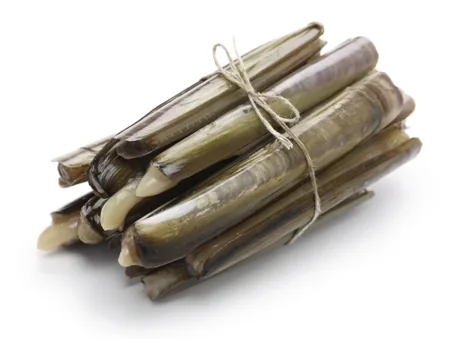
Scientific name: Ensis directus
Their shape resembles a razor or a jackknife, which explains the name. The razor clam is a very fast burrower. It is found on the Atlantic coast from South Carolina to Canada. It can expel water and propel itself through water by rapidly opening and closing its shell. A greenish-yellow periostracum (outer coating) protects it from erosion.
2. Northern Quahog / Hard Clam
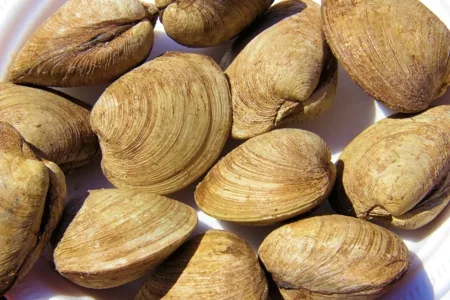
Scientific name: Mercenaria mercenaria
Also known as: Quahog clam / Cherrystone clam / Littleneck clam / Topneck clam
Cherrystones are mid-size hard clams around 3 inches across, while littleneck clams span about 1 to 2 inches. Hard clams typically have large rings on their surface. They're usually found on the eastern coast of the United States and in the Gulf of Mexico, and prefer saline waters.
Littlenecks, quahogs, and cherrystones are all types of hard-shell clams. Soft-shell clams have brittle, thin shells and flesh that is easy to cook. Their shells don't close completely, so they have a shorter life than hard-shell clams.
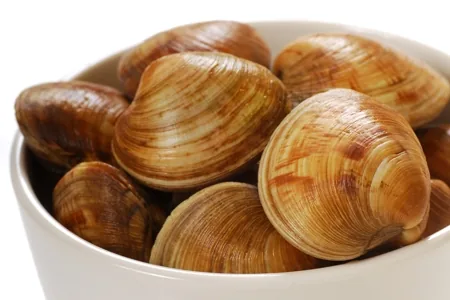
3. Manila / Japanese Littleneck Clam
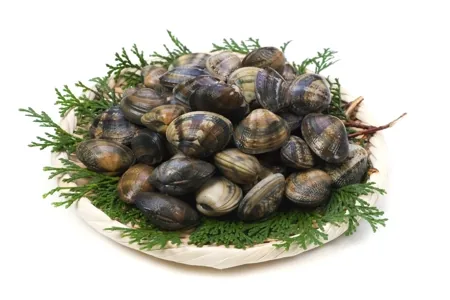
Scientific name: Venerupis philippinarum / Ruditapes philippinarum
The Manila clam has a thick shell with rings and ridges. Its umbo (the beak at the top of the shell) curves toward the head-end. Native to Japan, it was accidentally introduced to the Pacific coast through a shipment, and has now spread along the coasts from California to British Columbia.
4. Soft-shell Clam / Longneck Clam
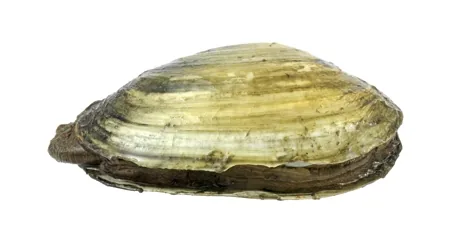
Scientific name: Mya arenaria
Before cooking, it is recommended to keep soft-shell clams in salt water for a few days so the sand is expelled from the digestive tract. Because they can also be steamed, they're often called steamers. Their shells are whitish and very thin and brittle. Since their siphons are fused together, they have a distinctive "long neck."
5. Cockles
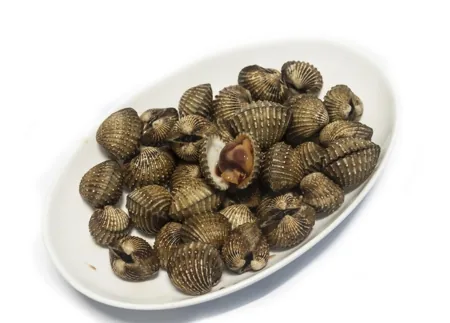
Scientific name: Cardiidae / Austrovenus stutchburyi
Cockles are easy to identify: prominent ribs on the shell are the giveaway. They're bivalve mollusks that resemble a heart shape. They're very tiny (even smaller than littlenecks) but prized for their taste. Cooking them can be time-consuming due to their small size.
Take the Clam Quiz!
5 questions. How well do you know your clams?
6. Geoduck Clam
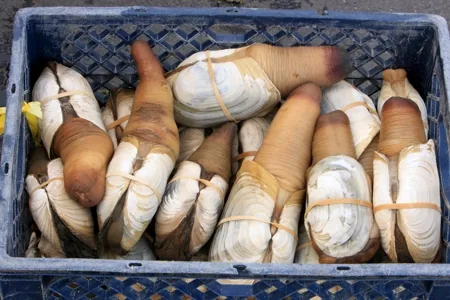
Scientific name: Panopea generosa
The geoduck has a very long siphon that looks like an elephant's trunk. Despite its unusual appearance, this is one creature with a remarkably long life. Geoducks can be eaten raw or cooked. Their habitat ranges from Alaska to Baja California. Look up giant clam facts for more ocean bivalve wonders.
7. Giant Clam
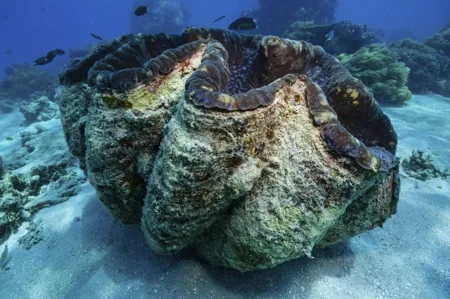
Scientific name: Tridacna gigas
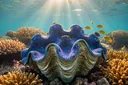
Listed as a vulnerable species due to over-harvesting by humans, the giant clam is sessile, it stays in the same spot for its entire life. It comes in brilliant combinations of hues: pink, blue, green, brown, yellow, and more. No two giant clams have the same coloration. They live with algae, giving the algae a home in exchange for the sugars and proteins the algae produce. A giant clam's weight can be more than 200 kg. They're found in the warm waters of the Indian and Pacific Oceans.
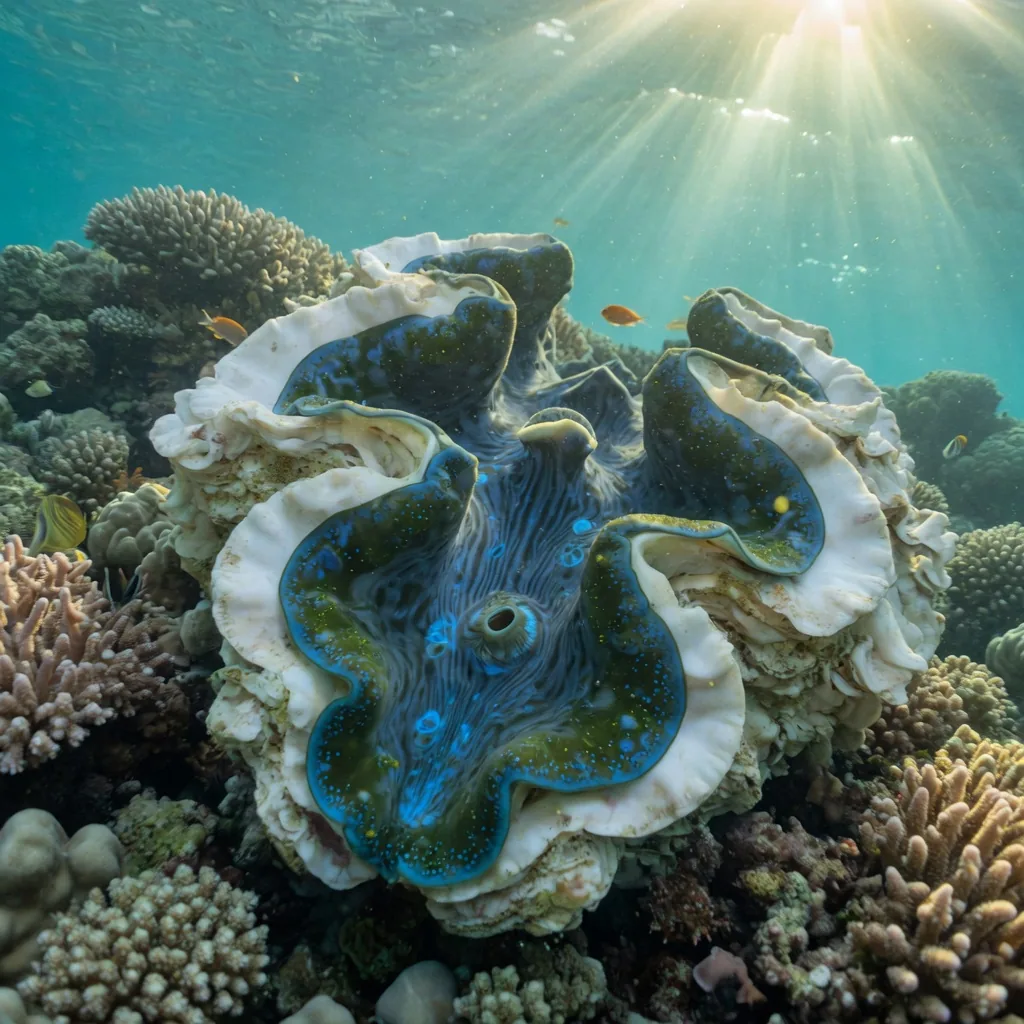
8. Sunray Venus Clam
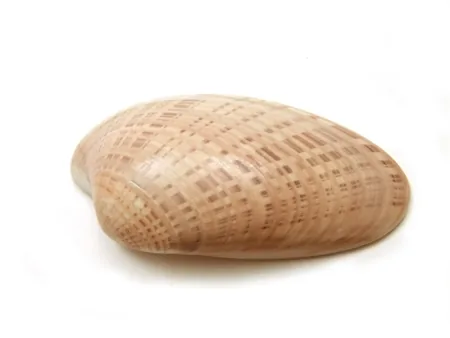
Scientific name: Macrocallista nimbosa
Native to Florida in the United States, the Sunray Venus clam is a recent entrant in seafood markets. It is sweet in taste and has a shinier appearance than most other clams, with a unique radiating sunburst pattern on its shell.
9. Atlantic Surf Clams / Hen Clam
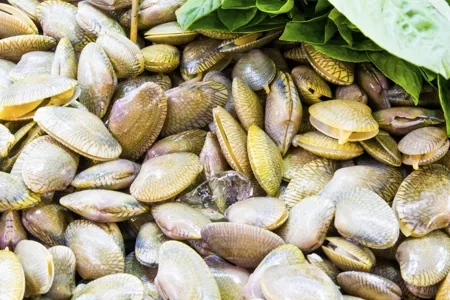
Scientific name: Spisula solidissima
The United States is a big commercial market for Atlantic surf clams. Because they're coarse in texture, they're sold only in processed form. They're commonly used to make frozen, breaded clam strips.
10. Smooth Clam / Fasolari
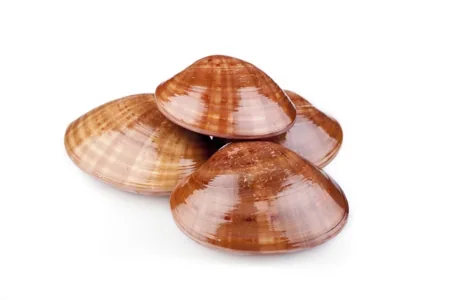
Scientific name: Callista chione
The smooth clam's standout feature is its glossy surface. Its color is creamy white with tinges of brown, and it is mainly found in the Mediterranean Sea. Like many bivalves, it feeds by filtering food from the water.
11. Ocean Quahog / Black Clam
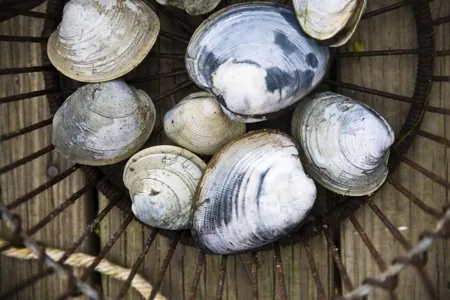
Scientific name: Arctica islandica
Ocean quahogs must be at least 20 years of age to reach commercially harvestable size. They typically burrow deep into the sand, hiding from predators. The smaller ones are popularly called "mahogany" clams. Ocean quahogs measure around 2.8 to 4.3 inches in size.
12. Horse Clam
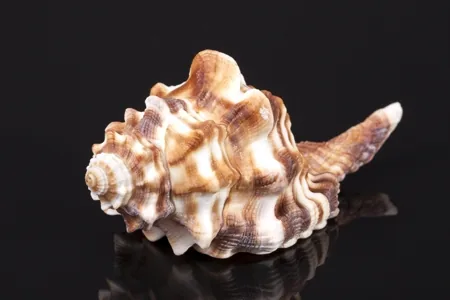
Scientific name: Tresus Capax and Tresus Nuttalli
Horse clams are considered sport clams in Oregon. Their tough skin makes them less popular with diggers. Although they are edible, this clam is less frequently hunted due to its lower meat content.
13. Butter Clam
Scientific name: Saxidomus gigantea
The butter clam prefers salty water and is mostly used for making chowders. However, it is prone to paralytic shellfish poisoning (PSP), so you must be certain before harvesting or eating it. Butter clams live in the lower intertidal and shallow sub-tidal zone, from Alaska to California.
14. Macoma Clam
Scientific name: Macoma nasuta and Macoma brota
Macoma clams are triangular in shape, with separate siphons. Because their valves bend to the right, they're also called "bent-nose" clams.
15. Asian Clam
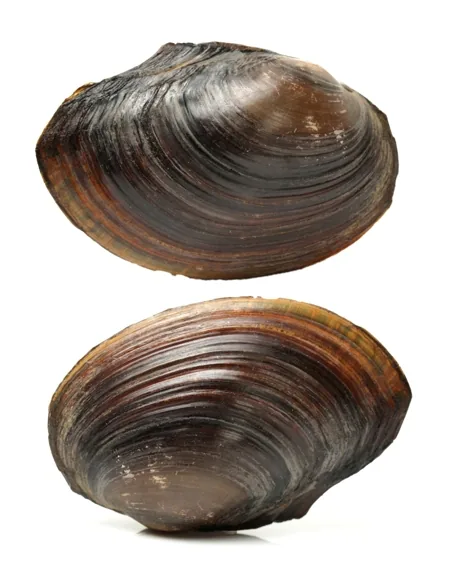
Scientific name: Corbicula fluminea
As the name suggests, this clam is found in eastern and southern Asia. Its color is yellowish brown. It spreads easily through human transport routes. Remarkably, Asian clams can reproduce up to 100,000 clams every year.
16. Peppery Furrow Shell
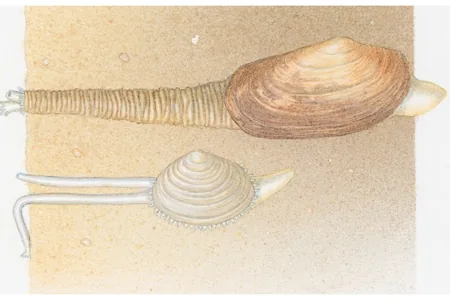
Scientific name: Scrobicularia plana
The peppery furrow shell can be identified by the star-shaped markings its inhalant siphon leaves in the sand. It is mostly found on European sea coasts.
17. Grooved Carpet Shell
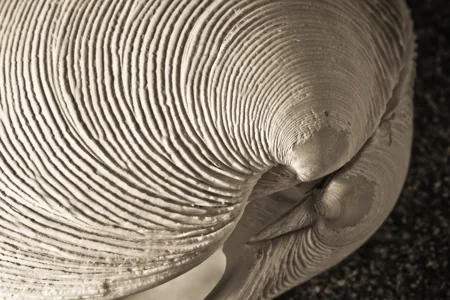
Scientific name: Ruditapes decussatus
Mainly produced in France, Spain, and Italy, the grooved carpet shell has a broad oval shape. It is usually cream or brown in color with dark markings. It's an important commercial shellfish across European nations.
18. Pacific Razor Clam
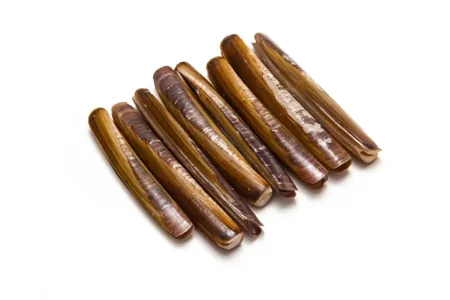
Scientific name: Siliqua patula
The Pacific razor clam has an oblong shell whose length can extend more than 7 inches. Its meat resembles a razor in shape. Many people enjoy razor digging as a family sport, though it is subject to rules and regulations. This meaty clam is popular in soups and chowders. Life expectancy can vary depending on the area. For more ocean creature comparisons, see our guide to marine animals.
19. Purple Varnish Clam
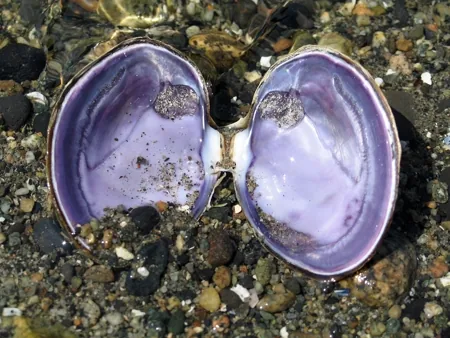
Scientific name: Nuttallia obscurata
This clam's unique feature is its varnish-like texture, with a vivid purple interior. Originally native to Japan, it is now harvested in the United States too. Also known as the dark mahogany clam, it is considered an invasive species in certain areas.
20. Ark Clam
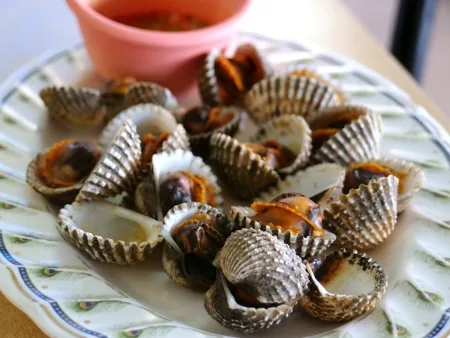
Scientific name: Arcidae
Ark clams belong to the family Arcidae, which has many species. Their surface is ribbed and their shape is squarish. They carry a thick layer of periostracum (outer shell coating).
Some of these clams are facing threats due to over-harvesting. To make sure future generations get to know clams, it is vital that we follow the harvesting guidelines set by the authorities. Always clean and store clams carefully before eating them. Take precautions, too, some clams can be prone to contamination by toxic elements.
Explore More Animals
 Interesting Facts About the Giant ClamGiant clams are the largest bivalves on Earth, sessile, brilliantly colored, and capable of living over 100 years. Discover how they feed, reproduce, and surv
 Types of FishThere are over 32,000 species of fish, more than all other vertebrates combined. Discover how fish are classified by species and habitat, plus the fish we keep
 What Do Mollusks Eat? A Guide to Gastropods, Bivalves & CephalopodsWhat do mollusks eat? Depending on the species and habitat, they can be plant-eaters, meat-eaters, or omnivores. Explore the diet of cephalopods, bivalves, and
 Squid vs. Octopus: What's the Difference?Squid or octopus? Both are clever cephalopods with three hearts and blue blood, but their bodies, homes, and habits are different. Here's a clear side-by-side

 Fun fact for today!M.I.T. researchers built a metal robot that copies the Atlantic razor clam's digging technique!