

Grasshoppers, also known as short-horned grasshoppers, are insects belonging to the order Orthoptera and suborder Caelifera. They are brown or green in color, with dark spots on their body. There are approximately 11,000 species of grasshoppers. All of them are herbivores and generally feed on plants. Some species eat only grass. While these insects are seen most often in autumn, they are also spotted in spring and summer.
Description and Population
Grasshoppers are flying insects that have two pairs of wings: the fore wings and the hind wings. The fore wings are narrow and leathery, while the hind wings are larger and membranous. Other notable features include strong, big hind legs (used for jumping) and short antennae with 20-24 segments, which are shorter than their body length.
Female grasshoppers are usually larger than males. Females also have two pairs of triangular structures called valves at the end of the abdomen, which they use to dig into sand during egg laying. Male grasshoppers have a single unpaired plate instead.
Grasshoppers are considered destructive pests by farmers because their population can explode under the right weather conditions. Infestation is heavily influenced by climate. The population is expected to be highest in areas where the weather is cool in early spring, followed by warm and dry conditions in late spring. Summer temperatures should also be high, with enough rainfall for uninterrupted growth of the young. On the contrary, a hot spring season and low summer temperatures lead to a population decline.
Life Cycle: Detailed Info
In general, reproduction takes place in early summer. During mating, the male grasshopper deposits a spermatophore (a packet containing sperm) into the ovipositor of the female, which is located at the abdomen. The ovipositor, or egg placer, is the organ used for laying eggs. It is relatively short but stronger than that of other insects in the same group. As the sperm reach the eggs via the micropyle, fertilization occurs. The three successive stages of the grasshopper life cycle follow.
Egg Stage
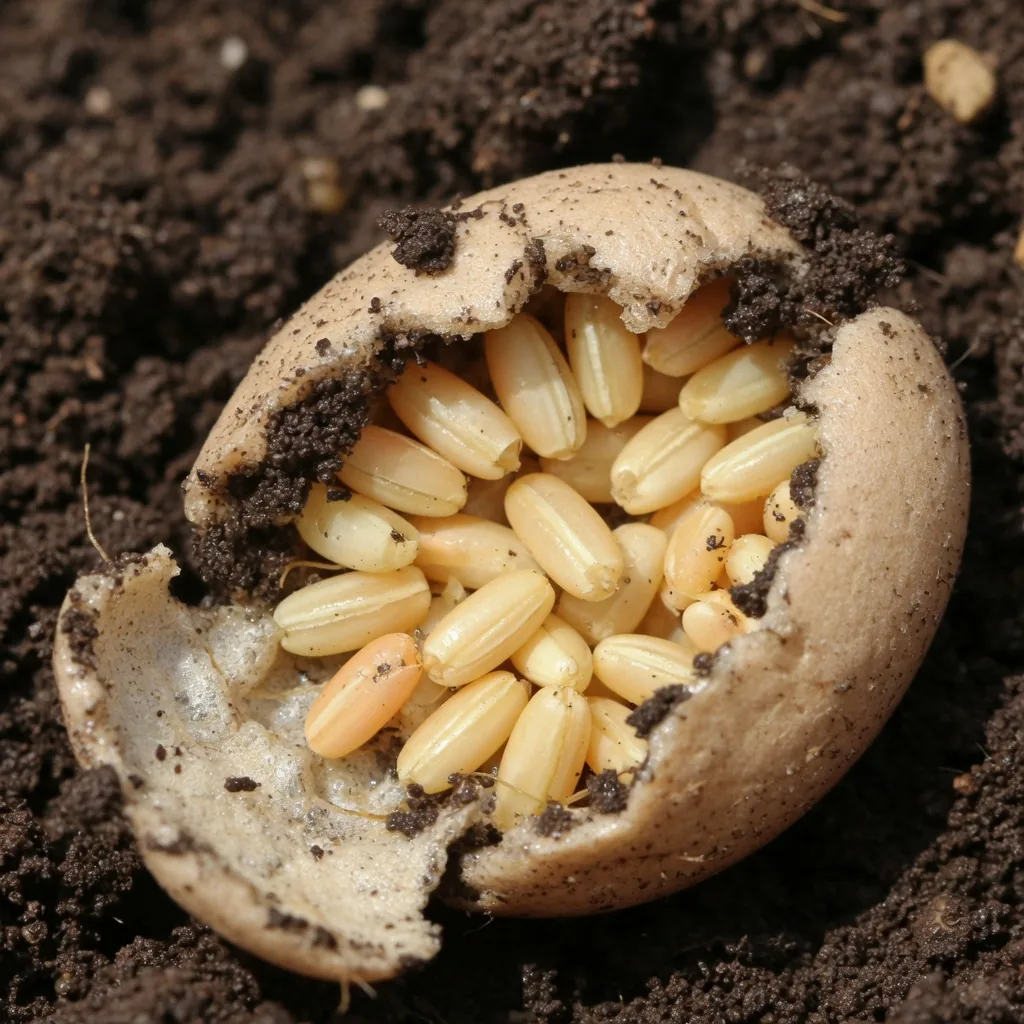
The life cycle of grasshoppers starts with the egg stage. By mid-summer, the female grasshopper lays the fertilized eggs either underneath the sand (about 1-2 inches deep) or among leaf litter. Right after depositing the eggs with the ovipositor, she sprays a sticky substance over them that hardens and forms egg pods. There are usually more than ten egg pods, and each one contains about 10-300 rice-shaped eggs.
The eggs remain dormant through autumn and winter, for almost ten months. When spring or early summer arrives and the temperature warms up, the eggs hatch into nymphs.
Nymph Stage
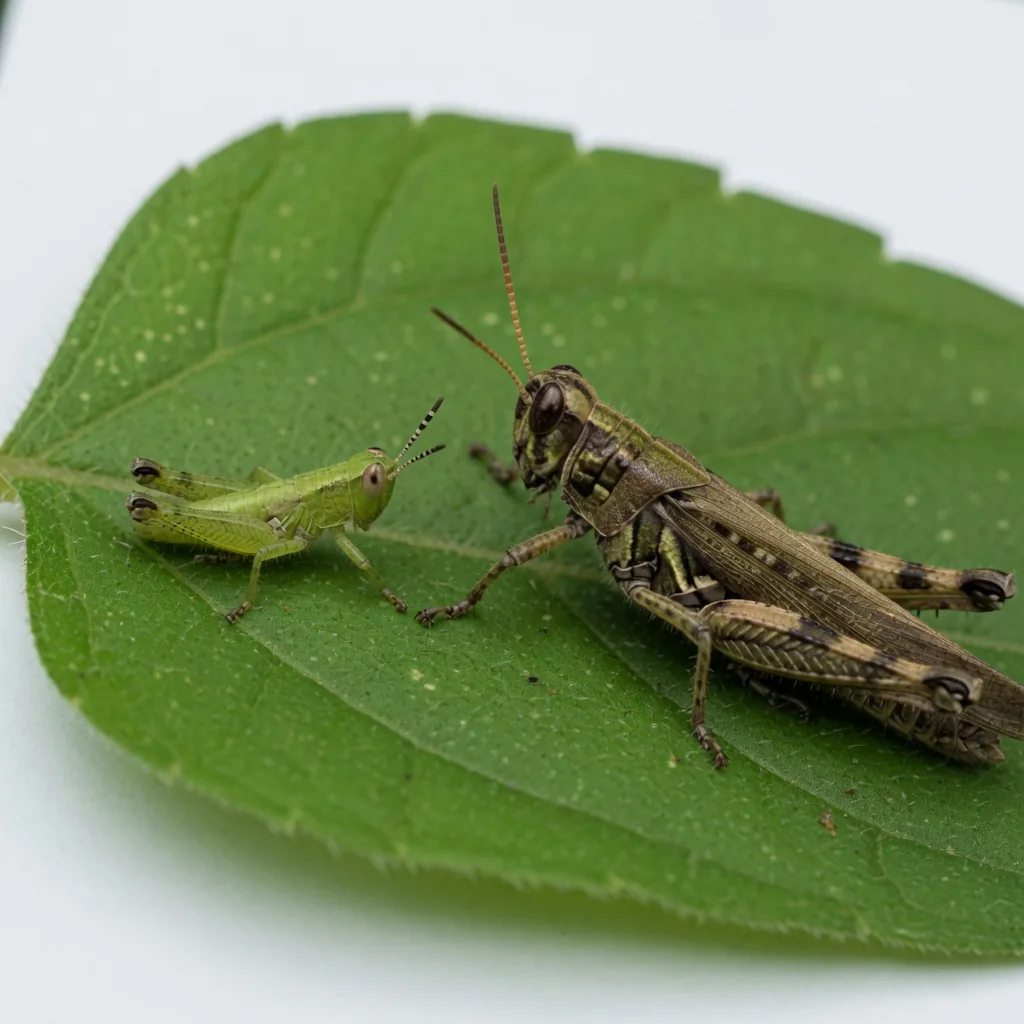
Immediately after hatching, the young nymphs (called first instar nymphs) start feeding on soft and succulent plant leaves. Nymphs look like miniature versions of adult grasshoppers, except they are lighter in color and do not have wings. Nymphs go through 5-6 molts, changing their form and structure, before becoming adults. The nymph stage may last 5-10 days per instar, based on the species and the weather, especially temperature and humidity. As the nymphs molt, their size increases and wing pads gradually develop on the thorax.
Take the Grasshopper Life Cycle Quiz!
5 quick questions. Can you track a grasshopper from egg to adult?
Adult Stage
After 25-30 days, the wings are fully developed and the nymphs become adults. By this point (counting from egg) the grasshopper is about eleven months old. Adults gain sexual maturity within 15 days and survive for about 30 days. Because adults have wings, they are far more mobile than nymphs, which helps them find food and escape predators. Even so, every stage of the grasshopper's life has its own set of natural enemies.
Frequently Asked Questions
How many stages are in a grasshopper's life cycle?
Three, egg, nymph, and adult. This is called incomplete metamorphosis.
How long does the nymph stage last?
The nymph stage lasts about 25-30 days in total, during which the nymph molts 5-6 times and gradually grows wings.
How long do grasshoppers live?
The total lifespan of a grasshopper is about 12 months from egg to death.
Where do grasshoppers lay their eggs?
Female grasshoppers lay eggs about 1-2 inches underground in soil or sand, or among leaf litter, covering them with a sticky substance that hardens into an egg pod.
The total lifespan of a grasshopper is about 12 months. Studies have found that the survival rate of nymphs after hatching is about 50 percent, since birds, rodents, and lizards eat a large number of them. This is why grasshoppers play a major role in ecosystems: they provide food for many predators in the food chain. A swarm (also known as locusts) can cause severe damage to crops, affecting yield dramatically.
Explore More Animals
 Grasshoppers: Habitat, Facts, Anatomy & Life CycleThe complete kids' guide to grasshoppers: where they live, what they eat, their 5 eyes and no ears, super-tough mandibles, record-breaking jumps, singing, and w
 Locusts vs. Cicadas: A Side-by-Side Comparison to Tell Them ApartLocusts and cicadas look and sound alike, but they're very different insects. Compare them side by side (body, life cycle, behavior, and sound) with a quiz,
 An Awesome Explanation of the Life Cycle of a CaterpillarThe caterpillar life cycle is explained in short in this article, along with some interesting facts about caterpillars.
 Utterly Astonishing Facts about CricketsIn many cultures, crickets are thought to bring good luck. It is also believed that crickets can tell the surrounding temperature. Discover the astonishing worl

 Fun fact for today!Grasshopper eggs sleep underground for almost ten months, waiting for spring warmth before they hatch!