

First, a Clever Trick: Disruptive Coloration
Disruptive Coloration
Disruptive coloration is a camouflage trick. The bold pattern breaks up the animal's outline, which makes it hard for other animals to spot it. A perfect example is the zebra, with its black-and-white stripes.
When we talk about beautiful animals, we usually mean the colorful ones that add to nature's palette: tigers with their magnificent stripes, songbirds with their bright plumage, butterflies with their striking wings, and so on. We seldom think of zebras as beautiful. A wildlife photographer, or someone who works with the environment, might — but most of us don't.
How many black-and-white animals can you list? Most people can't get past zebras and giant pandas. Black-and-white animals just don't grab our attention the way colorful ones do. A giant panda is famous because it is cute, not because of its color. For a lot of people the word 'colorful' has come to mean the same thing as beautiful — and that is exactly where we miss out on some real beauty.
The 20 Black-and-White Animals
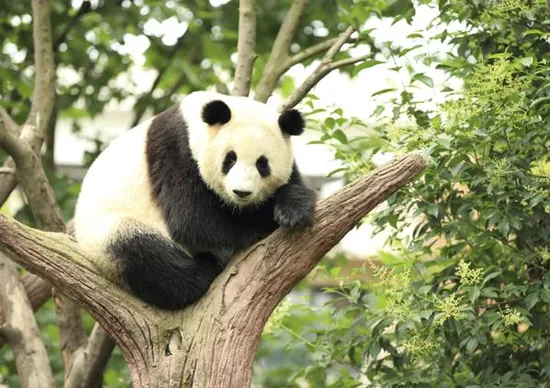
Giant Panda
The giant panda (Ailuropoda melanoleuca) is a species of bear native to south-central China. Like zebras, giant pandas are known for their distinct black-and-white look. It has black fur on its ears, eye patches, shoulders and legs, set against the white fur all over the rest of its body. That is exactly what its scientific name, Ailuropoda melanoleuca, means: black-and-white cat-foot.
Scientists are still not sure how this coloring helps them. One theory is that their appearance blends into their snow-clad rocky habitat, giving them good camouflage against predators.
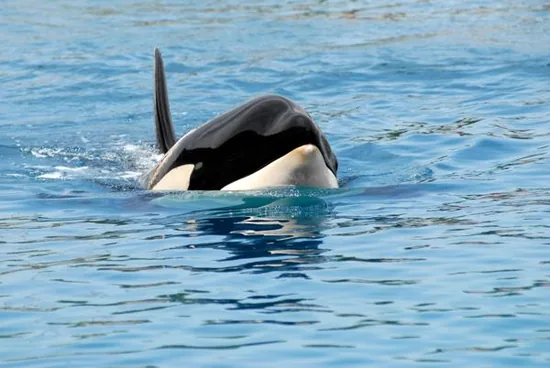
Killer Whale
The killer whale, or orca (Orcinus orca), is a top-level predator in the marine biome. Despite its name, it is actually a member of the oceanic dolphin family. The species is found nearly all over the world, and you can spot it by its bold coloring: a black back with a white chest and sides. There is also a white patch just above and slightly behind each eye.
The killer whale's coloring is another example of disruptive coloration. The only difference is that here it helps the animal hunt, by making it hard for other species to spot it coming.
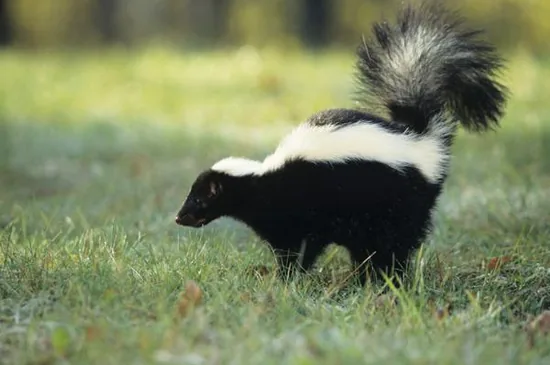
Skunk
This black-and-white group of skunks lives in North America. It includes the striped skunk (Mephitis mephitis), eastern spotted skunk (Spilogale putorius), western spotted skunk (Spilogale gracilis), hooded skunk (Mephitis macroura) and American hog-nosed skunk (Conepatus leuconotus). Of these, the striped skunk is the most common. You can spot it easily by its black body, with a white stripe running along each side that joins at the nape to form a broader white patch.
The eastern and western spotted skunks have stripes too, but unlike the striped skunk, their stripes are broken. The American hog-nosed skunk has a single, broad white stripe running from its head all the way to the base of its tail. And the hooded skunk gets its name from the ruff of white fur around its neck.
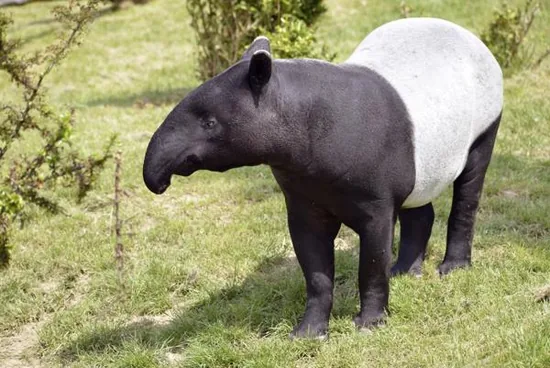
Malayan Tapir
The Malayan tapir (Tapirus indicus) is the largest of the five tapir species in the world, and the only tapir native to Asia. It is easy to recognize by its half-black, half-white look. It is basically black, with a big white patch that reaches from its shoulder all the way to its rear, and its ear tips are white too. The Malayan tapir has been listed as an endangered species by the IUCN.
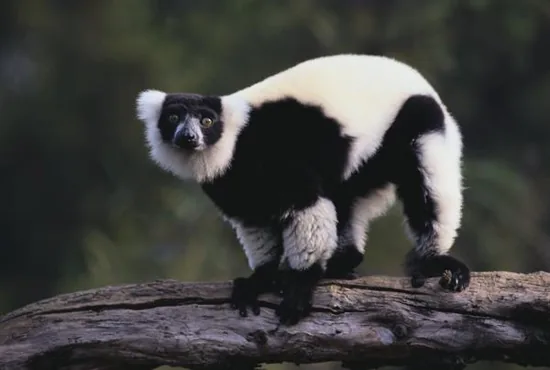
Black-and-white Ruffed Lemur
True to its name, the black-and-white ruffed lemur (Varecia variegata) has a brilliant mix of the two colors. Its abdomen, tail, hands, feet, inner limbs, forehead, face and crown are black, while its sides, back, hind limbs and hindquarters are white. Males and females are hard to tell apart from color alone. One more fun fact: it is the largest living member of the lemur family.
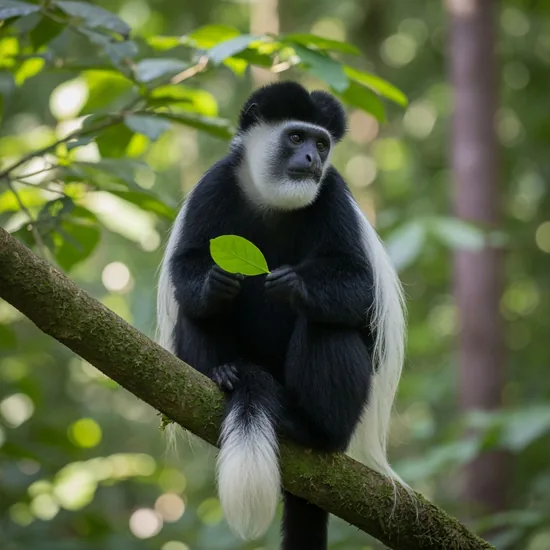
Eastern Black-and-white Colobus
The eastern black-and-white colobus (Colobus guereza) is one of the five black-and-white colobuses native to Africa. It is mostly black, with a thick white ring of fur around its face and long strands of white fur running down each side of its body. There is also a strip of white fur along its thigh. Its tail ends in a tuft of white hair, and the length of that tuft differs from one animal to another.
The Geoffroy's black-and-white colobus (Colobus vellerosus), Angolan black-and-white colobus (Colobus angolensis) and the Satanic black colobus (Colobus satanas) all look strikingly similar to the eastern black-and-white. The western black-and-white colobus (Colobus polykomos) is the exception, with white fur only on its whiskers and chest. As for tails, only the Satanic black colobus has a long black one.
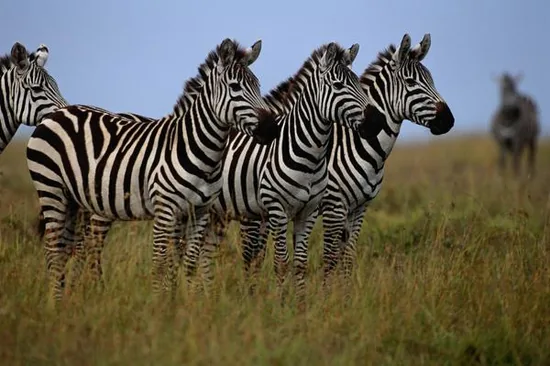
Zebra
There are three living species of zebra: the plains zebra (Equus quagga), Grevy's zebra (Equus grevyi) and the mountain zebra (Equus zebra). All are known for their black-and-white striped coat. People once thought zebras were white animals with black stripes. More recently, though, researchers have found evidence that they are actually black with white stripes.
Even more amazing: a zebra’s stripes are unique to each individual animal, the same way fingerprints are unique to each human. These stripes power the disruptive coloration trick. When zebras stand together in a herd, predators find it hard to pick out and chase a single one. The stripes also help the zebras recognize each other.
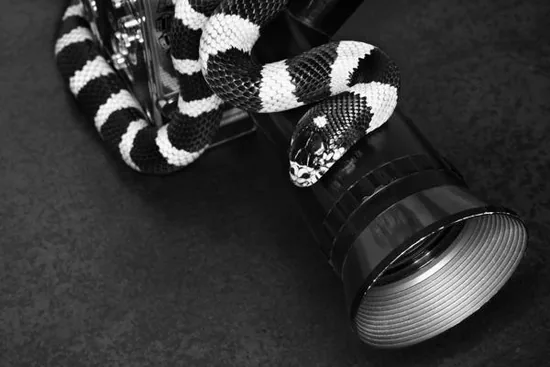
California Kingsnake
The California kingsnake (Lampropeltis getula californiae) is a non-venomous colubrid snake native to the western United States and northern Mexico. It usually comes in shades of black with white markings, which gives it an eye-catching look. Brown California kingsnakes with white markings exist too, but they are rare.
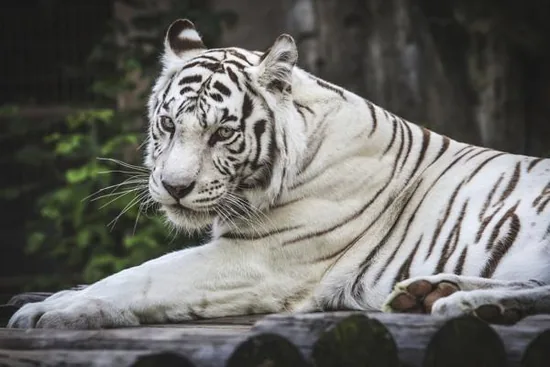
White Tiger
A tiger on a list of black-and-white animals may come as a surprise — but as the picture shows, the white tiger has earned its place. It is worth knowing that the white tiger is not a separate species of tiger. It is a mutant variant of the Bengal tiger (Panthera tigris). The Bengal tiger owes its orange fur to a pigment called pheomelanin, so when that pigment is missing, the animal turns out white.
Take the Black & White Animals Quiz!
5 quick questions. Find out how much you really know about nature's two-tone animals.
The Black-and-White Birds and Butterflies
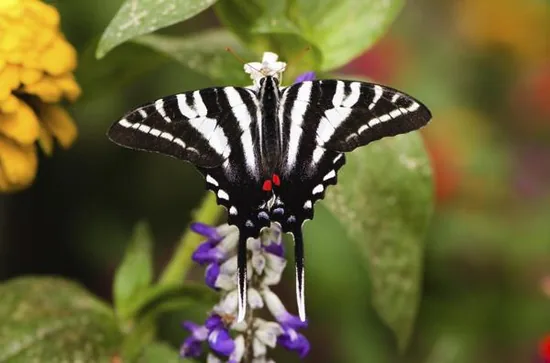
Zebra Swallowtail
Not all butterflies are colorful — some are black and white, and beautiful all the same. One of these is the zebra swallowtail butterfly (Protographium marcellus), found in the eastern United States and southeast Canada. Its black-and-white stripes look like a zebra's, which is how it got its name. You can also spot it by its distinctive wing shape and its long, spectacular tail.
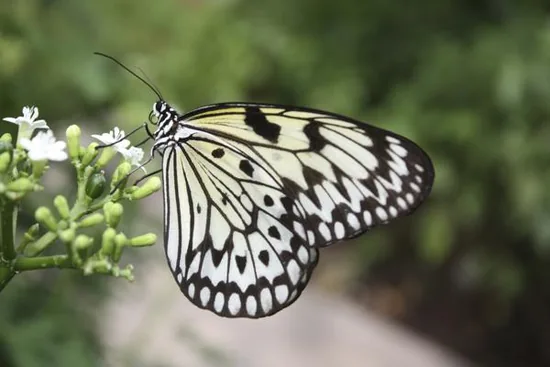
Paper Kite
Another striking black-and-white butterfly is the paper kite butterfly (Idea leuconoe), found in the Philippines, Malaysia and the rest of Southeast Asia. It is mostly white, with scattered black spots. Also known as the Rice Paper butterfly, it is unusually large, with a wingspan of about 6 inches.
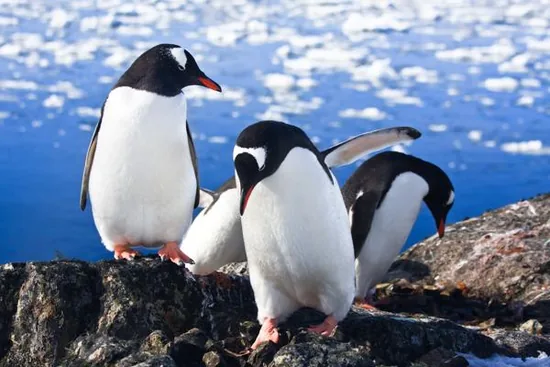
Adelie Penguin
Most penguins are black and white, but the Adelie penguin (Pygoscelis adeliae) really lives up to that classic penguin picture — classic, because not every penguin is black and white. It is mostly black with a white belly, so it looks as if it is wearing a tuxedo. It also has a white patch on its head that runs from eye to eye. This species lives all along the Antarctic coast.
Other penguins that are mostly black and white include the Chinstrap penguin (Pygoscelis antarcticus), Fiordland crested penguin (Eudyptes pachyrhynchus) and African penguin (Spheniscus demersus).
Frequently Asked Questions
Why are some animals black and white?
In many animals it is a camouflage trick called disruptive coloration. The bold pattern breaks up the animal's outline so other animals find it hard to spot, it helps the zebra hide in a herd and the killer whale sneak up on prey.
Is a zebra white with black stripes, or black with white stripes?
People used to think zebras were white with black stripes, but newer evidence suggests they are actually black animals with white stripes. Each zebra's stripe pattern is unique, like a human fingerprint.
Is the killer whale really a whale?
Despite its name, the killer whale (orca) is actually a member of the oceanic dolphin family. It is a top predator found in oceans nearly all over the world.
Is a white tiger a separate kind of tiger?
No. The white tiger is not a separate species, it is a mutant variant of the Bengal tiger that has lost the pheomelanin pigment that normally gives the fur its orange color.
What is a tuxedo cat?
A tuxedo cat is a black cat whose white fur is limited to its face, paws, throat and chest, so it looks like it is wearing a little dinner jacket.
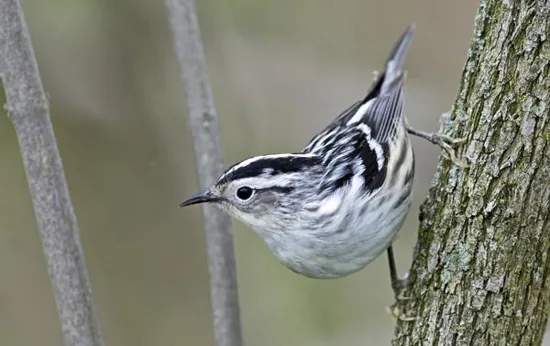
Black-and-white Warbler
Penguins are not the only black-and-white birds in the world. Another is the black-and-white warbler (Mniotilta varia), the only member of the genus Mniotilta. True to its name, this New World warbler is covered all over in black-and-white stripes. It has two white wing bars that show up when the bird is in flight, and the undertail coverts of this warbler have large black spots. Males are mainly dark, while females are paler.
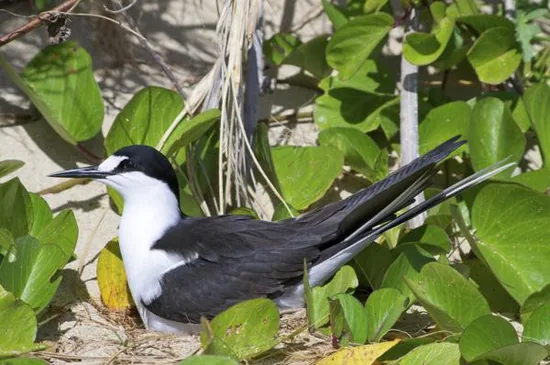
Sooty Tern
The Sooty tern (Onychoprion fuscatus) has black upperparts, legs and bill, set off against white underparts. In its coloring it looks a lot like the bridled tern (Onychoprion anaethetus), which shares its home range — but the sooty tern has darker upperparts than the bridled tern.
There are two subspecies of the sooty tern: the Atlantic sooty tern (Onychoprion fuscatus fuscatus), with clean white underparts, and the Indopacific sooty tern (Onychoprion fuscatus nubilosus), with light-gray or dull-white underparts.
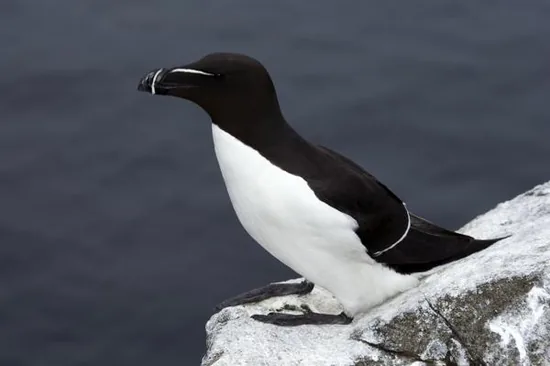
Razorbill
Also black with a white underside is the razorbill (Alca torda), a seabird that only comes to land to breed. The razorbill has black plumage on its head, neck and back, and its feet are black too. Look closely and you will see a thin white line running from its eyes to the tip of its bill. Males and females have the same coloring, so you have to use their size to tell them apart.
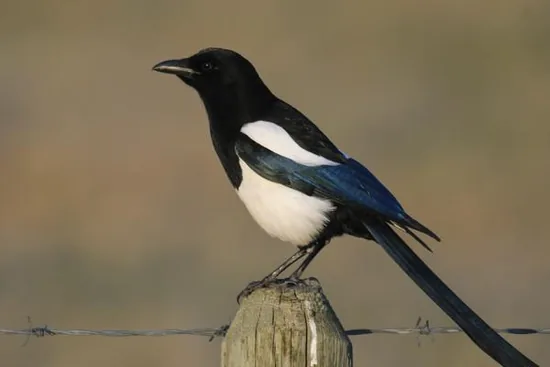
Black-billed Magpie
Then there is the black-billed magpie (Pica hudsonia), which is common in the western parts of North America. This bird is mostly black and white, with black wing feathers and black feet and bill, plus a hint of blue or blue-green on its tail. It also has large white markings on the primaries — the feathers along the outer edge of the wings — which show up clearly when the bird flies.
Explore More Animals
 Black or White? What Color are the Stripes of a Zebra?Everyone knows that zebras are striped black and white. But are they black stripes on white, or white stripes on black? Find out the science behind the stripes
 Jungle Animals ListAn A-to-Z list of jungle animals for kids: mammals, birds, insects, arthropods and reptiles that live in the world's jungles, each with a photo and fun facts.
 Zebra Adaptations & Facts: How Zebras SurviveAfrican savannas are full of predators, and zebras have remarkable adaptations to survive them. Meet all three zebra species and discover how stripes, speed, he
 Animals That Use Protective ColorationFrom the pygmy seahorse to the zebra: meet the animals that hide, mimic, warn and dazzle with color. A photo-rich kids' guide to protective coloration in natur
Even Farm Animals and Pets Wear It
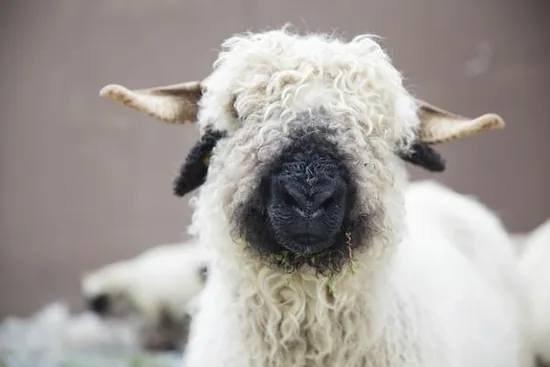
Valais Blacknose
The black-and-white coat is not just for wild animals — some farm animals wear it too. The Valais Blacknose, a breed of sheep from the Valais region of Switzerland, has a white, fluffy coat with a black face, ears, knees and legs.
A goat breed from the same region, the Valais Blackneck, also has a striking black-and-white coat, with a black front half and a white rear half.
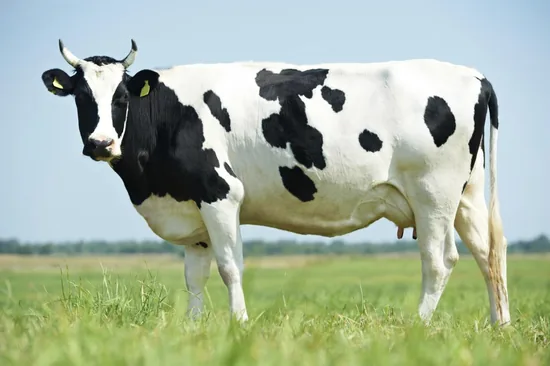
Cows
When it comes to black-and-white cows, two breeds stand out: the Holstein Friesian and the Belted Galloway. The Holstein Friesian, the world's highest-production dairy animal, has black-and-white markings that range from nearly all black to nearly all white. The Belted Galloway has a single broad white belt that wraps right around its body.
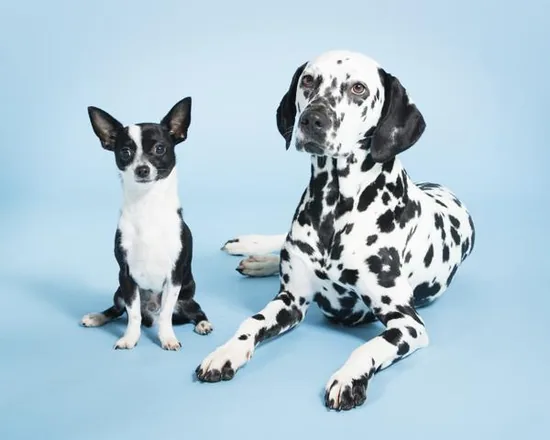
Dogs
Dogs come in all sorts of colors. When you think of a black-and-white dog, the dalmatian is probably the first breed that comes to mind, easy to spot by its black spots on a white coat. Dalmatians with brown spots on white exist too, but that mix is not as common as black on white.
Other black-and-white breeds include the Guatemalan Dogo, which is white with black markings on the head; the Karelian Bear Dog, which is black with white markings; and the Stabyhoun, which usually has a black-and-white coat. Long ago, even the French spaniel had a white coat with black markings. Besides these breeds, plenty of other dogs come in several color combinations, with black and white being one of them.
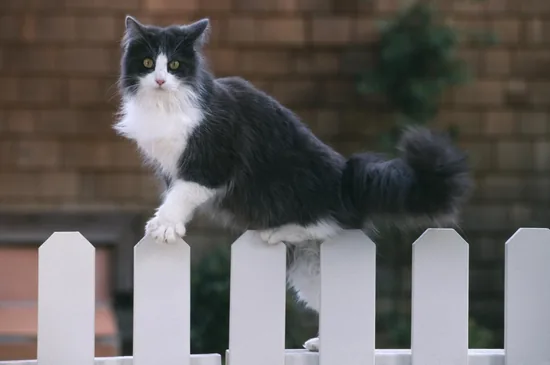
Cats
Like dogs, cats come in all sorts of colors too. Some cats are solid-colored, meaning they are just one color, while others are bi-colored — that is, white mixed with one other color. Among these bi-colored cats, the patterns are graded from 1 to 10. A grade of 1 means completely black fur, and 10 means completely white fur. When the white fur is limited to the face, paws, throat and chest of an otherwise black cat, it is called a tuxedo cat.
After going through this list of black-and-white animals with their pictures, you can see there are so many animals out there that are just black and white. Need we say more!

 Fun fact for today!No two zebras have the same stripes! Just like a human fingerprint, every zebra's black-and-white pattern is one of a kind — and a herd of them makes it really hard for a lion to pick just one to chase.