

Trivia: The red fox is the only species of fox found in Australia, where it was introduced by Brits to promote the traditional sport of fox hunting.
"As cunning as a fox." It's an idiom we hear time and again, and the fox definitely does justice to it. If it was not for its cunningness, the animal would have long become extinct. Surviving in suburban areas alongside humans is one thing. But the fox goes to the extent of making life miserable for humans — a totally different ball game — and that's exactly what it does. And remember, this is an animal no bigger than a medium-sized dog, doing this not just in its native range, but also in places where it has been introduced.
Types of Foxes With Pictures
Foxes are medium-sized mammals belonging to the Canidae family of kingdom Animalia. They are typically recognized by their small size — they are smaller than jackals and domestic dogs — along with pointed ears, a sharp muzzle, and a bushy tail. As for types, the term "fox" is used for over 20 species of the Canidae family.
However, only those species that belong to the genus Vulpes are considered true foxes. The rest of them, despite their name, are more closely related to dogs and wolves than foxes — true foxes, that is.
Genus Vulpes — True Foxes
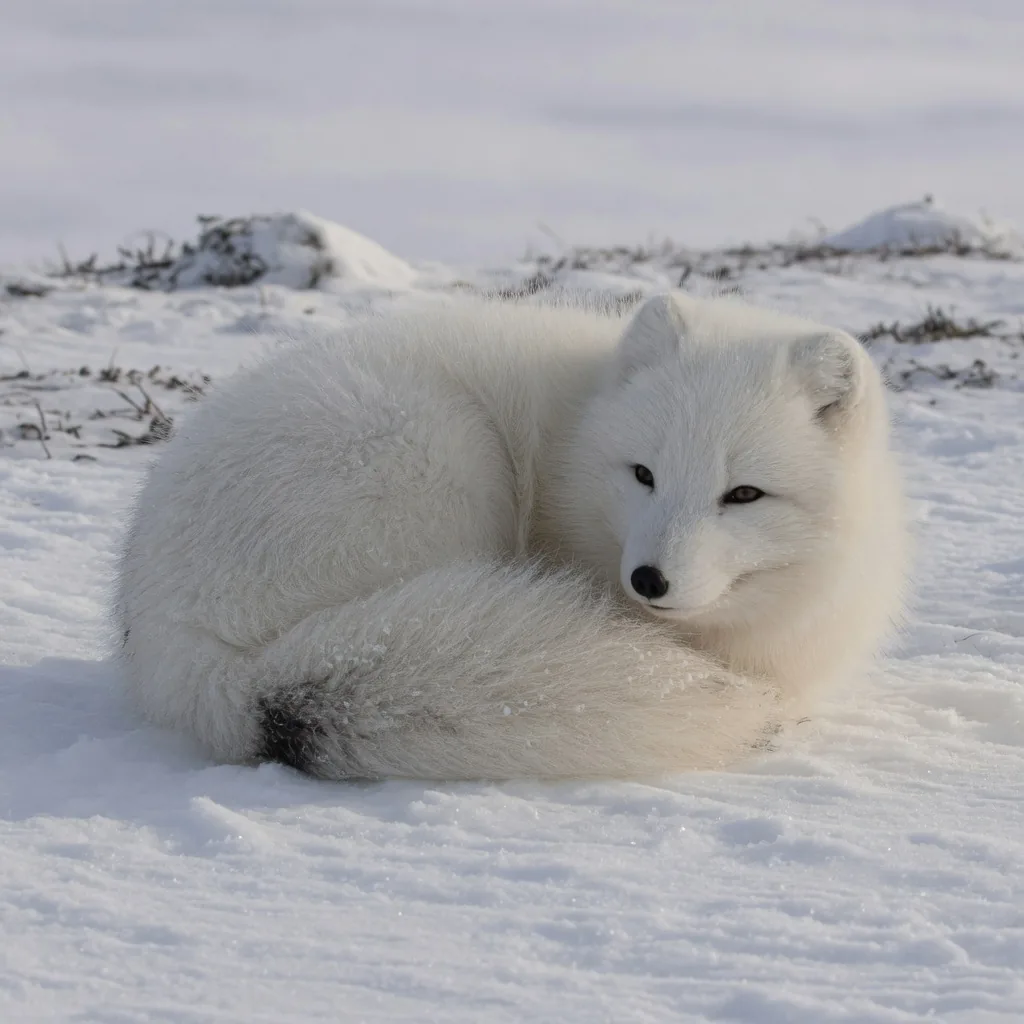
The Vulpes genus comprises twelve species, including the Arctic fox (Vulpes lagopus), which was previously considered the lone species of the Alopex genus. These foxes are typically recognized by pupils that retract into vertical slits when exposed to bright light.
Of the twelve species, the red fox (Vulpes vulpes) is the largest and most widely distributed species. It is found almost all over the Northern Hemisphere. In the Southern Hemisphere, it is only found in Australia, where it is an introduced species. Its rampant spread in Australia has earned the red fox a place on the list of the world's 100 most invasive species.
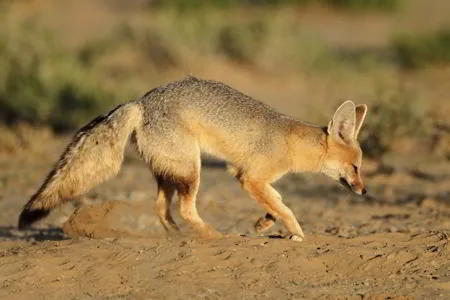
Cape fox (Vulpes chama)
A small true fox of the dry and semi-dry country of southern Africa. It has a silver-gray coat and the big, alert ears that desert foxes are known for.
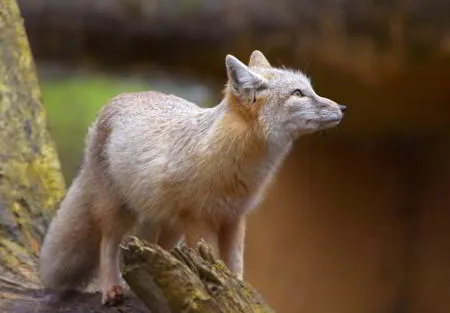
Corsac fox (Vulpes corsac)
This fox inhabits the arid regions of Central Asia. Like the Arctic fox, it copes with a harsh, open landscape — here it is dry steppe and desert rather than ice.
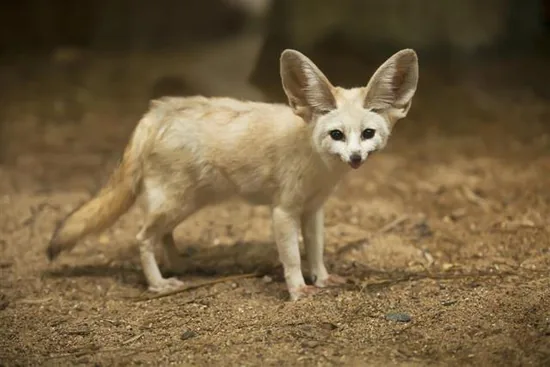
Fennec fox (Vulpes zerda)
The fennec fox inhabits northern Africa and is the smallest fox of all. Its enormous ears are its trademark — they help it lose heat and stay cool in the desert.
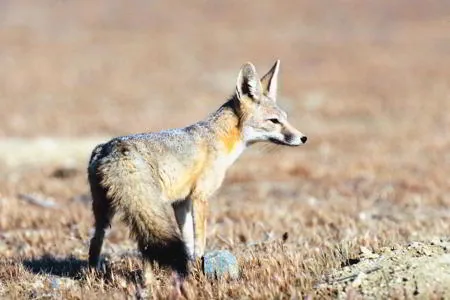
Kit fox (Vulpes macrotis)
The arid regions of North America are home to the kit fox. It is one of the smallest North American canids, with big ears and a pale, sandy coat for the desert.
While the Arctic fox is found in the cold regions of the Arctic, there are some species which prefer the dry environment of lower latitudes. The Blanford's fox (Vulpes cana), for instance, inhabits the semi-arid regions of the Middle East, while the Corsac fox (Vulpes corsac) inhabits the arid regions of Central Asia.
The Cape fox (Vulpes chama), pale fox (Vulpes pallida), and the fennec fox (Vulpes zerda) inhabit the arid and semi-arid regions of southern Africa, middle Africa, and northern Africa respectively. Only the Ruppell's fox (Vulpes rueppellii) is found in both Asia and Africa. As for the arid regions of North America, it is home to the kit fox (Vulpes macrotis).
Then there are species like the Bengal fox or Indian fox (Vulpes bengalensis), which is endemic to the Indian subcontinent — the region between the Indus River and the Himalayan mountain range, to be precise. There is also the Tibetan sand fox (Vulpes ferrilata), which is found in the plateau regions of Tibet and Ladakh. The Tibetan sand fox, like the red fox and the Ruppell's fox, has a white-tipped tail. All other species have a black-tipped tail.
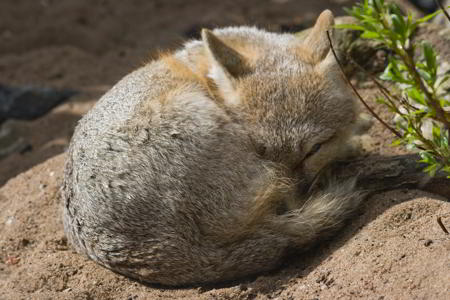
Swift fox (Vulpes velox)
The swift fox is closely related to the kit fox — so closely that the two were historically grouped together as a single species. Researchers now class them as two different species, because the two have different geographic ranges.
Except for the pale fox, which is considered Data Deficient, all the rest of the true foxes are listed as Least Concern species by the International Union for Conservation of Nature (IUCN).
Frequently Asked Questions
What is a true fox?
Only the foxes in the genus Vulpes are true foxes. There are 12 of them, including the red fox, the Arctic fox and the fennec fox. Many other animals are called foxes but are more closely related to dogs and wolves.
What is the largest type of fox?
The red fox (Vulpes vulpes) is the largest and most widely distributed true fox. It is found almost all over the Northern Hemisphere.
What is the smallest type of fox?
The fennec fox (Vulpes zerda) of northern Africa is the smallest fox, famous for its huge ears that help it stay cool in the desert.
Which fox is the most endangered?
Darwin's fox (Lycalopex fulvipes) of Chile is Critically Endangered. Most other foxes are listed as Least Concern by the IUCN.
Can foxes climb trees?
The gray fox and the island fox can climb trees. The only other dog-family animal that can do this is the raccoon dog.
Take the True-or-False Fox Quiz!
5 quick questions. Find out how much you really know about the world's foxes.
Genus Cerdocyon — Crab-eating Foxes
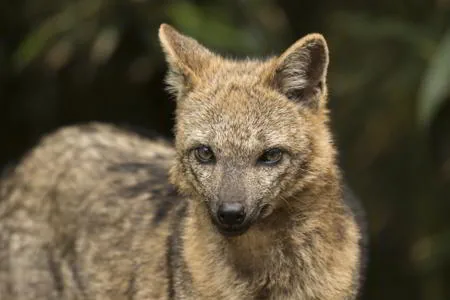
Crab-eating fox (Cerdocyon thous)
The crab-eating fox is the lone living member of genus Cerdocyon. It goes by several other names, including the common fox, wood fox, and forest fox. It is called a crab-eating fox because of its habit of foraging floodplains for crabs.
The crab-eating fox is endemic to the continent of South America. It is found in a variety of habitats in Colombia, Venezuela, Paraguay, Uruguay, Guyana, Surinam, Brazil, and Argentina. On the basis of geographical distribution, five subspecies of this fox have been identified.
Genus Lycalopex — South American Foxes
These are the six species belonging to the Lycalopex genus. They are also known as zorros in Spanish. Despite their common name, they are neither true foxes nor related to them. In fact, they are closer to other canids, such as dogs and wolves.
Genus Lycalopex
6 speciesThe South American "foxes," or zorros — not true foxes at all, but closer cousins of dogs and wolves.
- Culpeo or Andean Fox (Lycalopex culpaeus)
- Darwin's fox (Lycalopex fulvipes)
- South American gray fox (Lycalopex griseus)
- Pampas fox (Lycalopex gymnocercus)
- Sechuran fox (Lycalopex sechurae)
- Hoary fox (Lycalopex vetulus)
Genus Otocyon — Bat-eared Foxes
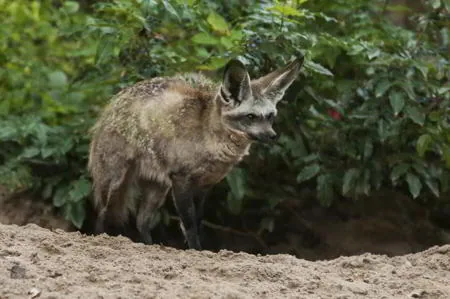
Bat-eared fox (Otocyon megalotis)
The bat-eared fox is the lone member of its genus, genus Otocyon. It is also known as the big-eared fox or black-eared fox — both names pointing to its long, black ears.
There are two subspecies of the bat-eared fox: Otocyon megalotis megalotis, found in Zambia, Angola, and South Africa, and Otocyon megalotis virgatus, found in Tanzania, Ethiopia, and Sudan.
There seems to be some confusion about whether this species is related to true foxes or not. As of now, it is placed in a distinct genus of its own.
Explore More Animals
 Jaw-dropping Facts About the Red FoxBuilt for speed and known for its clever opportunistic behavior, the red fox is one of the world's most widespread mammals. Discover its habitats, diet, amazing
 Fast Facts About Foxes That Will Leave You SpellboundFoxes are best known as sly creatures; however, these are like any other animal in the wild. Read some interesting facts about foxes and their relationship with
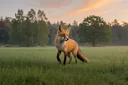 Red Fox Habitat: Places Where These Cunning Carnivorans LiveThe red fox lives in grasslands, forests, deserts, icy plains, and even cities. Find out where red foxes live, how they find food, and why they've conquered alm
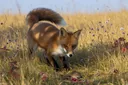 What Do Foxes Eat? Diet, Hunting Habits & Fun FactsFoxes are omnivores that eat everything from rabbits and mice to berries and earthworms. Discover what foxes eat, how they hunt, and what makes their diet so im
Genus Urocyon — The Gray Fox and Its Dwarf Cousin
Gray fox & Island fox (Urocyon)
And lastly, we have the two species belonging to genus Urocyon: the gray fox (Urocyon cinereoargenteus) and the island fox (Urocyon littoralis), which — again — are not true foxes. These species are known for their ability to climb trees; the only other canid with this ability is the raccoon dog (Nyctereutes procyonoides). Of the two, the island fox is listed as a Near Threatened species by the IUCN.
Nearly all the species we have mentioned are listed as Least Concern species by the IUCN. The only exception is Darwin's fox (Lycalopex fulvipes), which is considered Critically Endangered. If their survival against all odds doesn't speak volumes about the cunning animal that the fox is, nothing will.

 Fun fact for today!"As cunning as a fox" is more than a saying — foxes are so clever and adaptable that they thrive right alongside people, even in busy towns and cities!