

Mammals are warm-blooded animals that give birth to live young. Cats, dogs, elephants, giraffes, whales, dolphins, porpoises, and obviously Homo sapiens are all viviparous mammals. On the other hand, there are mammals that lay eggs, and these are called monotremes. The word monotreme comes from the Greek word monos, meaning "single," and trema, meaning "hole." These monotremes are warm-blooded animals with a high metabolic rate. Like other mammals, they have hair on their bodies, females produce milk for their young, have three middle ear bones, and a single bone in their lower jaw.
Platypuses, though being mammals, do not give birth to live young like marsupials and placental mammals. This was once considered a scandalous fact, and many people believed it to be the biggest hoax of all time. However, when one of the species was brought to Europe in 1799 from Australia, many scientists were called in to give their expert advice. Dr. George Shaw, after careful examination, recognized this strange creature (with a duck bill, beaver tail, and otter-like feet) as a new member of the animal kingdom. People thought it was the result of clever stitching, but it was in fact a platypus.
Characteristics of Monotremes
- Cloaca: A single opening for passing urine, feces, and eggs, where they are deposited before being expelled from the body.
- Leather Bill: A leathery bill is present to help detect prey.
- Nipples: They do not have nipples for milk secretion. Instead, milk is secreted through the skin of the abdomen.
- Spur: Males have a spur on their hind limbs. A platypus uses this spur to secrete venom.
- Ears: These mammals have a primitive inner bone that has fewer coils.
- Teeth: These monotremes have no teeth, they have horny pads instead.
- Gait: These animals have a reptilian gait, with limbs aligned laterally to the body.
Mammals That Reproduce by Laying Eggs
There are three living species of monotremes recognized by scientists:
- Duck-billed platypus
- Long-beaked echidna
- Short-beaked echidna
The following sections cover information about each of these egg-laying mammals.
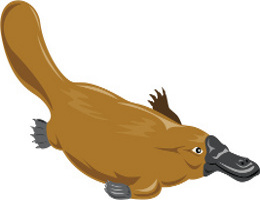
1. Duck-billed Platypus
| Scientific name | Ornithorhynchus anatinus |
| Order | Monotremata |
| Family | Ornithorhynchidae |
| Genus | Ornithorhynchus |
The platypus (Ornithorhynchus anatinus) has a streamlined body that looks like an otter's. Its tail looks like a beaver's tail, and it has a duck-like bill used to detect prey. It has webbed feet and is semi-aquatic. Platypuses feed mainly on insect larvae, shrimp, shellfish, frogs, and fish eggs. An adult platypus is about 45 to 60 cm in length. Its habitat includes the freshwater regions of the southeastern coast of Australia and Tasmania. Hawks, eagles, owls, crocodiles, and foxes are its natural predators.
Take the Monotreme Quiz!
5 quick questions about the world's only egg-laying mammals.
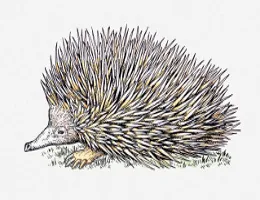
2. Long-beaked Echidna
| Scientific name | Zaglossus bruijni |
| Order | Monotremata |
| Family | Tachyglossidae |
| Genus | Zaglossus |
The long-beaked echidna's body is covered in spines that are yellow with black tips. Below these spines, it has fur. Its snout is half the length of its head. Males have a spur on their hind legs, but this spur lacks venom. Adults are around 50 to 55 cm in length, with a tail that is 6 cm long. They are very good swimmers. The long-beaked echidna is found in Papua New Guinea and feeds mainly on worms and insect larvae.
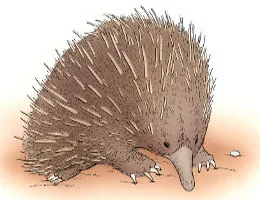
3. Short-beaked Echidna
| Scientific name | Tachyglossus aculeatus |
| Order | Monotremata |
| Family | Tachyglossidae |
| Genus | Tachyglossus |
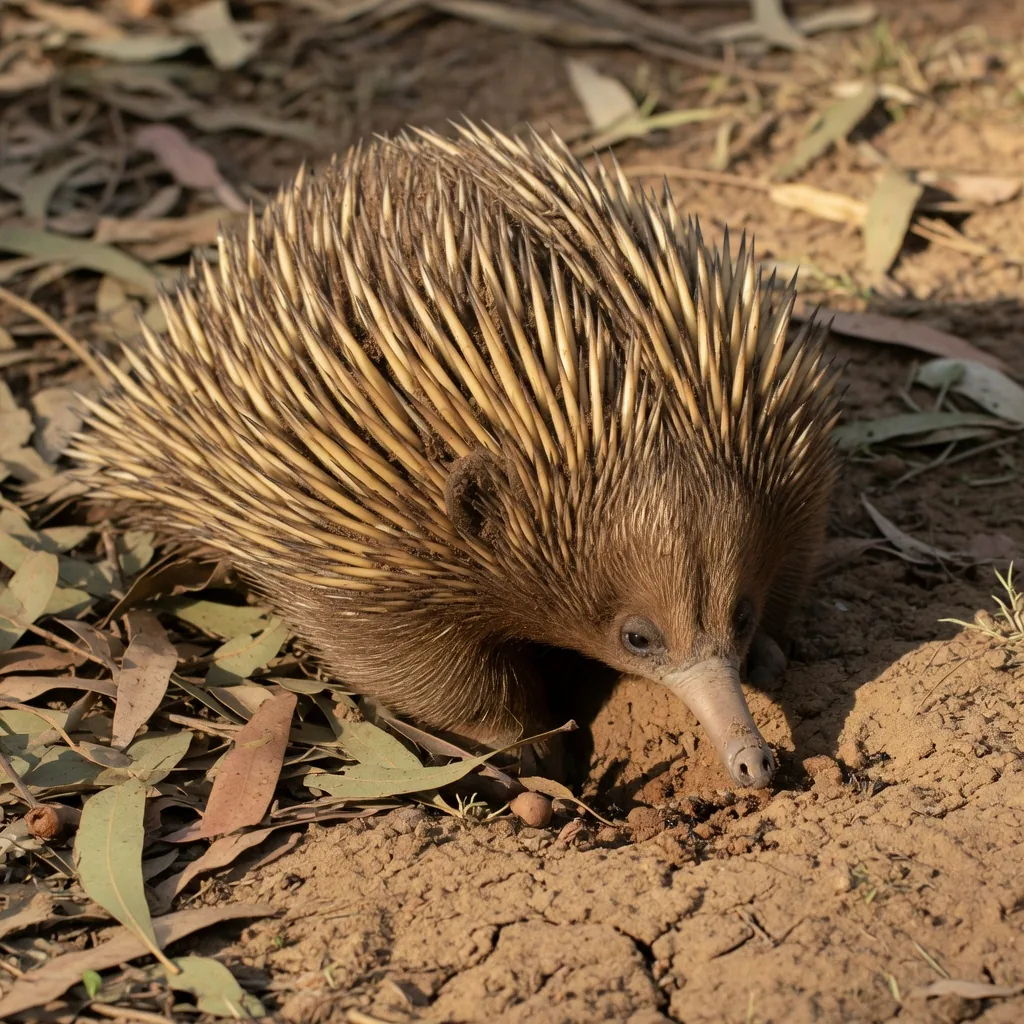
The short-beaked echidna is covered in both fur and spines. It has a distinctive snout and a specialized tongue that is used to catch prey at great speed. This echidna is found throughout Australia and in the southwestern regions of New Guinea. It is sometimes called the spiny anteater in older texts, though that name is now rarely used. Adults are about 45 to 77.5 cm in length. They feed mainly on termites and ants. Tasmanian devils and eagles are their natural predators.
Explore More Animals
 Unusual and Little-known Facts About MammalsMammals are a class of vertebrates which began to evolve on Earth around 200 million years ago. Discover record-holders, classification, and surprising facts ab
 Animal Gestation Period ChartA complete animal gestation period chart for 79 animals, from the 2-year elephant to the 15-day hamster. See how long each animal is pregnant, sorted longest to
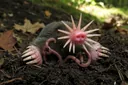 14 Animals With Really Strange Noses You Won't Believe are RealWe always wonder what was Mother Nature thinking when she decided to make certain animals look weird, and sometimes even creepy, especially their noses. In this
 Marsupials List: 334 Pouched Mammals of the WorldFrom the red kangaroo to the tiny long-tailed planigale: meet the marsupials, the pouched mammals. A photo guide plus a full list of 334 species with ranges and

 Fun fact for today!Platypuses and echidnas are called monotremes, a word that means "single hole" in Greek!