

Mandrills (Mandrillus sphinx) are Old World monkeys, closely related to drills and baboons. They are perhaps the most colorful of all mammalian species known to us. These colorful features make them distinct from other primates.
The colors are more prominent in adult males. An average adult male has double the body weight of an average adult female. Females are noticeably smaller and have dull body colors.
Mandrill Features
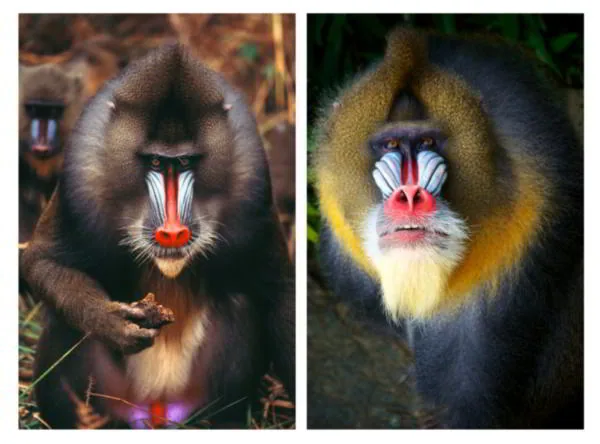
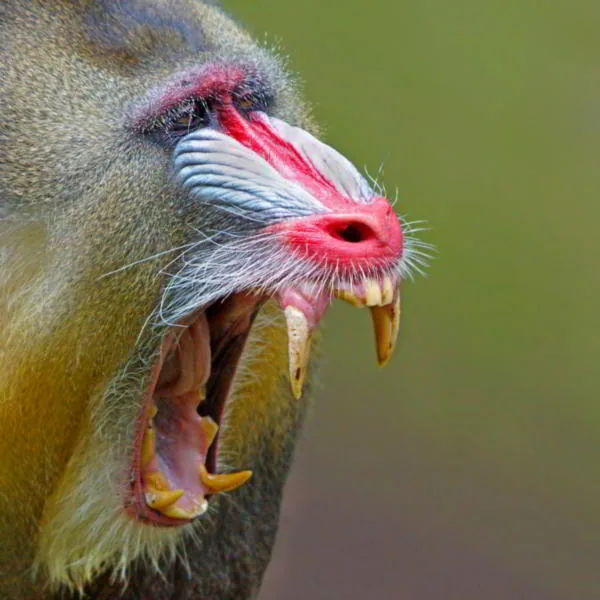
You can identify a mandrill by its most striking feature: a long muzzle with a bright red stripe running between blue ridges. Even the nostrils and lips are vivid red. The animal has sunken eyes, prominent brow ridges, and red fur patches above the eyes. Its face is hairless. The fur of this monkey is grayish or olive-colored, and it sports a yellow beard, white tufts, and a white belly. The colors grow brighter as the male reaches adolescence.
Among males, the dominant ones are the most colorful of all. The dominant mandrill has high levels of testosterone. The colors also become more pronounced when the animal gets excited. It has a colorful rump with shades of red, pink, and blue.
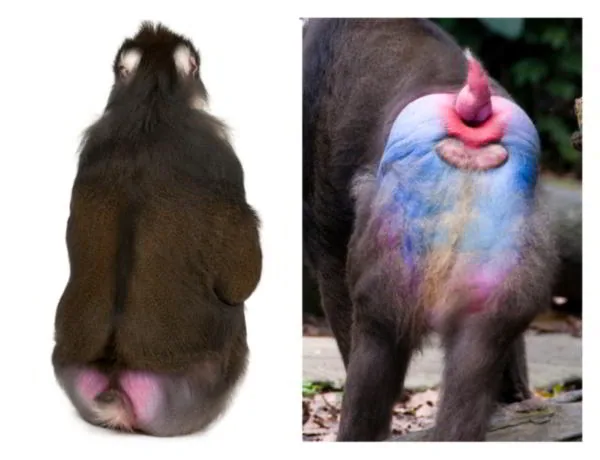
Like baboons, mandrills have toughened, cushion-like, hairless skin on their rump. This is called ischial callosities. This tough skin makes it easy for these monkeys to sleep while sitting upright. It is one of the key adaptations of mandrill monkeys, which have the habit of sleeping on tree branches in a sitting position.
Both males and females have chest glands that release scents. These are used to attract mates through olfactory communication. The mandrill also has a short, vestigial tail.
Another striking feature is the sharp, long canine teeth, which can grow up to 6.5 centimeters in length. An average adult male mandrill weighs around 33 kilograms, while an adult female weighs around 12 kilograms. Males measure around 32 to 36 inches long, while females have a body length of 22 to 26 inches.
Distribution and Habitat
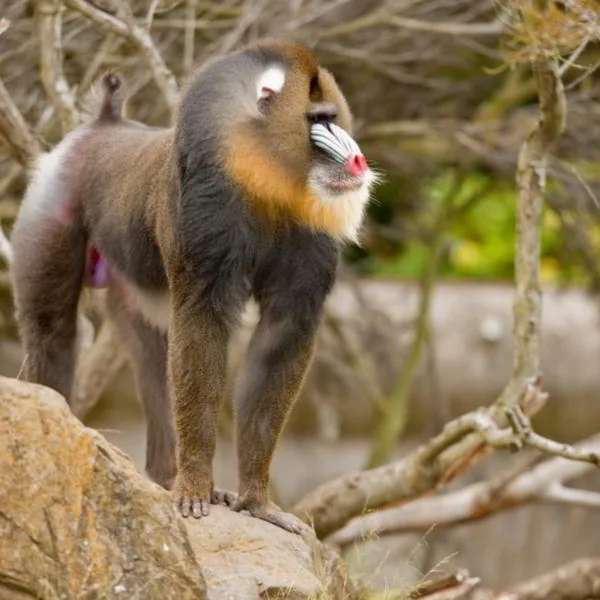
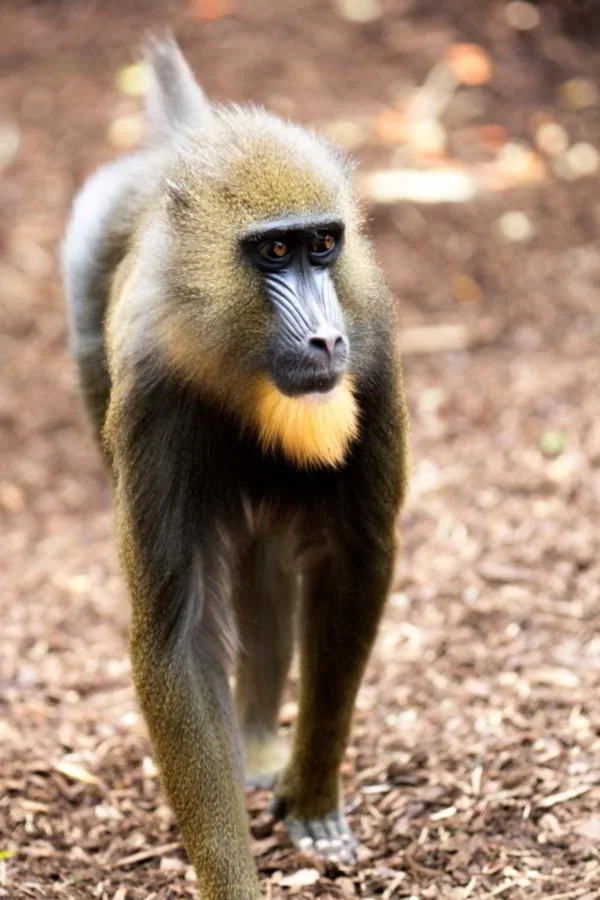
Mandrills are natives to the central and western regions of Africa. They are found in Cameroon, Gabon, Equatorial Guinea, and Congo. Their natural habitat includes rainforests and woodlands. Being exclusively terrestrial primates, they prefer to spend most of their time on the forest floor. Even so, they climb large trees and sleep on the branches for safety.
They are also seen in rocky forests, stream beds, and grasslands. At times, they may enter cultivated areas and damage crops.
Mandrill Diet
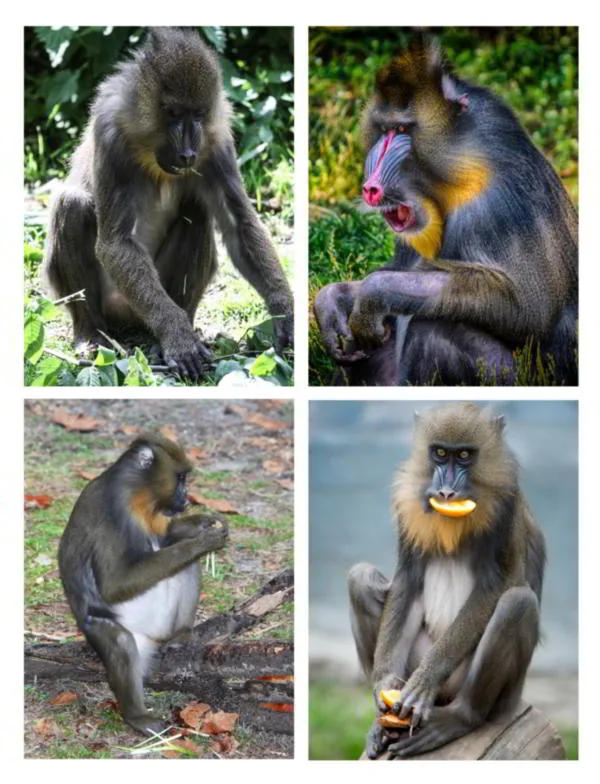
The diet of these omnivorous monkeys includes a wide range of fruits, roots, other vegetative parts, mushrooms, insects, small amphibians, reptiles, and other animals. Fruits make up the main part of the diet, but mandrills also eat considerable amounts of seeds, leaves, and other plant matter. Only 4% of their diet consists of animal matter, which includes spiders, ants, termites, snails, scorpions, beetles, birds, frogs, rats, and porcupines.
Behavior and Reproduction
Mandrills live in groups known as "hordes." A single group may contain as many as 1,000 individuals, mostly females and their young. Although they are social animals, male mandrills prefer to live a solitary life. Occasionally they form groups and forage alongside females, but most large mandrill groups consist of adult females and juveniles.
Take the Mandrill Facts Quiz!
5 quick questions. How much do you know about the world's most colorful monkey?
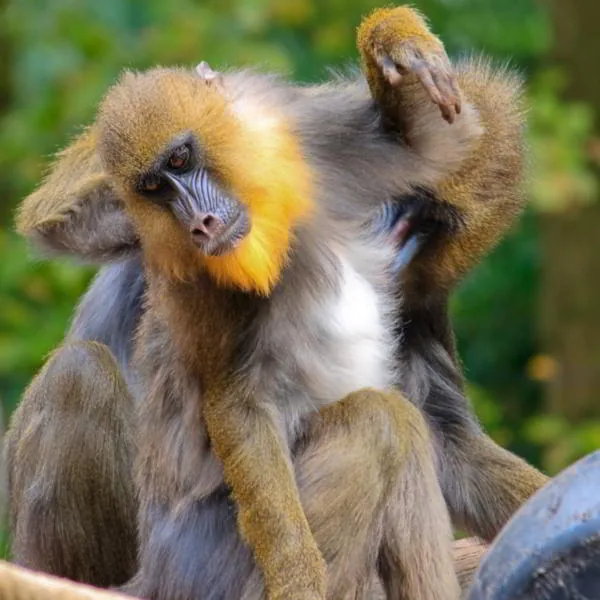
The dominant male enters a horde during the mating period, which extends up to three months. The females of a horde share a strong bond with each other. Mothers are more attached to their daughters than their sons. Females spend their time foraging, playing, and grooming each other. Fights are very rare among the females of the group.
Frequently Asked Questions
What is a mandrill's scientific name?
Mandrillus sphinx
How heavy is an adult male mandrill?
Around 33 kilograms
Where do mandrills live?
Rainforests and woodlands of Cameroon, Gabon, Equatorial Guinea, and Congo
Are mandrills endangered?
They are classified as Vulnerable by the IUCN, threatened by hunting and rainforest habitat loss.
How long do mandrills live?
Up to 25 years in the wild and around 30 years in captivity.
Mandrills become sexually mature at the age of three to four years. While the dominant male is brightly colored, paler males also enter the horde and try to mate, but only the dominant male succeeds in producing offspring. Males in the group engage in deadly fights to gain dominance. Each horde also has dominant females, who are more likely to become pregnant.
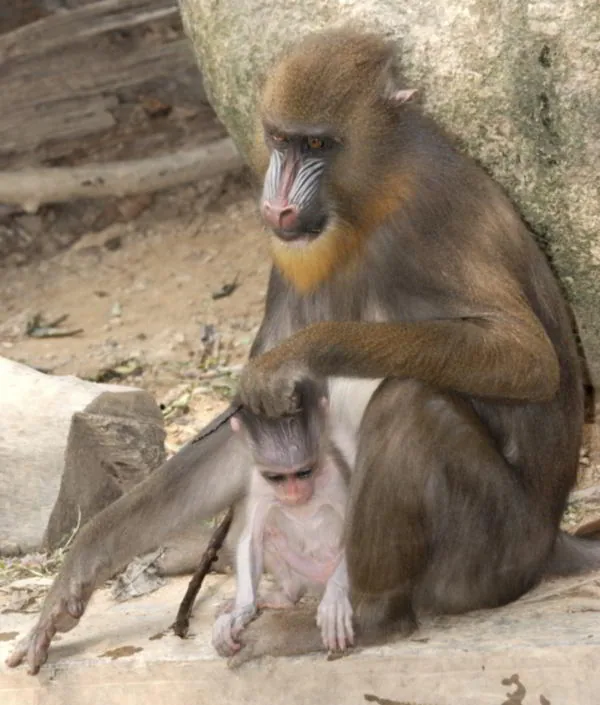
According to a recent study, female mandrills can choose the dominant male, identifying him by his scent and color. The gestation period is 145 days, after which a single baby is born. The mandrill baby is hairy and is born with open eyes. It has pink skin and black hair. The color of the skin and hair remains the same for the first two months. While daughters spend the rest of their life with their mothers, sons become solitary after reaching sexual maturity. The mother and her female relatives all take care of the young one.
Threats and Conservation
Mandrills are believed to live up to 25 years in the wild. In captivity, these monkeys can survive for around 30 years. In the wild, mandrills are mainly threatened by leopards and pythons. However, humans are the biggest threat, mandrills are hunted for their meat. Loss of rainforest habitat is another major reason for their dwindling numbers. These monkeys are classified as "vulnerable" by the International Union for Conservation of Nature (IUCN).
Explore More Animals
 Undeniably Interesting Facts About MonkeysIf a monkey yawns at you, better let it be, it's most likely angry. Discover fascinating monkey facts: Old vs New World, the loudest land animal, the world's t
 A Complete List of All Types of MonkeysFrom the pygmy marmoset (5 inches tall) to the giant Mandrill: discover every major type of monkey (New World and Old World) with photos, fun facts, and a qui
 Endangered Gorillas: Why They're Disappearing & Amazing FactsMeet the gorilla, the largest ape on Earth. Discover the two species, how they live, what they eat, why they are endangered, and what is being done to save the
 Interesting Facts About WarthogsWarthogs are tough, clever survivors of the African savanna. Discover mind-boggling facts about how they live, eat, fight, and raise their young, including the

 Fun fact for today!Charles Darwin called the mandrill "the most extraordinary" colored mammal in the whole animal kingdom!