

Meet the Milkweed Bug
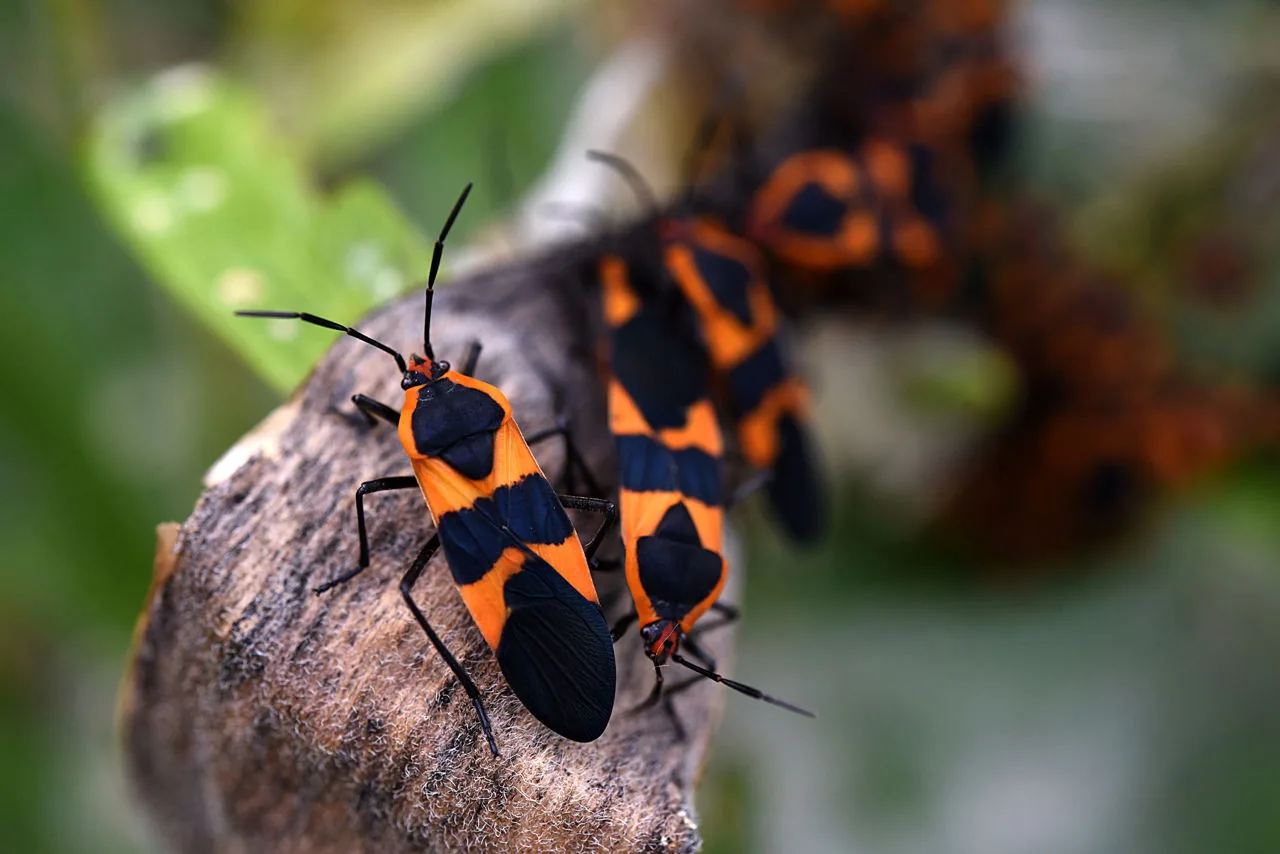
Milkweed bugs are insects that feed on milkweed plants and are found only where milkweed grows, hence the name. With oblong, orange-red and black bodies, these bugs suck nutrients from the seeds of milkweed plants. That said, they don't eat only milkweed: they also consume the nectar of a variety of flowers.
Milkweed bugs belong to the "true bugs" category of insects, unlike beetles, moths, flies, and butterflies. This means they don't have mouths for biting and chewing food. Instead, they have a tube-like mouthpart called a proboscis for sucking fluids.
There are two species. The large milkweed bug (Oncopeltus fasciatus) measures 10-16 millimeters, while the small milkweed bug (Lygaeus kalmii) measures 10-13 millimeters. Both belong to the true bug category and both feed on milkweed seeds.
Life Cycle of a Milkweed Bug
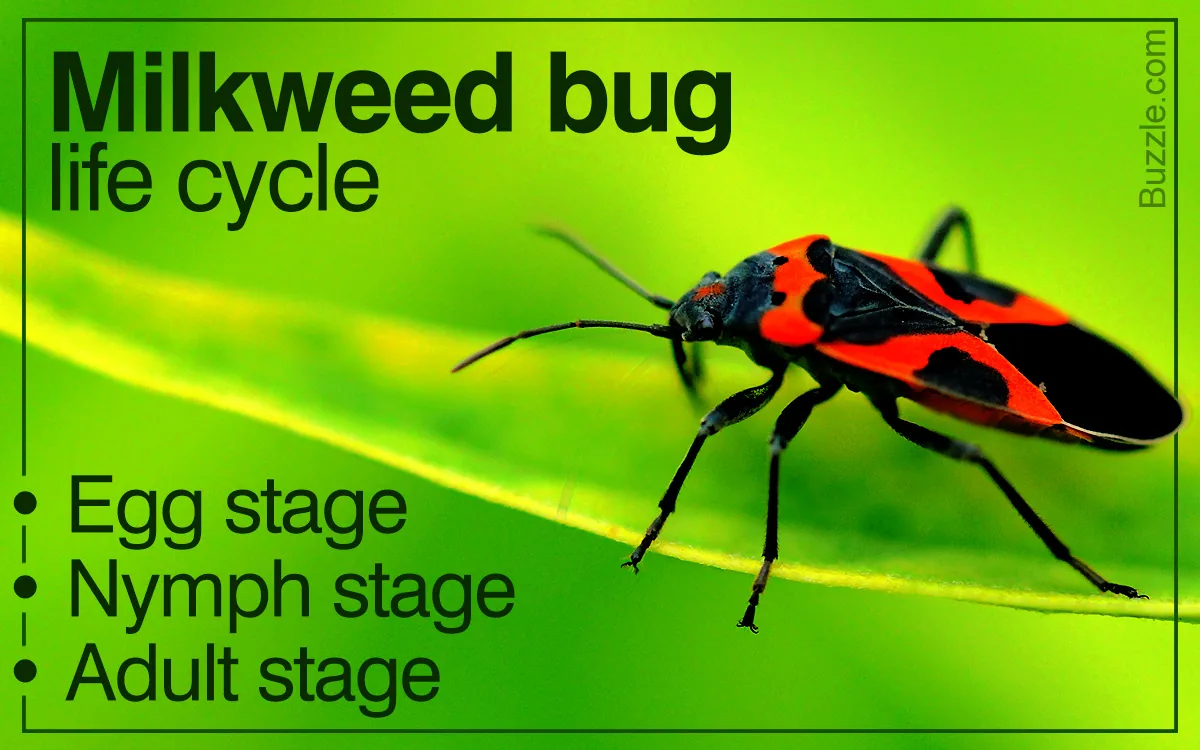
Milkweed bugs undergo a simple metamorphosis process, involving an egg, nymph, and adult stage. Because they undergo incomplete metamorphosis, the nymph looks like the adult in appearance, just smaller. Let's look at each stage in detail.
Stage 1: The Egg
Mating takes place towards the end of the summer months. Males attract females with a sound they make by rubbing their wings on their abdomen. The adults mate end-to-end and can remain attached for half an hour or more.
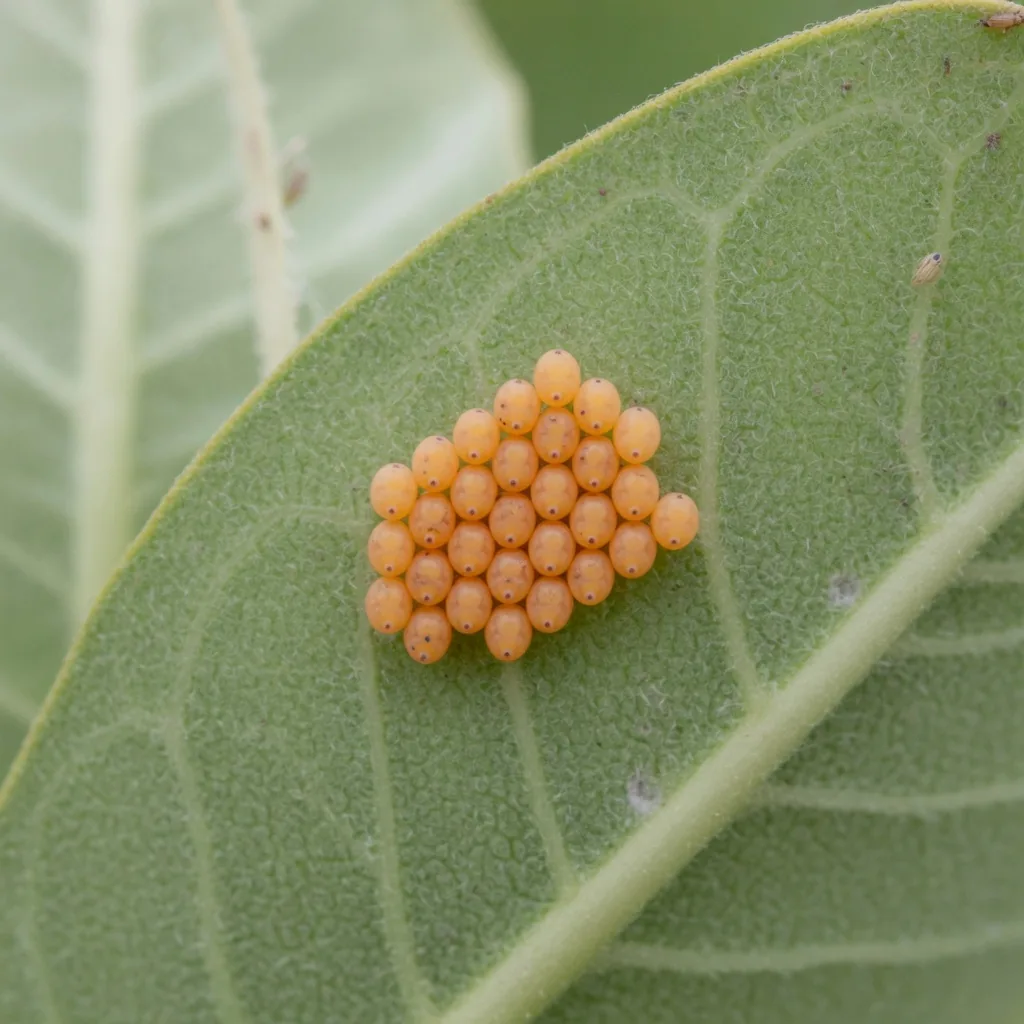
About 20 eggs are laid by the female every day, in clusters called clutches. She tucks her eggs in a ball of milkweed seed fluff or under the milkweed leaves for protection. The eggs stay attached to the leaves thanks to small curved points at their tips.
Over her lifespan of about one month, the female bug can lay around 2,000 eggs.
Stage 2: The Nymph (5 Instars)
The pale orange eggs hatch after about a week, when the temperature is warm and favorable. As soon as they hatch, milkweed bugs enter the nymph stage. They look like miniature versions of the adult bug, except their wings are incomplete. The tiny creatures appear like specks of red dust, but don't be fooled. Even at this stage, each one has six microscopic legs, three tiny body parts, and two antennae. They do lack the black spots that adults have, though. About half of the hatching nymphs will be male and half female.
Nymphs feed voraciously. Their mouthparts let them suck sap from milkweed seeds, flowers, and leaves. All that eating makes the body grow, but the tough exoskeleton protecting the body is not flexible. When the nymph outgrows it, the exoskeleton bursts open and the nymph slides out. A new, moist, flexible exoskeleton develops and lets the nymph grow to twice its size in just minutes. The new exoskeleton then hardens within a few hours.
After about a week, the nymph sheds its exoskeleton again. This process of shedding to grow is called molting. Right after a molt, the bug appears creamy-yellow with bright red antennae and legs. A few hours later, its body turns dark orange and the legs and antennae turn black.
Milkweed nymphs molt five times in total. Each stage between molts is called an instar. The first instar is a newly hatched baby bug; the fifth instar is the stage just before adulthood. With each instar, the body shape changes and dark body markings and wing pads develop.
Frequently Asked Questions
How many stages are in the milkweed bug life cycle?
Three stages: egg, nymph, and adult (incomplete metamorphosis).
How many times does a milkweed nymph molt?
Five times, passing through five instars before becoming an adult.
How many eggs does a female milkweed bug lay?
About 20 eggs per day and around 2,000 eggs over her lifetime of about one month.
What is the scientific name of the large milkweed bug?
Oncopeltus fasciatus (10-16 mm). The small milkweed bug is Lygaeus kalmii (10-13 mm).
Take the Milkweed Bug Quiz!
5 quick questions. How well do you know the milkweed bug's life cycle?
Stage 3: The Adult
This gradual maturing is called incomplete metamorphosis, the bug grows larger and larger until the last molt reveals the adult. The full process, from egg to adult, takes 4-8 weeks depending on habitat temperature.
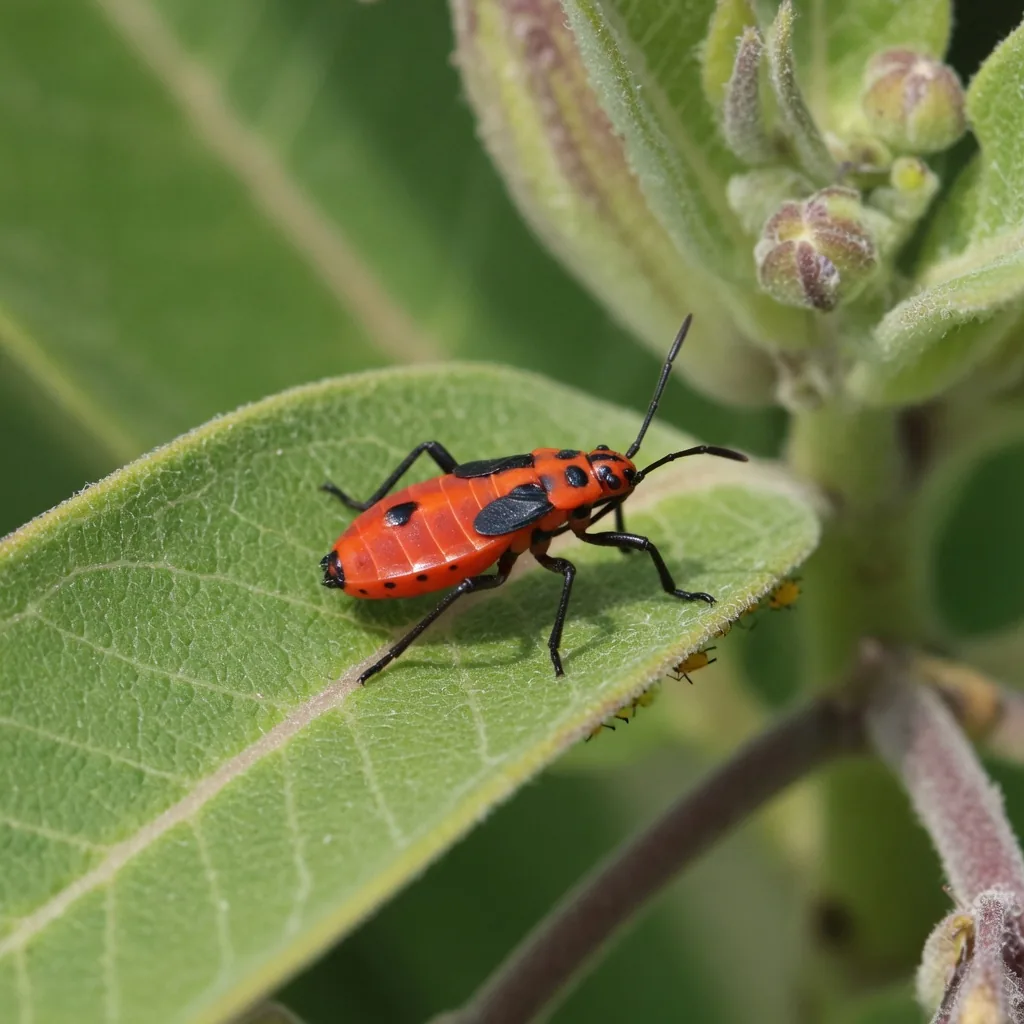
Adult milkweed bugs have black-tipped abdomens, a bright orange segment before the tip, and tiny black dots on the edges. You can tell the sexes apart: if the segments after the orange segment have black bands, it's a male. Males are smaller than females and have two black bands on their underside, while females have one black band and two black spots on their underside. Adults have two soft inner wings for flying and tougher outer wings that protect them.
About a week after reaching adulthood, these bugs begin to mate. The female and male stay attached end-to-end for a long time. A few days after mating, the female starts laying yellow eggs in clusters of 20. Adult milkweed bugs may then live another 2 months after mating and laying eggs, a kind of retirement period.
Explore More Animals
 Four Growth Stages of a ButterflyHow does a caterpillar that comes out of a tiny egg, metamorphose into a butterfly with magnificently artistic designs on its wings? This article will tell you
 Utterly Fascinating Information About Butterfly MetamorphosisA complete change of physical form starting from the egg, to a larva, then a chrysalis, and then a gorgeous butterfly, discover the four amazing stages of butt
 Types of Flying Insects With PicturesThe complete kids' guide to flying insects, every main order from dragonflies and beetles to bees and butterflies, how their bodies and wings work, the species
 Woolly Bear Caterpillar Facts: Appearance, Habitat, Life Cycle & MoreIt is not uncommon to come across woolly bear caterpillars on sidewalk, roads, and other areas during autumn. There are many interesting facts worth knowing abo
Winter, Toxicity, and Pets
Milkweed bugs stop reproducing in the fall, as the weather turns cold and milkweed plants die. Adult milkweed bugs that have not yet reproduced enter a stage of hibernation during this time, using the natural antifreeze in their bodies to survive the cold months. However, a large number of bugs do not make it through the rough winter months.
Milkweed bugs are not considered pests, except for people who want to grow milkweed plants. However, they can be a danger to pets: ingesting them can make pets ill. The sap they suck from the milkweed plant is toxic and can cause harm to predators. So take care of your pets!

 Fun fact for today!Milkweed bugs are "true bugs", they can only suck fluids, never bite and chew!