

Poison dart frogs are from the Dendrobatidae family. They are known by several names, the "poison arrow frog" and the "dart poison frog" are the most common. There are about 175 species of these frogs, although only three of them are extremely toxic to human beings.
Description
The tiny poison dart frog is quite a show-off. It displays a range of brilliant colors on its skin. These frogs are a classic example of aposematism, a defense mechanism where an organism uses various tactics to warn off potential predators. Those tactics can include bright colors, ultrasonic sounds, or noxious odor. In simple words, the bright colors are a way of saying, "please don't eat me!"
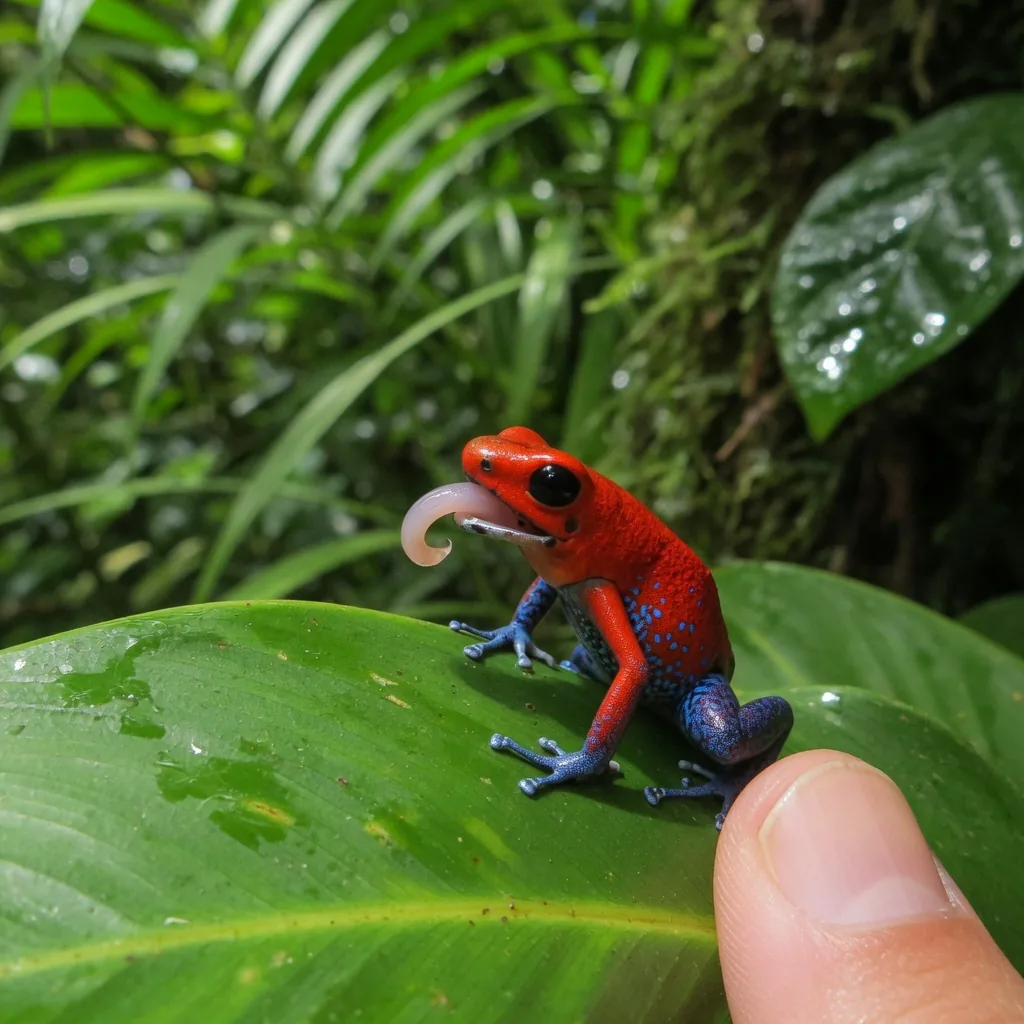
These frogs are extremely small. Their size is less than 2 and a half inches. In fact, the smallest can be the size of your thumbnail, and weigh as little as 2 grams. Their colors range from classic golden to bright hues of red, yellow, green, blue, and black. The patterns also help them camouflage themselves among the forest foliage.
| Kingdom | Animalia |
|---|---|
| Phylum | Chordata |
| Class | Amphibia |
| Order | Anura |
| Family | Dendrobatidae |
| Genus | Dendrobates |
Habitat and Geographical Range
Poison dart frogs love warm, humid climates. They are mostly found in the tropical rainforests of countries like Costa Rica, Brazil, Venezuela, Colombia, and Ecuador in Central and South America. You can read more about the incredible creatures that share this habitat on our Amazon rainforest animals page.
These frogs live in wet, moist places, streams, marshes, and underneath rocks and leaves on the forest floor. They are mainly ground-dwellers, but they can climb trees easily. The poison dart frog enjoys the sun and extremely humid environments. Temperatures between 72°F (22°C) and 80°F (27°C) are ideal for them.
Diet and Lifespan
Poison dart frogs are meat eaters. They have long, sticky tongues that zap out to catch prey, fruit insects, termites, ants, and small spiders.
These frogs have a clever way of catching a meal. Their bright skin colors actually attract insects towards them. Once an insect touches the deadly toxins from the frog's skin glands, it experiences instant death. That's definitely fatal attraction!
The average lifespan of a poison dart frog is 3 to 5 years in the wild. In captivity, however, they can survive for 10 to 15 years.
Take the Poison Dart Frog Quiz!
5 quick questions. How much do you really know about these deadly little frogs?
Reproduction
Poison dart frogs usually mate in the rainy season, from mid-July to mid-September. They go through elaborate rituals (vocalisation calls and territory fights) to attract a partner.
Once the female chooses her partner, she lays a clutch of eggs in the forest canopy. The male fertilises the eggs and keeps them moist. After about twelve days, these eggs hatch into tiny tadpoles.
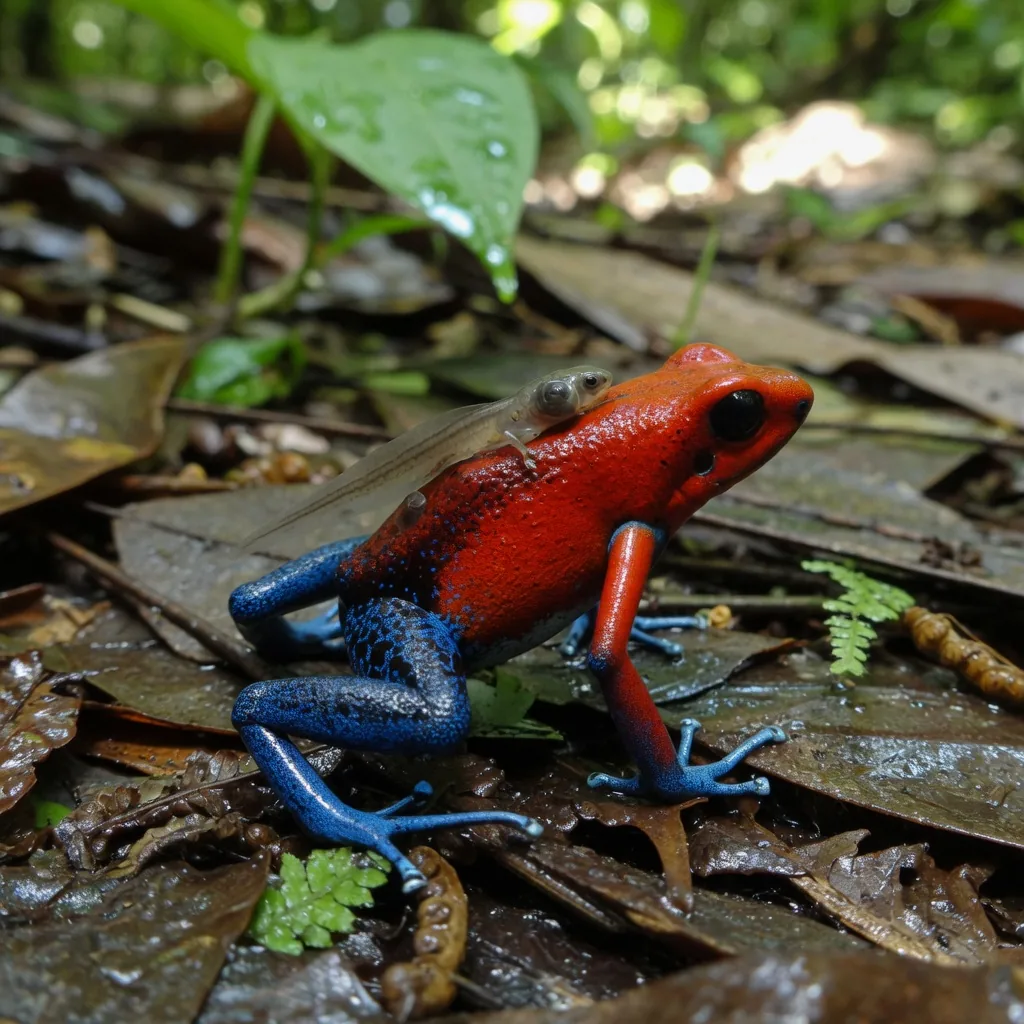
Poison dart frogs are surprisingly devoted parents. They are the only species in the Dendrobatidae family that care for their young. When the eggs hatch, the male frog carries the tiny tadpoles on his back (they stick to the mucus on his skin) and moves them into pools of water collected in the leaves of certain plants. The female occasionally feeds them on unfertilised eggs until the tadpoles go through metamorphosis and turn into adults.
Frequently Asked Questions
How many species of poison dart frog are there?
About 175 species, though only three are extremely toxic to humans.
Where do poison dart frogs get their poison?
From the insects they eat, which acquired the toxins from plants. Captive frogs fed different food have no toxins.
How long do poison dart frogs live?
3 to 5 years in the wild; up to 10 to 15 years in captivity.
Are poison dart frogs endangered?
The IUCN lists them as vulnerable, with some species such as the golden poison dart and blue poison dart classified as critically endangered.
Toxicity and Care
These frogs use their toxins as a defense mechanism. They secrete lipophilic alkaloid toxins through their skin glands when they sense danger. These deadly poisons more than make up for their tiny size.
Scientists believe the poison comes from the insects the frogs feed on. Those insects, in turn, acquire chemicals from toxic plants. This explains why frogs raised in captivity show no signs of toxins at all, they simply don't eat insects that have fed on poisonous plants.
Because of their toxicity, these frogs have very few predators. Snakes and large spiders are usually the ones that eat them, though it can turn out to be a deadly meal! One snake, Leimadophis epinephelus, is the only predator known to have developed resistance to the poison.
The poison also has medicinal uses. Scientists have used it in a painkiller called epibatidine, which is 200 times more powerful than morphine.
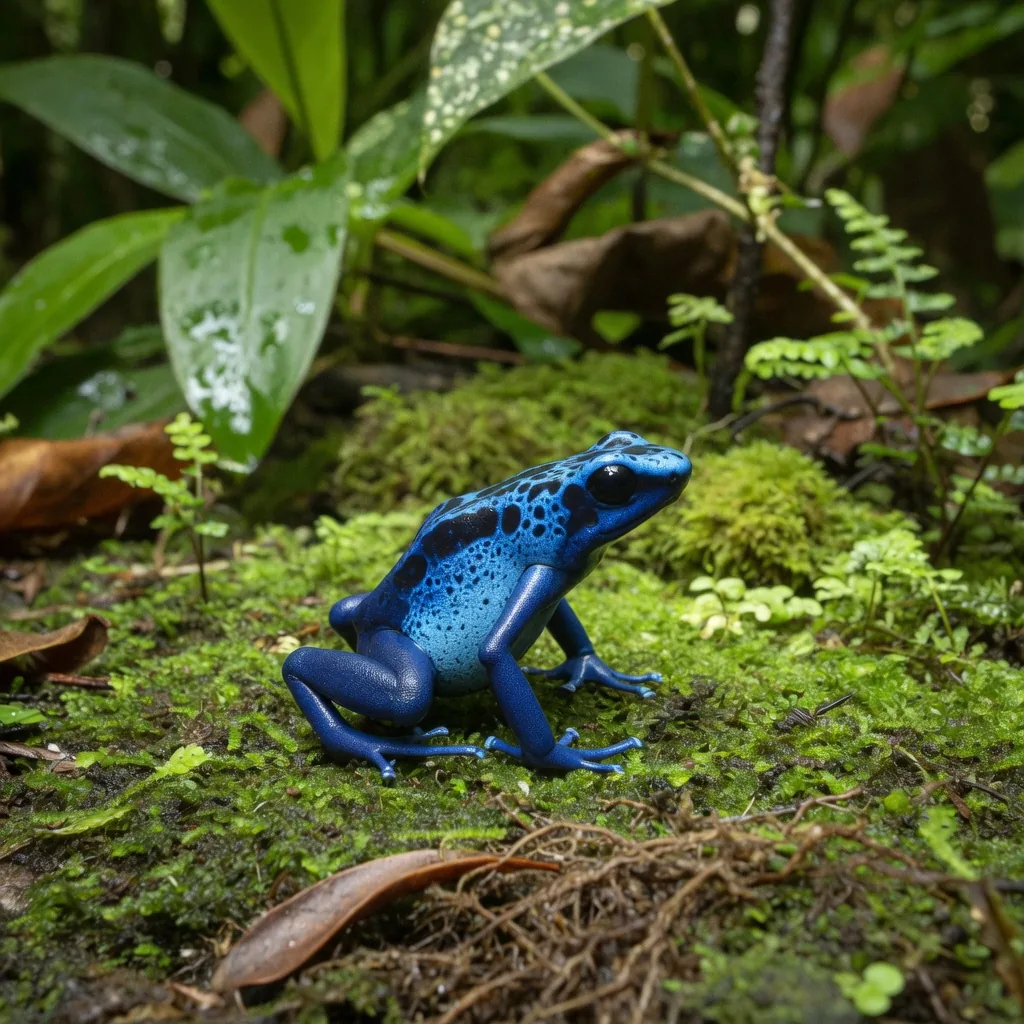
Other Facts
The poison dart frog is so named because some Amerindian tribes used its toxin to poison the tips of their blow darts for hunting.
The golden poison frog is the most dangerous species in the world. It is believed that the venom of just one golden poison frog can kill 10 humans. These frogs are so poisonous that one millionth of an ounce can kill a small animal, and an amount smaller than a grain of rice is enough to kill a human being. However, they are harmless if left alone.
These frogs are sometimes kept as pets. The toxin is only dangerous if it enters the bloodstream through an open wound or is swallowed.
Unlike most amphibians, this species is diurnal, active during the day and asleep at night. They are not good swimmers, and are mostly ground-dwellers. They are solitary creatures and only seek companionship for mating. One interesting exception to their range: the green and black poison frog was introduced to Hawaii by humans and is the only species found there.
Explore More Animals
 Small But Deadly: 4 of the Most Poisonous Frogs in the WildDiscover the world's most poisonous frogs, from the golden poison frog that can kill 20 humans to the warty cane toad. Learn their habitats, toxins, and how to
 Types of Frogs and Toads: A Complete Picture GuideFrom the tiny Paedophryne to the giant goliath frog, discover all the main types of frogs and toads, with pictures, quick facts, and a quiz for kids.
 Frog Habitat Facts With Stunning Pictures of Their DwellingsFrogs are amphibians, which means that they typically live on land but breed underwater. Discover natural frog habitats, the life cycle connection, aquarium set
 Interesting Facts About the Beautiful Blowfish (Puffer Fish)Also known as puffer fish, blowfish can inflate themselves to scare away their predators, hence the name. They are believed to be the second most poisonous vert
Conservation Status
The International Union for Conservation of Nature (IUCN) has listed these frogs as vulnerable. However, some species (including the golden poison dart and the blue poison dart) are critically endangered. The main causes are habitat loss, environmental changes, and pollution. Collecting these exotic creatures for the pet trade is another serious reason for their decline in numbers.

 Fun fact for today!Some poison dart frogs are so toxic that an amount smaller than a grain of rice is enough to kill a human being!