

Commonly known as the larval forms of butterflies, caterpillars are members of the order Lepidoptera. Most of these caterpillars are herbivores, but some selected species are insectivorous, all of them being voracious feeders. Anatomically, caterpillars have a tubular segmented body, with three pairs of true legs on the three thoracic segments and up to four pairs of prolegs on the middle segments of the abdomen. They also have a single pair of prolegs on the last abdominal segment.
Caterpillars have very good vision and breathe through a series of tiny openings along the sides of the thorax and abdomen, known as spiracles. Many caterpillars can detect vibrations of wings and other movements around them for defense purposes. Like the variety in their appearances, habits, and habitats, there is also a classification that depends on them being poisonous and non-poisonous.
Venomous Caterpillars
There are many venomous caterpillars belonging to many species, and each has its own unique defense mechanisms. Those that are known to be poisonous have a slight difference in their appearance. The ones described below are some of the most well-known poisonous caterpillars.
Hag Moth Caterpillar
Known as the monkey slug, the Hag Moth Caterpillar is easy to identify. It is a full-grown, brown, and hairy caterpillar that is 5/8 inch long. The third, fifth, and seventh pairs of its processes are generally twisted, that's why it is called the "hag." It feeds on the foliage of trees like the dogwood, ash, apple, willow, and oak. It breeds in the months of August and September.
Saddleback Caterpillar
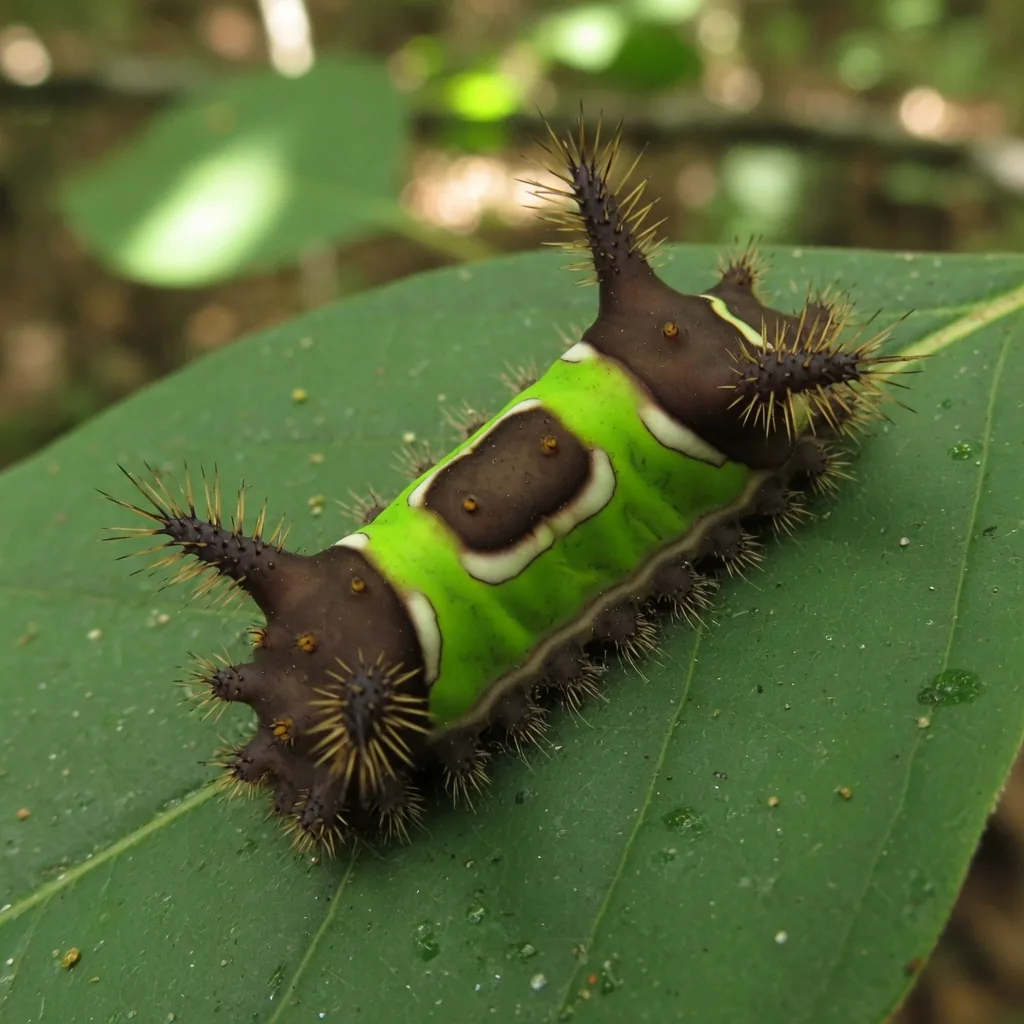
This is the most commonly found slug caterpillar, recognizable even in its early stages of development. It is 1 inch long, with a very prominent green saddle on the back of its dark-brown body. It also has prominent horns that bear spines for protection. This is a very poisonous caterpillar and can create severe problems if touched. It feeds on the foliage of the same trees mentioned above and is a solitary feeder.
Puss Caterpillar
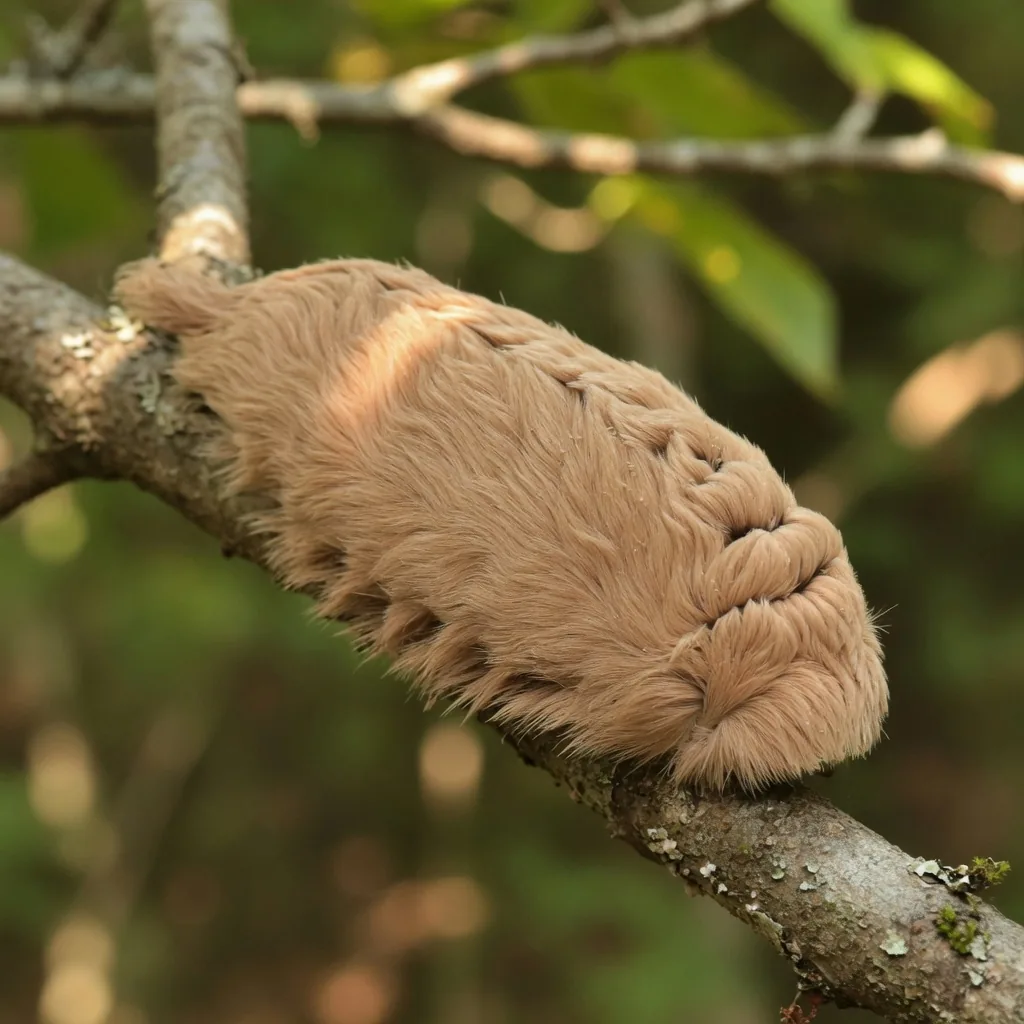
The Puss Caterpillar is a one-inch caterpillar densely covered with a woolly coat of soft brown hair and a tail-like end at the back. Several short poisonous spines are hidden under this hair, and they cause instant irritation when touched. Unlike the Saddleback, it is not a solitary feeder, it is found in groups feeding on the leaves of the maple, oak, and hackberry trees. The sting of this caterpillar is more poisonous than the others.
Frequently Asked Questions
What makes a caterpillar venomous?
Venomous caterpillars have hollow spines or stiff hairs connected to poison glands beneath the skin. When touched, the spines break and inject venom, causing pain, rash, or in rare cases more serious reactions.
Which caterpillar has the most painful sting?
The Puss Caterpillar (Megalopyge opercularis) is considered the most venomous caterpillar in North America. Its sting is more painful than that of similar species.
How do caterpillars breathe?
Caterpillars breathe through spiracles, tiny openings along the sides of the thorax and abdomen.
Test Your Caterpillar Knowledge!
5 quick questions. Can you tell your Saddleback from your Io Moth?
Io Moth Caterpillar
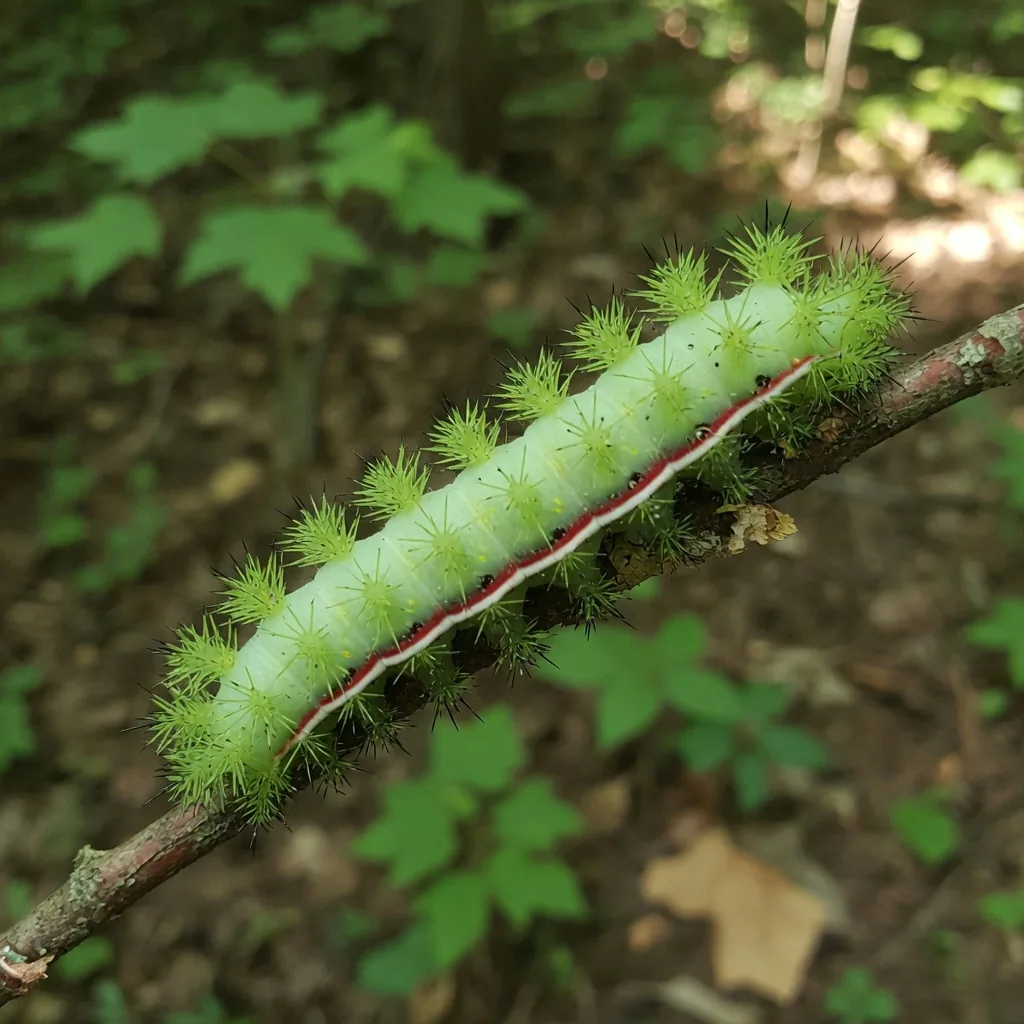
The Io moth belongs to the group of giant silkworm caterpillars, which are leaf feeders covered with numerous spines. This particular poisonous caterpillar is light-green overall, with a narrow red band on either side along with a white band under it. It is two inches long and is completely covered with branched, black-tipped, pointed green spines. The Io moth also feeds on foliage, specifically the leaves of the elm, beech, clover, apple, willow, corn, and roses.
Explore More Animals
 A Visual Guide to Caterpillar IdentificationIdentify caterpillars by family, loopers, hornworms, woolly bears, swallowtails and more. A visual field guide to common moth and butterfly larvae and their te
 Green Caterpillar IdentificationHow to identify a green caterpillar by its shade, body pattern, hair and unique features, with pictures of the luna moth, hornworms, swallowtails and more.
 An Awesome Explanation of the Life Cycle of a CaterpillarThe caterpillar life cycle is explained in short in this article, along with some interesting facts about caterpillars.
 These Facts About Tobacco Hornworms Will Simply Leave You BaffledTobacco hornworms are 70-millimeter caterpillars that can defoliate an entire tobacco plant. Discover their life cycle, habitat, diet, and how to tell them apar
Stinging Rose Caterpillar
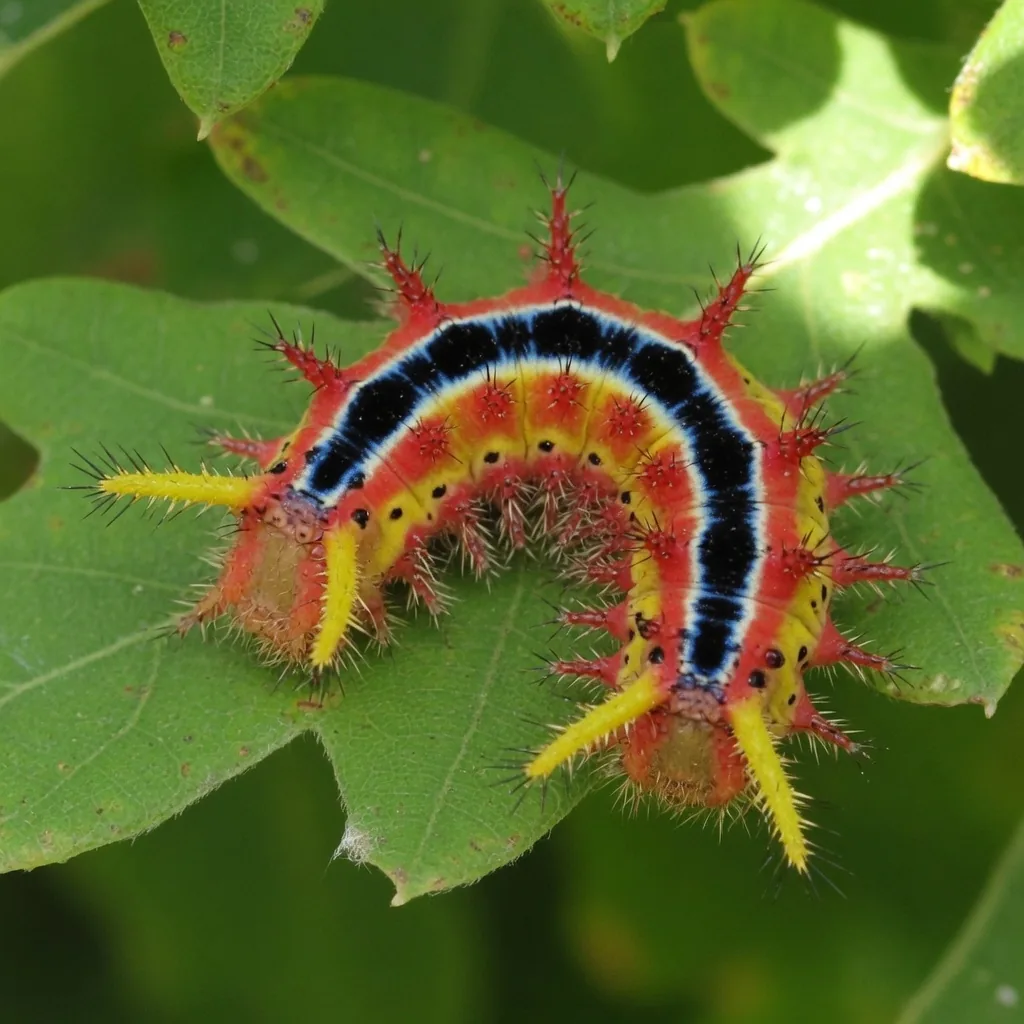
This caterpillar also belongs to the slug type and is a yellow to red-colored creature. It has red spines with black and blue stripes that run down the middle of its back. It also has very prominent, poisonous, spiny yellow horns at the front, rear, and center of its body. It feeds on the bushes and tree branches of the oak, bayberry, and sycamore trees.
There are many more poisonous caterpillars in nature, but this list covers the most commonly found and the most dangerous ones among all the species.

 Fun fact for today!Some caterpillars can detect wing vibrations of nearby predators and use them as an early-warning system!