

The Arctic region is typically characterized by harsh conditions where human habitation is next to impossible. Yet some animal species (like the polar bear, Arctic fox, snowshoe hare, and collared lemming) survive there with immense ease. While quite a few species inhabit the freezing regions of Arctic tundra, none is as well-known as the polar bear (Ursus maritimus). It is not just a representative of Arctic tundra animals, but also a mascot of survival adaptations in kingdom Animalia.
Physical Adaptations
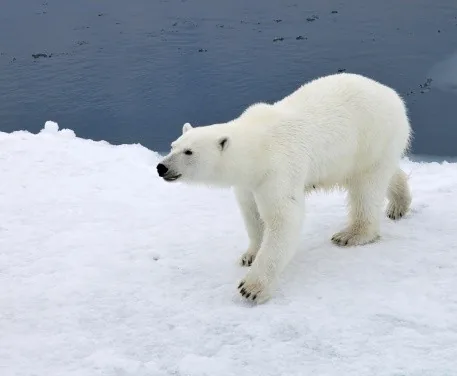
If the polar bear can survive the harsh conditions of Arctic tundra (freezing temperatures, vast snow-covered land, open icy water, and scarce food) it is only because of the behavioral and physical adaptations this species possesses.
By far, the most prominent feature of polar bear appearance is its characteristic white fur. Interestingly, this fur is actually transparent, not white. It is one of the most amazing physical adaptations in this species, as it provides natural camouflage in snow-covered surroundings. While the fur appears pure white in winter, the summer molt gives it a light yellow hue. Beneath this light-colored fur lies the skin of a polar bear, which is black in color, helping the species absorb heat from its surroundings.
More importantly, the dense fur coat of this species is made up of thick, hollow fur that helps it survive the freezing cold climate. The thick layer of fat in its body, known to be as thick as 4.3 inches, also helps the species survive the freezing conditions. This fat layer and the specially designed fur coat are equally helpful when polar bears spend time in the freezing waters of the Arctic.
A closer look at the anatomy of this species reveals that the polar bear has small ears and a short tail. This adaptation helps them minimize heat loss in winter. At times, especially in summer, this thick fur coat can cause overheating. In such cases, excess heat is released from areas where fur is either absent or not very dense, such as the nose, ears, muzzle, and footpads. The dense fur, thick fat layer, and other cold-weather adaptations facilitate thermoregulation, helping the species maintain its body temperature at 98.6°F, even when the temperature outside drops to -34°F.
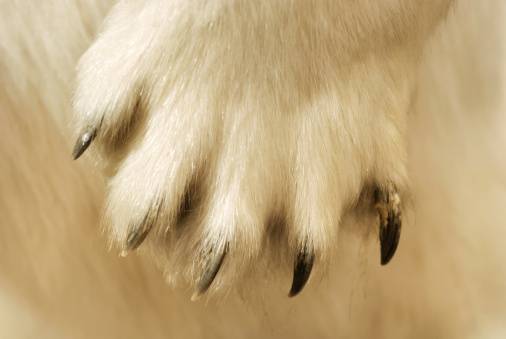
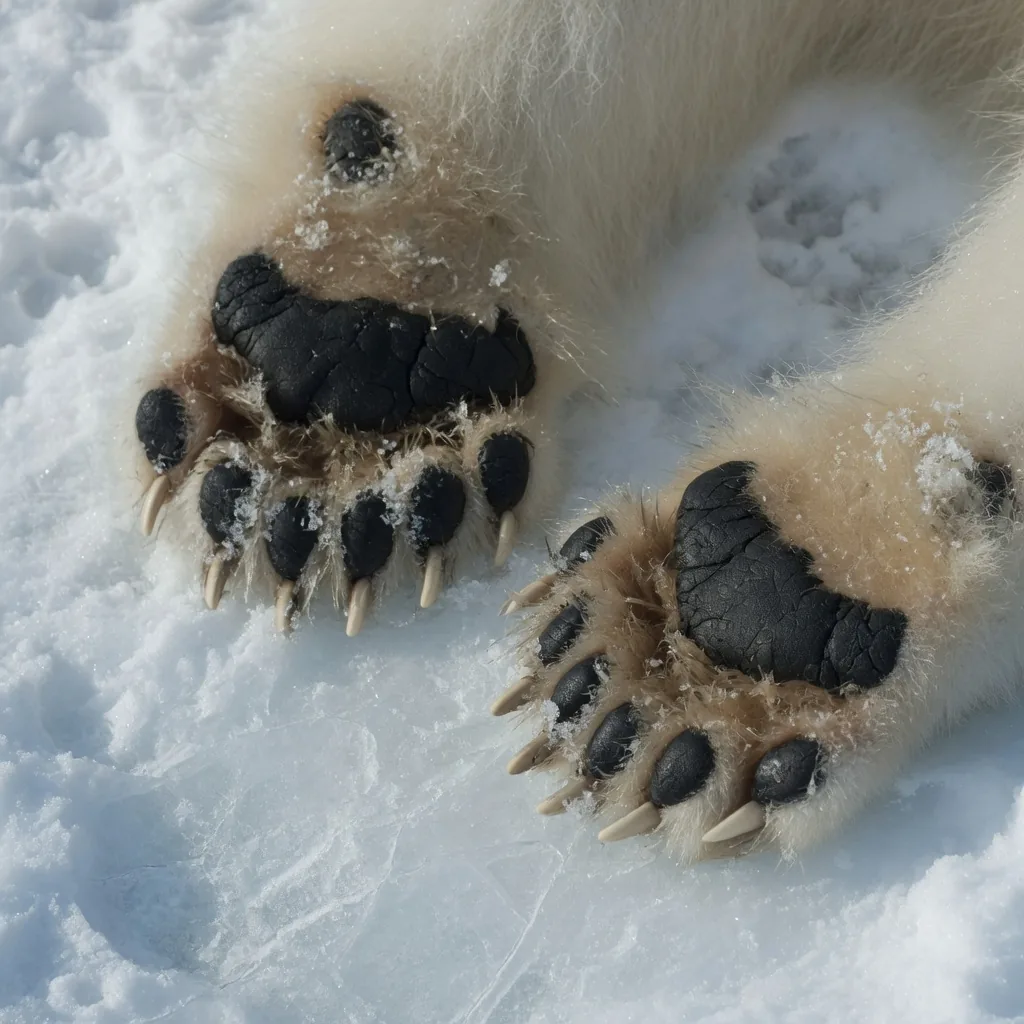
The limbs of a polar bear are designed so that its weight is spread equally across all four limbs. The broad paws prevent the bear from sinking into snow, while a layer of hair on the soles provides much-needed traction on ice. At the same time, the front paws are used for swimming when hunting or moving from one iceberg to another. When swimming, the hind feet act as rudders while the front paws work as paddles, helping the bear swim dog-paddle style.
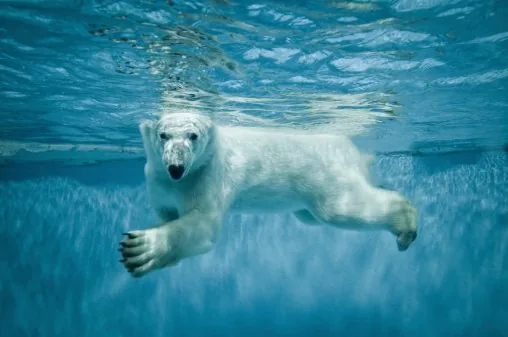
Beyond swimming, these paws (together with sharp claws) are used by polar bears for digging in snow and hunting. Other key physical adaptations include sharp, jagged teeth that help them tear through the flesh of seals (which make up a major part of their diet) and frozen carcasses. Their nostrils are specially adapted to close underwater, allowing them to stay submerged in freezing ocean water for as long as two minutes.
Frequently Asked Questions
What color is polar bear skin?
Black, it absorbs heat even though the fur looks white.
How thick is a polar bear's fat layer?
Up to 4.3 inches thick.
Can polar bears swim? How?
Yes, they paddle dog-paddle style using their front paws as paddles and hind feet as rudders.
Do polar bears hibernate?
They are not true hibernators. Instead they use 'walking hibernation', lowering their body temperature, heart rate, and breathing when food is scarce.
Test Your Polar Bear Knowledge!
5 quick questions about how polar bears survive the Arctic. Can you ace it?
Behavioral Adaptations
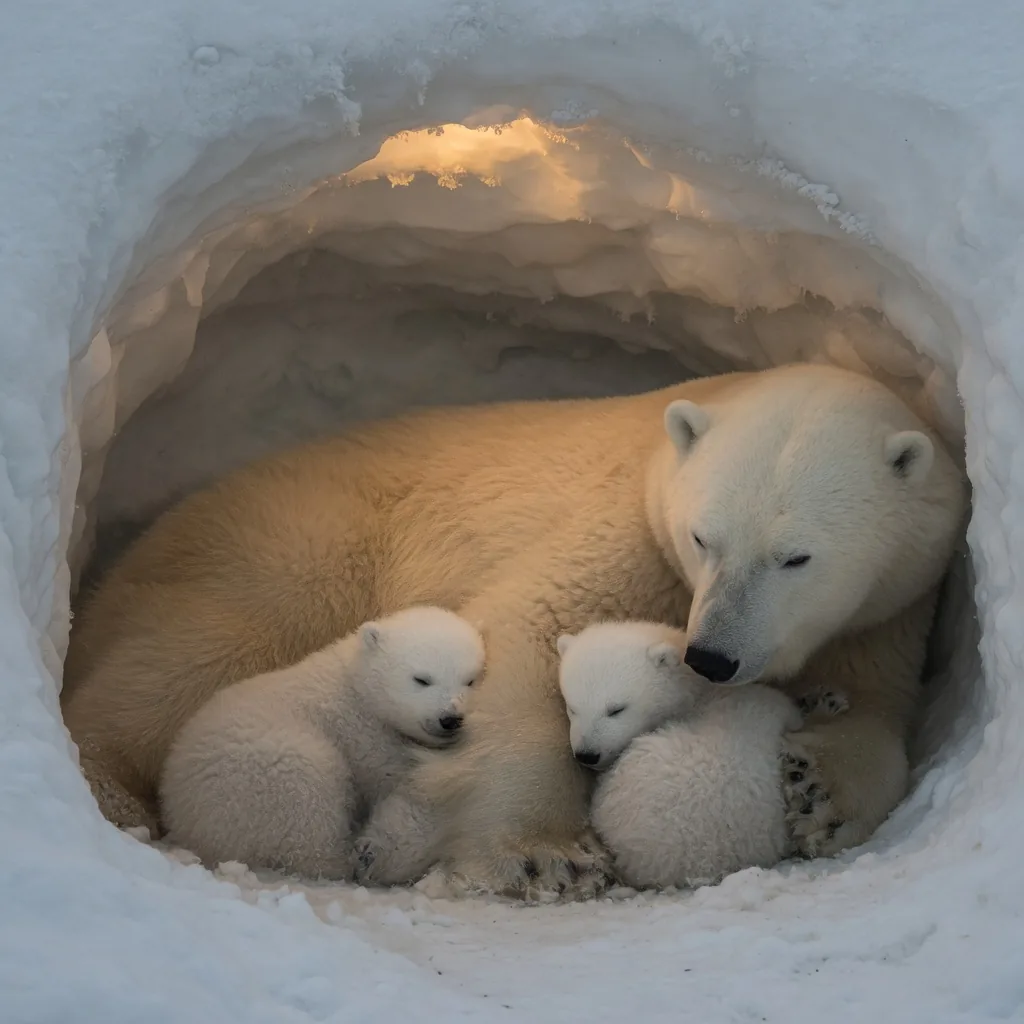
Physical adaptations alone don't tell the whole story. There are also behavioral adaptations that help the polar bear survive harsh winters and the food scarcity that comes with them. Even though the species is not a true hibernator, it does practice walking hibernation, lowering its body temperature, heart rate, and breathing rate when food becomes seriously scarce. Pregnant females, however, are known to enter a hibernation-like state and do not leave their den until their young are up on their legs. More recently, experts have witnessed an unusual practice of cannibalism in polar bears, which (according to researchers) can be attributed to increasing stress from habitat loss.
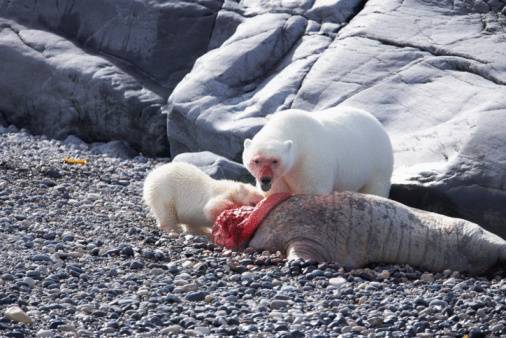
Their choice of food is yet another behavioral adaptation. Polar bears rely on a high-fat diet, that is why seals form the major part of their meals. Even the milk produced by polar bear mothers is high in fat content, which helps cubs develop fat layers to counter extreme cold. Polar bears also dig their dens several feet deep in the ground. This protects them from strong Arctic winds and keeps them warm.
The Climate Challenge
With an average length of 7.9-9.8 ft and weighing somewhere around 770-1,500 lbs, the polar bear is the largest carnivore on the planet. Even though it has no predators in the wild, the biggest threat to this species comes from human-induced global warming, which is causing polar ice to melt at an alarming rate. There is no doubt that all these adaptations have played a crucial role in the polar bear's survival, but loss of habitat is a serious issue, and adaptations alone may not be enough to address it.
Many people argue that polar bears, and other species living in polar regions, will eventually adapt to the changing climate. What they fail to understand is that these adaptations have developed over the course of several thousands of years. The rate at which climate change is occurring today will not give the species enough time to adapt to such rapid shifts.
Explore More Animals
 What Do Polar Bears Eat? Well, It's Not What You ThoughtNative to the Arctic, polar bears are the world's largest land carnivores. Discover their diet, hunting methods, and what happens to their food in summer when t
 Polar Bear Facts for KidsPolar bears are some of the most majestic, beautiful, and dangerous creatures on Earth. The Inuits call polar bears, Nanook. Today, there are an estimated 20,00
 Tundra Animals: Arctic, Antarctic & Alpine WildlifeIf you thought survival in the tundra was impossible, think again. Meet the remarkable animals of the Arctic, Antarctic, and Alpine tundra, from the polar bear
 Unbelievably Amazing Examples of Animal AdaptationsAdaptation is a structural or functional change in a living organism that helps it survive. To look at some of the animal adaptations, read on.

 Fun fact for today!A polar bear's fur is transparent, not white, each hollow strand scatters light to appear white against the snow!