

Where Polar Bears Live
Polar bears live at the edge of the northern polar ice cap, in the Arctic Circle, one of the coldest places on Earth. Most of their time is spent at sea. They populate the icy water covering the continental shelf, the ice sheets, and the island groups between them. They roam the Arctic Circle, swim the icy waters, and hunt to survive.
Polynyas (water areas surrounded by ice) and shore leads (open patches between ice sheets and coasts) are their favorite hangouts, because seals gather there. No polar bears live at the South Pole or in the Antarctic. That is where penguins live.
Polar bears are found in coastal parts of Alaska, Canada, Russia, Norway (Svalbard), and Denmark (Greenland). The normal temperature in these regions is -55 °Celsius (-67 °Fahrenheit), and winds blow at an average speed of 30 miles per hour. Hudson Bay, James Bay, and the Beaufort Sea all have thriving polar bear sub-populations. The Polar Bear Provincial Park, north of Ontario, Canada, is a 9,093 square miles expanse devoted to conserving these magnificent animals. An estimated five to seven thousand polar bears live in Russia.
Cubs and Family Life
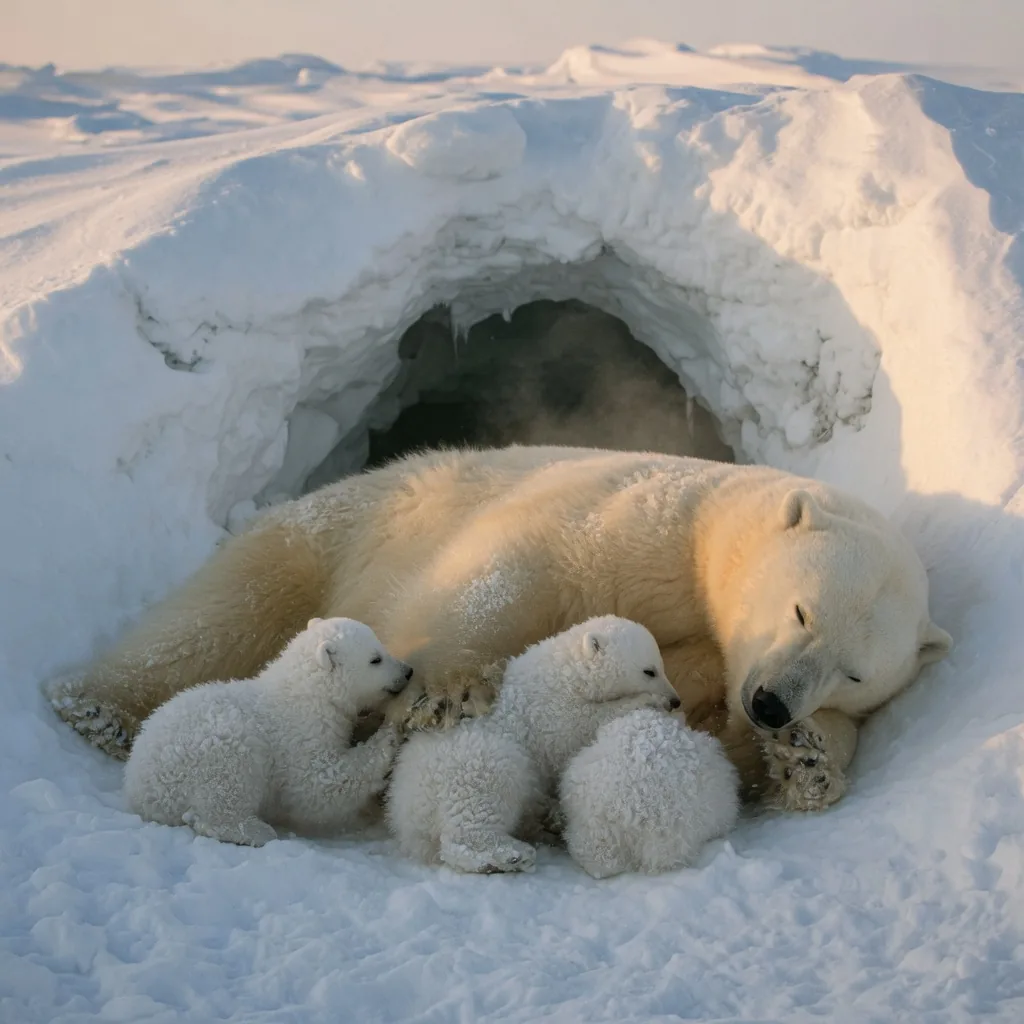
Pregnant polar bears build dens on land and ice to shelter themselves from the harsh Arctic winter. They nurse their young for more than 2 years, after which the cubs are on their own.
Champion Swimmers
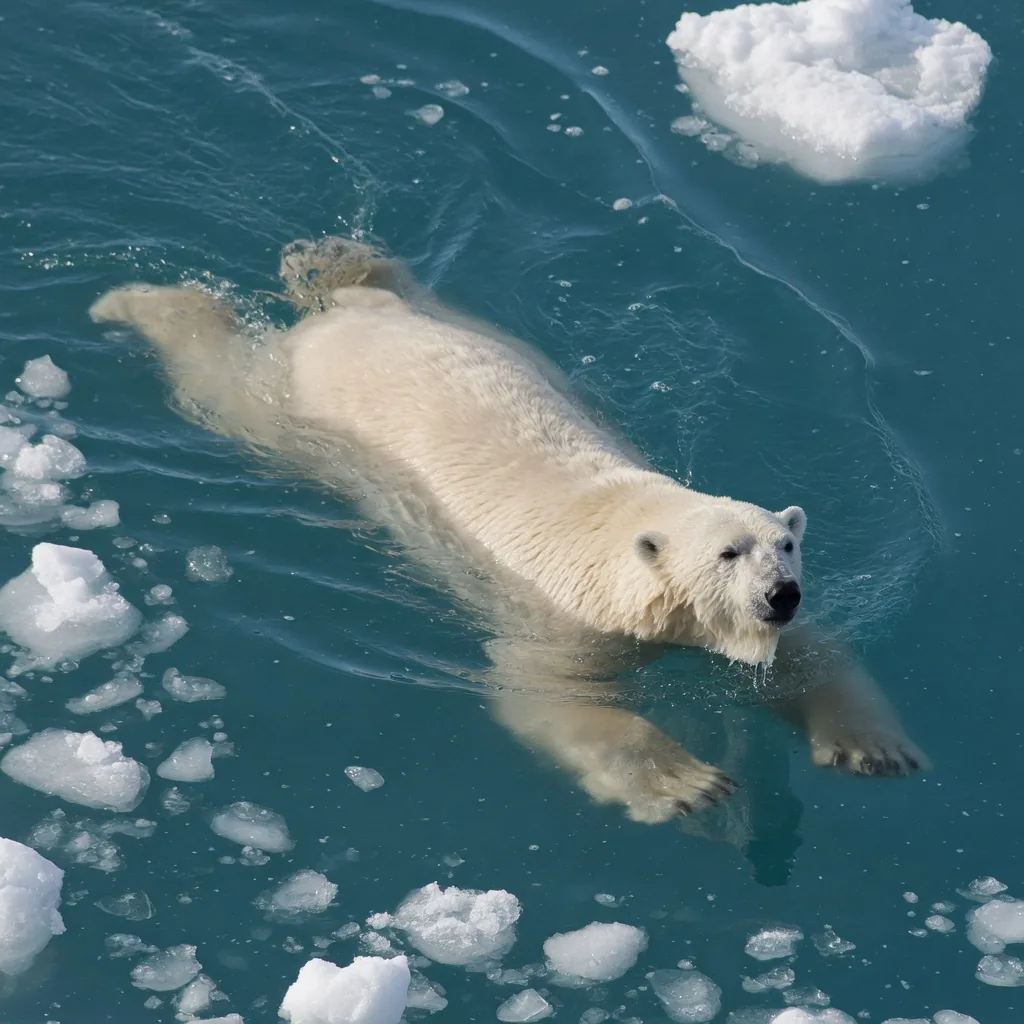
Polar bears are champion swimmers. They can swim at a rate of 6 miles per hour in sea water at sub-zero temperatures. No Olympic gold medalist would stand a chance against them. These bears have been known to swim for hundreds of miles non-stop, resting on ice sheets for a while in between. On land, polar bears can travel at top speeds of 40 kilometers per hour.
Giants of the Animal World
Polar bears are the largest bears on Earth, and the largest land carnivores (meat-eaters) in the world. Newborn polar bear cubs are as small as rats, but as they grow they can tower up to 10 feet in height and weigh more than 1,400 pounds. Their average weight is about 352 to 680 kg (770 to 1,500 lb), which is roughly half a ton! Adult females are about half the size of males.
These great predators live up to 25 to 30 years. They have 42 sharp teeth that can bite through almost anything they can get their paws on. Their paws are each 12 inches (1 foot!) wide, which helps them wade through deep snow. Their eyes are protected by three eyelids, each designed to guard their vision from snow and wind. Interestingly, polar bears have blue tongues.
Take the Polar Bear Quiz!
5 quick questions. How much do you really know about the Arctic's greatest predator?
Staying Warm: The Blubber Secret
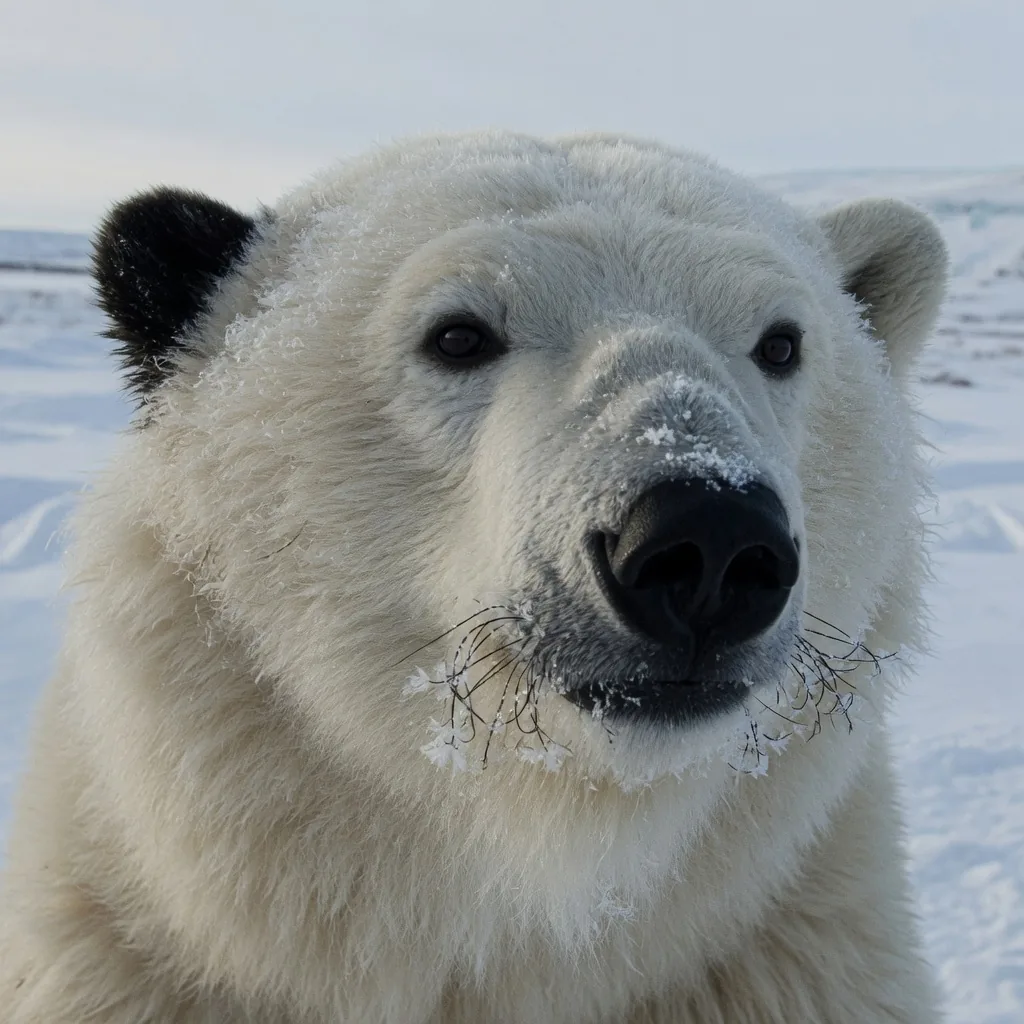
You might wonder how polar bears stay warm in temperatures that would kill most animals. The answer is a 4-inch-thick layer of blubber fat under their skin. This layer acts like insulation, locking in body heat so well that polar bears barely show up on an infrared (night-vision) camera!
Polar bear fur is not actually white, even though it looks that way. Each hair in their coat is transparent. The fur looks white because it reflects the color of the ice. The fur is also oily and water-repellent, so it dries out quickly after a swim. Contrary to what many people think, the color of a polar bear's skin is black, hidden under all that fur. The black skin helps absorb the sun's warmth.
What Polar Bears Eat
Polar bears are mostly seal hunters. They mainly go after ringed, bearded, harp, hooded, and ribbon seals. They will also hunt narwhals, walruses, reindeer, seabirds, muskox, shellfish, kelp, fish, eggs, and at times even Beluga whales. An adult polar bear eats about 4.4 pounds of fat every single day. Their stomachs can hold food weighing 10% to 20% of their total body weight.
Their hunting style is all about patience and stealth. They crouch near ice holes for hours, waiting to pounce on surfacing seals. In summer they switch to a plant-based diet and eat berries when nothing else is available. They are the undisputed kings of the Arctic, unmatched in strength and endurance.
To survive the extreme cold, a polar bear's body works like a perfect fat-and-protein processing machine. About 84% of consumed protein and 97% of fat is completely absorbed. The fat stored during the hunting season lets them survive without food for up to 9 months. You can learn more about the full diet of polar bears including their unusual summer foods.
Frequently Asked Questions
How big do polar bears get?
Males can reach up to 10 feet tall and weigh over 1,400 pounds
What do polar bears eat?
Primarily ringed and bearded seals; also walruses, narwhals, seabirds, and berries in summer
Are polar bears endangered?
They are classified as Vulnerable on the IUCN Red List, threatened by global warming and poaching
What color is polar bear fur?
Each hair is transparent; it only looks white because it reflects the color of the ice. Their skin underneath is black.
How fast can polar bears swim?
6 miles per hour in sub-zero sea water, and they can swim hundreds of miles non-stop
Built for the Arctic
Polar bears are built to rule the Arctic environment. They have an incredibly powerful sense of smell. Their nose can detect a seal from a mile away or one meter under ice. Much like wolves, they can track their prey even when it is hiding in an ice lair.
Threats and Conservation
Global warming is seriously harming polar bears by rapidly melting the Arctic ice sheets that serve as their floating homes and hunting grounds. Polar bears are also poached for their meat and fur. In the IUCN Red List of Threatened Species, they are classified as Vulnerable, as their existence is threatened by both human hunters and climate change.
Every one of these facts shows just how uniquely polar bears are adapted to brave the icy winds of the Arctic. They are built to survive sub-zero temperatures around the North Pole, where they are slowly beginning to recover. You can help polar bears by opposing poaching for fur, and by supporting clean energy to slow global warming. You can also virtually adopt a polar bear by donating to the WWF (World Wildlife Fund), which uses the money to fund global conservation efforts.
Explore More Animals
 Polar Bear AdaptationsDiscover the amazing physical and behavioral adaptations that let polar bears survive Arctic temperatures of -34°F, swim icy oceans, and thrive where few animal
 What Do Polar Bears Eat? Well, It's Not What You ThoughtNative to the Arctic, polar bears are the world's largest land carnivores. Discover their diet, hunting methods, and what happens to their food in summer when t
 Are Polar Bears Endangered? The Truth Will Leave You in ShockPolar bear population was believed to be endangered due to global warming and melting sea ice. But recent studies show numbers have risen. So are polar bears en
 Tundra Animals: Arctic, Antarctic & Alpine WildlifeIf you thought survival in the tundra was impossible, think again. Meet the remarkable animals of the Arctic, Antarctic, and Alpine tundra, from the polar bear

 Fun fact for today!The Inuits call polar bears Nanook. There are an estimated 20,000 to 25,000 polar bears living worldwide.