

Did You Know?
Scientifically, the red panda is known as Ailurus fulgens, or "fire-colored cat." It earned these names because of its cat-like face with long white whiskers.
Offspring
The female panda raises her cubs alone, and the cubs stay with her for only about a year. The average weight of a cub is 110 to 113 grams. Adult females weigh in at 4.2 to 6 kg, and males at 3.7 to 6.2 kg. The average length from head to body is 56 to 63 cm, while the tail is 37 to 47 cm long.
After this small introduction to the temperate forest's most charming resident, let's move on to its classification and see how it adapts to its environment for survival.
Classification of the Red Panda
Red Panda and Giant Panda
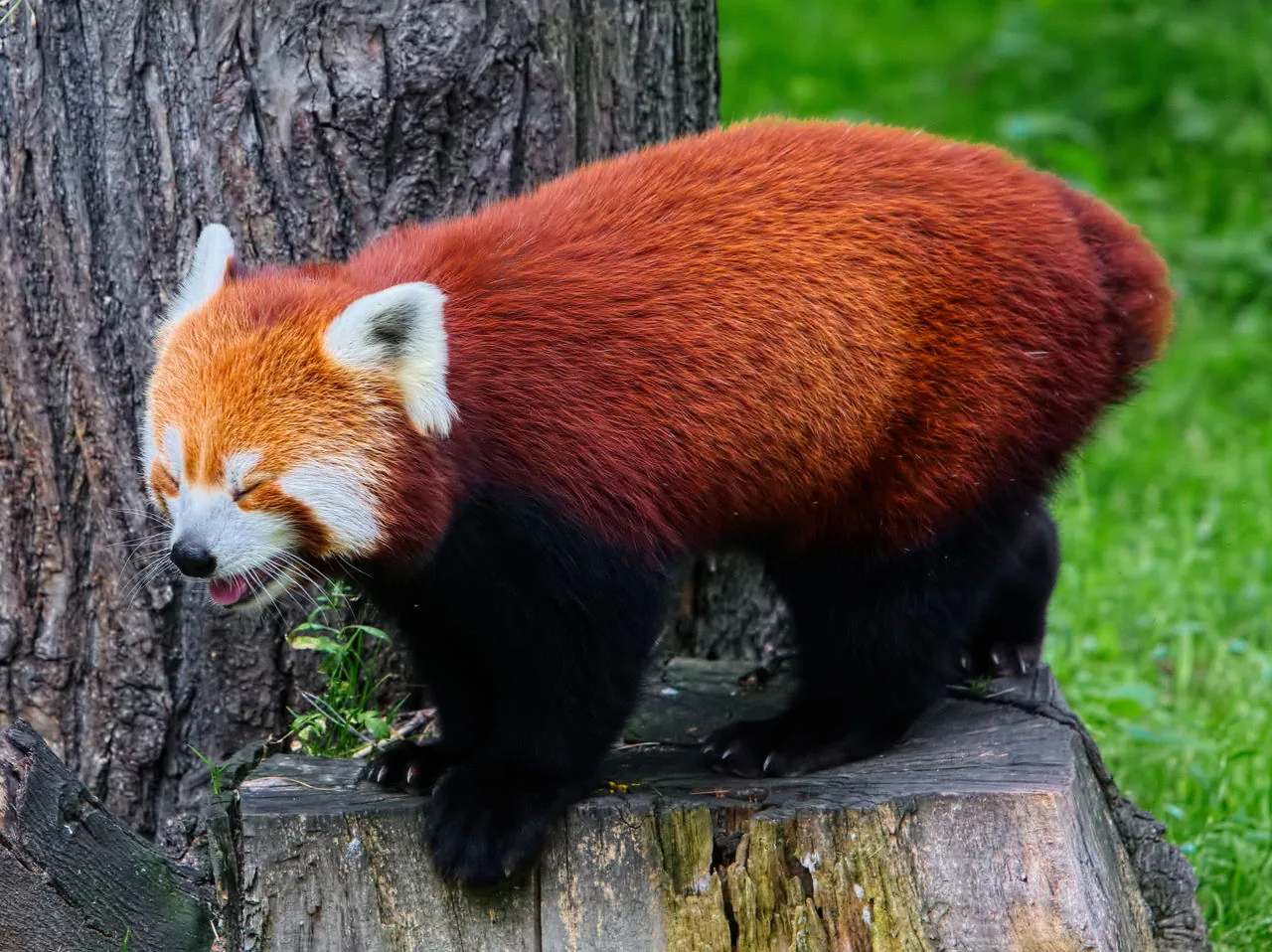
Only the name "Panda" is common between the red panda and the giant panda. None of the other features match between these two animals. The giant panda belongs to the bear family, whereas the red panda looks very much like a raccoon and was long classified as one.
A New Family
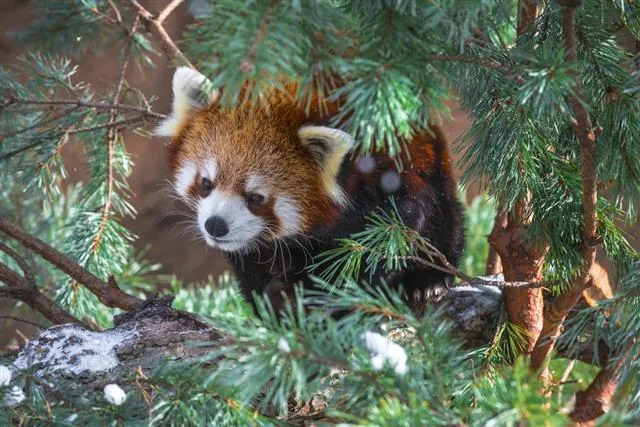
Due to the persistent confusion about the origin of the red panda, it has finally been placed in its own exclusive, unique family called Ailuridae.
Physical Adaptations
Tail
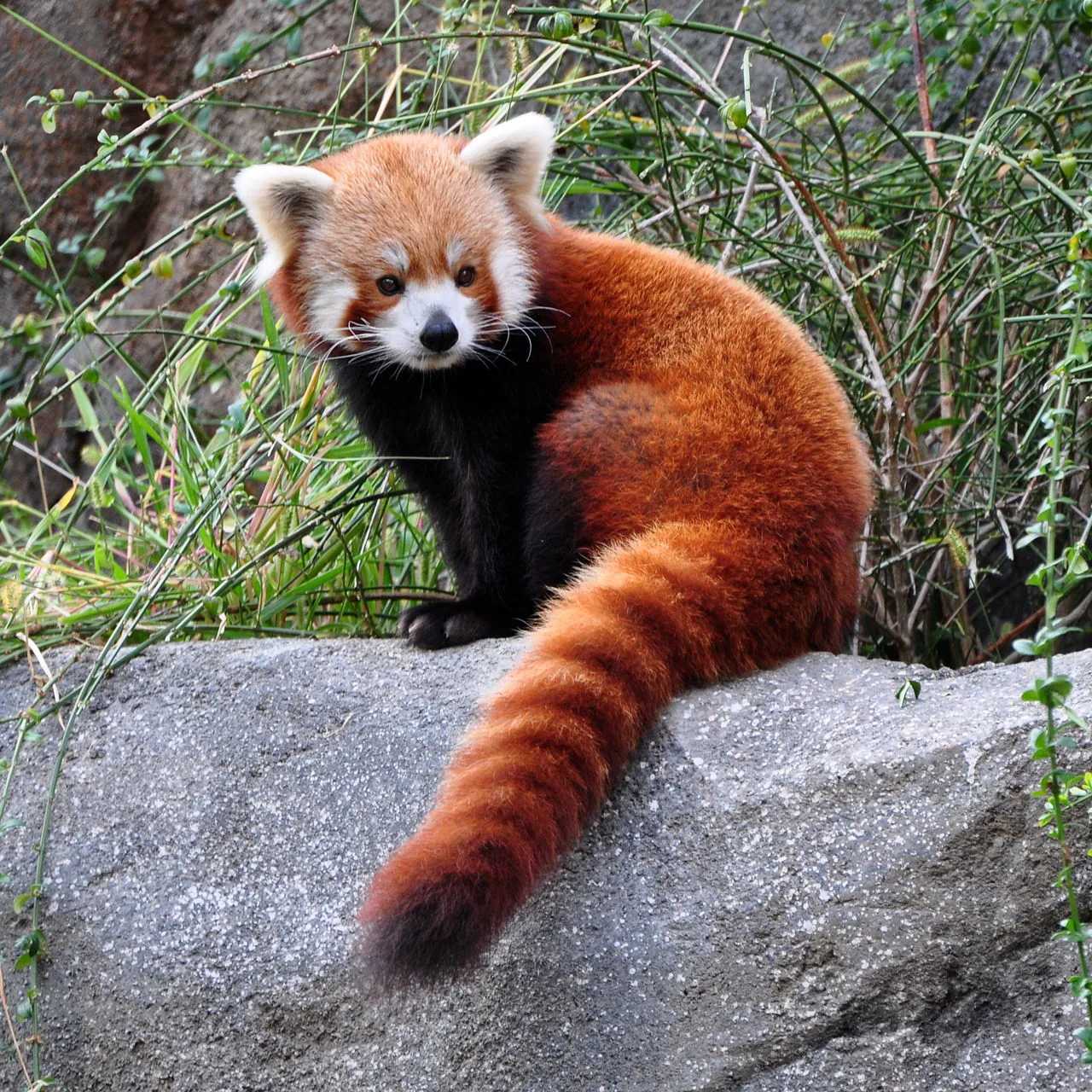
Why do red pandas have a long bushy tail? It is because they belong to the raccoon family, and both species have similar tails, often called a raccoon tail. Both the raccoon and the red panda balance on their long bushy tail while climbing a tree or a rock column. The red panda also uses its tail to cover its face while sleeping during the daytime, and to cover its nose in cold weather.
Teeth
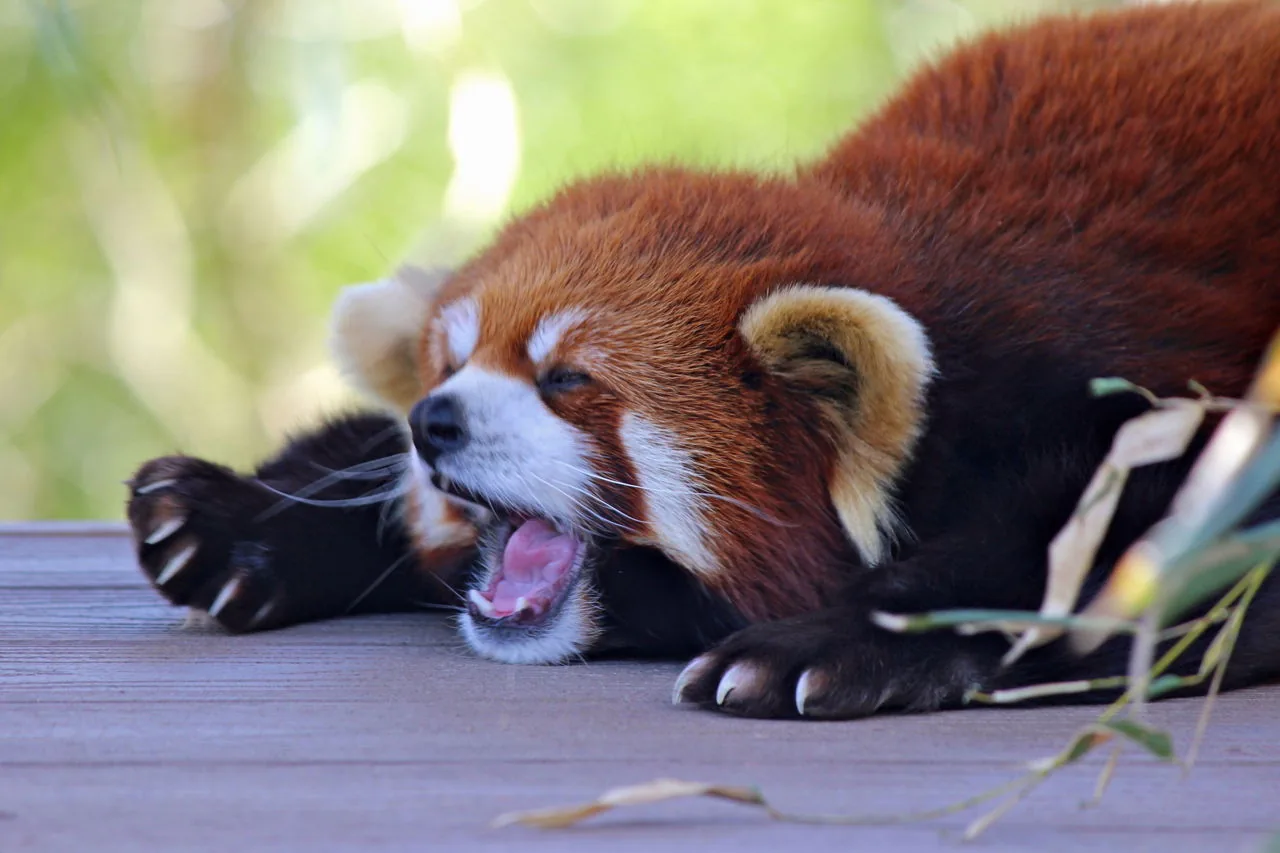
Red pandas have 38 strong teeth set in powerful jaws. They are classified as carnivores and have sharp canines and incisors. However, the main food of this animal is bamboo, a herbivorous diet. Its teeth are perfectly shaped for the job: front teeth tear bamboo stems apart, while the molars at the back of the mouth grind the tough plant material.
Test Your Red Panda Knowledge!
5 quick questions about how the red panda survives in the wild.
Feet and Paws
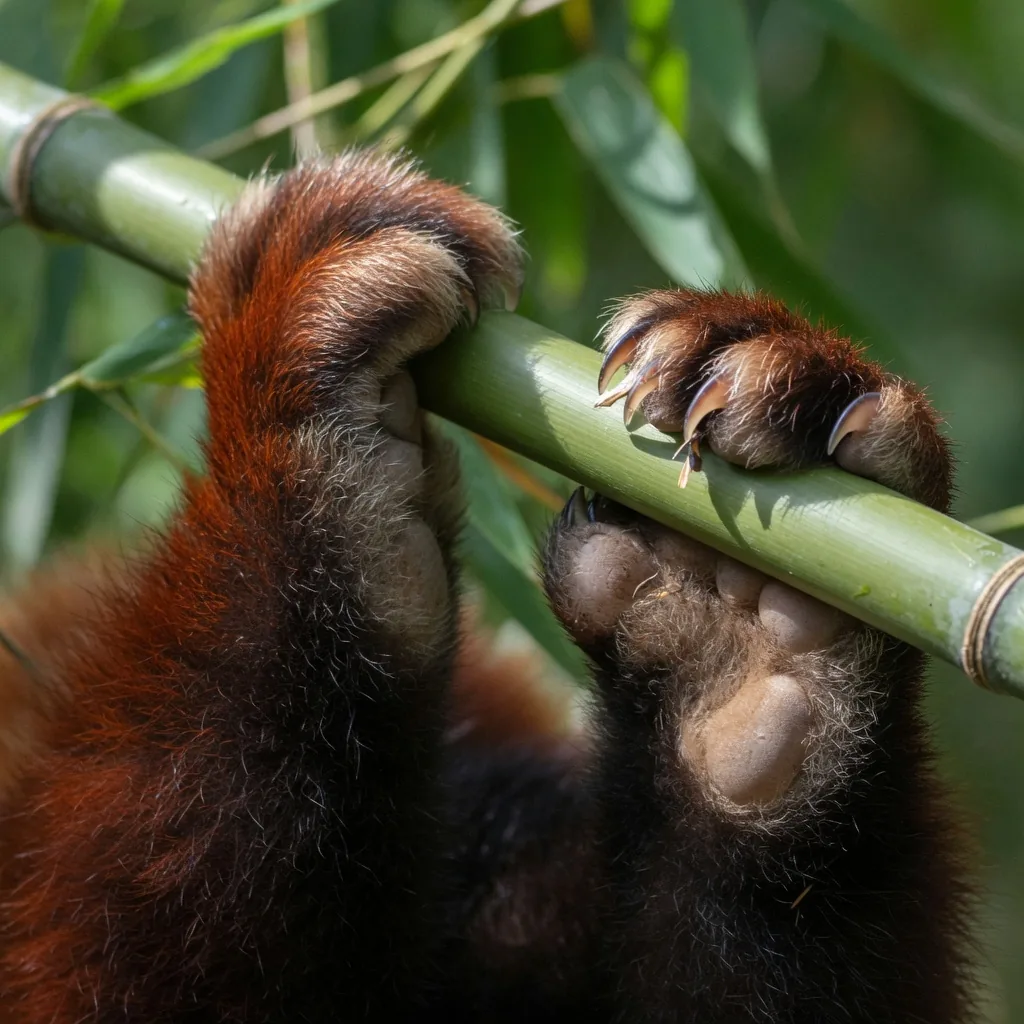
The feet of red pandas are coated with woolly fur to reduce heat loss and provide a better grip while climbing wet branches. Their claws are extremely sharp and semi-retractable, which makes tree climbing easier. When coming down a tree head-first, red pandas can rotate their ankles to control their downward movement, a rare ability among mammals.
Forepaws help them hold bamboo leaves and poles firmly while eating. The bone on the inner side of the paws acts as an extra thumb, helping them grip tree trunks while climbing and hold plant matter while eating. To drink water, they plunge their paw into the water and then lick it.
Body Coat
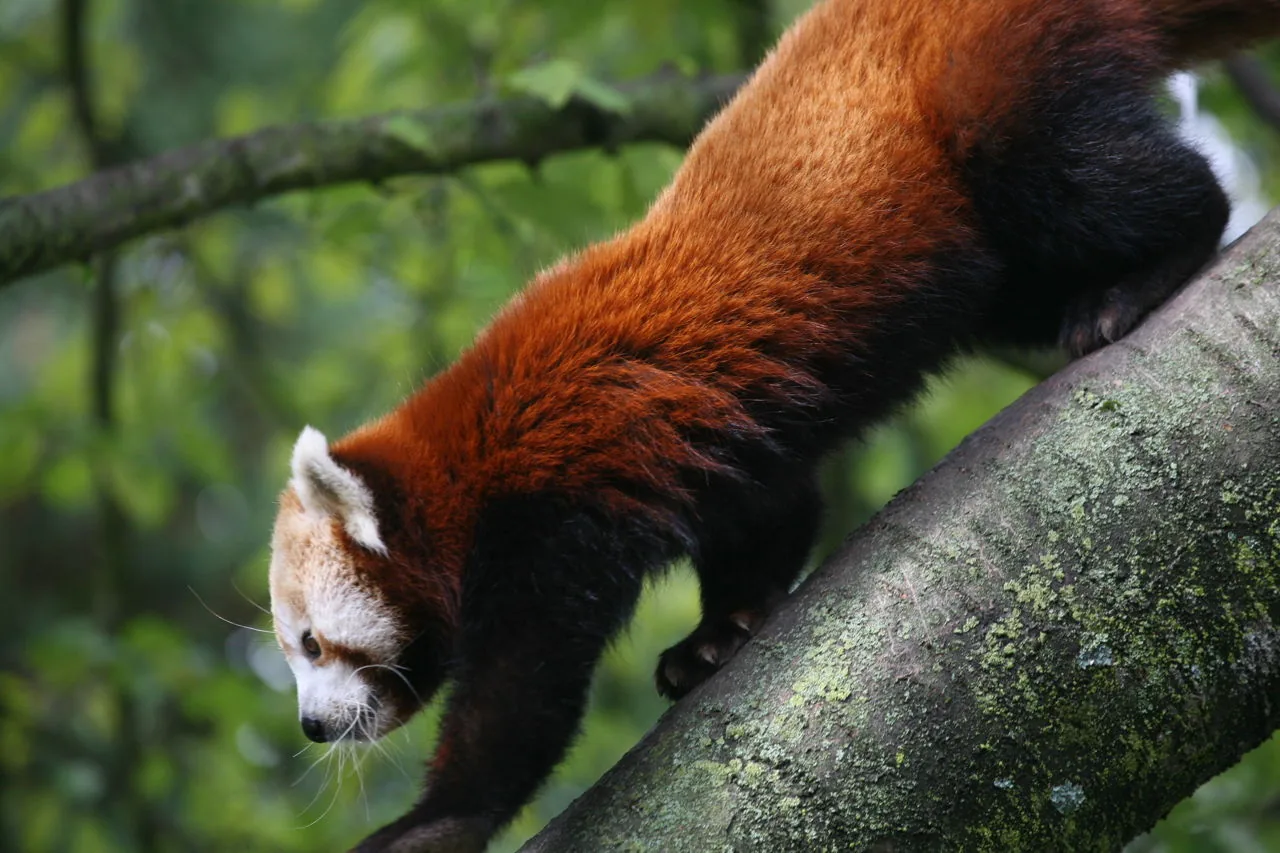
Beautiful reddish-brown fur coats the entire body, with some variation: red on the back and dark brown on the belly. The fur is very dense, which keeps the mammal warm in its cold mountain home. The tail is thick and striking, with reddish-brown long fur alternating with rings of white fur.
Explore More Animals
 Giant Panda BehaviorGiant pandas live alone, eat bamboo all day, and skip hibernation entirely. Discover the fascinating behavior of one of the world's most beloved endangered anim
 Giant Panda Facts: The Complete Kids' GuideThe complete giant panda guide for kids: where pandas live, what they eat, their secret extra thumb, mating habits, the full baby panda growth cycle, sub-specie
 Koala Bear AdaptationsKoalas have amazing adaptations for life in the trees and a diet of toxic eucalyptus leaves. Discover the science behind their claws, thick fur, special liver,
 Polar Bear AdaptationsDiscover the amazing physical and behavioral adaptations that let polar bears survive Arctic temperatures of -34°F, swim icy oceans, and thrive where few animal
Behavioral Adaptations
Social Structure
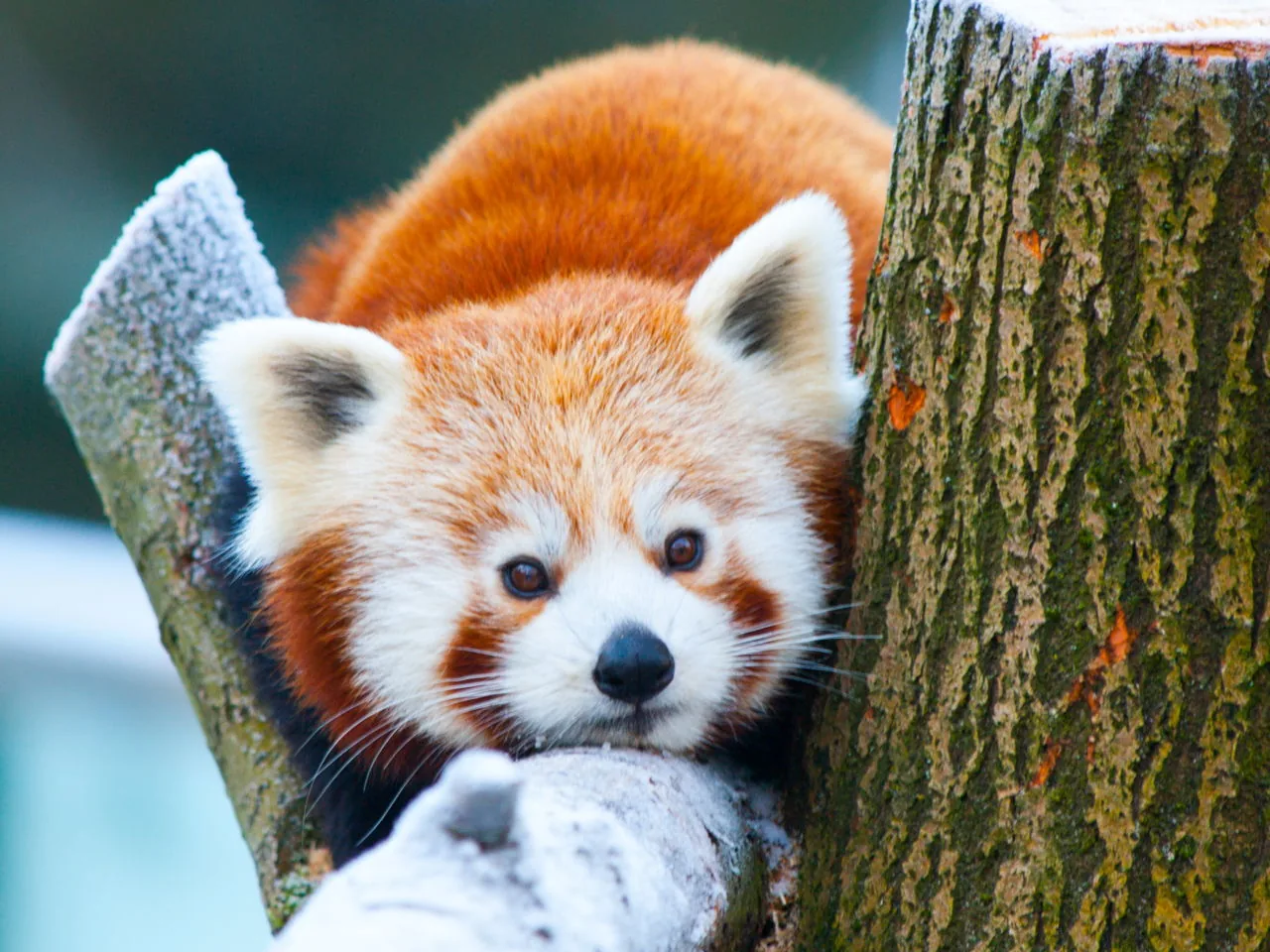
Male red pandas are solitary animals. Female red pandas live with their cubs. Winter is usually the mating season; after that, the male leaves the female. Overall, red pandas prefer to be alone on tree branches or in large tree hollows.
Sleeping Habits
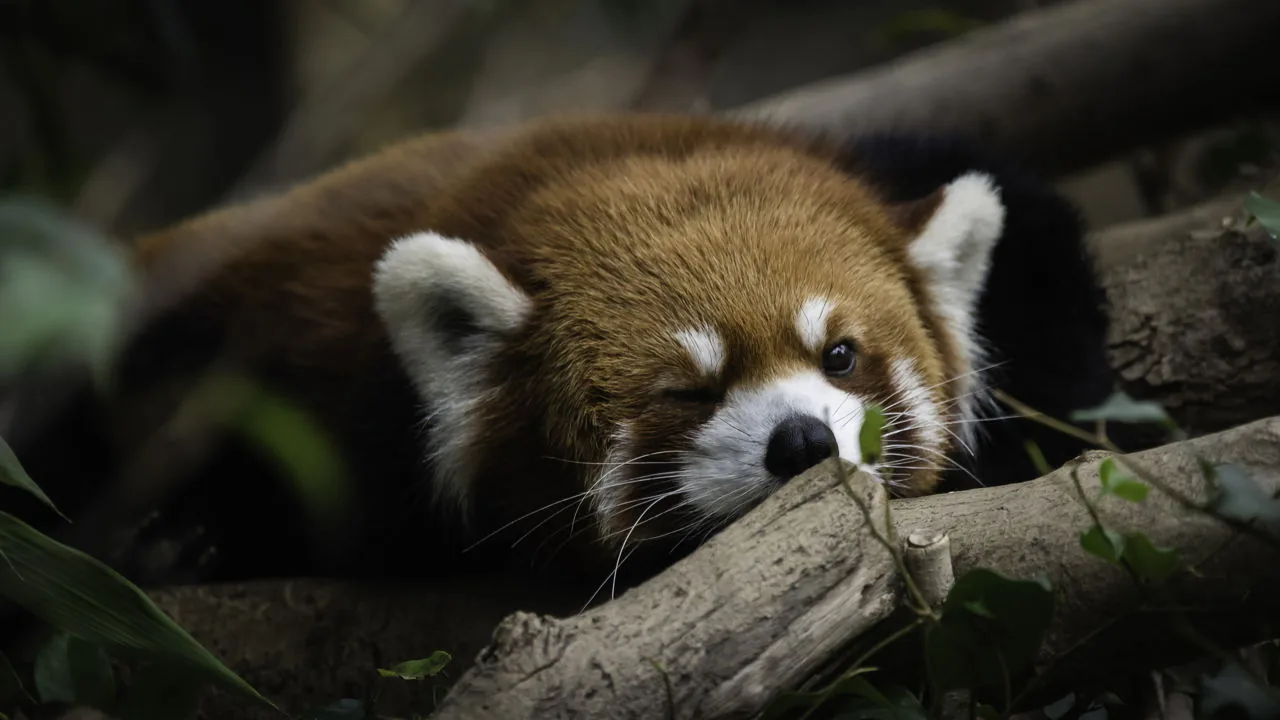
They sleep stretched out on tree branches with legs dangling during summer, and curl themselves up (covering their faces with their tails) during winter.
Eating Habits
They feed at night, so they have little to fear from predators or from competing with other animals for the same food. For this reason, they are also called nocturnal animals, mostly active at night.
Marking of the Territory
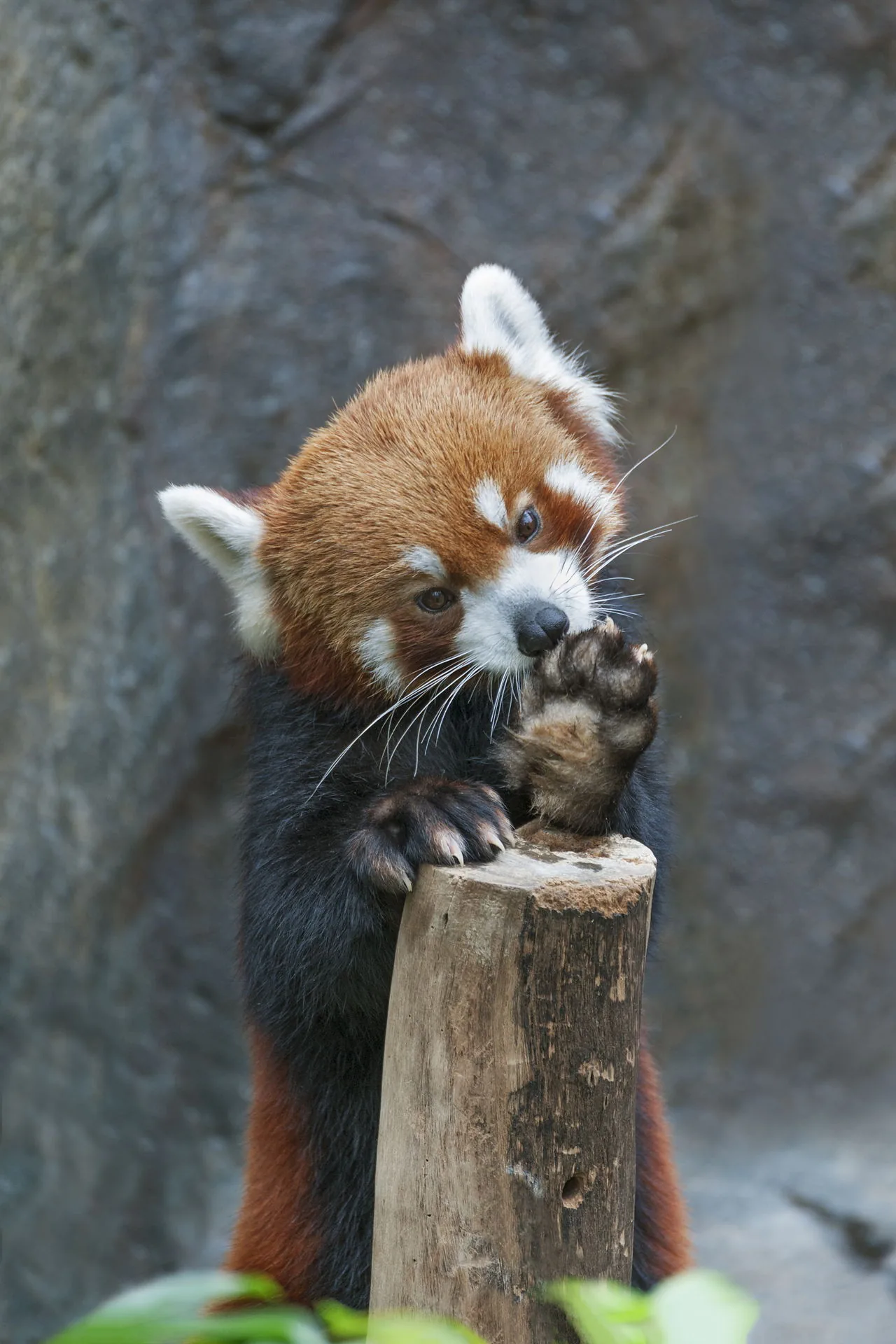
The red panda is a territorial animal. When it wakes up, it cleans its fur by licking its paws and rubbing its stomach, sides, and back against a rock or along the trees, then examines its territory. To mark the territory, it uses a weak musk-smelling secretion and its urine.
When Threatened
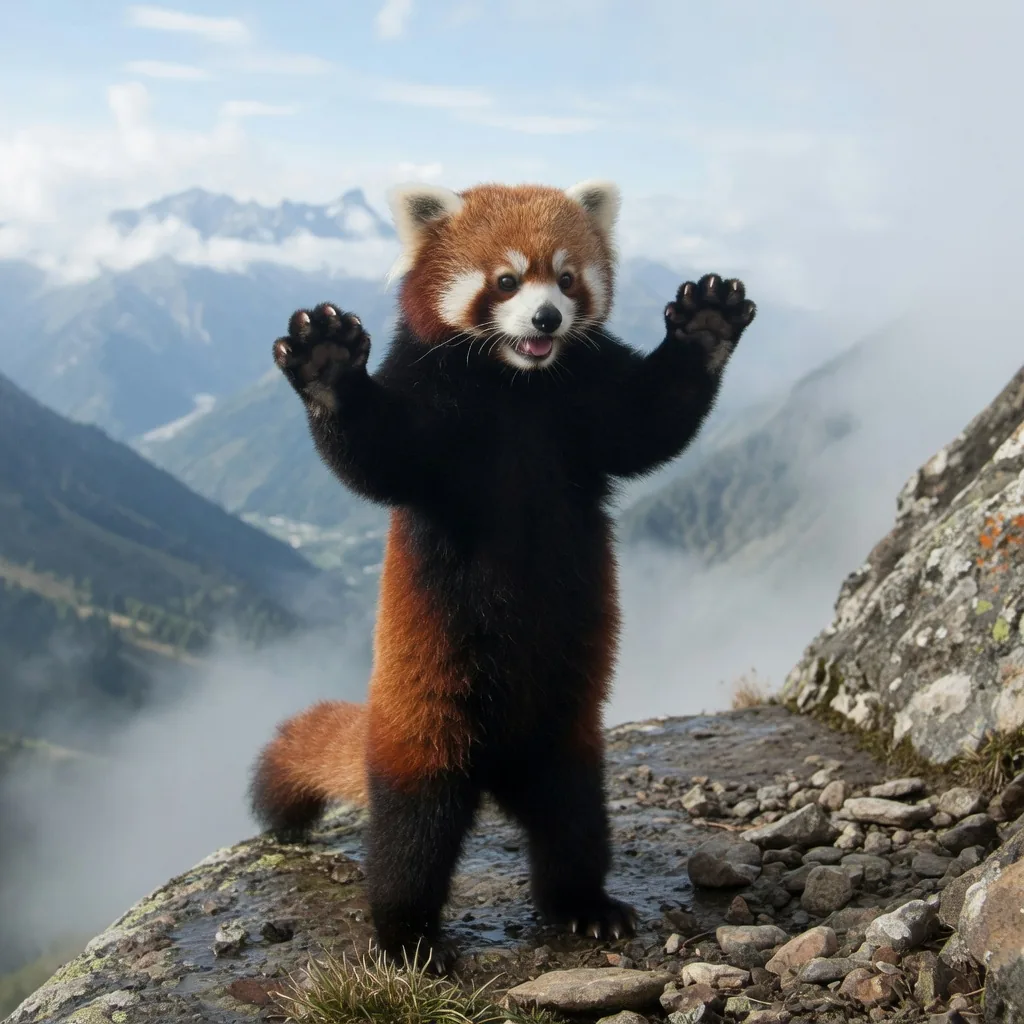
When a red panda senses danger, it tries to escape by climbing a tree or hiding in a tree hollow. If it cannot do so, it stands on its hind legs to make itself appear larger, and uses the sharp claws on its front paws to defend itself.
Communication
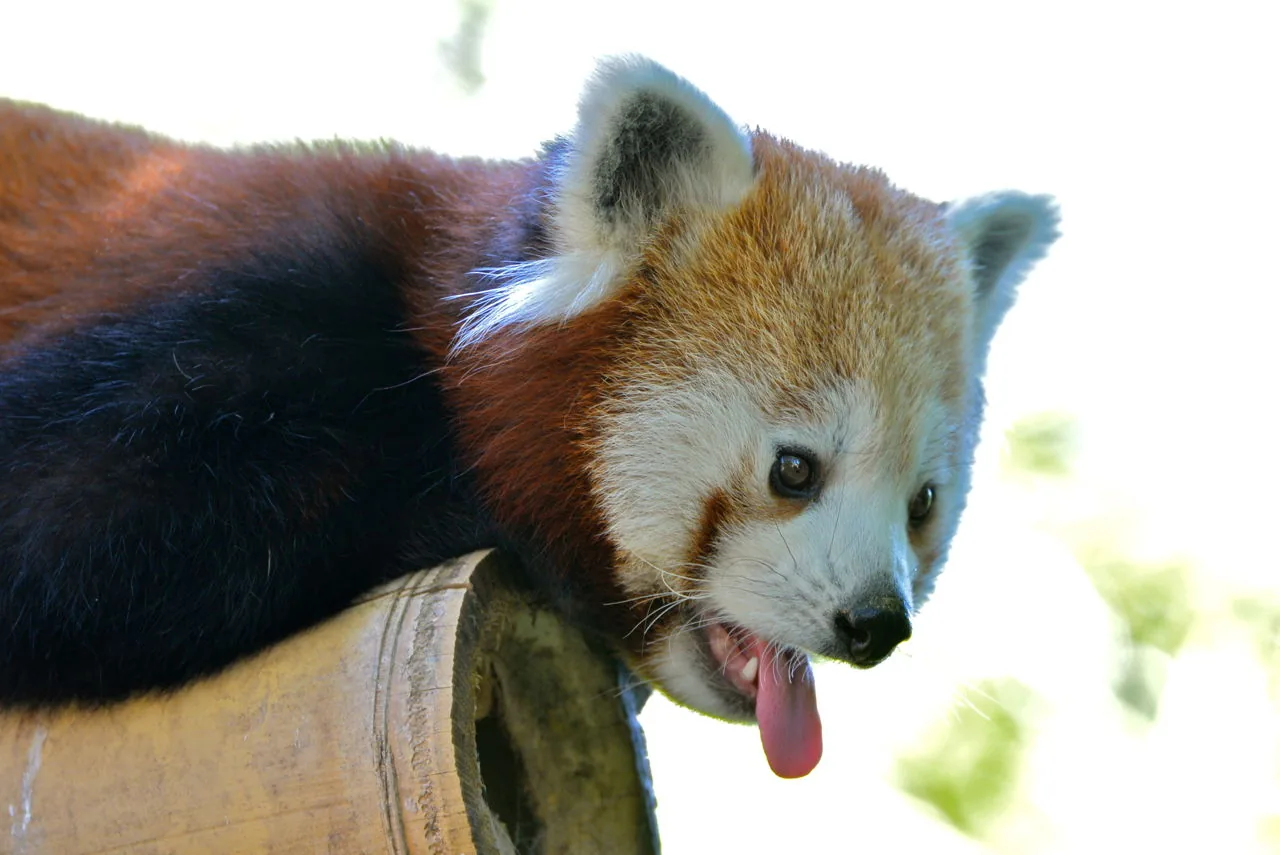
The red panda communicates with a range of sounds (twitters, whistles, and hisses) and uses body gestures like tail arching.
Forests are the red panda's habitat. If they are cut down, these cute-looking animals will not be able to adapt well to other habitats. They depend on bamboo for their basic needs of food and shelter. This part-raccoon, part-bear creature may soon become extinct if the forests are cut down at the current rate.

 Fun fact for today!Red pandas are known scientifically as Ailurus fulgens, which means "fire-colored cat"!