

Identifying snakes is not a particularly difficult job, but it takes a careful look at the unique features of each species. Snakes show a bewildering array of physical variations. So it is a good idea to keep a database handy (a simple guidebook will usually do) or, if you know which snakes you are likely to meet, to memorize the features of that particular snake.
Most people, though, would prefer to just run away as fast as possible if they see a snake! To be fair, that is always easier than remembering the snake's binomial name and thinking, 'Oh relax, it's just Hardto rememberosa, it's not venomous'!
Snake identification isn't always a hands-on job. It is also useful if you find a shed snakeskin and want to know whether the snake is nearby. Being able to identify different types of snakes is a very handy skill if you live in an area full of them, or if you are going hiking or camping. And in the unfortunate case of a venomous bite, identifying the snake is very useful for doctors, too.
Different snakes have different types of venom, such as hemotoxins (which affect red blood cells), neurotoxins (which affect the nervous system), or cardiotoxins (which affect the heart). A particular antivenom is needed to treat the bite of a particular snake. Knowing which snake was responsible helps doctors give the right antivenom as early as possible.
How to Identify Snakes
These are some of the most important ways snakes are grouped. A particular species can usually be worked out from the exact combination of the following characteristics:
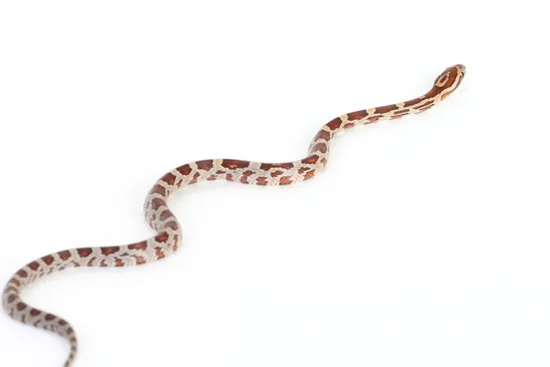
Length
When describing a snake's length, try to picture it stretched out in a straight line. Naturally, most snakes never hold that shape, so a length guess can be vague. Juvenile snakes also often fall into lower categories, making the task even harder. Done right, though, this is a very helpful marker. The length categories are short, mid-sized, and long.
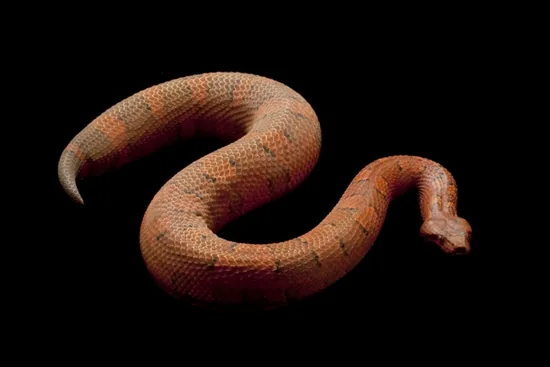
Girth
This can also be called 'body type'. The categories are thin, mid-sized, and stocky. Two things can throw off a girth guess: the snake could have just had a meal, or it could be pregnant.
If the girth is even along the whole body (apart from tapering off at the tail, of course), the guess is most likely correct. If there is an odd bulge, especially around the belly, then one or both of those two conditions is probably the reason.
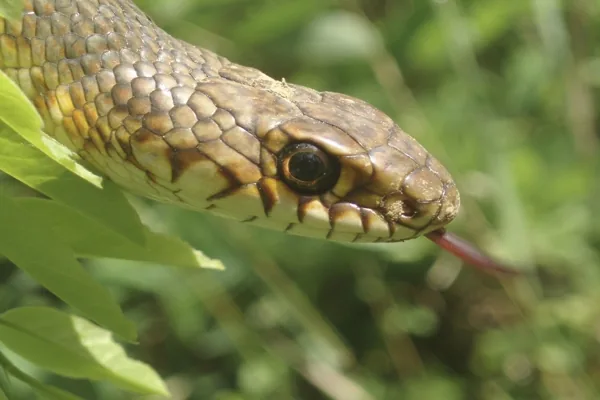
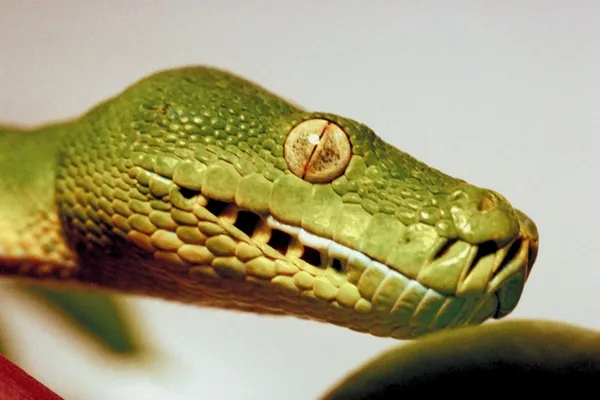
Pupils
Snakes have either a round eye (top) or a vertical eye (bottom). This is a clearly visible indicator and can be very helpful in identifying the snake. Sometimes the shape of the pupil is also used to tell venomous and nonvenomous snakes apart, but that classification is not accurate.
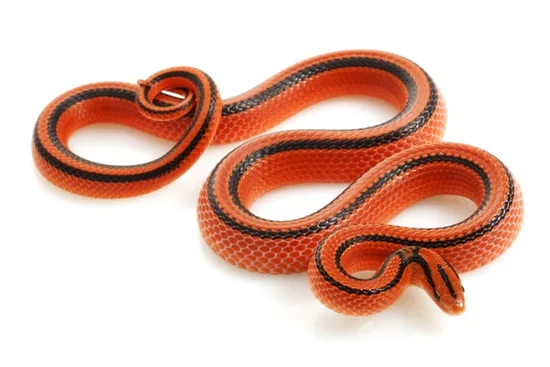
Body Pattern
The patterns on snakes' skins can vary massively. The most common patterns are monochrome (the whole upper body one color), two-tone, banded, striped, spotted, blotched, and a differently colored head.
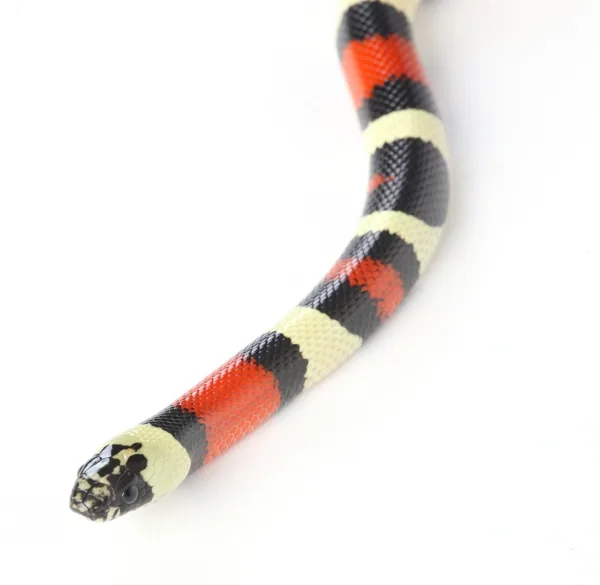
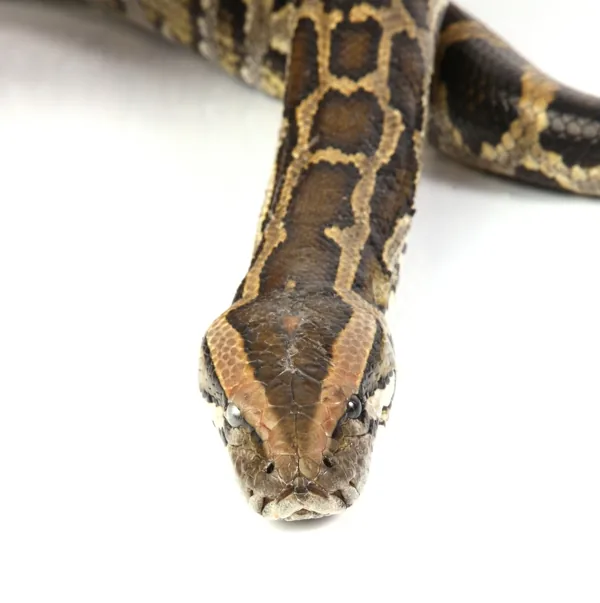
Head
Based on the width of the head compared with the rest of the body, snakes fall into two broad groups: no neck (top), whose heads are roughly the same width as the body, giving a smooth, rounded look; and broad-headed (bottom), whose necks are clearly wider than the body.
Tail Plates
This is a test for identifying dead snakes or shed snake skins, and it works as a fairly accurate marker of whether a snake is venomous or not. If the tail plates (the plates after the anal plate) on the underside of a snake are single, the snake is most probably venomous. Likewise, if the tail plates are in double plates, the snake is most probably nonvenomous.
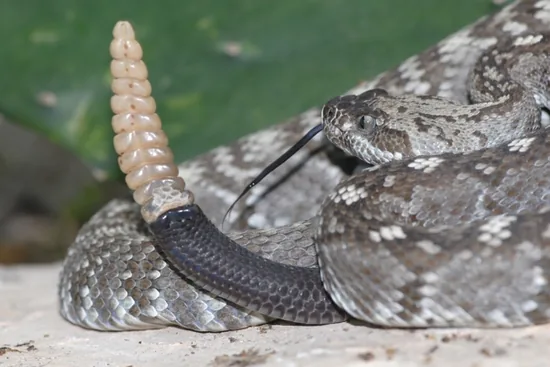
Unique Markers
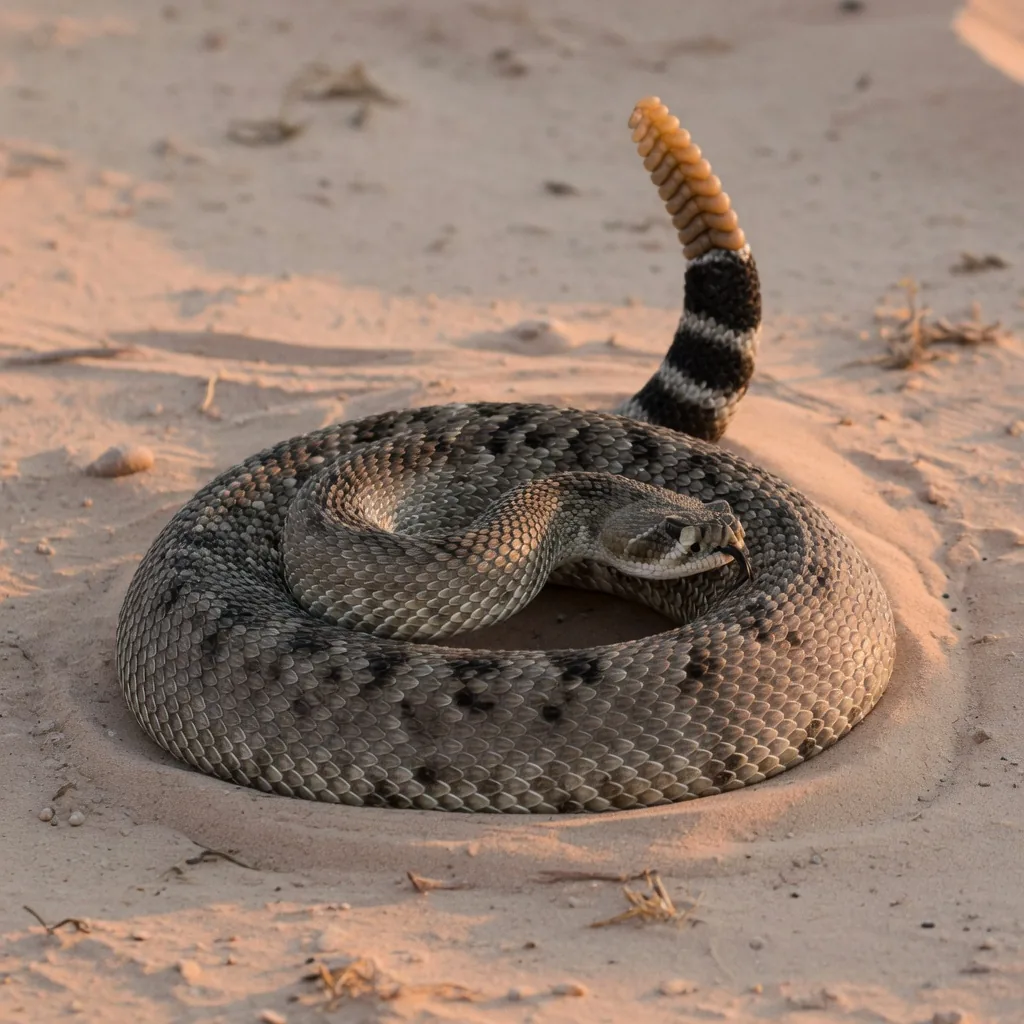
Some snakes are best known for (and most easily identified by) one special feature. For instance, cobras flare their hoods when agitated, as a warning to possible predators. In the same way, rattlesnakes use their famous 'rattles' to warn off predators.
Pit vipers use special heat-sensing organs, called 'pits', to view their surroundings as differences in heat between an object (such as prey) and its background. These three examples are all easy to spot. Incidentally, cobras, rattlesnakes, and pit vipers are all highly venomous.
Any species can be correctly identified by finding the meeting point of the characteristics listed above. It is best to keep a guide to the snakes usually found in your area handy, so you can quickly cross-check.
Poison or Venom?
The word 'snake' conjures up in most minds images of a dangerous, toxin-spewing creature slithering about in dark dungeons. The reality, however, is quite different, a majority of snake species are not poisonous. Snakes are timid creatures and prefer fleeing from aggressors such as humans. Given fair warning of an approaching intruder, they will try to get away, as long as there's no intrusion upon their kill or their nest (in the case of females of some species). They then warn the intruder in various ways: flaring their hoods (king cobra), rattling their tails (rattlesnakes), or spewing venom onto their aggressor (spitting cobras) to buy more time to escape. They only resort to biting as a last resort, or when cornered. Most snakes never chase humans, and only the largest species do so in a predatory fashion.
Snakes are often called poisonous or nonpoisonous. However, 'poison' is a general term for substances that are harmful when eaten or injected, for example, poisonous mushrooms, denatured alcohol, and so on. Venom, on the other hand, is a specific term for toxic substances made by animals such as snakes, scorpions, and spiders.
The toxins these animals make are formed in their own bodies, and they only have a harmful effect when injected into the tissues of a victim (blood counts, since it is actually a tissue too). Snake venom can even be swallowed and digested by humans without any harmful effect, but this needs a perfectly healthy digestive system, which is naturally rare.
In the rest of this article, the word 'poisonous' is used to make things easier to follow, since it is the term most people use. Just remember that the exact word is 'venomous'.
When it comes to identifying a poisonous snake, it is always better to identify the exact species rather than rely on general markers, because there is no single feature that always separates poisonous from nonpoisonous snakes. Some helpful clues are listed below, but medical attention should always be sought in the case of a snakebite, even if you are perfectly sure the snake was nonpoisonous. When it comes to snakebites, it's better to be paranoid than… well, let's not go there!
Warning Signs: Is It Venomous?
No single sign below is foolproof on its own, even the experts read several clues together. Here are the readily observable ones, with the exceptions you need to know about.
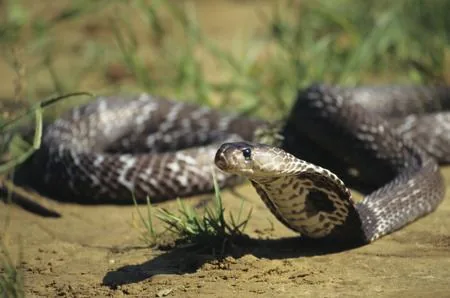
Triangular Head
Poisonous snakes often have a triangular head tapering towards the mouth, while nonpoisonous species often have smoothly curved, U-shaped heads. However, some nonvenomous snakes may narrow their heads to warn off predators, and some have a naturally pointed head. A striking example of the latter is the wine snake, which has a very pronounced 'tip' to its head. In most cases, though, it is wise not to approach a snake if it has a tapering head.
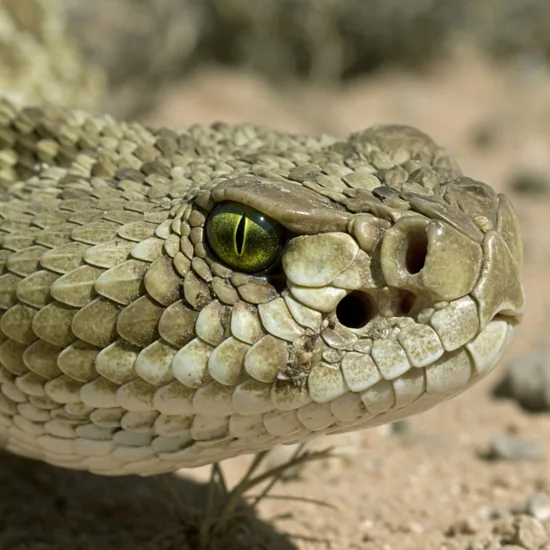
Elliptical Pupils
The pupil is the hole through which light enters the eye. In plain terms, it is the innermost black circle in the center of our eyes. Nonpoisonous snakes have round pupils, while poisonous snakes have elliptical, cat-like pupils.
Once again, though, there's an exception among some of the most poisonous and aggressive snakes in the world (the mambas and cobras) which have round pupils. Also, various boas, which are nonvenomous, have elliptical pupils.
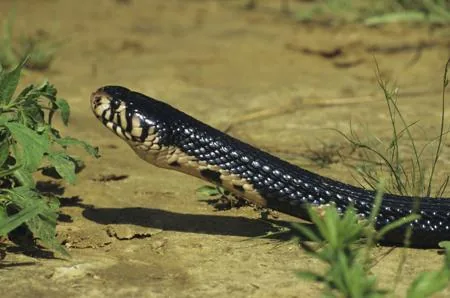
Nose 'Pits'
A family of snakes known as pit vipers have indentations below their nostrils called 'pits'. These do a unique job: sensing thermal radiation (heat) given off by their surroundings. Pit vipers use this ability to 'see' the world as differences in temperature, which lets them strike prey with infallible accuracy. The presence of these pits (which can be spotted even at a distance) is a foolproof mark that the snake is poisonous.
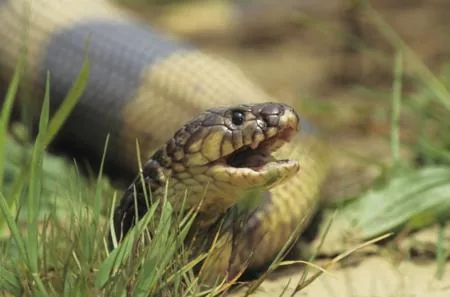
Scales
Let me make a disclaimer about this one before you go any further. It involves looking at a snake's underside, and so it is NOT to be checked with live snakes.
The scales on a venomous snake's belly go from the anal plate to the tail in a single row, although the very tip of the tail could have two. Non-venomous snakes have two rows of scales from the anal plate to the end of the tail. This method is useful only if the snake has been killed, or has shed its skin.
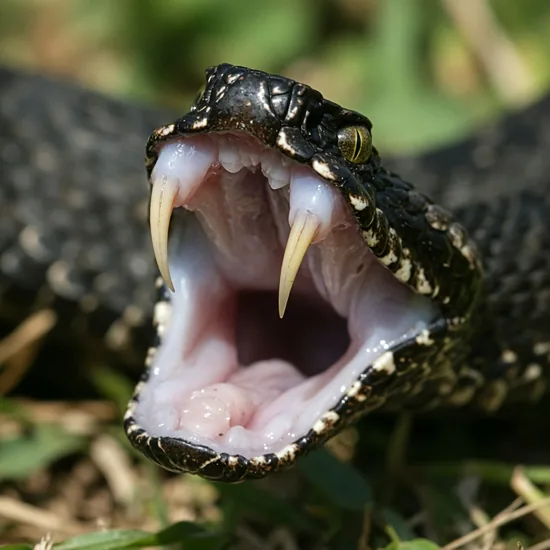
Fang Marks
If two close-set puncture marks can be seen on the skin, it is certain that the snake is poisonous, and immediate action should be taken to get the victim medical care. If the bite mark is ragged, it is a sign that fangs (and therefore poison) were absent. A nonpoisonous snake wound is still a cause for concern, though, since deep wounds can become gangrenous.
Frequently Asked Questions
What characteristics help identify a snake?
Length, girth (body type), pupil shape, body pattern, head shape, tail plates, and unique markers such as a cobra's hood or a rattlesnake's rattle.
Can you tell if a snake is venomous from its pupils?
Not reliably. Nonvenomous snakes usually have round pupils and many venomous snakes have elliptical, cat-like pupils, but there are exceptions, mambas and cobras are very venomous yet have round pupils, and some harmless boas have elliptical ones.
What do tail plates and belly scales tell you about a snake?
On the underside of a snake, single tail plates (a single row of scales after the anal plate) usually mean the snake is venomous, while double tail plates or two rows usually mean it is nonvenomous. It is a useful test only on dead snakes or shed skins, never on a live snake.
Is it poison or venom?
Venom is the correct word. Poison is a general term for substances harmful when eaten or absorbed, while venom is a toxin an animal makes in its own body and injects into a victim. People often say 'poisonous snake' even though 'venomous' is the exact term.
What are heat pits on a snake?
Pit vipers have small indentations called pits below their nostrils. The pits sense thermal radiation (heat), letting the snake 'see' its surroundings as differences in temperature. Their presence is a reliable sign that the snake is venomous.
What are the different types of snake venom?
Hemotoxins affect red blood cells, neurotoxins affect the nervous system, and cardiotoxins affect the heart. Each needs a particular antivenom.
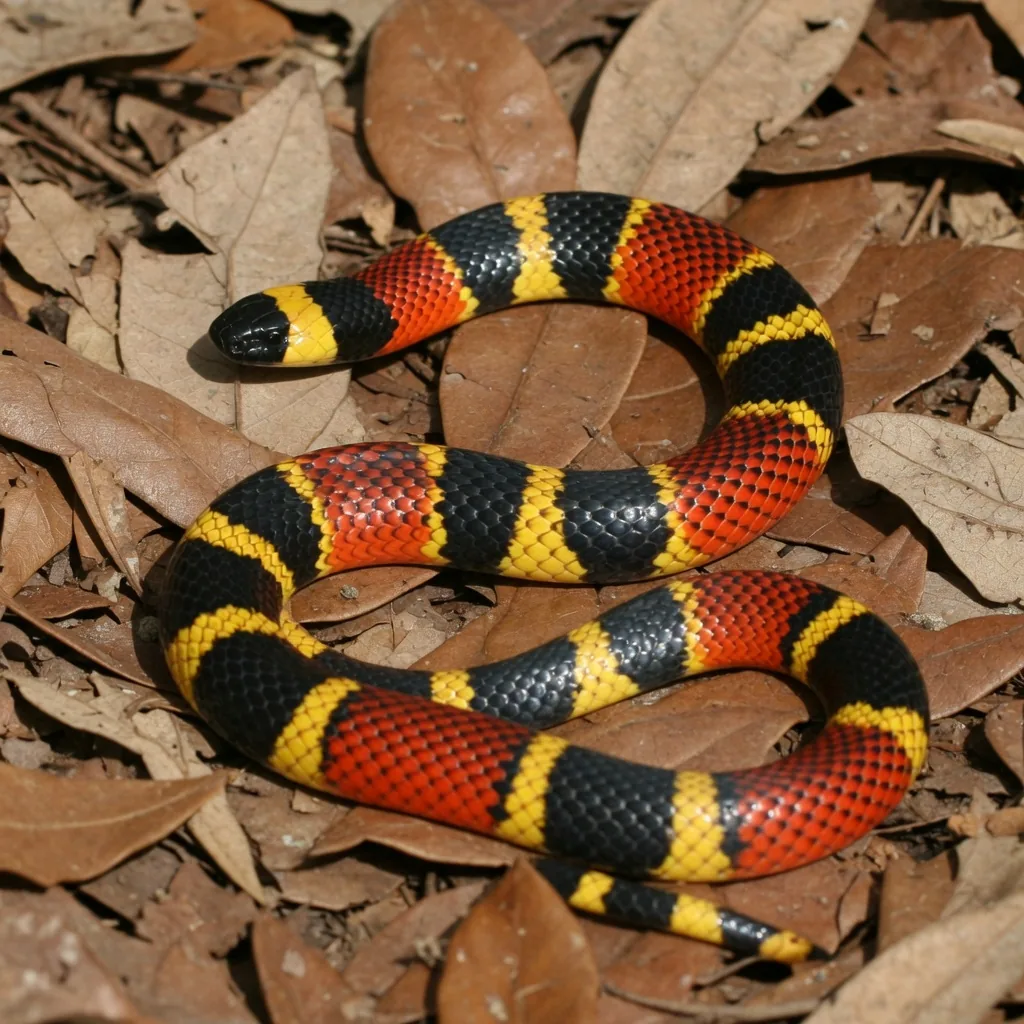
Does the 'red next to yellow' rhyme always work?
Only for North American coral snakes. The rhyme 'red next to black, won't kill jack; red next to yellow, deadly fellow' does not apply to coral snakes found elsewhere in the world, so it is not a safe rule outside North America.
What should you do after any snakebite?
Always seek medical attention, even if you are sure the snake was nonvenomous. A venomous bite can be deadly, and even a nonvenomous bite can become infected or gangrenous.
A Few More Tell-tale Signs
If, after biting, a snake latches on and doesn't let go, it is usually a sign that it is nonpoisonous. Poisonous snakes have two specialized, hollow teeth called fangs, which act like hypodermic syringes that deliver their lethal dose of venom. A poisonous snake usually pulls its fangs back immediately after a bite, since they are its only weapons and must be protected.
However, several poisonous snakes do hold on to their bite, either because they are unusually aggressive (which is rare), or to make up for the low strength of their venom by injecting a large amount of it.
Some poisonous snakes are best identified by their own special features, such as the 'rattle' of a rattlesnake, or the distinctive 'red next to yellow' bands of North American coral snakes.
The list of defining features of a poisonous snake is not exhaustive, or even completely accurate, but these are some of the readily observable signs. Remember: a snakebite, poisonous or not, should never be left untreated. A poisonous bite can kill, and even a nonpoisonous bite can end up disfiguring your arm. The most useful protection while near snakes is, in Mad-Eye Moody's words, "constant vigilance". A snake only bites if cornered or surprised and, given its way, would much rather slither away in peace.
Be safe!
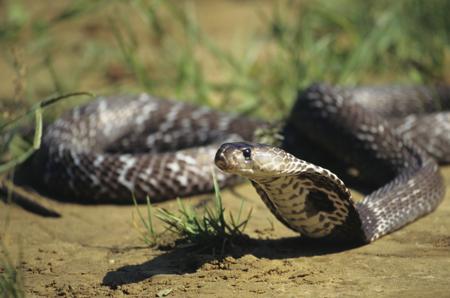
A Gallery of Snakes to Compare
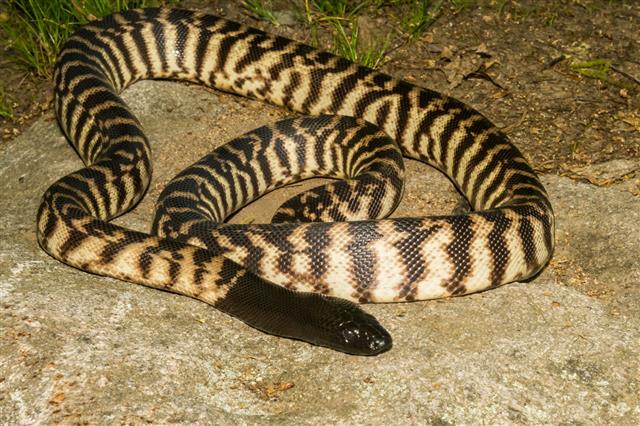
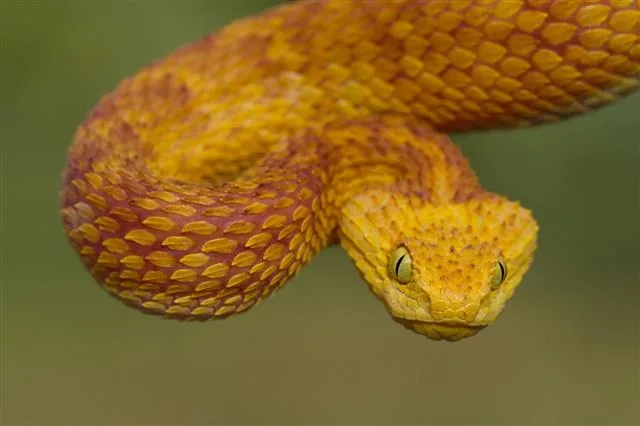
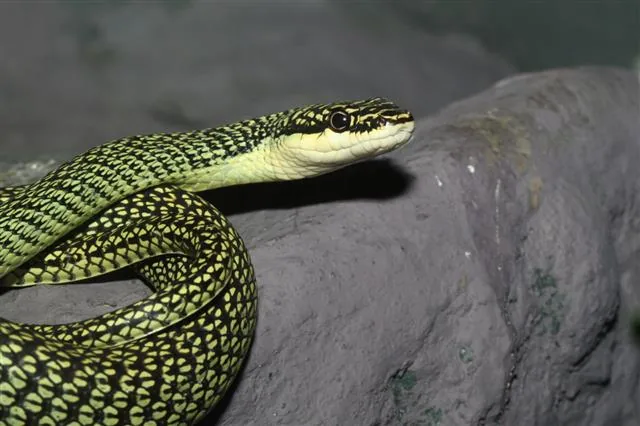
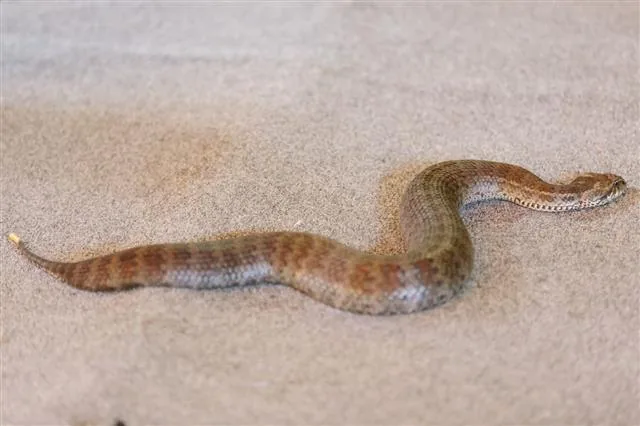
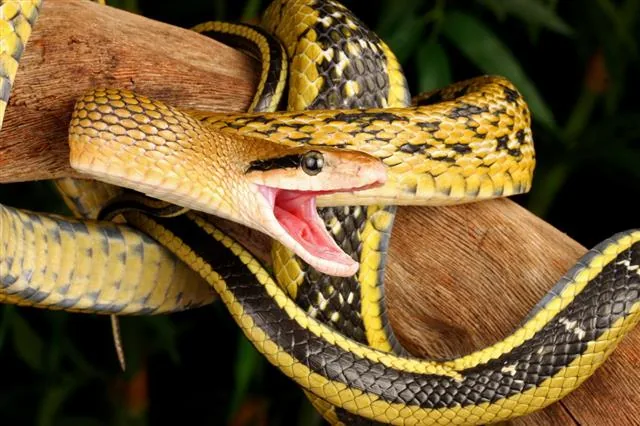
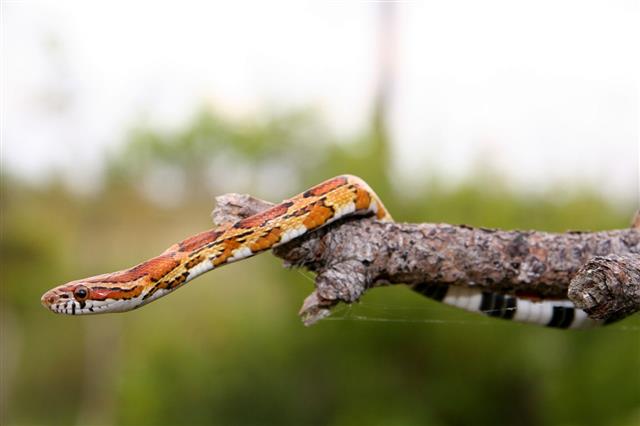
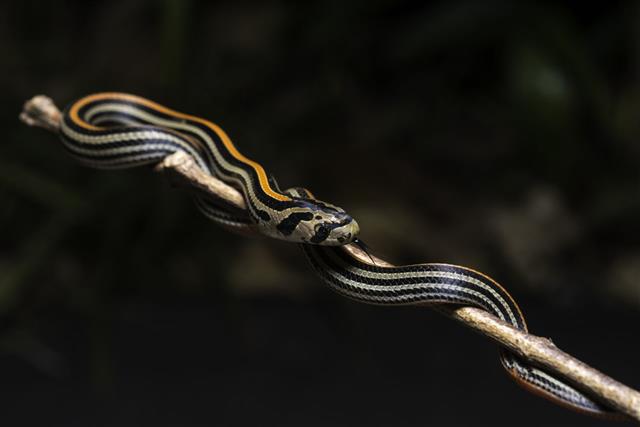
Here are some real snakes from around the world. Look at each one and try to read its clues (the eyes, the pattern, the head shape, the warning signs) just like a field guide would.
Explore More Animals
 Types of Snakes With PicturesMeet every type of snake, from the deadliest venom-injecting cobras and vipers to record-breaking constrictors, tiny thread snakes, and ocean-going sea snakes.
 How to Identify a Garter (Garden) SnakeThere are around 35 species of garter snakes in the genus Thamnophis. Found across North America, these colorful, slender snakes are easy to spot once you know
 Characteristics of Reptiles Explained with PicturesWhat do snakes, turtles, crocodiles, and lizards have in common? Discover the unique characteristics that define all reptiles, from scaly skin to cold-blooded b
 3 Stages in the Life Cycle of a SnakeThe life cycle of a snake starts with the egg stage and ends at the adult stage. In some species the female gives birth to live young. Discover all three stages

 Fun fact for today!On a global average, snakes kill far fewer people each year than vehicle accidents do. Given a way out, a snake would much rather slither away than bite.