

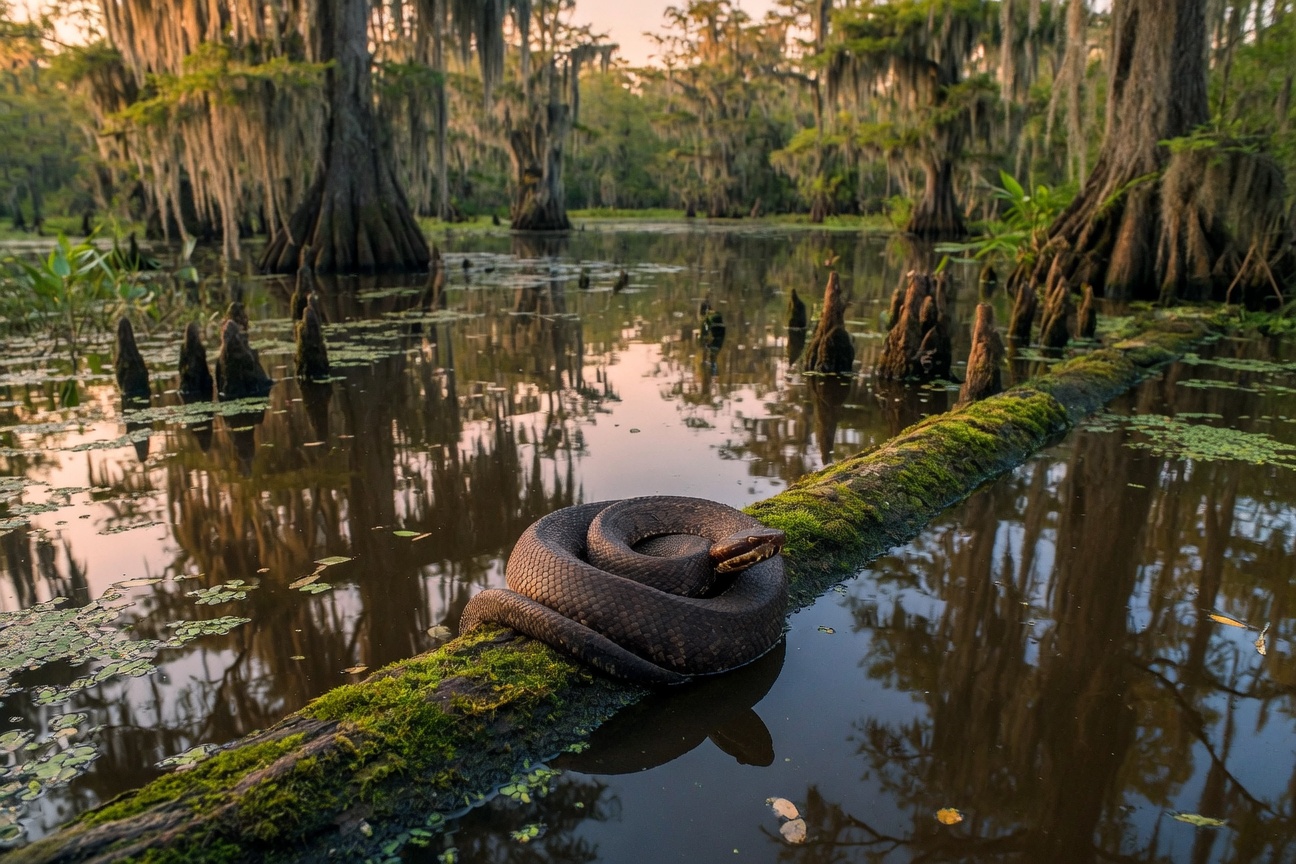
Louisiana sits at the southern end of the United States. It is rich in biological diversity thanks to its location on the Mississippi's coast and the humid subtropical climate that supports it. The U.S. government has made effective steps to protect this biodiversity through national parks and the forest service. Six national parks operate in the state: Atchafalaya National Heritage Area, Cane River National Heritage Area, Jean Lafitte National Historical Park and Preserve, Poverty Point National Monument, and Saline Bayou, a scenic river near Winn Parish in northern Louisiana. The forest service protects the state's only forest, Kisatchie National Forest, which spans a total of 600,000 acres in central and northern Louisiana.
Louisiana's snakes may fascinate some people, but they do cause fear in many others. Snakes in general aren't aggressive, except when defending themselves. If you see one, don't panic or run around. Most are non-venomous, and the venomous ones total just 7 species discovered to date.
Note: Never kill a snake, always contact a snake rescuer or the forest department to deal with it.
Venomous Louisiana Snakes
Copperhead
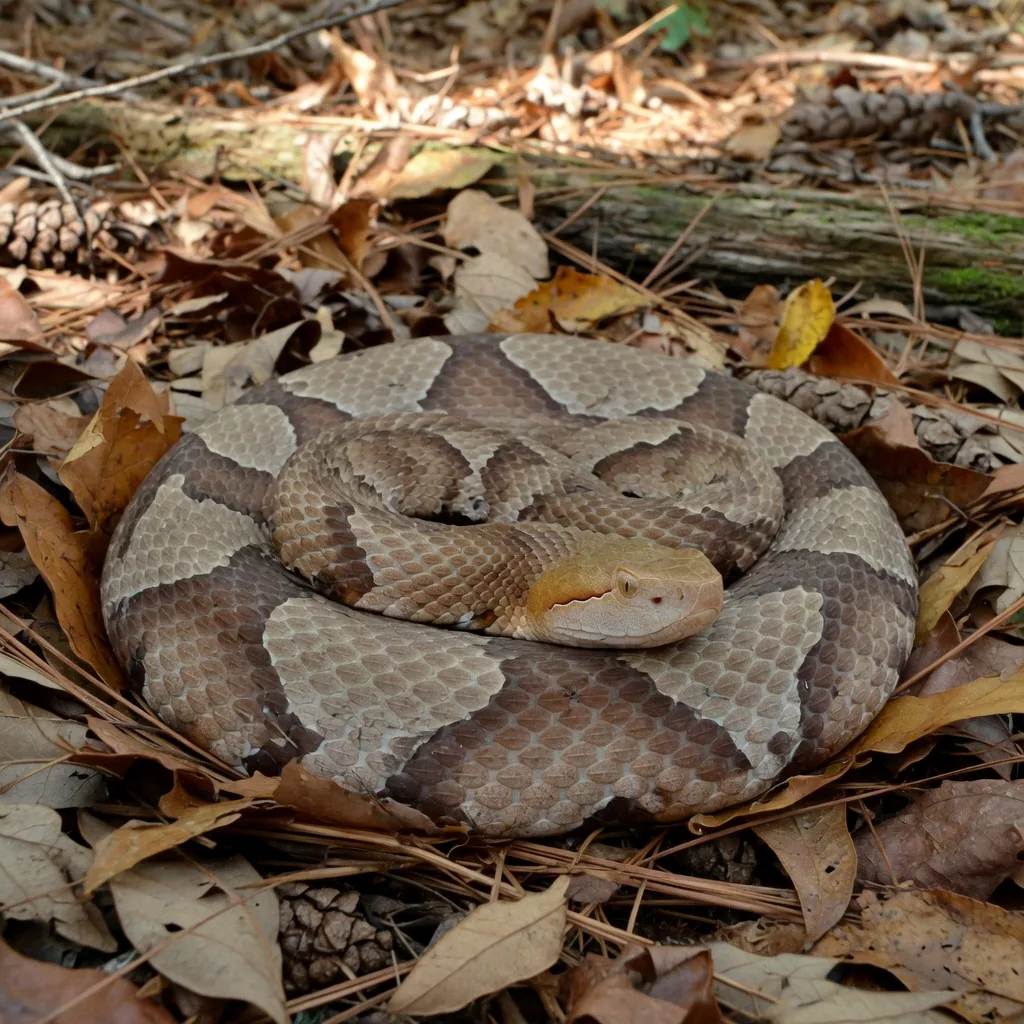
Genus: Agkistrodon | Species: Agkistrodon contortrix | Adult Length: 50-95 centimeters (2-3 ft.)
Venom: Though venomous, these snakes are quite hesitant to bite, and their venom is weak, rarely fatal.
Appearance: Color ranges from beige to tan, sometimes pale gray. The body has broad dark-brownish crossed bands, while the head is solid with a faint orange tint on top and pale yellowish sides. Copperheads have dark brown blotches on the underside and about 23-27 rows of keeled scales on the back.
Texas Coral Snake
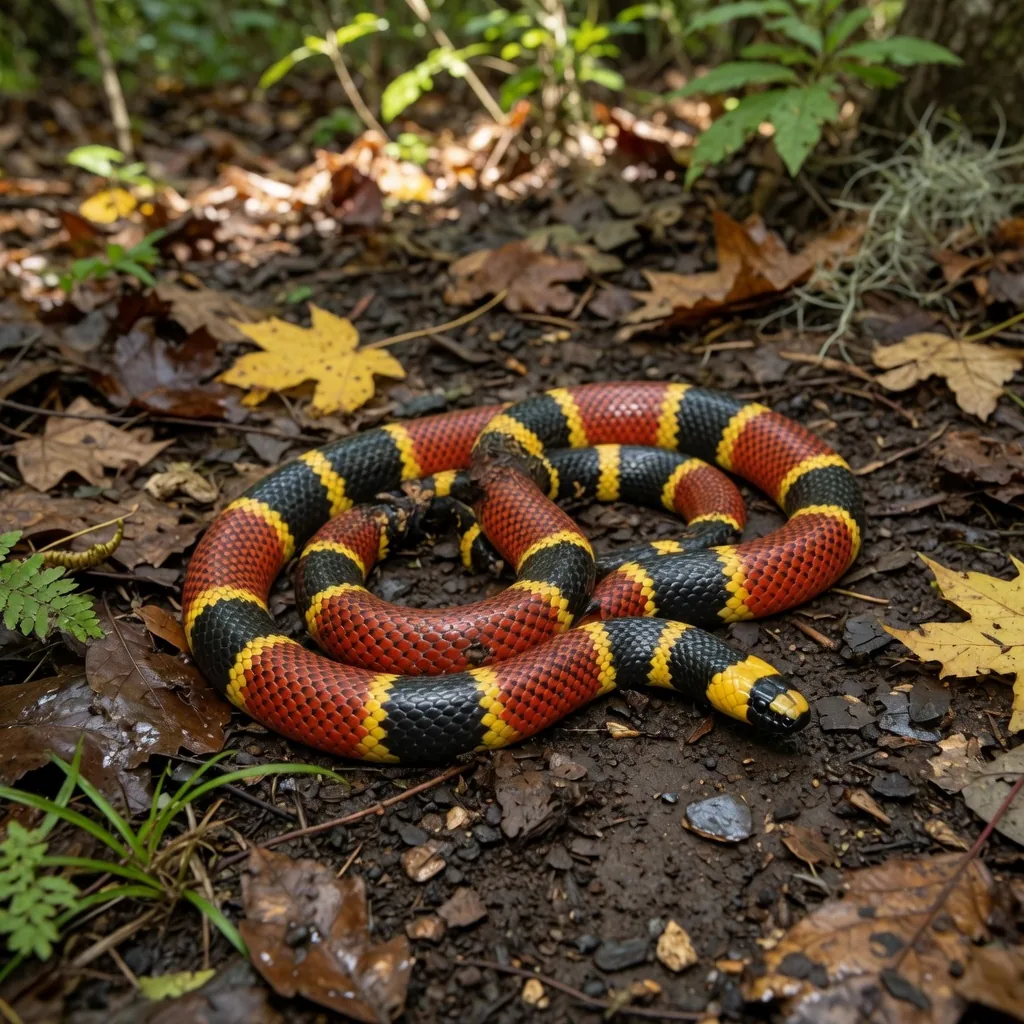
Genus: Micrurus | Species: Micrurus tener | Adult Length: 60-100 centimeters (2-3 ft.)
Venom: A Texas Coral snake's bite may not prove fatal, but the neurotoxin it contains is responsible for causing a neuromuscular dysfunction.
Appearance: The snake has a series of wide red and black rings lined by thin yellow rings over the whole body. The head is two-toned, the snout is black and the rear part is yellow. These snakes have 15 rows of smooth scales and look a lot like the Harlequin Coral snake.
Pygmy Rattlesnake
Genus: Sistrurus | Species: Sistrurus miliarius | Adult Length: 40-60 centimeters (1.3-2 ft.)
Venom: The amount of venom produced is too little to kill a human. The bite isn't fatal but is hemorrhagic. The venom is free of neurotoxins but contains serotonin, which can cause prolonged unpleasant feelings.
Appearance: Color is pale gray or tan, with 2 rows of dark black spots on either side of the back. A brick-reddish hue runs down the center of the back, and the head has bands of black in the center and on either side. The underside is grayish white or light tan, with approximately 23 rows of keeled scales.
Eastern Diamondback Rattlesnake
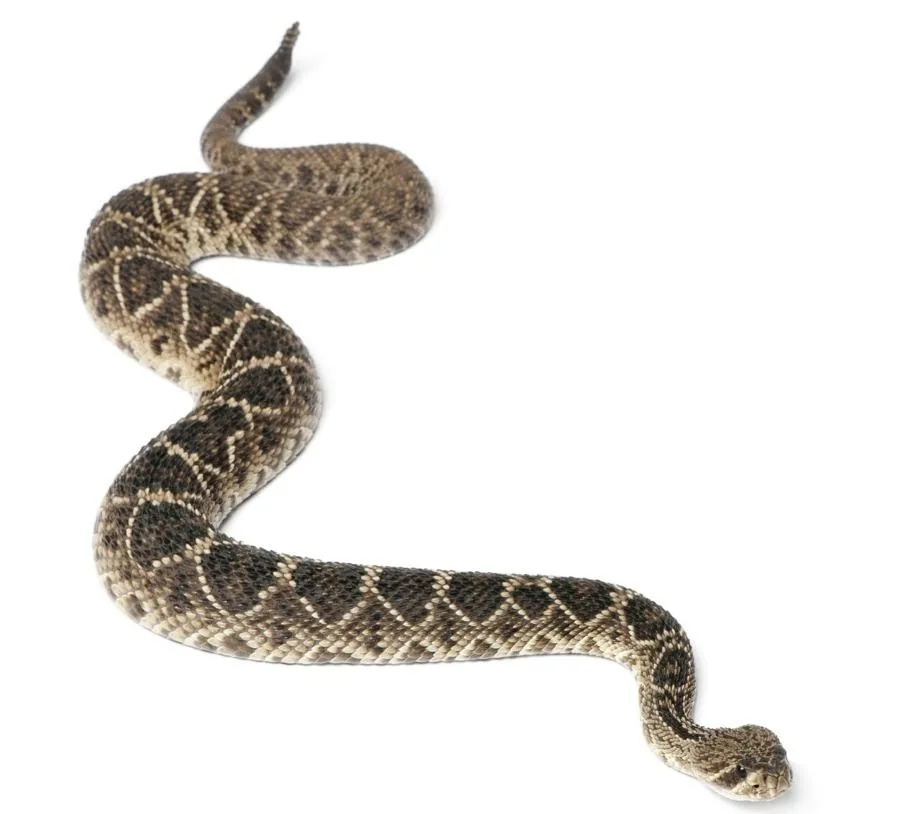
Genus: Crotalus | Species: Crotalus adamanteus | Adult Length: 200-230 centimeters (6-8 ft.)
Venom: Bites from this snake can prove fatal. This rattlesnake is considered one of northern America's most dangerous venomous snake species. The venom causes high hemorrhagic and hemolytic activity and can sometimes lead to cardiac failure. Symptoms include intense pain and bleeding at the bite site, intense internal pain, weak pulse, swelling, and discoloration.
Appearance: Brown or tan with diamond-shaped markings all over the body. A dark band lined with light brownish stripes crosses each eye diagonally. It has 29 rows of dorsal scales.
Canebrake Rattlesnake
Genus: Crotalus | Species: Crotalus horridus | Adult Length: 91-152 centimeters (7-12 ft.)
Venom: Very dangerous, long fangs and a high venom yield. Its venom is highly neurotoxic and can cause hemorrhaging and death in extreme cases.
Appearance: Skin is usually light tan or beige with dark brown or black crossbands, and a brick-reddish strip running all along the back. The tail is dark gray or black. It has around 21-26 rows of dorsal keeled scales.
Cottonmouth
Genus: Agkistrodon | Species: Agkistrodon piscivorus | Adult Length: 80-90 centimeters (2.5-3 ft.)
Venom: A cottonmouth's bite is rarely capable of causing death. The venom contains certain tissue-destructive enzymes but is free of any neurotoxin.
Appearance: Color ranges from dark tan to brown, or nearly black, with pale black or dark brown crossbands. The head is black except for thin white stripes extending from the eye to the angle of the jaw. The underside is dark with large black spots, and about 25 rows of keeled dorsal scales.
Harlequin Coral Snake
Genus: Micrurus | Species: Micrurus fulvius | Adult Length: 40-90 centimeters (1.5-3 ft.)
Venom: Fatalities are very rare, death is only possible without proper medical attention. The snake is reluctant to attack and can't control how much neurotoxin it injects, resulting in a weak bite. Timely hospitalization and antivenin can cure a victim.
Appearance: Skin is usually light tan or beige with dark brown or black crossbands and a brick-reddish strip running all along the back. The tail is dark gray or black, and it has around 21-26 rows of dorsal keeled scales.
That covers the venomous ones. Now for the harmless, non-venomous species. The non-venomous snakes are mostly water snakes, small garden snakes, or rat snakes, learn more in the next section.
Take the Louisiana Snakes Quiz!
5 quick questions. How well do you know Louisiana's serpents?
Non-venomous Louisiana Snakes
Gray Ratsnake
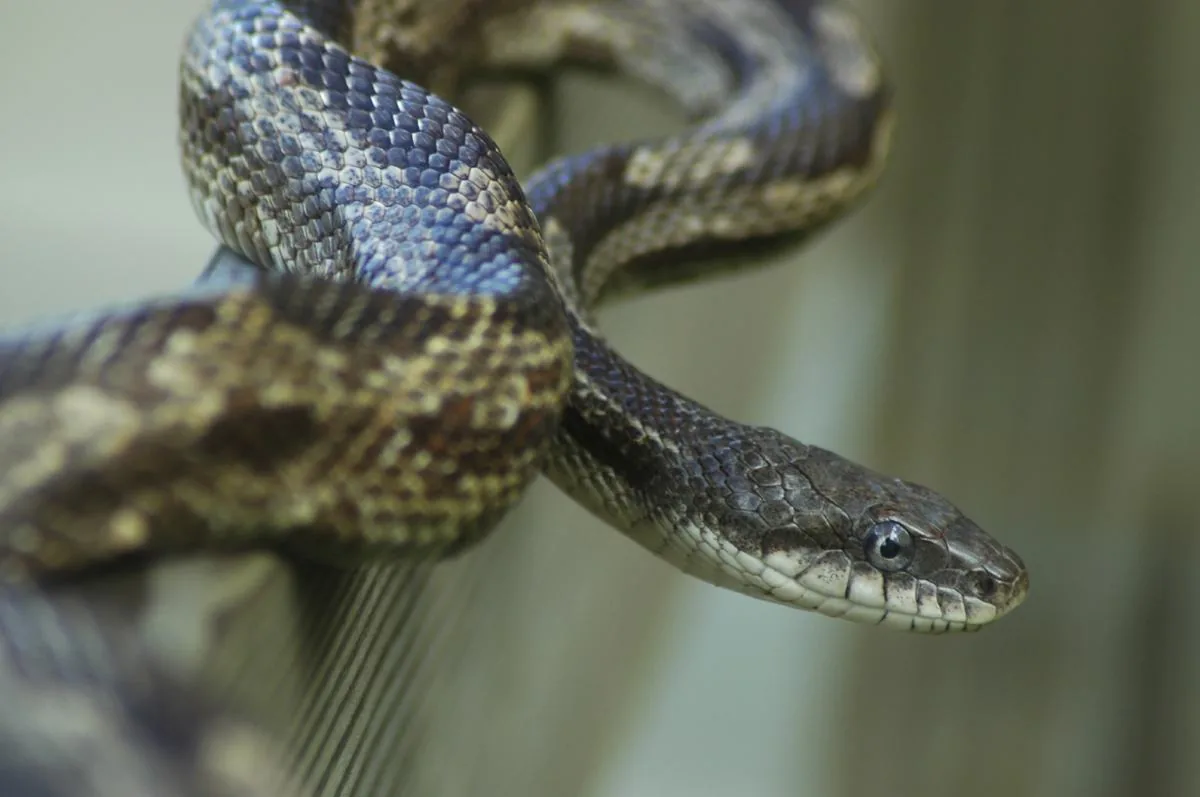
Genus: Pantherophis | Species: Pantherophis spiloides | Adult Length: 99-183 centimeters (3.2-6 ft.) | Category: Constricting Snakes
Appearance: The base color is gray (sometimes tan) with large dark brown or black spots on the back and smaller spots on the sides. The belly is usually white, sometimes with a tinge of gray or pale brown. The dorsal scales are slightly keeled and occur in 25-27 rows.
Mississippi Green Water Snake
Genus: Nerodia | Species: Nerodia cyclopion | Adult Length: 40-127 centimeters (1.3-4.1 ft.) | Category: Water Snakes
Appearance: Deep marshy green with a tinge of gray, these snakes love to rest in large water bodies. The body has large square-shaped marks alternating on the upper sides, back, and lower sides. The underside is dull yellow with gray-colored spots. Scales are keeled in 23-27 rows.
Scarlet Kingsnake
Genus: Lampropeltis | Species: Lampropeltis elapsoides | Adult Length: 30-60 centimeters (1-2 ft.) | Category: Mimic Snakes
Appearance: The body has a series of large red and white/yellow rings bordered with thinner black stripes, encircling the whole body including the underside. It has a red snout and 17-19 rows of smooth dorsal scales.
Ring-necked Snake
Genus: Diadophis | Species: Diadophis punctatus | Adult Length: 25-38 centimeters (0.8-1.2 ft.) | Category: Small Garden Snakes
Appearance: Smooth-scaled (15 rows) with a slate gray body and a distinct yellow collar around the neck. The underside is yellowish-orange with a central row of black dots.
Banded Water Snake
Genus: Diadophis | Species: Diadophis punctatus | Adult Length: 25-38 centimeters (0.8-1.2 ft.) | Category: Small Garden Snakes
Appearance: Coloration ranges from deep brown to black, with pale tan or yellow crossbars. In some southeastern areas the color is tan to orange with deep brown or gray crossbars. In the darker form, an orange stripe extends from the eye to the angle of the jaw. The underside is white with brick-red, black, or brown spots. Dorsal scales are keeled in 21-25 rows.
Milk Snake
Genus: Lampropeltis | Species: Lampropeltis triangulum | Adult Length: 51-152 centimeters (1.6-5 ft.) | Category: Mimic Snakes
Appearance: Covered with a series of red and white/yellow rings with black borders. It has smooth scales in 21 rows and a black/red snout.
Prairie Kingsnake
Genus: Lampropeltis calligaster | Species: Lampropeltis calligaster | Adult Length: 76-102 centimeters (2.4-3.3 ft.) | Category: Constricting Snakes
Appearance: Coloration ranges from tan to brown to gray, with dark brown to reddish oblong spots down the back and a smaller series of similar spots along the sides. The underside is whitish with brown spots. Dorsal scaling is smooth in 21-27 rows.
Red Corn Snake
Genus: Pantherophis | Species: Pantherophis guttata | Adult Length: 63-165 centimeters (2-5 ft.) | Category: Constricting Snakes
Appearance: Yellow, brown, tan, or reddish brown with large reddish or orange spots running down the back, edged with black borders, and similar smaller spots on the sides. The top of the head has reddish bands narrowing between the eyes. The underside is white with a checkerboard pattern. The snake has 27 rows of keeled dorsal scales.
Common Water Snake
Genus: Nerodia | Species: Nerodia sipedon | Adult Length: 40-125 centimeters (1.3-4.1 ft.) | Category: Water Snakes
Appearance: Gray, tan, or orange above with distinct brick-red crossbars. The underside is pale white, yellow, or gray, with crescent-shaped dark spots. Dorsal scales are in 21-23 rows and are keeled.
Eastern Hog-nosed Snake
Genus: Heterodon | Species: Heterodon platirhinos | Adult Length: 38-106 centimeters (1.2-3.4 ft.) | Category: Harmless Non-venomous Snakes
Appearance: The body can be simply dark brown or black, or pale gray or tan, with rows of small black spots, stripes, or even a checkered pattern on the front half. The belly is dull gray, cream, or yellowish. These snakes have 25 rows of keeled scales.
Graham's Crayfish Snake
Genus: Regina | Species: Regina grahamii | Adult Length: 35-114 centimeters (1.1-3.7 ft.) | Category: Water Snakes
Appearance: Color ranges from olive to gray above, and yellowish or grayish below. The underside has a row of dark spots and two dark lines on both sides of the belly. Dorsal scales are keeled in 19 rows. It prefers marshy and swampy areas. Learn more about this species and others in our guide to facts about snakes.
Speckled Kingsnake
Genus: Lampropeltis | Species: Lampropeltis getula holbrooki | Adult Length: 40-152 centimeters (1.3-5.0 ft.) | Category: Constricting Snakes
Appearance: The snake has a glossy black coat with tiny yellowish-white speckles on each scale. The underside is cream or yellow with black spots. It has about 21-23 rows of smooth dorsal scales.
Western Ribbon Snake
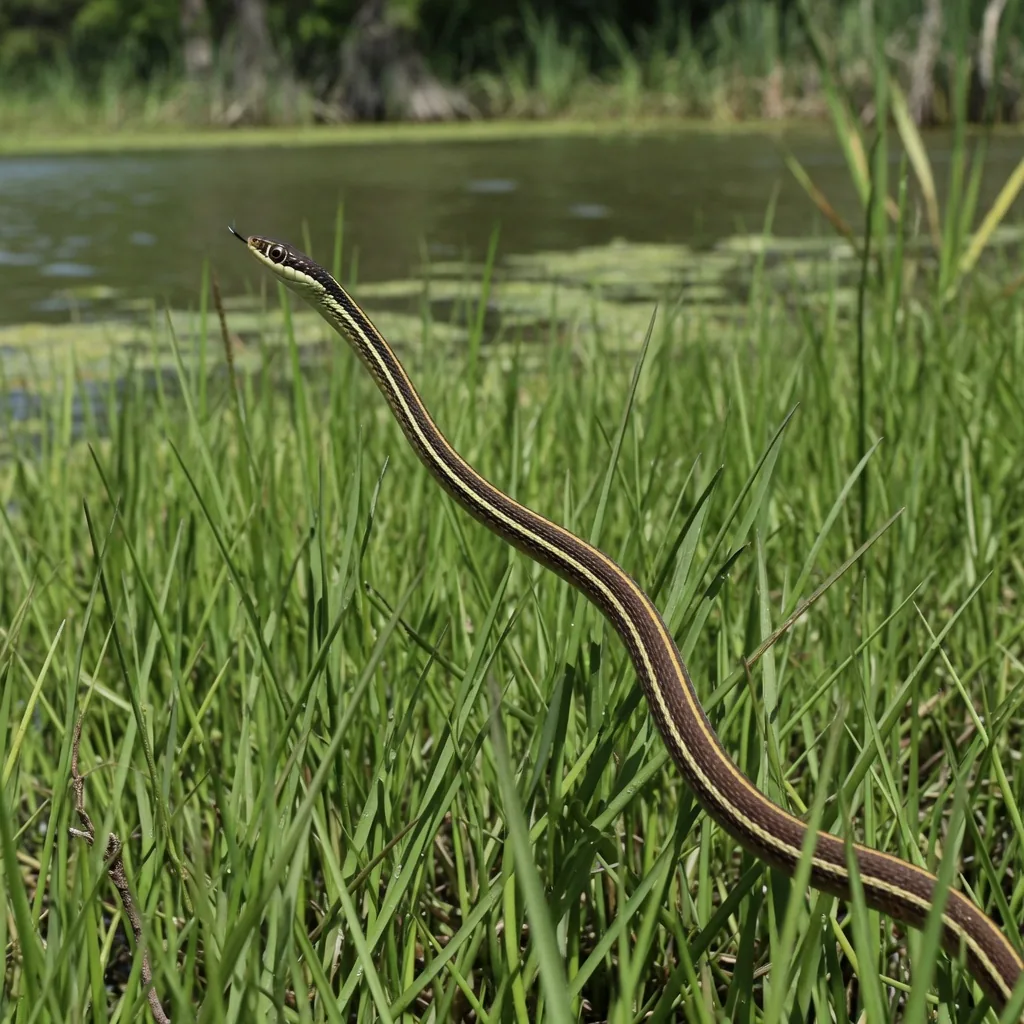
Genus: Thamnophis | Species: Thamnophis proximus | Adult Length: 60-106 centimeters (2.0-3.4 ft.) | Category: Diurnal Snakes
Appearance: Similar in looks to eastern ribbon snakes, these are mostly black or brown with a central stripe (either yellow, orange, or white) running all the way along the back. There are similar but duller stripes on the sides, with a whitish underside. There are 19 rows of keeled scales and a distinct white spot on the head, which is absent in eastern counterparts.
Rough Green Snake
Genus: Opheodrys | Species: Opheodrys aestivus | Adult Length: 40-106 centimeters (1.3-3.4 ft.) | Category: Diurnal Snakes
Appearance: Grass-green in color, with keeled 17-row scaling and a yellow underside.
Coachwhip
Genus: Coluber | Species: Coluber flagellum | Adult Length: 63-228 centimeters (2-7 ft.) | Category: Diurnal Snakes
Appearance: Usually dark brown or black, with a gradation to brick red or reddish pink toward the tail. Some varieties are entirely black or pink. The underside is white or pink. It has 17 rows of smooth dorsal scales.
Common Garter Snake
Genus: Thamnophis | Species: Thamnophis sirtalis | Adult Length: 38-114 centimeters (1.2-3.7 ft.) | Category: Diurnal Snakes
Appearance: Very slender bodies and abundant in various colors including shades of green, blue, yellow, gold, red, orange, brown, and black. A central stripe runs down the back, usually white, yellow, or orange. A pale stripe of the same color runs along either side. The underside is white, dull tan, or pale green, with a row of dark spots on each side. Scales are keeled in 19 rows.
Racer
Genus: Coluber | Species: Coluber constrictor | Adult Length: 50-165 centimeters (1.6-5.4 ft.) | Category: Diurnal Snakes
Appearance: Racers get their name from their agility and speed. Coloration is mostly shiny black with white undersides; gray in the southeastern areas; olive to tan in the southwest; and bluish gray in the central and northern parts. The underside in all cases is usually white, sometimes with a slight yellowish tinge. They have smooth dorsal scales in 17 rows. Racers often prefer open areas, though they are also spotted in forests. These snakes are highly territorial and will bite if disturbed, but they aren't venomous, though the bite can be painful.
Brown Snake
Genus: Storeria | Species: Storeria dekayi | Adult Length: 30-40 centimeters (1-1.5 ft.) | Category: Small Garden Snakes
Appearance: Mostly tan or dark brown, very common to the southern and eastern United States. Has a light brown stripe bordered with tiny spots running along the center of the back. The underside is beige, with 17 rows of keeled dorsal scales. These snakes strike when disturbed but are non-venomous and harmless.
Brahminy Blind Snake
Genus: Ramphotyphlops | Species: Ramphotyphlops braminus | Adult Length: 6.35-16.5 centimeters (0.2-0.5 ft.) | Category: Small Garden Snakes
Appearance: A very tiny snake that looks like an earthworm. Its eyes appear as tiny spots, and the whole body is either black, dark brown, or sometimes even purple. It has 20 rows of smooth dorsal scales. It is a burrowing snake and won't usually be spotted in the open.
Black Pine Snake
Genus: Pituophis | Species: Pituophis melanoleucus | Adult Length: 122-254 centimeters (4-8 ft.) | Category: Constricting Snakes
Appearance: Smooth-scaled, with a harmless spine on the tip of the tail. This is also a burrowing snake that prefers loose soil, leaf litter, or beneath logs.
Rainbow Snake
Genus: Farancia | Species: Farancia erytrogramma | Adult Length: 63.5-152 centimeters (2-5 ft.) | Category: Harmless Non-venomous Snakes
Appearance: These reptiles mostly wander in the southeastern regions of Louisiana. They are called rainbow snakes because of their shiny exteriors with three red stripes running down the back, yellow-colored sides, and yellow undersides. The belly has several rows of black spots. Dorsal scaling is smooth in 19 rows.
Louisiana Pine Snake
Genus: Pituophis | Species: Pituophis ruthveni | Adult Length: 63-165 centimeters (2-5 ft.) | Category: Constricting Snakes
Appearance: One of the threatened species, this snake occurs in a pale tan color with dark brown or black blotches along the back. The underside is whitish with spots, and it has a pointed snout and 27-33 keeled dorsal scales.
Pine Woods Snake
Genus: Rhadinaea | Species: Rhadinaea flavilata | Adult Length: 25-33 centimeters (0.8-1.8 ft.) | Category: Small Garden Snakes
Appearance: A small reddish/yellowish-brown snake with an unmarked pale yellow underside. A distinct dark band passes through the eye, bordered by a pale line. It has 17 rows of smooth dorsal scales.
Slowinski's Corn Snake
Genus: Pantherophis | Species: Pantherophis slowinskii | Adult Length: 60-132 centimeters (2-4.3 ft.) | Category: Constricting Snakes
Appearance: Gray in color with a row of dark gray/brown/orange spots down the back and a similar series on each side. The underside is white with a chess-board pattern. Two bands extend from the top of the head, converging between the eyes. Dorsal scales are slightly keeled and occur in 27 rows.
Smooth Earth Snake
Genus: Virginia | Species: Virginia valeriae | Adult Length: 15-33 centimeters (0.4-1 ft.) | Category: Small Garden Snakes
Appearance: Tan, brown, or reddish brown above, with pale yellow or whitish underside. There are tiny black dots near the head, and a faint line may run along the back. Scales are smooth in 17 rows.
Diamond-backed Water Snake
Genus: Nerodia | Species: Nerodia rhombifer | Adult Length: 45-165 centimeters (1.4-5.4 ft.) | Category: Water Snakes
Appearance: Grayish brown or tan on the upper body, with pale yellowish to off-white below. The back has dark brown or black crossbands, while the underside has small dark markings. There are 25-27 rows of keeled dorsal scales.
Eastern Ribbon Snake
Genus: Thamnophis | Species: Thamnophis sauritus | Adult Length: 18-86 centimeters (0.5-3.4 ft.) | Category: Diurnal Snakes
Appearance: Also known as the common ribbon snake, these are slender with either black or dark-brown bodies and a central yellow stripe. Two more stripes run along the sides. The underside is a mix of green and white. Dorsal scales are keeled in 19 rows.
Mud Snake
Genus: Farancia | Species: Farancia abacura | Adult Length: 63-203 centimeters (2.5-6.6 ft.) | Category: Harmless Non-venomous Snakes
Appearance: These snakes prefer muddy or swampy spots. They can be recognized by their shiny black bodies with a red underside featuring black crossbars. The red from the underside also extends unevenly to the sides. Scales are smooth in 19 rows.
Explore More Animals
 Facts about Copperhead SnakesCopperhead snakes are venomous pit vipers found across the eastern US. Learn how to identify them, where they live, what they eat, and what makes their venom so
 List of Nonvenomous Snakes With PicturesMost snakes won't hurt you: about 85% are nonvenomous. Meet pythons, boas, kingsnakes, rat snakes and more harmless snakes, with pictures of each.
 Ways to Identify a Water Moccasin Snake And Tips to Treat its BiteThe water moccasin is one of North America's most venomous snakes. Learn how to identify it by its heavy body, triangular head, vertical pupils, and white mouth
 Types of Snakes With PicturesMeet every type of snake, from the deadliest venom-injecting cobras and vipers to record-breaking constrictors, tiny thread snakes, and ocean-going sea snakes.
Glossy Crayfish Snake
Genus: Regina | Species: Regina rigida | Adult Length: 38-76 centimeters (1.2-2.4 ft.) | Category: Water Snakes
Appearance: As the name suggests, these snakes have a glossy coat (either dark olive, dark gray, or completely black) with yellow or tan stripes along the lowest part of the sides. The underside is pale yellow with two rows of black spots. Dorsal scales are keeled in 19 rows.
Red-bellied Snake
Genus: Storeria | Species: Storeria occipitomaculata | Adult Length: 15-35 centimeters (0.4-1.1 ft.) | Category: Small Garden Snakes
Appearance: Mostly deep brown or gray on the upper body, with twin rows of dots or four thin lines running from head to tail. The belly and underside are red, orange, and rarely yellow or off-white. Scales are keeled in 15 rows.
Salt Marsh Snake
Genus: Nerodia | Species: Nerodia clarkii | Adult Length: 38-88 centimeters (1.2-2.8 ft.) | Category: Water Snakes
Appearance: This species comes in three colors: gray, green, or tan, with dark bands of the respective color. There are 4 dark stripes on the neck and a dark band through each eye. The underside is dark reddish brown with a dark spotted central row. Scales appear in 21 rows and are keeled.
Western Rat Snake
Genus: Pantherophis | Species: Pantherophis obsoleta | Adult Length: 63-213 centimeters (2-7 ft.) | Category: Constricting Snakes
Appearance: Common to southern and central Louisiana. Either tan or gray with black spots on the back and sides. The underside is white, graduating to gray or pale brown toward the tail. Pale spots are present in some varieties. Scales are in 25-27 rows and are slightly keeled.
Western Worm Snake
Genus: Carphophis | Species: Carphophis vermis | Adult Length: 20-35 centimeters (0.6-1.1 ft.) | Category: Small Garden Snakes
Appearance: Very easy to recognize if you can see its belly. The body is completely black above, and pink or reddish orange on the underside. It has 13 rows of smooth scales.
Yellow-bellied Water Snake
Genus: Nerodia | Species: Nerodia erythrogaster | Adult Length: 40-139 centimeters (1.3-4.5 ft.) | Category: Water Snakes
Appearance: Mostly seen in shades of gray or green, these snakes aren't really aquatic, they prefer wooded areas. The back has dark blotching, and the underside varies from yellow to green to brown, and sometimes even red. Dorsal scales are in 23-27 rows and are keeled.
Southeastern Crowned Snake
Genus: Tantilla | Species: Tantilla coronata | Adult Length: 40-139 centimeters (1.3-4.5 ft.) | Category: Small Garden Snakes
Appearance: A dull shade of tan on the body, but the head is black with a dark collar on the neck. The underside is slightly pinkish, and it has smooth 15-row dorsal scaling.
Rough Earth Snake
Genus: Virginia | Species: Virginia striatula | Adult Length: 15-30 centimeters (0.4-0.9 ft.) | Category: Small Garden Snakes
Appearance: Comes in 3 colors (brown, tan, or gray) with a pale yellow to whitish belly. This snake has 17 rows of keeled scales.
Flat-headed Snake
Genus: Tantilla | Species: Tantilla gracilis | Adult Length: 12-22 centimeters (0.3-0.8 ft.) | Category: Small Garden Snakes
Appearance: Dull tan above, with the head a slightly darker shade of tan. The underside is pinkish. Dorsal scales are smooth, totaling 15 rows.
Eastern Worm Snake
Genus: Carphophis | Species: Carphophis amoenus | Adult Length: 20-30 centimeters (0.6-1 ft.) | Category: Small Garden Snakes
Appearance: Resembles a worm in size. Brown above with a pink underside. Dorsal scales total 13 rows and are smooth. These snakes are usually found beneath logs, leaf litter, or loose soil.
The next time you visit Louisiana's forests, remember that when you enter a forest or sanctuary, you are visiting the homes of these creatures. Respect them, keep your distance, and they won't do any harm.

 Fun fact for today!Always keep a safe distance at least equal to the snake's body length. Venomous snakes can't strike farther than that!