

Two Species, One Family
The name snapping turtle refers to two different species of freshwater turtles that belong to the same family, Chelydridae. The two species are:
- Chelydra serpentina of the genus Chelydra
- Macrochelys temminckii of the genus Macrochelys
Chelydra serpentina is commonly known as the common snapping turtle, while Macrochelys temminckii is known as the alligator snapping turtle. Both species are mainly found in North America. Scientists believe this turtle family once had many other species that are now extinct. The name "snapping turtle" comes from their aggressive and fierce nature.
Physical Features
When compared to common snappers, alligator snapping turtles are larger but less aggressive. Both species share some features: a large head, long neck, and a spiky tail. The main distinguishing feature is the ridged and spiky carapace of alligator snappers.
Carapace
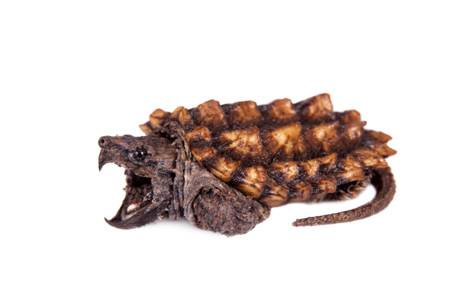
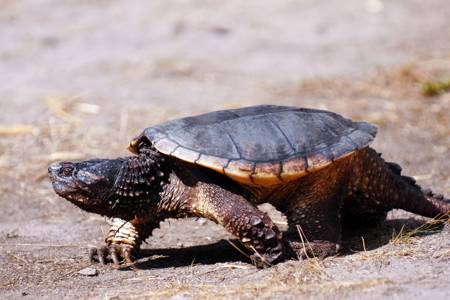
Alligator snapping turtles have three rows of spikes on the carapace, which also has raised plates. The common snappers, by contrast, have a slightly ridged but smooth carapace. The young ones of common snappers have somewhat pronounced ridges that even out as they grow.
Body Weight
An average adult common snapping turtle weighs between 5 to 16 kilograms. Some exceptionally large ones reach a body weight of around 35 to 40 kilograms. An average adult alligator snapper can weigh up to 80 kilograms, though heavier ones are also found. Males are larger than females and have longer, thicker tails.
Color
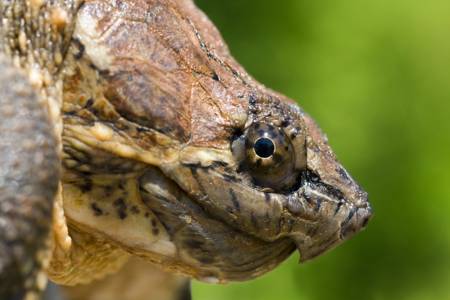
In common snappers, the smooth carapace can be tan, brown, olive green, or black. They have muscular legs with strong claws, large heads, and long tails. These turtles also have nodules on the legs, neck, and tail. Alligator snappers can be gray, brown, black, or olive green. They have fleshy filamentous eyelashes and a radiating yellow pattern around the eyes.
Scaly Limbs
Snapping turtles cannot protect themselves by pulling the head, limbs, and tail inside the shell. Instead, they have scales on the legs and tail as a protective covering.
Plastron
The shell covering that protects the belly of a turtle is called the plastron. In snapping turtles, the plastron is small and does not cover the whole underside. This makes it difficult for them to hide their head and limbs inside the shell when threatened, which could be one of the reasons for their aggressive behavior.
Jaws and Claws
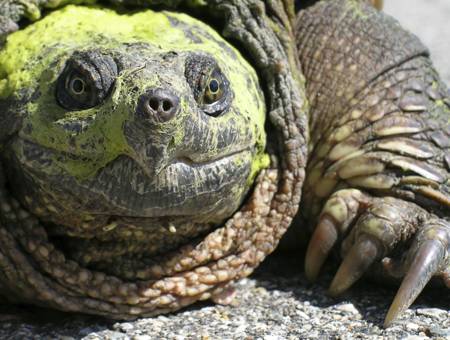
Snapping turtles have very strong beak-like jaws with sharp edges. They use these jaws for tearing food and for biting. With a long neck that can be extended all the way to the back, these turtles can inflict serious bites. They are also equipped with strong claws used for defense.
Tongue Lure
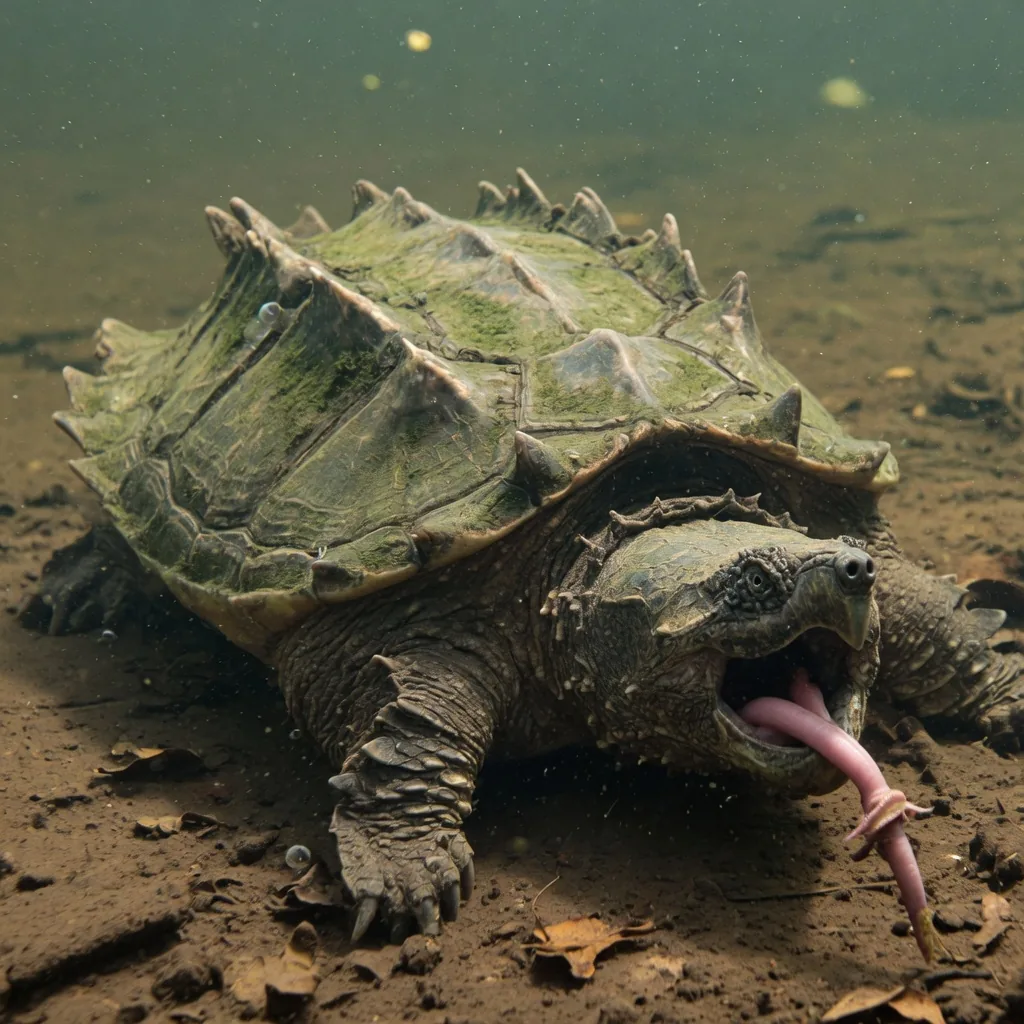
The alligator snapping turtle has a pink appendage on the tip of its tongue to lure fish. As the turtle rests motionless, the worm-like appendage wiggles like a worm to attract fish. It is one of the most remarkable hunting adaptations of any freshwater animal.
Lifespan
Common snappers have a lifespan of around 30 to 40 years in their natural habitat, but in captivity they may live up to 50 years. The life expectancy of alligator snapping turtles can be between 20 to 70 years in captivity. However, it is said that these turtles may live up to 200 years in the wild.
Take the Snapping Turtle Challenge!
5 quick questions. How much do you know about these snapping freshwater giants?
Distribution and Habitat
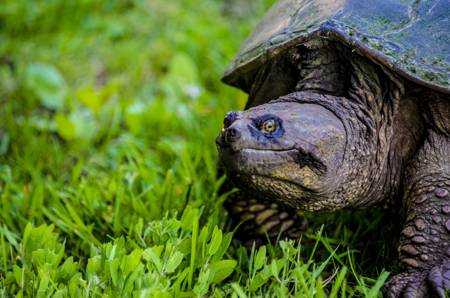
While alligator snappers are mostly found in the southern waters of the United States, the range of common snapping turtles spans from South America to Canada. Common snapping turtles are often found at higher altitudes than alligator snappers, and they inhabit shallow ponds, lakes, and streams.
Behavior
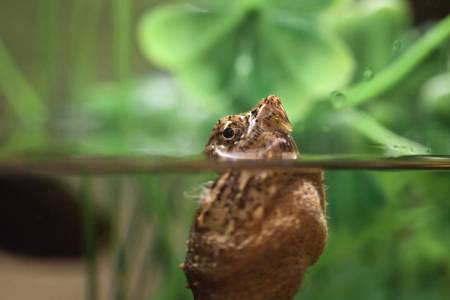
Both species are aquatic creatures that spend most of their lives in water. They can lie at the bottom of a water body for a very long time, stretching their neck for occasional breathing. Females come out of the water for nesting, and these turtles are occasionally found basking in the sun.
Most snapping turtles can spend three to four hours continuously underwater. Inside water bodies, they are mostly peaceful and harmless. However, their aggressive behavior is mainly seen when they are on land. Snapping turtles also produce hissing sounds when they feel threatened.
Frequently Asked Questions
What family do snapping turtles belong to?
Chelydridae
How heavy can an alligator snapping turtle get?
Up to 80 kilograms, with some even heavier
Why are snapping turtles so aggressive?
Their plastron (belly shell) is small and doesn't cover their whole underside, so they can't fully retreat inside their shell. This makes them snap instead.
How long can snapping turtles stay underwater?
Most snapping turtles can stay underwater for three to four hours continuously.
What is the conservation status of snapping turtles?
Common snapping turtles are Least Concern; alligator snapping turtles are Vulnerable.
Diet and Feeding Habits
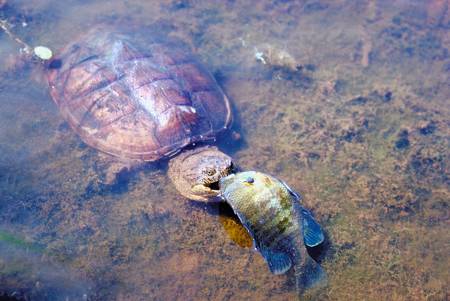
While common snapping turtles are omnivores that feed on both plant and animal matter, alligator snappers are mostly carnivorous. The diet of common snappers includes plant matter, worms, insects, snails, fish, tadpoles, frogs, small mammals, birds, and dead animals. Alligator snapping turtles feed on worms, molluscs, fish, water birds, aquatic rodents, small mammals, snakes, small alligators, and even other turtles.
Reproduction
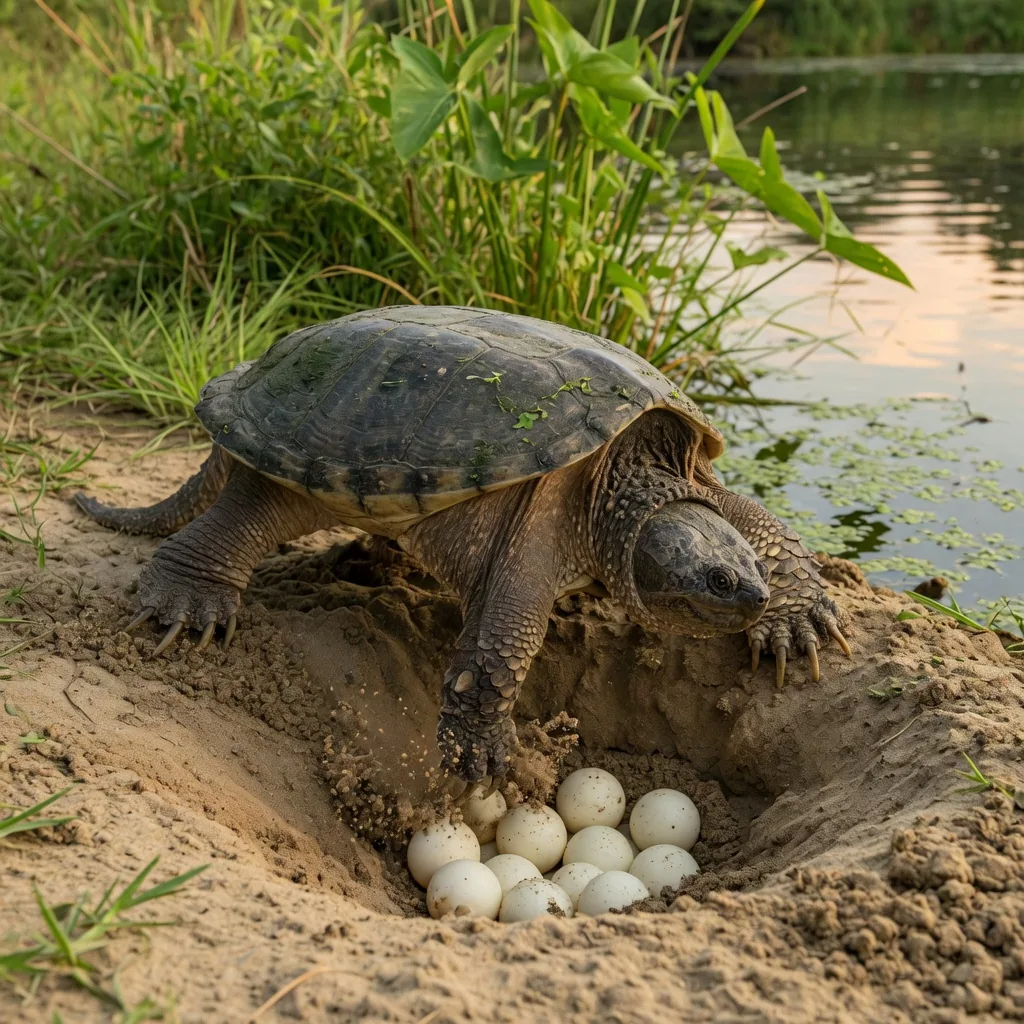
Mating takes place once a year, and the female lays around 10 to 50 eggs at a time. Though they spend most of their time underwater, female snapping turtles travel long distances to find a suitable spot for laying eggs. Once they find such a place, they dig nests, lay eggs, and return to the water.
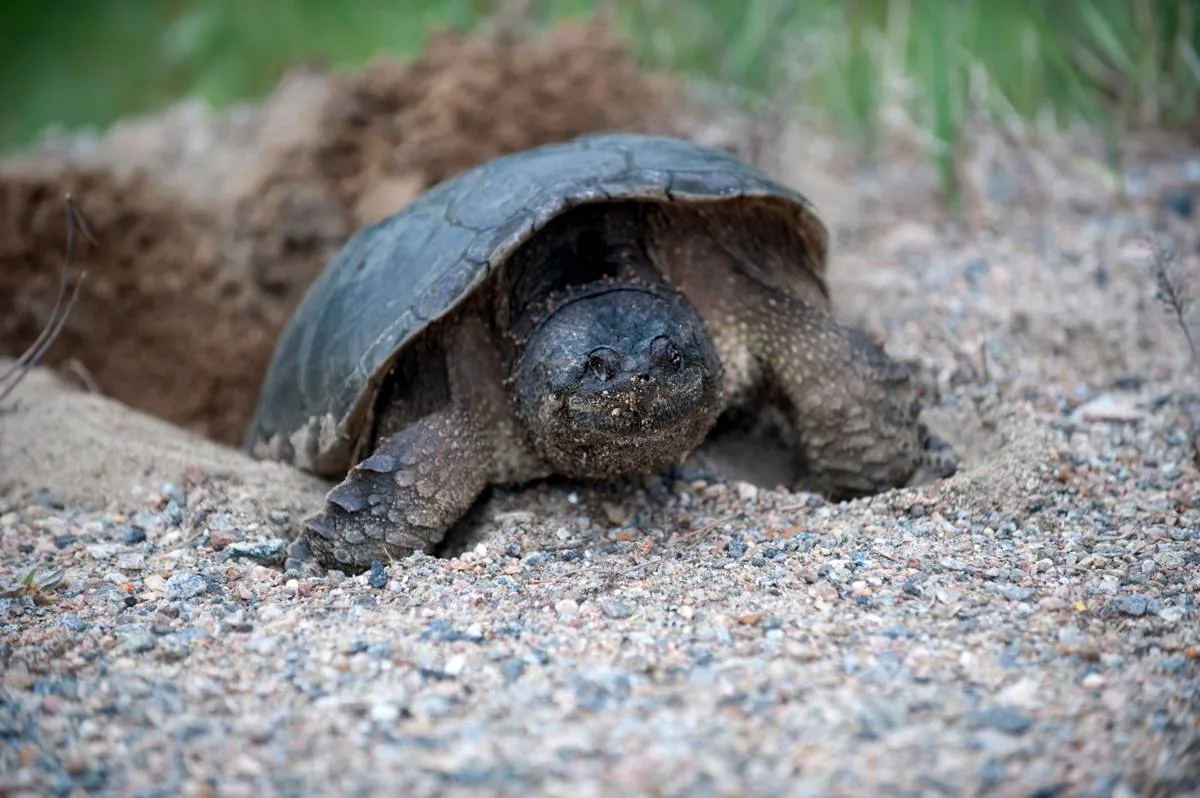
The creamy-white eggs take around three to four months to hatch. It is the temperature that determines the sex of the hatchlings. A temperature range of 70 to 72 °F produces both males and females. If the temperature drops below 68 °F, the hatchlings will be mostly females. Only males are produced if the eggs are incubated at a temperature range of 73 to 75 °F.
In short, snapping turtles are aggressive and are not considered good pets. You have to handle them with great care to avoid their bites. Apart from their aggressive nature, another challenge is their huge size. Improper handling can also injure the animal. As for conservation status, the common snapper falls under the 'LEAST CONCERN' category, while the alligator snapper is listed as a 'VULNERABLE' species.
Explore More Animals
 Different Types of Turtles: A Complete List With PicturesFrom giant sea turtles and ancient tortoises to tiny mud and softshell turtles: meet the 14 families and 300+ species of turtle, grouped by type, with photos.
 What Do Sea Turtles Eat? It's Not What You ThinkSea turtles, herbivores, carnivores or omnivores? The answer depends on the species. Discover the diet of all seven sea turtle species, plus a quiz, glossary,
 Where Do Crocodiles Live? Habitat, Species & Amazing FactsCrocodiles live near swamps, marshlands, brackish waters, lakes, and rivers across five continents. Meet all the species, learn where each one lives, and discov
 What Do Alligators Eat? It's Not What You ImaginedAn alligator's jaw can snap the neck of prey weighing more than 900 kg in one bite. Discover what alligators eat, how often they hunt, and the terrifying death
Glossary
| Term | What it means |
|---|---|
| Carapace | The hard upper shell of a turtle or tortoise, covering the back. |
| Plastron | The hard lower shell that covers a turtle's belly. In snapping turtles it is small, leaving the turtle unable to fully retract inside its shell. |
| Lingual lure | A worm-like pink appendage on the tip of the alligator snapping turtle's tongue, used to attract fish into its open mouth. |
| Carapace nodule | A small bump or knob on the surface of a turtle's shell or skin, providing texture and minor protection. |
| Omnivore | An animal that eats both plants and other animals. Common snapping turtles are omnivores. |
| Vulnerable | A conservation status meaning a species faces a high risk of extinction if conditions don't improve. Alligator snapping turtles are listed as Vulnerable. |

 Fun fact for today!Snapping turtles can't fully hide inside their shells, that's part of why they're so aggressive!