

Confusing Names
Various crab species that belong to the family Majidae are known as spider crabs, mainly because of their long legs. The term crab spider, by contrast, refers to several species of spiders, mostly those in the family Thomisidae. They are entirely different animals.
The name "spider crab" can refer to any of the various crab species in the family Majidae. This family contains a few hundred marine species. The dorsal section of their exoskeleton is longer than it is wide, and the shell is bristled. In some species the legs are notably long. However, crabs from certain other families are also called spider crabs, which is why the name can cause confusion.
General Facts
Most spider crabs have thick, rounded bodies. Their sizes range from 12 mm to 4 m. Both their shell and their legs are covered with setae, small hair-like structures. They are generally sluggish animals.
A spider crab is dimorphic: males and females look different. After mating, the female stores the sperm in her spermatheca. One mating is enough to fertilize several subsequent batches of eggs. Mostly, spider crabs are scavengers of dead flesh. Dead starfish and mollusks are a regular part of their diet. The habitat of spider crabs includes the Atlantic and Pacific regions. Many live on rocky substrata while others prefer muddy seafloor.
European Spider Crabs
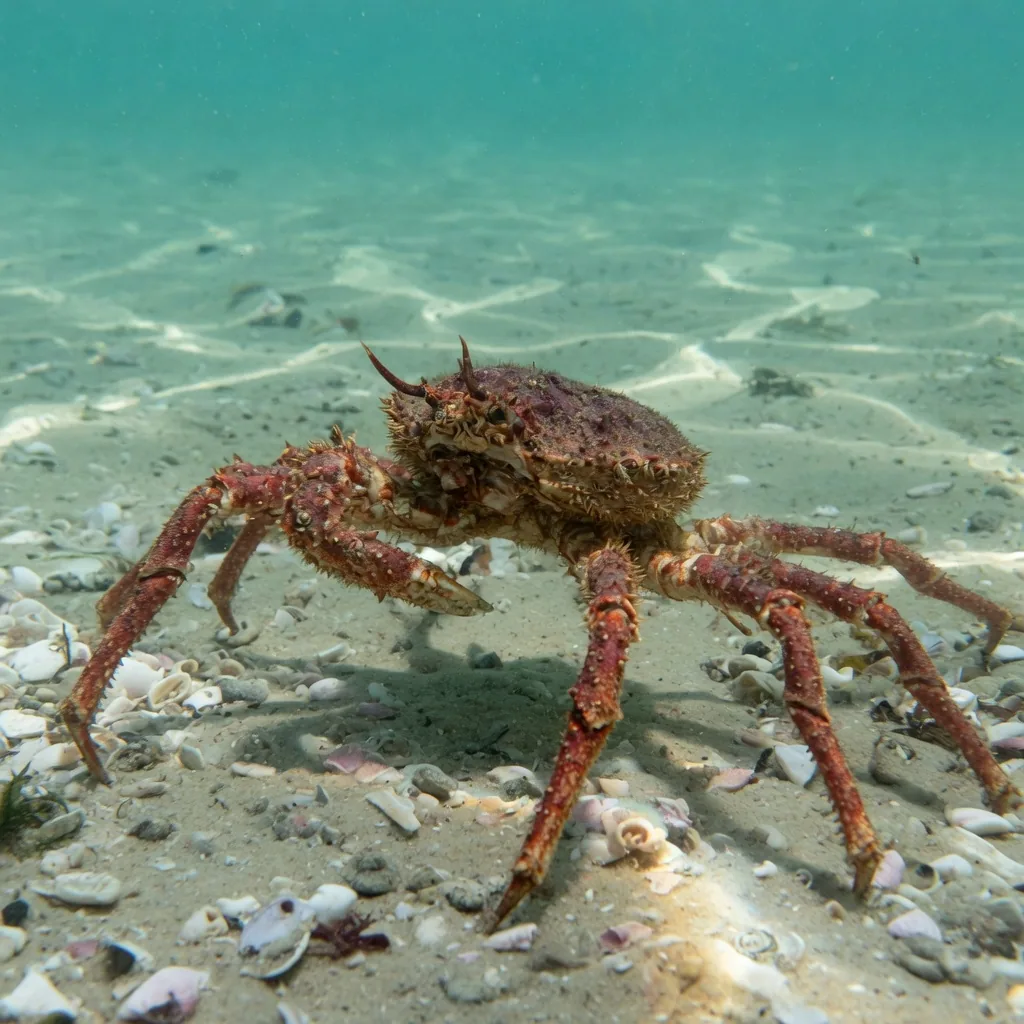
Their scientific name is Maja squinado, and they are also called spiny or spinous spider crabs. They belong to the family Majidae and genus Maja.
They mainly inhabit regions where the seabed is soft. These crabs are often found partially buried in the substrate. Adult males may also be found on rocky seafloor. European spider crabs live in the northeastern Atlantic and in the Mediterranean Sea.
European spider crabs live for around 5-8 years. They go through a larval stage and then a juvenile stage before becoming adults. Adults are omnivores, they adapt to eating whatever is available in their habitat. Marine algae form a major part of their diet.
When molting, European spider crabs form large groups as a defense against predators. Thousands of them are caught each year, mostly in the coastal regions of France.
A unique feature of Maja squinado is that it can mate even when the female's shell is still hard, whereas other crab species require the female to shed her shell (exuviate) before mating. Another striking characteristic is that European spider crabs migrate seasonally. They migrate in autumn, sometimes covering 100 miles in 8 months.
Take the Spider Crabs Quiz!
5 quick questions. How much do you know about these bizarre ocean creatures?
Japanese Spider Crabs
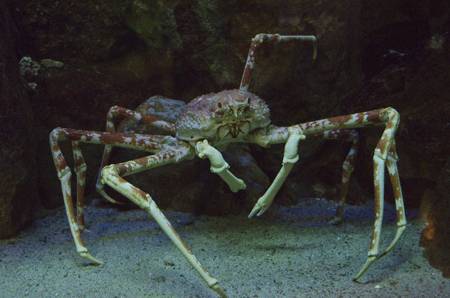
The Japanese spider crab, Macrocheira kaempferi, gets its name from a Latin phrase meaning "tall-footed crab." It was named after Engelbert Kaempfer, a German traveler and naturalist. These crabs belong to the superfamily Majoidea, family Inachidae, and genus Macrocheira. It can live for about 100 years, an amazingly long lifespan!
It has the largest leg span among all arthropods. Its body size is about 37 cm, and it can weigh up to 20 kilograms. It has an orange body with white spots on its legs. Compound eyes sit on the front of the head, with two small thorns jutting out from between them.
Females lay eggs during spring. They carry the fertilised eggs attached to their abdominal appendages until the eggs hatch. The larvae have round bodies with no legs. These crabs are omnivores. Sometimes they scavenge on dead animals; other times they scrape the ocean floor for plants or search for mollusc shells.
Japanese spider crabs are found in the Pacific Ocean near Japan. They commonly live as deep as 150-800 meters in the seabed. They are eaten, used for ornamental purposes, and also used in research. These factors have led to a decline in their population, and there is a growing need to protect them.
Portly Spider Crabs
The portly spider crab's scientific name is Libinia emarginata. It is also known as the common spider crab or the nine-spined spider crab. These are stenohaline crabs, they need stable salinity to survive. They belong to the family Epialtidae and genus Libinia.
Portly spider crabs are found in estuarial regions on the eastern coast of North America and in the Gulf of Mexico. They live at depths of around 160 feet, and sometimes down to 400 feet.
They have a spiny back, and their carapace is shiny and hairy. They are brown or yellow in color with white claws. The hair on the carapace helps them blend in with their surroundings, like other decorator crabs, they also cover their bodies with debris and small animals for extra camouflage.
These crabs do not harm humans. Like most other spider crabs, they are slow movers and scavengers. Females lay eggs between June and September. The eggs start out bright orange and turn brown as they develop. Unlike other crabs, the female can produce another batch of eggs within twelve hours of the first brood hatching.
Long-legged Spider Crabs
Their scientific name is Macropodia rostrata. They also go by the name long-legged crabs. They belong to the family Inachidae and genus Macropodia.
Long-legged spider crabs cover their bodies with algae for camouflage, which gives them a hairy appearance. Their bodies are grayish, yellowish, or reddish brown. They are slow-moving creatures, found in Europe and western Africa at depths of up to 164 feet. They are mostly found on kelp. They reproduce between May and January.
Great Spider Crabs
The great spider crab's scientific name is Hyas araneus. It belongs to the genus Hyas and family Oregoniidae. Great spider crabs are reddish brown, with a pear-shaped carapace. The extension of the carapace that projects between their eyes splits into two parts. These crabs are found in the Atlantic regions and in the North Sea.
Leach's Spider Crabs
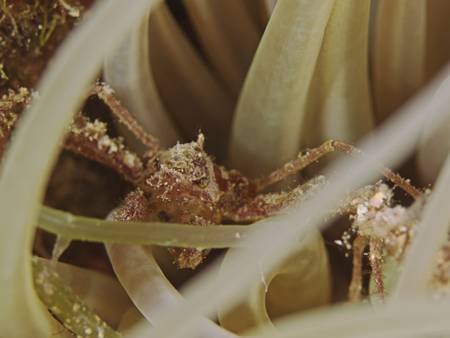
Leach's spider crab's scientific name is Inachus phalangium. It belongs to the family Inachidae and genus Inachus. These crabs are found in the north-eastern Atlantic Ocean and the Mediterranean Sea. Their carapace is brownish yellow. They share a commensalism relationship with the sea anemone Anemonia sulcata, the crab benefits from the anemone's protection without harming the anemone.
West Indian Spider Crabs
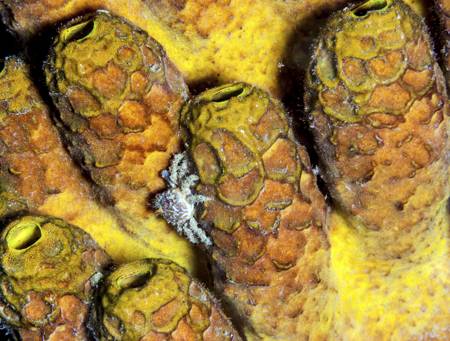
Their binomial name is Mithrax spinosissimus. They are also known as channel clinging crabs, coral crabs, reef crabs, or spiny spider crabs. They belong to the family Majidae and genus Mithrax. West Indian spider crabs are found in South Florida and the Caribbean Islands. They have a reddish brown carapace and purplish gray claws. Their legs are covered with spines and nodules, and their claw tips are blunt. Not much is known about their diet, but they are believed to be omnivores.
Explore More Animals
 What Do Crabs Eat? Diet, Body, Food & Amazing Crab FactsWhat do crabs eat, and what makes them so strange? Explore the crab's chewing stomach, body plan, diet, how humans eat crabs, and the weirdest crabs in the ocea
 Meet the World's Largest Terrestrial ArthropodsCoconut crabs are the biggest land arthropods on Earth, tree-climbing, coconut-cracking giants. Learn their life cycle, diet, adaptations, names, and why they
 Gripping Facts About the Largest Spiders in the WorldTwo spiders share the title of world's largest: the Goliath birdeater (heaviest) and the giant huntsman (longest leg span). Discover the facts, quiz, and more.
 Things You Might Not Know About Water SpidersWater spider (Argyroneta aquatica) is the only spider that lives underwater. It builds a silk diving bell filled with air, a bubble home where it eats, molts,
Sheep Crabs
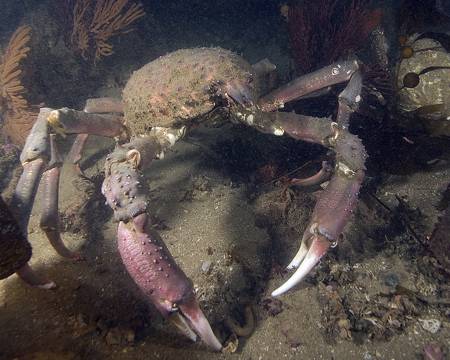
Sheep crab is the common name for Loxorhynchus grandis. These crabs belong to the family Epialtidae and are members of the California spider crabs. They have oval-shaped bodies covered with spines and bumps. Males have stronger claws and longer legs. They are found in the shallow waters off the California coast.
Why Spider Crabs Matter
As you can see, many spider crabs share the family name Majidae, but some come from other families and are still called spider crabs. The name covers a wide variety of species. Some spider crabs are edible, while others are used for ornamental purposes. They are caught and farmed on a large scale. These arthropods need to be protected, most of them are important scavengers of the marine environment, cleaning up the ocean floor and recycling nutrients.

 Fun fact for today!The Japanese spider crab can live for about 100 years, longer than most humans!