

Diurnal Dudes
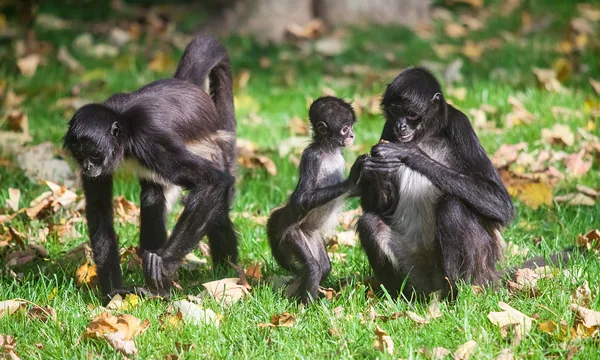
Spider monkeys are diurnal, which means they are active during the day. Every morning, these monkeys split into groups or troops of 25-40 and go looking for food. On days when food is not enough, they split into smaller groups, since individual trees have only a limited amount of fruit. This splitting and rejoining is called fission-fusion foraging.
Strongest Tail in the Animal Kingdom
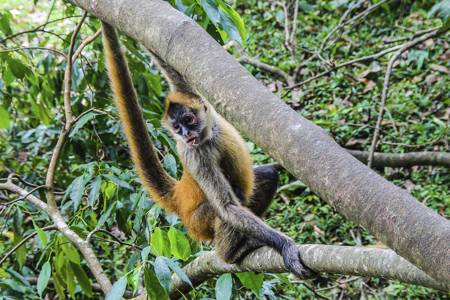
Spider monkeys possess a prehensile tail that acts as nothing less than a fifth limb. It is longer than the rest of the body and can measure around 90 cm in length. The tail is strong enough to support more than the animal's body weight, handy when you need to dangle from a branch to reach a distant fruit.
Selecting Sleeping Trees
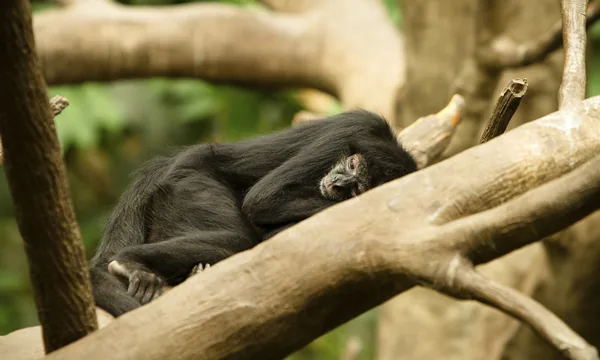
Spider monkeys choose special trees for their slumber. They sleep in the forks of branches, so that if a predator comes at night they will be alerted by the slightest movement. The monkeys gather together at the sleeping site at about dusk.
Who Needs a Thumb?
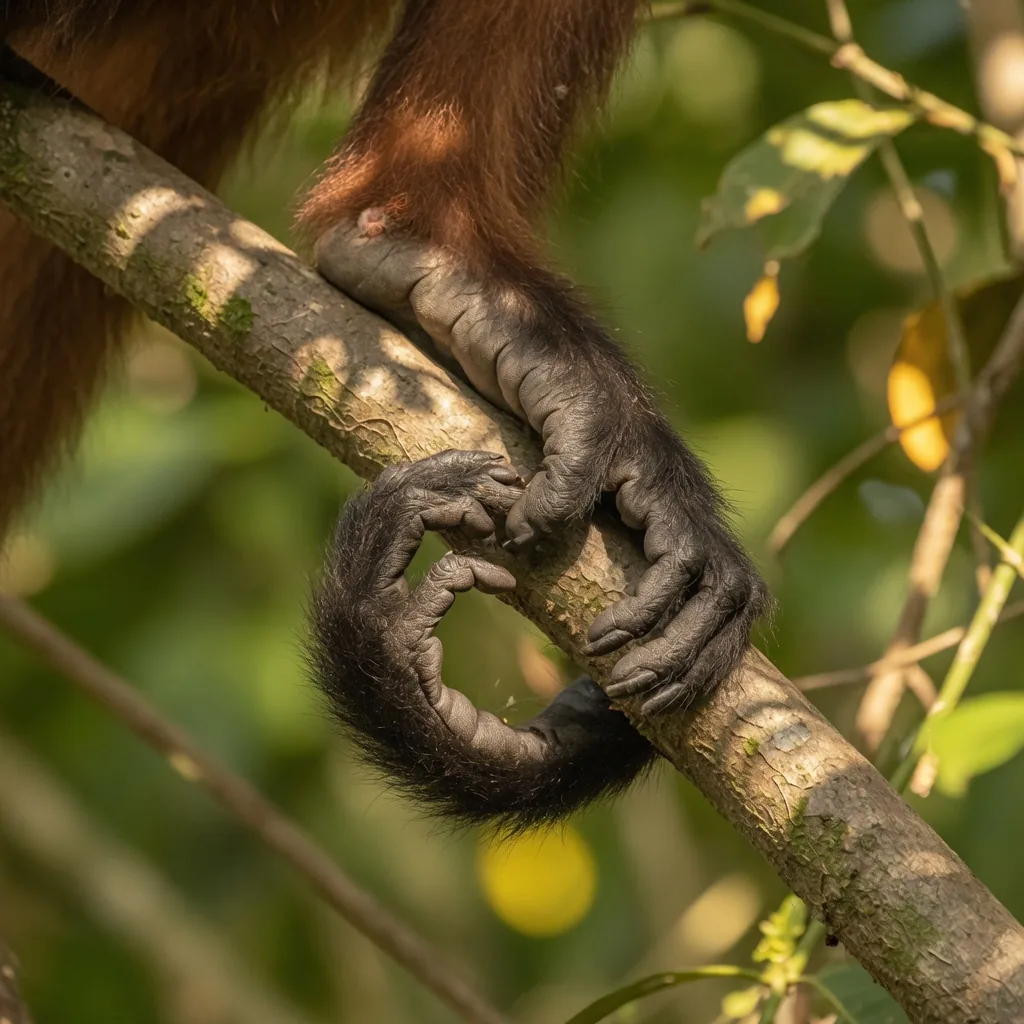
Spider monkeys do not have a thumb. They have only four fingers, which are curved to resemble a hook. This hook-like shape helps them grasp branches very well. The absence of a thumb is an adaptation, not an imperfection, it actually makes grasping branches easier. Because the thumb is missing, their grooming isn't as thorough as in other monkeys, but their tree-swinging is second to none.
Take the Spider Monkey Quiz!
5 quick questions. How much do you know about these jungle acrobats?
Raising the Young
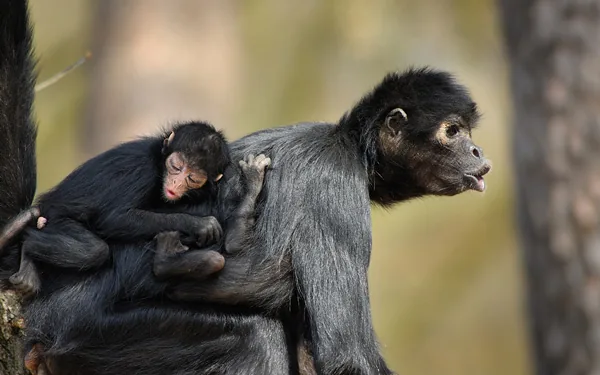
Males play no role in raising the young, the sole responsibility lies with the mother. The baby clings to the belly of the mother for about 4-5 months, then is transferred to her back for another 6 months. The mother cares for the baby until it reaches 3 years of age.
The fission-fusion foraging pattern means spider monkeys move between several different groups throughout their lives. When these groups meet, the monkeys greet each other with hugs, which help cool down any aggression and keep the peace in the monkey community.
Frequently Asked Questions
Why are spider monkeys called spider monkeys?
Their long legs, long arms, and extra-long prehensile tail make them look like a giant spider when hanging from branches.
Do spider monkeys have thumbs?
No, spider monkeys have no thumbs. Their four fingers curve into a hook shape that is ideal for gripping and swinging through trees.
How long is a spider monkey's tail?
Around 90 cm (longer than the rest of the body) and strong enough to support more than the animal's body weight.
What do spider monkeys eat?
About 90% of their diet is ripe fruits and seeds. They also eat leaves, nuts, flowers, bird's eggs, insects, and tree bark.
Are spider monkeys endangered?
Several species of spider monkey are classified as Endangered or Critically Endangered due to habitat loss and hunting.
Communication Calls
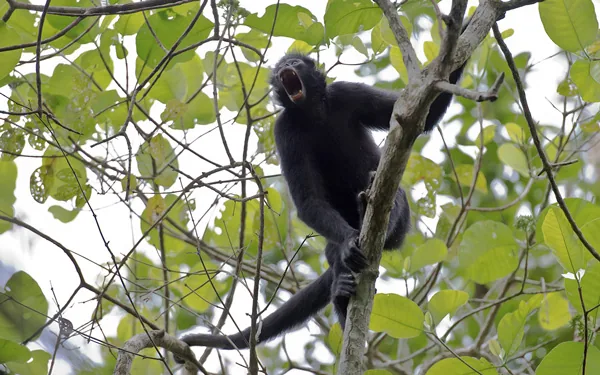
Spider monkeys bark when threatened. They bark in the direction of the threat, warning others to stay away. They also break off branches and throw them down to scare off predators or intruders. They can also be heard whining like horses, screaming, and making sobbing noises.
Fruity Food
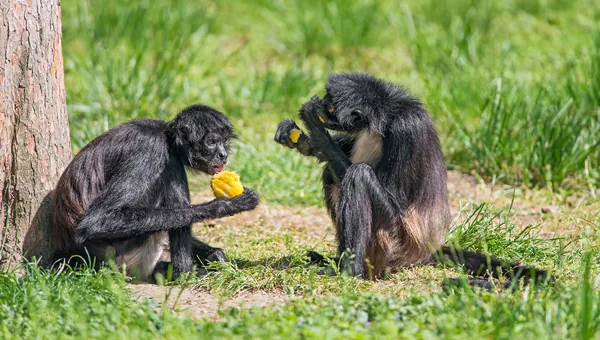
About 90% of a spider monkey's diet consists of ripe fruits and seeds. Their tails help them hang from branches and reach out for fruit. Spider monkeys are also important seed scatterers in the forest, and in this way they help with pollination. They also eat leaves, nuts, flowers, bird's eggs, insects, and the bark of trees.
Arboreal Acrobats
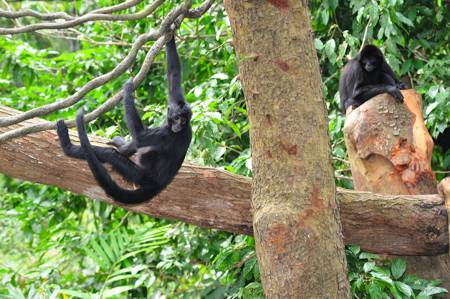
Spider monkeys spend most of their time in the trees. They prefer undisturbed, tall forests where they can find enough food and sleep safely in the canopy without fear of predators. They use all four limbs and their strong tails to swing through the trees.
This does not mean they never come down. Spider monkeys do walk on the ground, moving on two legs. Their tail helps them keep balance while walking upright.
Explore More Animals
 Undeniably Interesting Facts About MonkeysIf a monkey yawns at you, better let it be, it's most likely angry. Discover fascinating monkey facts: Old vs New World, the loudest land animal, the world's t
 Monkey Habitat: Where Do Monkeys Live?There are more than 260 extant monkey species known today. Discover where monkeys live (from Amazon rainforests to Asian mountains) plus habitat facts, a quiz
 A Complete List of All Types of MonkeysFrom the pygmy marmoset (5 inches tall) to the giant Mandrill: discover every major type of monkey (New World and Old World) with photos, fun facts, and a qui
 Animals With Prehensile Tails: Gripping Facts and PicturesThe term 'prehensile' is derived from the Latin word 'prehender', which means 'to grasp'. Discover which animals use their tails to grip, hang, and climb, from

 Fun fact for today!A spider monkey's tail can measure around 90 cm (longer than the rest of its body) and is strong enough to hold the monkey's full weight!