

We're all aware of the famous cobra with its threatening hood. There are 270 types of cobras that have been identified as of today. One such type is the spitting cobra! Most of us are familiar with the uniqueness of the spitting cobra. When we think of the spitting cobra, we picture the cobra spitting out a stream of venom. The venom sprayed by the spitting cobra is only a defense mechanism, and not meant to catch prey. However, the venom is used to kill prey via bites. Spitting cobras relish birds, lizards, carrion, and other small snakes.
According to several studies, this spitting mechanism is actually an adaptation that protects spitting cobras from predators larger than themselves, including man. When threatened, these cobras eject a spray of venom into the eyes of their predator with incredible accuracy. The spray, although not fatal, causes temporary blindness. If not treated, it can result in permanent blindness. Spitting cobras are intriguing reptiles. Let's have a closer look at them.
A Misleading Name
The name "spitting cobra" is actually misleading. It makes you think the cobra spits venom the way you or I might spit water. But the truth is that these cobras spray venom into the face of the predator. The venom is not ejected by puckering the lips and blowing outward. Instead, it is sprayed out in distinctive patterns from the holes in the front of the fangs.
Venom-Spraying Fangs
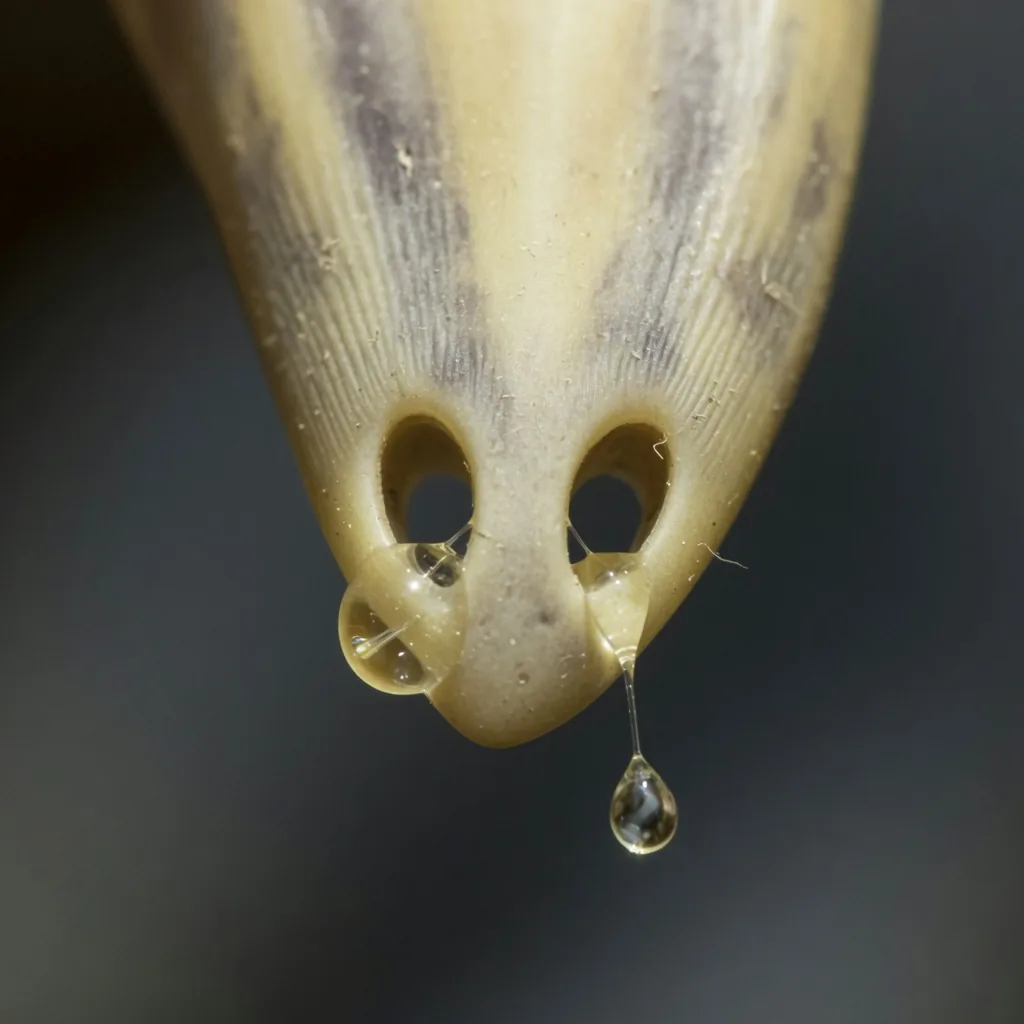
Spitting cobras eject venom from their fangs as a defensive response when they encounter a predator. The muscles of the venom sacs contract and force the venom out via the holes at the tip of the fangs. The holes in the fangs are narrow and teardrop-shaped, which allows a narrow stream of venom to be sprayed at high speed. The tinier and rounder the hole, the higher the speed of the sprayed venom, and the better the accuracy. It's this venom spray that makes these spitting cobras one of the most feared snakes. They can spray their venom to a distance of 6 feet and also have the ability to spray venom over 40 times in quick succession.
Why Do Spitting Cobras Spew Venom?
Spitting cobras are not particularly muscular and do not have the strength to squeeze and kill large prey. Their fangs are small, and if they bite, they need to hold on to their prey for a long time before it dies. If they bite a large predator, they will have to bite it and wait till it dies. In this struggle of holding on to larger prey, if the prey gets loose, it can kill the spitting cobra, even after receiving the venom. This is because the venom takes time to work. So it is important for the spitting cobra to disable its predator as quickly as possible. This it does by blinding it.
Spitting Cobras Aim for the Eyes
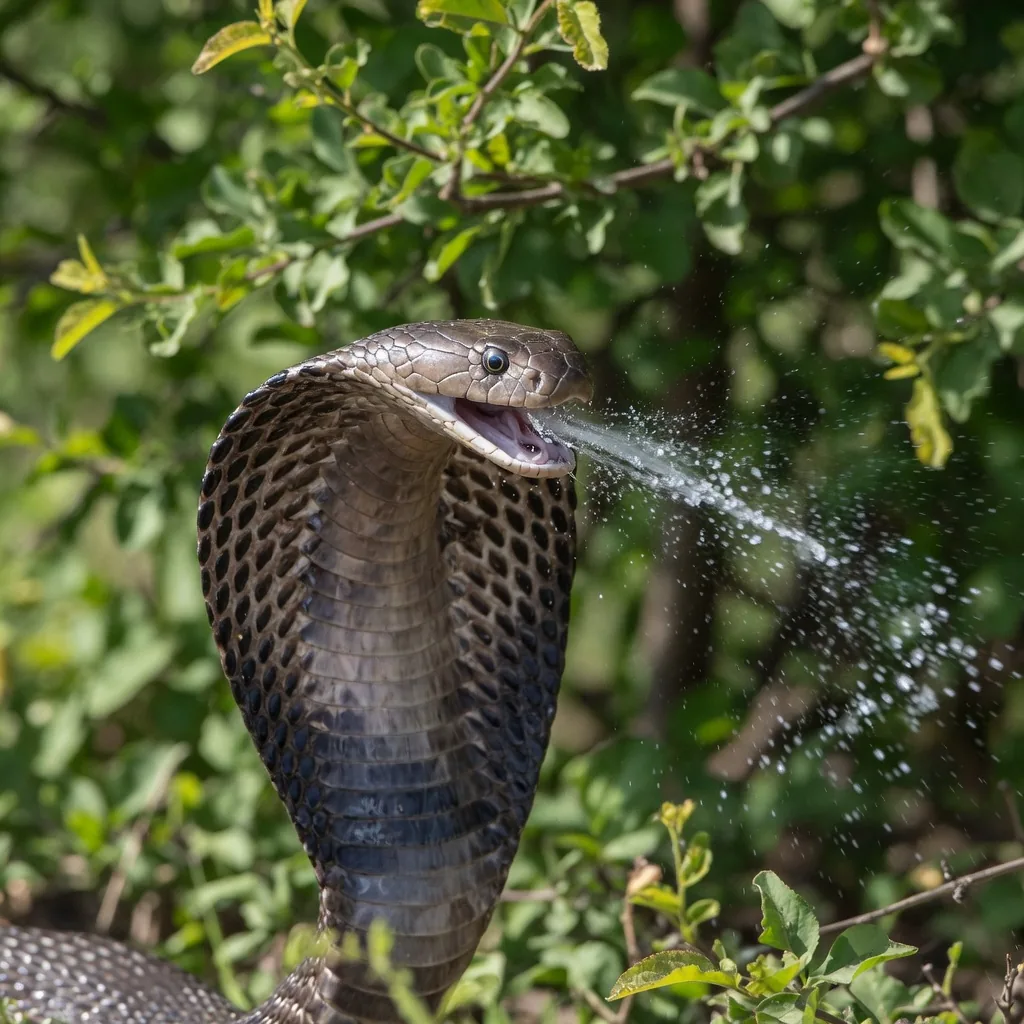
Research conducted by Katja Tzschätzsch, a research student at the University of Bonn in Germany, revealed that spitting cobras aim at moving faces. According to her findings, the spitting cobras made no efforts to spray venom at hand movements. They aim for the eyes. Once the venom hits the eye, the neurotoxins in the venom cause a condition of chemical conjunctivitis, which eventually blinds the victim temporarily. The venom of a spitting cobra has no effect if it falls on the skin. It has to fall into the eyes for effect, which is why the cobra aims at the eyes.
Venom Is Sprayed in Geometric Patterns
Research conducted by Dr. Bruce Young and his colleagues, Melissa Boetig and Dr. Guido Westhoff, at the University of Massachusetts Lowell, revealed that the venom sprayed from the fangs of the spitting cobra is not a single stream hitting only one spot. Instead, it is sprayed in geometric, oval shapes. These shapes or patterns are produced by certain head and neck movements of the spitting cobra just before ejecting the venom. When the cobra aims at the eye, it's actually anticipating the head movements of the victim and sprays a jet of venom in geometrical patterns across a plane of probability, not at one particular spot. The geometric oval pattern maximizes the chances of hitting the eye.
Take the Spitting Cobra Quiz!
5 quick questions. Can you ace them all?
How Poisonous Is the Venom?
Venom sprayed by spitting cobras will not harm the skin. However, if it comes into contact with the eyes it can cause temporary or permanent blindness, along with severe pain. The venom is a neurotoxic, tissue-destroying, blood-cell-destroying venom stored in the fangs. As the venom hits the predator's eyes, the cobra gets its chance to escape. When the neurotoxic venom comes in contact with the eyes, besides causing a stinging sensation, the venom gets completely absorbed by the capillaries of the conjunctiva in the eyes. This leads to irritation in the cornea, followed by tissue damage and temporary blindness. Extensive tissue damage can lead to permanent blindness. If the venom happens to enter the bloodstream via wounds or cuts, it may result in systemic problems.
Frequently Asked Questions
How far can a spitting cobra spray its venom?
Up to 6 feet (about 1.8 meters).
Does spitting cobra venom harm skin?
No, it is harmless on skin but causes blindness if it enters the eyes.
How many species of spitting cobra are there?
12 species: 7 African and 5 Asian.
Which is the largest spitting cobra?
Ashe's spitting cobra (Naja ashei), reaching up to 9 feet in length.
Why do spitting cobras aim for the eyes?
Venom on skin does nothing, but in the eyes it triggers chemical conjunctivitis and temporary blindness, disabling the predator without a dangerous physical bite.
Species of Spitting Cobras
12 species of spitting cobras have been identified so far, with seven coming under the African category and five under the Asian category. Naja nigricollis, Naja nubiae, Naja pallida, Naja ashei, Naja katiensis, Naja mossambica, and Naja nigricincta come under the African spitting cobra category. Naja sputatrix, Naja sumatrana, Naja philippinensis, Naja samarensis, and Naja siamensis come under the Asian spitting cobra category.
World's Largest Spitting Cobra
Ashe's spitting cobra (Naja ashei), also commonly known as the large brown spitting cobra, is the largest species of spitting cobra in the world today. Native to the African continent, this giant spitting cobra measures about 4 to 6 feet in length. However, the largest one ever found (in Kenya) was almost 9 feet in length. Its venom is considered to be the most poisonous of all spitting cobras, and it has the capacity to inject twice the amount of venom that any other snake can inject in one bite. One bite has enough venom to kill 15 to 20 people.
The venom of a spitting cobra is not as venomous as that of the King Cobra, but it's still quite deadly. If you are dealing with spitting cobras, make sure you have a face mask over your glasses and a full body suit on. If the venom falls on open wounds, it can prove deadly. So take all possible precautionary measures.
Explore More Animals
 Things You Never Knew About Cobras, the Snakes with HoodsThe cobra is one of the most venomous snakes found in the world. Discover cobra pictures, detailed species information, hood anatomy, venom facts, and identific
 Insanely Killer Facts about the Red Spitting CobraA brilliant display of colors is a characteristic feature of the red spitting cobra. However, be warned! When threatened, it spits venom which is aimed at the a
 Top 10 Deadliest Snakes That'll Chill You to the CoreAccording to the WHO, approximately 5 million people get bitten by snakes every year. Which snakes are truly the deadliest? Meet the top 10, ranked by toxicity
 Mind-blowing Facts About Snakes That Will Leave You DumbfoundedThere's a lot more to snakes than most of us know. They are as intriguing as they are scary. An insight into the world of these fascinating reptiles proves why.
Glossary: Spitting Cobra Key Terms
| Term | What it means |
|---|---|
| Neurotoxin | A poison that attacks the nervous system. Spitting cobra venom contains neurotoxins that disrupt the eyes and can cause blindness. |
| Chemical conjunctivitis | Painful inflammation of the eye caused by a chemical, in this case, venom. The eye becomes red, swollen, and temporarily unable to see. |
| Venom sac | A pouch behind the cobra's head that stores venom. Muscles squeeze the sac to force venom along channels into the hollow fangs. |
| Rectilinear movement | The straight-line, caterpillar-like crawling motion many heavy-bodied snakes use, contracting belly muscles to grip the ground. |
| Elapidae | The snake family that includes cobras, mambas, and sea snakes, mostly with fixed front fangs and powerful neurotoxic venoms. |
| Adaptation | A feature that evolved over generations because it helped an animal survive. The spitting mechanism is an adaptation that protects cobras from larger predators. |

 Fun fact for today!A spitting cobra can fire venom up to 6 feet, and repeat the shot over 40 times without stopping!