

Squid and octopuses are cephalopods, members of the molluscan class Cephalopoda. This group is thought to be the most intelligent invertebrates around. Both creatures live in salt water and belong to the kingdom Animalia, and they share the same phylum, class, subclass, order, and superorder. Their blood is blue because of the copper in it, and they each have three hearts. They can survive in both tropic and temperate zones.
So if they are such close cousins, what really sets them apart? The chart below lines up the biggest differences side by side. You can also dig deeper on each animal in our guides to octopus facts for kids and the many types of squids.
| Feature | 🦑 Squid | 🐙 Octopus |
|---|---|---|
| Body shape | Long body with a triangular head and two side fins. | Round, soft head with no skeleton and no fins. |
| Arms | Eight arms plus two longer tentacles with hooks or sucker rings. | Eight long arms with two lines of suckers, and no extra tentacles. |
| Size | From 1 cm to around 40 feet; the giant squid reaches 20 meters and over 1,000 pounds. | From 1 cm to more than 5 meters; the Giant Pacific octopus can weigh up to 600 pounds. |
| Home | The open sea, alone or in groups, at many different depths. | Coral reefs, the ocean floor, and caves, usually alone. |
| Inside the body | A stiff inner support called a pen. | No inner support at all, completely soft. |
| On the menu as | Calamari. | Sushi, takoyaki, and akashiyaki. |
Appearance
An octopus is a soft-bodied creature, because it has no skeleton. It has two eyes, eight long arms with suckers, a round head, a bilaterally symmetric body, and a mantle. It also has two lines of suckers on its arms that help it taste its food. An octopus has a beak and a tongue, called a radula, which let it open and bore into the shells of its prey. Once it breaks into a shell, it injects a paralyzing venom into the prey. Its mouth sits at the center of its limbs.
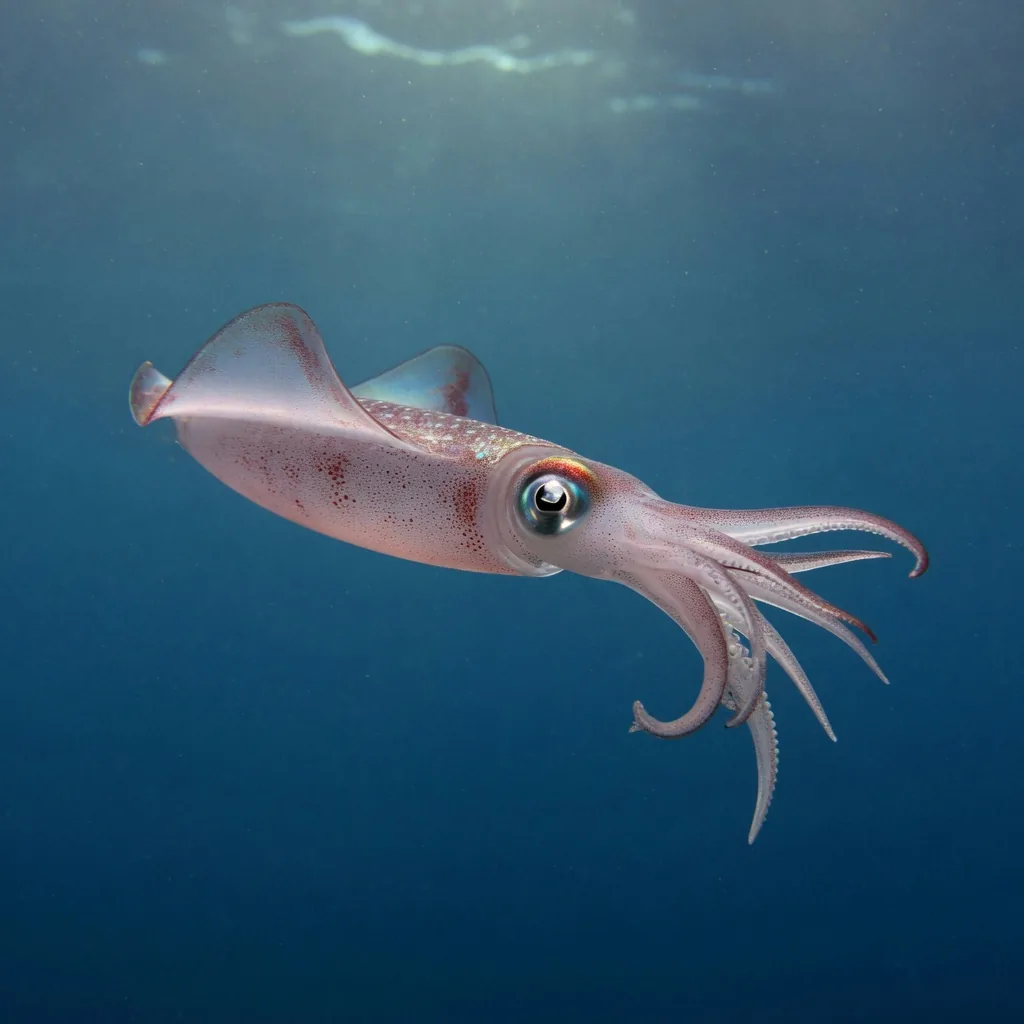
Long and torpedo-shaped, with two fins and a stiff inner pen, built for swimming in the open sea.
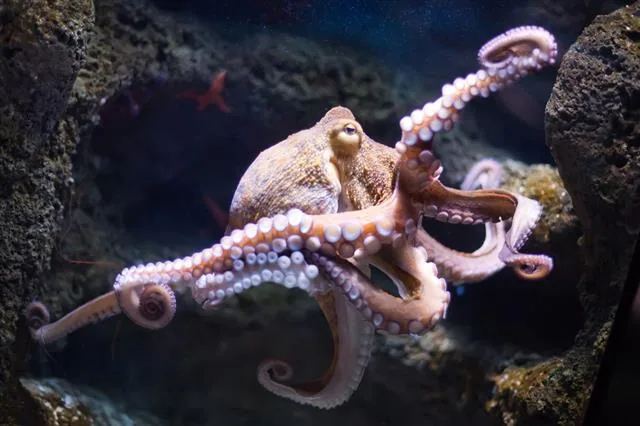
Round, soft, and boneless, with eight arms, perfect for squeezing into reef caves and holes.
These fascinating sea animals vary in length from 1 cm to more than 5 meters long. The Giant Pacific octopus lives only four to five years, yet it can weigh up to 600 pounds. In general octopuses have a short lifespan, from about 6 months to 5 years.
A squid has a soft body like an octopus, but it is more firm and bendy. It has a triangular-shaped head, eight arms, and a mantle. It also has two head fins and a pair of tentacles tipped with hooks, or sucker rings, or both. The body sits inside the mantle, which has two side fins, and the squid uses these fins to swim. Inside its body is a stiff support called a pen.
Squid vary in size from 1 cm to around 40 feet, and they live for about a year. Most do not grow longer than 60 centimeters. The giant squid, however, can grow up to 20 meters and weigh more than even 1,000 pounds.
Habitat
Octopuses thrive in many places, coral reefs, pelagic (open) waters, and the ocean floor. Most of the time they live inside caves or holes on the sea floor. They like to keep to themselves; in short, they are solitary creatures.
Octopuses have several ways to defend themselves against predators. They can use camouflage, startling color displays (called diematic displays), a cloud of body ink, fast swimming, and a quick escape to stay safe.
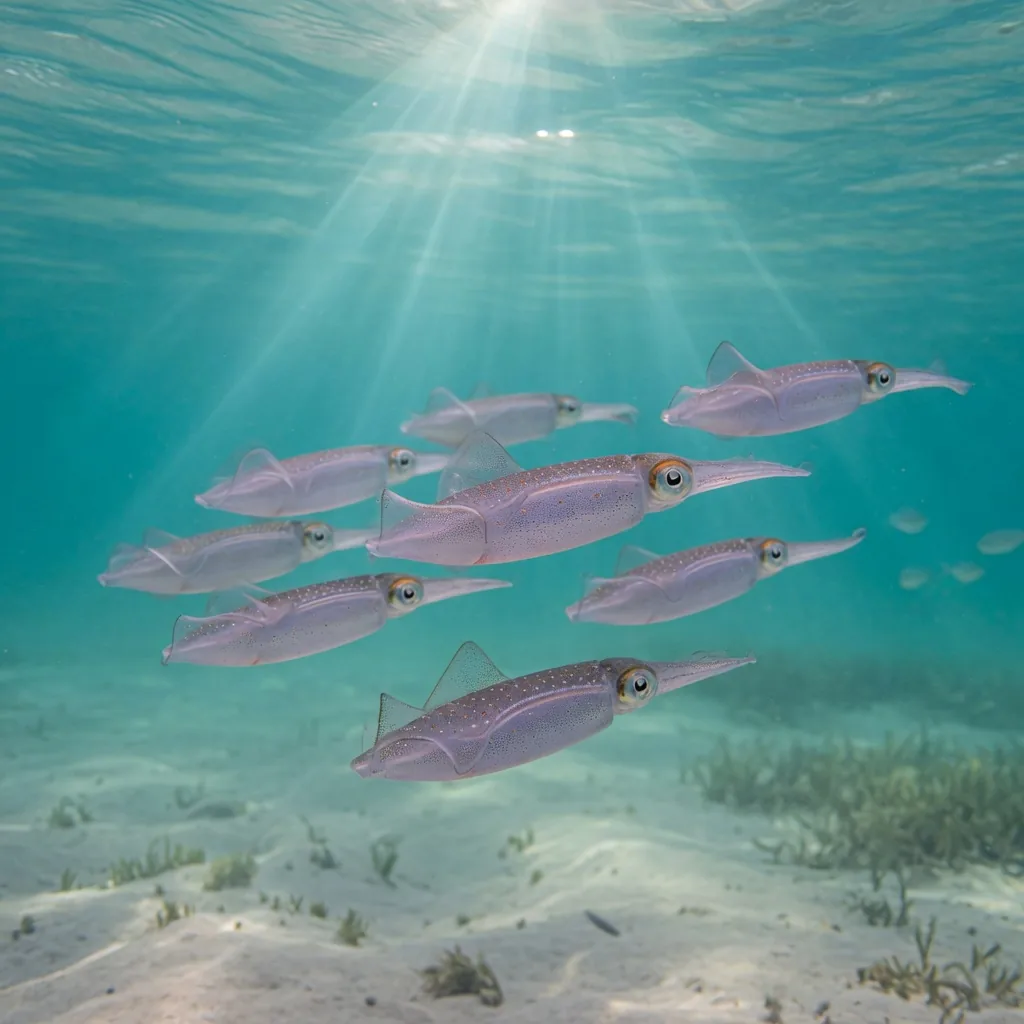
Squid like to live in the open sea. They thrive at many different depths, and their exact home depends on the species. A squid may live alone like an octopus, but most of the time squid stay in groups when they are young. Some become solitary as they age.
To protect themselves, squid change color to blend in with the background around them. Their skin is covered in tiny color cells called chromatophores. Sometimes they release a black mucous ink from a sac to confuse their predators.
Diet
An octopus eats crustaceans that live at the bottom of the sea, including crabs, whelks, small fish, molluscs, clams, and lobsters. Octopuses are skilled hunters, and they can catch almost anything in the waters they live in. Their head and arms also help them defend themselves well against enemies.
The supple arms of an octopus grab and pierce the shells of its prey, then release a venom that makes the prey go limp so the octopus can eat it. The octopus also releases salivary enzymes that loosen the meat from the inner shell, so it can devour it.
Squid feed on shrimp, crabs, and small fish. They are clever, sneaky hunters that feed on other ocean creatures, see exactly what squid eat for more. They use their tentacles to capture prey. At the end of each tentacle is a club covered in suckers that stick onto the prey. The squid then pulls the prey in with its limbs and draws it into its mouth.
Squid or Octopus? Take the Quiz!
5 quick questions. Can you tell these clever cousins apart?
Intelligence
Octopuses and squid are highly intelligent invertebrates. They use complex reasoning to find and hunt their prey, and their large brains can store and process complex information. Scientists have found that octopuses can solve mazes and remember the solutions. They solve problems readily, learn quickly, and can even remember what they have learned.
Octopuses have highly developed sensory organs. They have taste receptors all over their bodies that are 10 to 10,000 times more sensitive than ours. Their suction cups carry chemo receptors, so they can taste whatever they touch. Sensors in their arms tell them when their arms are stretched out. Octopuses and squid also have high-quality vision, though they may be color blind, and they smell through pits below their eyes.
Locomotion
Octopuses can crawl and swim. Their fastest way to move is jet propulsion, followed by swimming and then walking. They crawl using their arms over both soft and hard surfaces.
A squid has a siphon in its mantle that pushes out water and waste. The squid uses this jet propulsion to move. It pumps water out of the mantle as it shoots through the sea, and that is also how it breathes in.
Frequently Asked Questions
Are squid and octopuses the same kind of animal?
They are close cousins. Both are cephalopods in the molluscan class Cephalopoda, but a squid and an octopus are different animals with different bodies and habits.
How many hearts does a squid or octopus have?
Three each. Their blood is blue because it carries copper instead of iron.
What is the quickest way to tell a squid from an octopus?
Look at the body. A squid is long with a triangular head and two side fins; an octopus has a round, soft head and eight arms with no fins.
How big can a squid or an octopus get?
The giant squid can grow up to 20 meters and weigh more than 1,000 pounds. The Giant Pacific octopus can weigh up to 600 pounds.
Is calamari squid or octopus?
Calamari is the menu name for squid. Octopus shows up in dishes like sushi and takoyaki instead.
Reproduction
The male octopus uses a special arm called a hectocotylus to carry packets of sperm (spermatophores) from his reproductive tract into the female's mantle cavity. After laying her eggs, the female guards them in her den, or even builds walls to close off the cave until they hatch. The male dies a few months after mating, while the female can keep the sperm alive inside her for weeks until the eggs are ready. After fertilization, the female lays around 200,000 eggs.
The male squid fertilizes the female using an arm that passes the sperm to a special spot near the female's beak. Squid usually reproduce in schools, and their eggs are attached to seaweed or sometimes to the sea floor. The eggs are usually seen in clusters inside an egg case. The male dies a short time after mating, and the female dies once the eggs are laid.
As Food
Octopus is used in Japanese foods like sushi, takoyaki, and akashiyaki. In Greek restaurants, a pickled octopus called Octopothi is served. In Korea, some kinds of octopus are eaten uncooked. Miruhulee, a Maldivian dish, is made from octopus tentacles fried with curry leaves. In Portugal, octopus is eaten with potatoes and olive oil. It is a popular food in Spain, Greece, and North and West Africa, and it is popular in Mediterranean and Hawaiian cooking too.
The giant squid are eaten by sperm whales, while smaller squid are food for albatrosses, fish, and humans. On a menu, squid is known as calamari. In black pasta, squid ink is used to color the dish.
Explore More Animals
 What Do Squid Eat? The Diet of One of the Ocean's Deadliest HuntersSquid are fierce hunters with a parrot-like beak and three hearts. Discover exactly what squid eat (from tiny plankton to whales and sharks) and how they catc
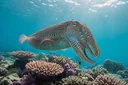 Truly Incredible Facts about CuttlefishThe cuttlefish is not a fish. In fact, it is a mollusk, and is well-known for its chameleon-like behavior. Discover the anatomy, camouflage, ink, diet, mating,
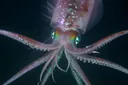 Types of SquidsThe deep, blue, murky depths of the world's oceans are home to many different, fascinating and downright weird animal species. Amongst the weird genre are squid
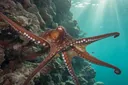 Octopus Facts for Kids: Eight Arms, Blue Blood, and Big BrainsThe octopus is an intriguing creature of the seas that derives its name from a Greek word which means eight-footed. Discover fascinating octopus facts for kids:
Health Benefits
Octopus is a low-calorie seafood that contains protein. It is also a good source of iron, potassium, phosphorous, and selenium. It provides important vitamins such as vitamin A, vitamin B, and vitamin C, plus some omega-3 fatty acids, which help lower the chance of heart disease, cancer, and depression. Octopus was also found to boost the immune system and help brain development in children.
Squid contains copper, which covers most of what the body needs. It can help with arthritis and the damage caused by free radicals. Squid also contains phosphorous and vitamin B12.
Even after all this, there is still a great deal about squid and octopuses that we do not know. Researchers keep digging to discover more, so that we learn new and interesting facts about these amazing creatures.

 Fun fact for today!Both squid and octopuses have three hearts, and their blood is blue, not red!