

Discussing starfish in the classroom is the best way to let students learn about this marine animal.
It is fun presenting facts on the starfish because children are always interested in learning new things. The starfish is the kind of animal that can keep them engaged for a long time, as there are at least 2,000 types of it known to man. Marine scientists have named one well-known species Protoreaster nodosus. A starfish has no scales, fins, or gills like other fish use to get oxygen from water, and it can't actually swim. For this reason, even though it has 'fish' in its name, marine biology does not consider it a fish.
Details about the Starfish
The starfish is also known as the 'Sea Star', which is a more fitting name. It looks like a star in the sky but belongs to the sea. It comes in different colors and sizes. Depending on its type, the body has 5 to 40 arms attached to it. Whoever named it starfish may not have known that it can actually walk. If you turn one on its back, you can see as many as 15,000 tube feet attached to its arms. These feet end in suction pads that grip a surface so the animal can climb or crawl.
- The starfish belongs with other marine animals such as sea urchins, sand dollars, and sea cucumbers, all classified under phylum Echinodermata and class Asteroidea.
- Anyone interested in their anatomy will find that their body plan can be described as a central body with 5 sections arranged around it. The word echinodermata is used for organisms that have spiny skin. The skin on the upper side is made up of calcium carbonate plates. The presence of spine-like structures protects the starfish from its enemies. Fish, sea otters, birds, and humans are its natural enemies.
- It eats food such as shellfish. It uses its tube feet for catching prey.
- On average, it grows to a length of about 8 inches (from the tip of one arm to the tip of the arm on the opposite side of its body). However, some have been reported to be as big as 3 meters in length.
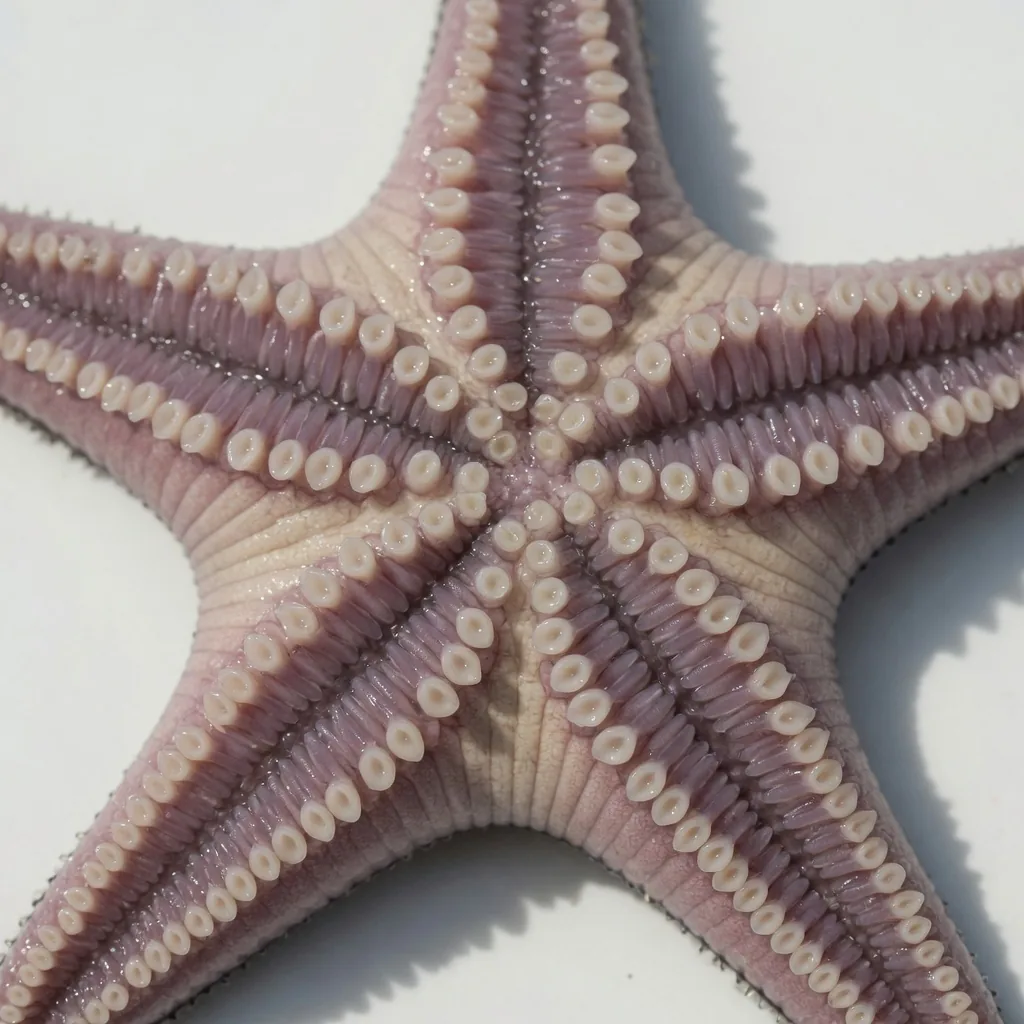
- It has two stomachs. One opens as the mouth in the center of the underside of its body. The mouth can protrude outside and extend to gobble up food and pass it to the other stomach, which digests it.
- Oysters, clams, worms, sea urchins, and crustaceans make up its diet.
- It uses its tube feet and other tubes all over its body to breathe in air.
- Most starfish have the ability to regenerate arms if they lose one or two in an attack by a predator.
Test Your Starfish Knowledge!
5 quick questions about these amazing sea creatures. How many can you get right?
- Each arm tip has special cells that can detect whether it is light or dark outside.
- This animal is found in all the oceans of the world. However, it prefers coastal areas, coral reefs, and warm, shallow waters.
How Starfish Reproduce
A female starfish can lay as many as 2 million eggs. Of these, the number of eggs laid at one time varies between 1 and 1.3 million. When fertilized by the male, the eggs become larvae. This stage in their life cycle lasts for 3 weeks, and then they start changing to take on their characteristic star shape.
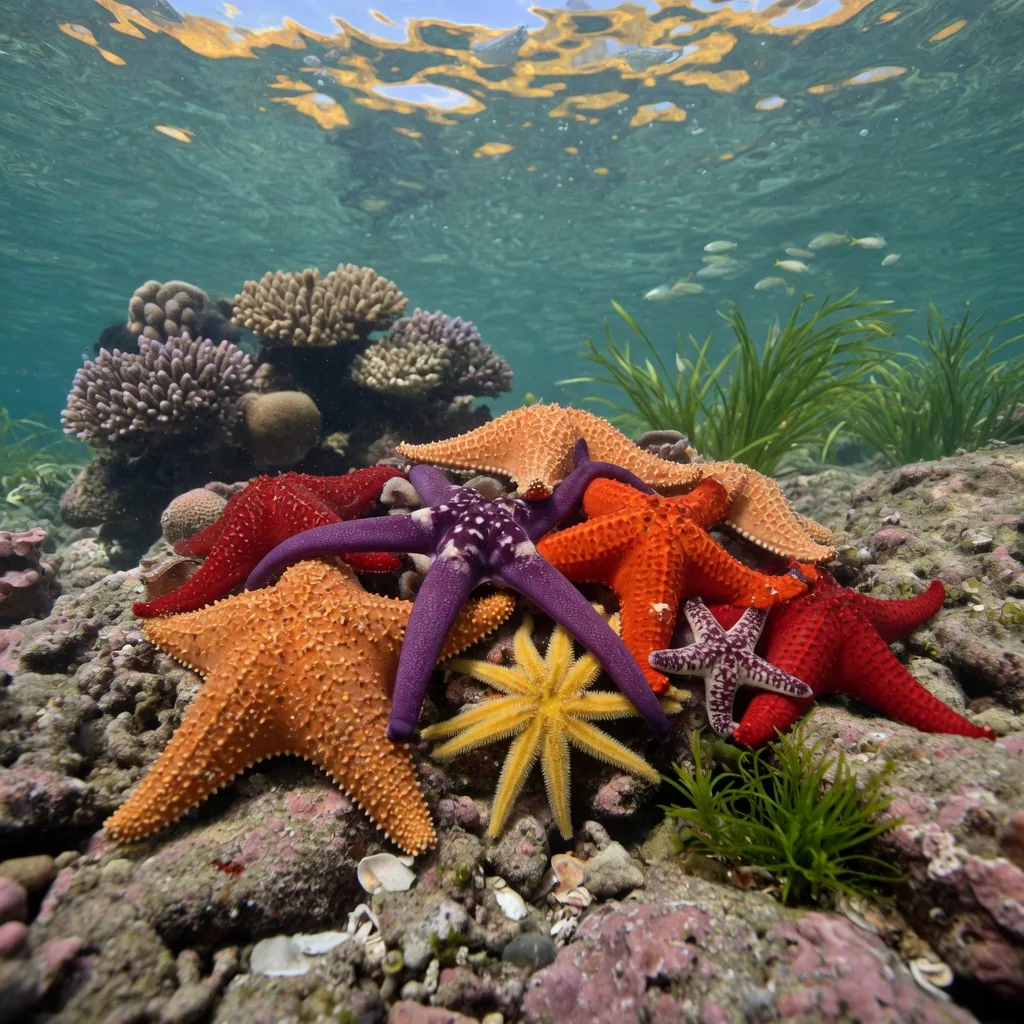
The most amazing thing about starfish is that they can change their gender when conditions require it. If the temperature is right and food is plentiful, a number of male starfish can change their gender and lay eggs to help increase the population.
Not all the eggs that are laid manage to survive. Many of them are eaten by other fish and marine animals, which prevents an uncontrolled rise in their population.
Starfish and Their Future
Global warming and pollution of sea water are threatening the habitat of these marine creatures. Just like corals, these fantastic sea animals are losing the battle for survival. Efforts should be made to save them.
Explore More Animals
 Incredibly Interesting Facts About StarfishThe depths of the oceans are home to many amazing sea creatures. Starfish is surely one of them. These interesting facts about the starfish will amaze you and g
 Starfish Habitat: Where Sea Stars Actually LiveIn this article, we shed light on one of the little-known attributes of the life of starfish, their natural habitat, and their adaptations which help them survi
 Octopus Facts for Kids: Eight Arms, Blue Blood, and Big BrainsThe octopus is an intriguing creature of the seas that derives its name from a Greek word which means eight-footed. Discover fascinating octopus facts for kids:
 Fun Facts About the Animal Kingdom That Kids Will EnjoyAre you looking for interesting facts about animals? Can you believe flies have five eyes; two large and three smaller ones? Here are some amazing facts about a

 Fun fact for today!Despite its name, a starfish is not a fish. It has no fins, no gills, and it can't swim!