

Tobacco hornworms are 70 millimeter long caterpillars that are a menace for tobacco plants. This article presents some useful tobacco hornworm facts that include their life cycle, habitat, and diet.
Habitat and Distribution
Tobacco hornworms are very common in the southern states of the United States, although their habitat stretches all the way from Canada to Argentina. Their habitat includes the foliage of plants belonging to the Solanaceae family. Their most favorite host is the tobacco plant.
In nature, the tobacco hornworms' diet includes the leaves of the plants they grow on. When raised in laboratories for scientific studies, their diet is wheat-germ based.
Life Cycle
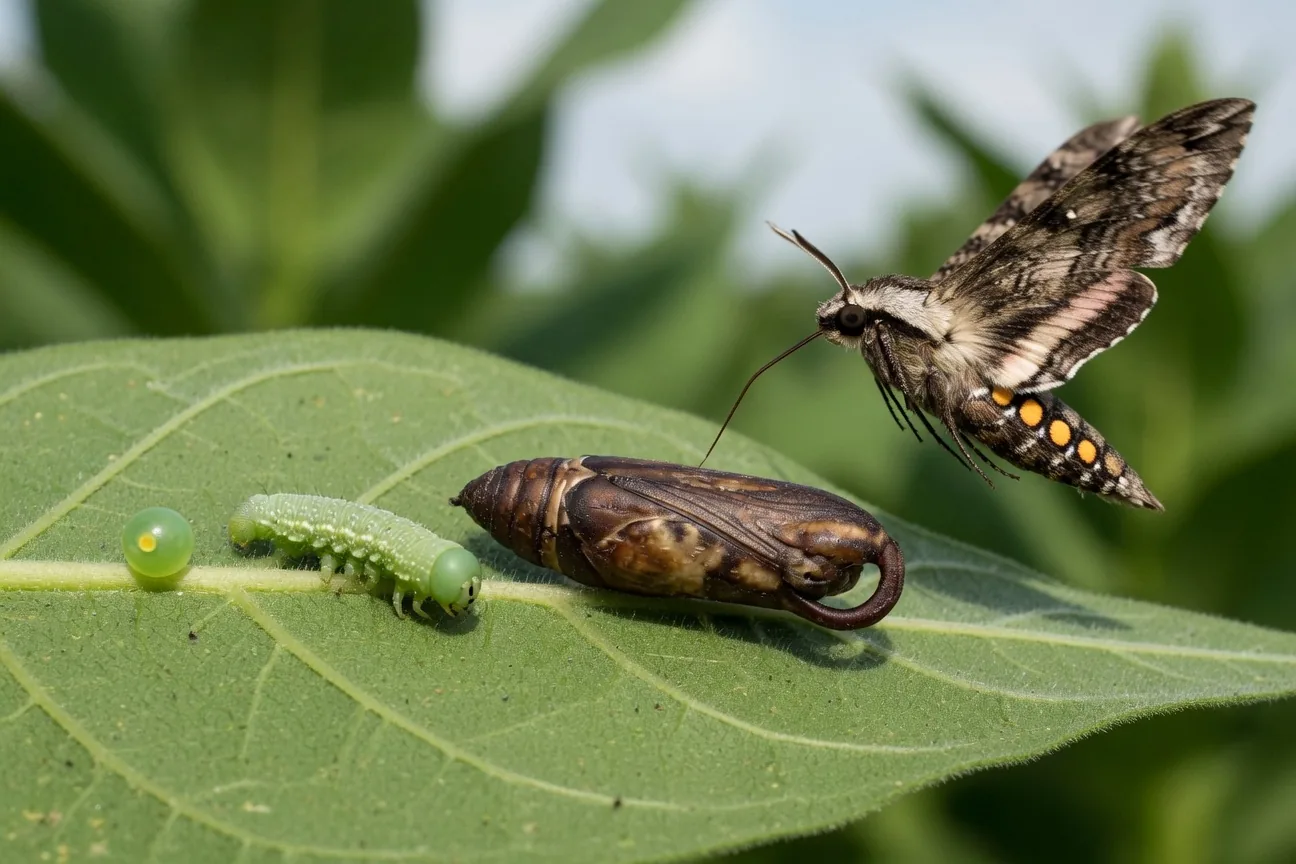
The tobacco hornworm's life cycle is a short one, spanning just 30 to 50 days. It begins with eggs that hatch into larvae. The larvae become pupae, which finally mature into adults. The emergence of an adult moth from a larva is an example of complete metamorphosis. Here is a step-by-step account of the tobacco hornworm's life cycle.
Eggs
The tobacco hornworm's eggs are spherical and translucent-green in color. They are mostly found on the lower surfaces of leaves. However, occasionally, the female moth may also lay them on the upper surfaces of leaves.
Larva
Within 2 to 4 days after they have been laid, the eggs hatch into larvae. Also known as caterpillars, these larvae are green in color and about 70 millimeters in length. They feed on the foliage of the plant on which the eggs were laid.
The caterpillars go through 5 larval instars, or developmental stages, that span about 20 days. Throughout these stages, the caterpillars grow larger. The characteristic horn or spike on their abdominal segment (the feature that gives them their name) also gets shorter with each successive instar. As they approach their final stage, the caterpillars start looking for a place to burrow so they can enter the pupal stage. This wandering behavior is aptly called wandering.
Pupa
Once the tobacco hornworm larvae are fully grown, they drop to the ground and burrow into the soil to a depth of 10 to 15 cm. Here they form brown or reddish-brown pupae that are elongated and oval, with a pointed rear end. The pupae have a pronounced maxillary loop that wraps around the mouthparts. This loop extends to almost one-fourth of the pupa's body length. In the tomato hornworm, by comparison, this loop reaches one-third of its body length. The pupal stage is long, and its duration can vary.
The Adult
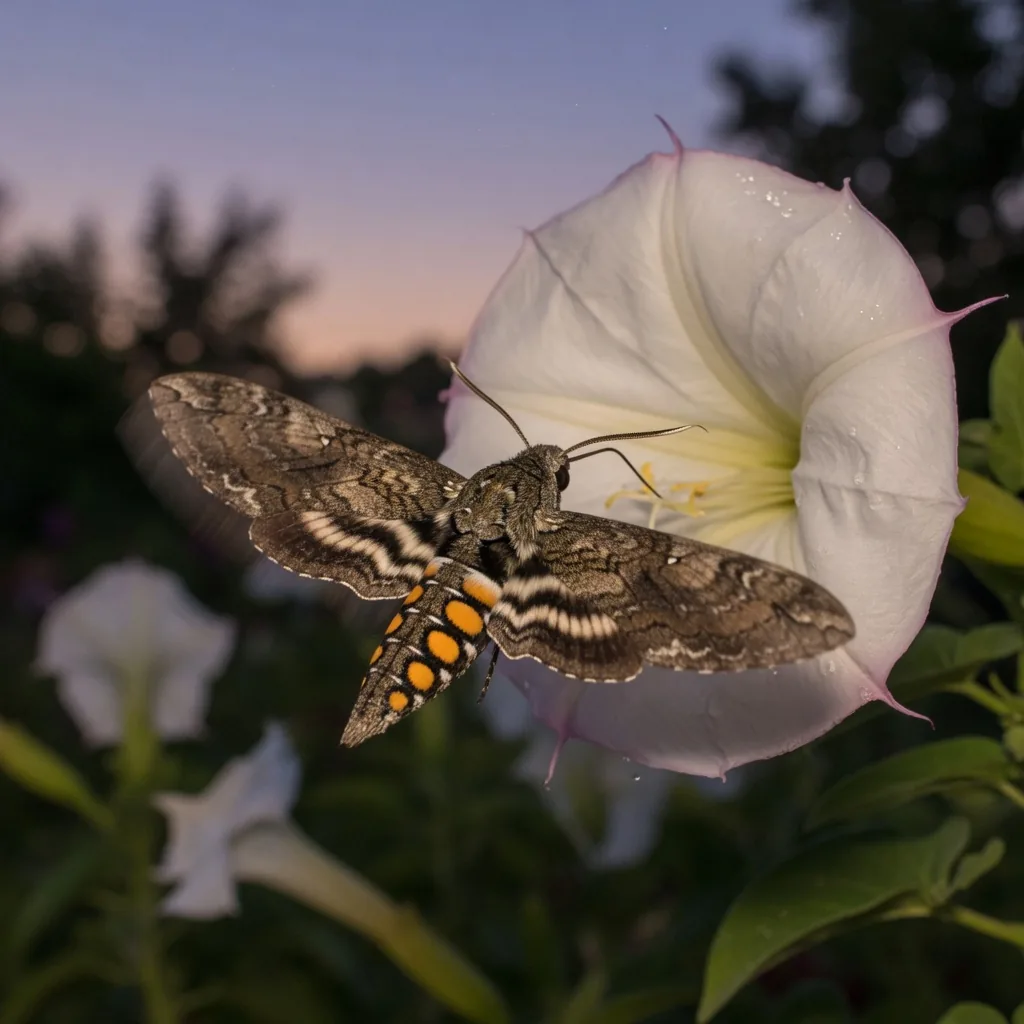
The adult form of the tobacco hornworm is known as the Carolina Sphinx moth, or hawk moth. These moths are sexually dimorphic and have large forewings. Their identification marks are the orange-yellow spots on their abdomen. The adults feed on the nectar of flowers. It is due to the powerful and rapid beating of their wings that these moths are also called hummingbird moths. They are often seen hovering over flowers at dusk.
Frequently Asked Questions
What is the scientific name of the tobacco hornworm?
Manduca sexta, in the family Sphingidae.
How big do tobacco hornworms get?
About 70 millimeters long.
What does a tobacco hornworm turn into?
The Carolina Sphinx moth, also known as the hawk moth or hummingbird moth.
How do you tell a tobacco hornworm from a tomato hornworm?
Tobacco hornworms have white diagonal lines on their sides; tomato hornworms have V-shaped markings.
What eats tobacco hornworms?
Natural enemies include the stilt bug Jalysus spinosus (attacks eggs) and braconid wasps (lay eggs inside the caterpillar).
Take the Tobacco Hornworm Quiz!
5 quick questions. How much do you know about this incredible insect?
Other Facts
Tobacco hornworms are model organisms, and are commonly used in neurobiology due to their short life cycle and easily accessible nervous system.
The caterpillars cause great damage to the leaves of a tobacco plant. Just two such caterpillars can defoliate an entire plant.
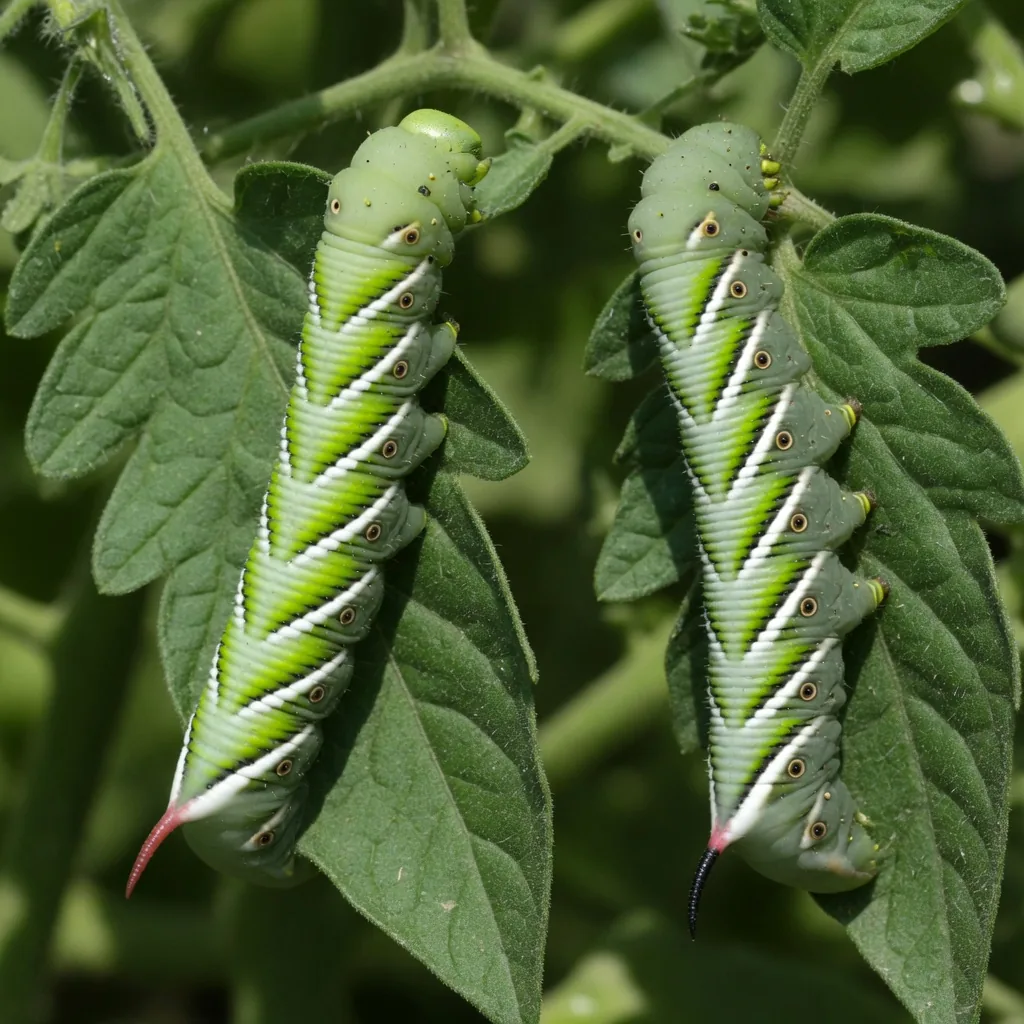
The distinguishing feature between tobacco hornworm and tomato hornworm caterpillars are the markings on their bodies. While tobacco hornworms have white diagonal lines, tomato hornworms have V-shaped markings on their body.
Tobacco hornworm caterpillars can be controlled using insecticides.
Natural enemies include the stilt bug Jalysus spinosus, which attacks their eggs. The braconid wasp is a predator that lays its eggs inside the hornworm. As those eggs hatch, the wasp larvae eat their way out of the caterpillar, slowly killing it.
One of the most alarming tobacco hornworm facts is that, due to their voracious appetite, they are one of the most destructive pests of tobacco plants. If their growth is left unchecked, they are capable of destroying an entire crop.
Explore More Animals
 Green Caterpillar IdentificationHow to identify a green caterpillar by its shade, body pattern, hair and unique features, with pictures of the luna moth, hornworms, swallowtails and more.
 An Awesome Explanation of the Life Cycle of a CaterpillarThe caterpillar life cycle is explained in short in this article, along with some interesting facts about caterpillars.
 Intriguing Facts About Inchworms You Probably Didn't KnowMany of you may have come across inchworms in your garden. However, these small creatures have many interesting facts that are worth knowing.
 Mysteriously Amazing Facts about Hummingbird MothsYou saw a hummingbird fly past you, or at least you think you did. In fact, what you may have seen could have been a hummingbird moth that looks a great deal li

 Fun fact for today!Just two tobacco hornworm caterpillars can completely defoliate an entire plant!