

The areas where humans face the most snakebite casualties are Africa, Australia, India, and parts of Southeast Asia. You might be surprised to learn that despite these regions being home to some of the world's most venomous snakes, the majority of bites actually come from non-venomous species.
While these numbers can understandably create fear, the truth is that snakes don't chase people and bite them for fun. They bite only when they feel threatened. Most snakebites happen when a victim has stepped on a snake barefoot, or when someone tried to handle one. Most fatal encounters occur in rural areas (particularly in Africa and India) where people live close to snake habitats. Snakes are also attracted near homes because their favorite prey (rodents) are plentiful in kitchens and fields. The WHO points out that a lack of antivenin and poor healthcare access make outcomes far worse, especially in developing countries.
Unlike common folklore, snakes don't prey on humans. The best way to stay safe is simply to avoid close contact. If you learn about snakes, you'll realize many aren't as frightening as they seem. But some encounters really could be your last. The 10 snakes ranked below were chosen not only for their toxicity, but for their actual encounters with humans and the deadly consequences of "disturbing them" by being nearby.
The 10 Most Deadliest Snakes: Our Picks
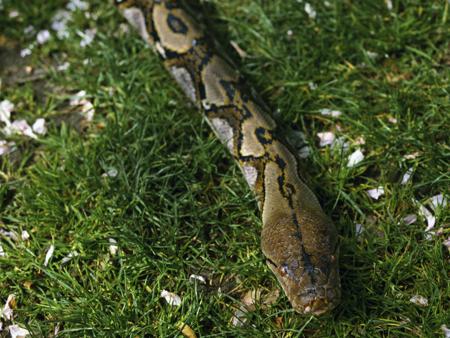
The Reticulated Python (Python reticulatus)
Geographical Range: Southeast Asia
Attacking Strategy: It hides close by and waits for prey to come nearer. When the moment is right, it strikes at speed, gripping its target with backwards-curved teeth. When aggressive, it won't hesitate to strike repeatedly, but first it hisses and raises its head slightly from the ground, which is enough warning for any threat to take seriously.
Aftereffects: A prey animal dies when the python wraps around it and kills by asphyxiation, then swallows it whole. If you survive a python attack, expect serious injuries: broken bones, heavy bleeding from bites, and loss of consciousness.
Like all pythons, this giant non-venomous snake is a constrictor that prefers to be left alone. What earns it a place on this list is the fact that it inflicts many human injuries, and even a few deaths. This huge snake can grow up to 20 feet in length and has an aggressive feeding response, it won't hesitate to attack a human nearby and try to eat them, even if that person is its owner. Most casualties happen because some people keep this giant as a pet. News stories regularly feature these pythons escaping and attacking infants, toddlers, and adults. The same warning applies to the African Rock Python and the Burmese Python.
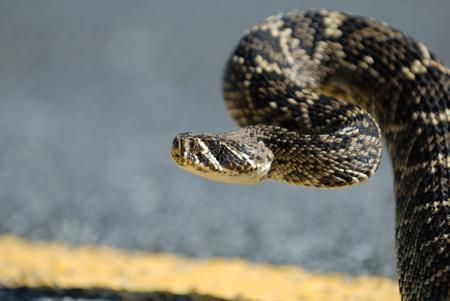
The Eastern Diamondback Rattlesnake (Crotalus adamanteus)
Geographical Range: Southeastern United States
Attacking Strategy: In defense, this snake forms an S-shaped coil while lifting the front half of its body off the ground. It can strike at great speed from a distance equal to one-third of its total length. Sometimes it leaves after one bite; other times it holds its position and bites repeatedly.
Aftereffects: The lethal dosage of this snake's venom is estimated at around 100 to 150 mg, yet this species can yield 400 to 450 mg, with a maximum potential of 858 to 1,000 mg. The venom isn't the most lethal around, but without medical help it is absolutely fatal. Symptoms include excruciating pain, heavy bleeding from the bite site, mouth bleeding, swelling, necrosis, and a weak pulse.
Widely considered the most deadly snake in North America, it is the king of rattlesnakes for its size (up to 8 feet in length), weight (up to 10 pounds), and fangs, the longest of any rattlesnake species. Despite its aggressive reputation, it actually isn't. However, because it hides near homes while hunting mice, frogs, and other rodents, it ends up bumping into people. Fortunately, easy access to antivenin usually prevents deaths. Watch out for juveniles, though, they are more dangerous than adults because they can't control themselves and inject far more venom. This species causes the most rattlesnake envenomations in the United States.
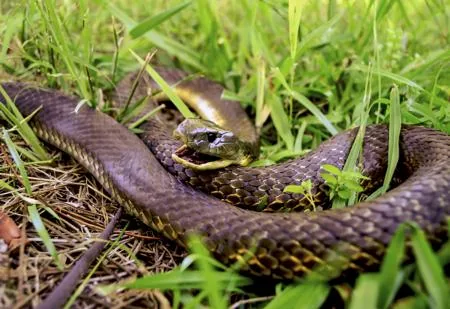
The Mainland Tiger Snake (Notechis scutatus)
Geographical Range: Southeastern Australia (including the islands of Bass Strait and Tasmania) and southwestern Australia
Attacking Strategy: A highly aggressive species. If it feels threatened (especially if you're blocking its escape route) it puts on a fierce display. It flattens its neck and hisses loudly, then delivers mock strikes before finally attacking for real.
Aftereffects: A bite from this highly venomous snake can cause severe pain, tingling, an inability to breathe, sweating, numbness, and paralysis. Its venom is both highly neurotoxic and coagulant, damaging blood vessels and potentially causing kidney failure. Without immediate medical attention, death is certain.
Tiger snakes have several sub-species. The mainland tiger snake ranks second on the list of snakes responsible for the most human casualties in Australia from snakebites. Although it is typically banded with yellowish stripes, some individuals are stripeless. The tiger snake was once the leading cause of snakebite deaths in Australia. According to the Australian Reptile Park, its numbers have declined as frog populations (its preferred prey) have fallen.
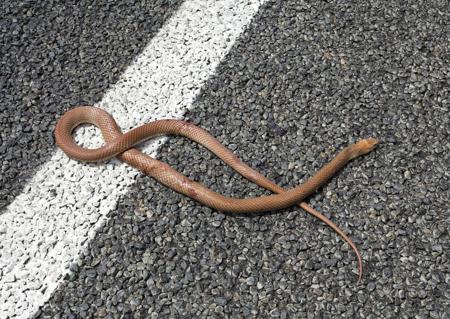
The Eastern Brown Snake (Pseudonaja textilis)
Geographical Range: Australia, Papua New Guinea, and Indonesia
Attacking Strategy: It will try to flee from humans first, but if provoked it forms an S-shaped coil and raises its front body off the ground, lifting parallel to the ground when mildly threatened, and upright when severely threatened. It spreads its neck and opens its mouth slightly. Its strikes are sudden and accurate.
Aftereffects: With the second-most toxic venom among all land snakes, just 2 mg released in a bite is enough to kill a human. This snake doesn't inject large amounts, but the small amount is more than enough. It releases between 2 to 10 mg of neurotoxic venom, causing symptoms including diarrhea, convulsions, dizziness, paralysis, renal failure, and cardiac arrest.
The eastern brown snake is responsible for 80% of all snakebites in Australia, remarkable given that Australia is home to 50 of the world's most venomous snakes. In its search for prey, this snake (which isn't always brown, its coloring varies widely) wanders into human settlements, which explains most encounters. It stands out for its toxicity and aggression, but because Australia has good antivenin access, a relatively small percentage of attacks turn fatal. Timely treatment prevents most serious complications.
Take the Deadliest Snakes Quiz!
5 questions. Do you know your puff adder from your saw-scaled viper?
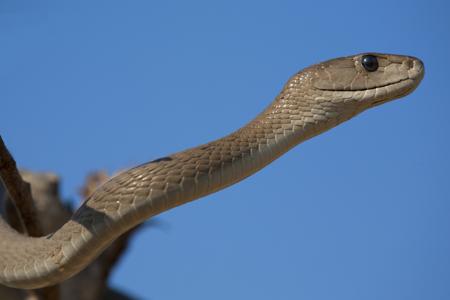
The Black Mamba (Dendroaspis polylepis)
Geographical Range: Sub-Saharan Africa
Attacking Strategy: The black mamba isn't actually black, its name comes from the bluish-black color of its inner mouth, which it opens wide when ready to strike. It raises up to one-third of its body off the ground and flexes its neck. It hisses to warn threats, then strikes multiple times, injecting its deadly venom with each bite.
Aftereffects: The lethal dose is estimated at just 10 to 15 mg, yet the average injection is approximately 120 mg. Larger individuals can deliver up to 400 mg in one bite. The venom acts so fast it can kill an adult human within 20 minutes. Neurotoxic symptoms include severe pain, respiratory paralysis, drowsiness, and loss of consciousness. Without immediate help, death follows in minutes to hours.
A black mamba bite is called the "kiss of death," and one expert famously called the species itself "death incarnate." It has everything needed to top this list, and many people do consider it the world's most deadly snake. It can reach 12.5 miles per hour, making it the fastest land snake on Earth. It ranks as the fourth most venomous snake in the world and the second longest venomous snake. It doesn't hold the record for most human fatalities, but its incredible speed, aggressive nature, and agility make it one of the most lethal creatures alive.
The Puff Adder (Bitis arietans)
Geographical Range: Africa and the Southwestern Arabian Peninsula
Attacking Strategy: When threatened, this snake coils tightly and forms an S-shape from the front of its body. It hisses loudly and continuously. It strikes at extreme speed, then snaps back to its defensive coil, ready to strike again immediately.
Aftereffects: Its venom is lethal to an adult at a dosage of 100 mg, and this snake can yield up to 750 mg. Symptoms include bleeding, pain, swelling, nausea, blistering, tissue death, and immobility. Without treatment, death is likely within 25 hours.
The puff adder is responsible for more human deaths in Africa from snakebite than any other species, accounting for nearly 32,000 deaths per year. Its coloring and patterns provide exceptional camouflage, which is exactly why so many victims accidentally step on it. Its wide range across the continent also increases the frequency of human contact. You can learn more about the African bush viper, a close relative that shares many of these habitats.
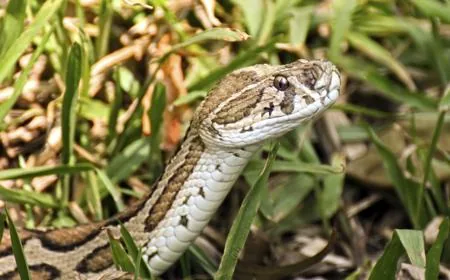
The Russell's Viper (Daboia russelii)
Geographical Range: India, Nepal, Myanmar, Thailand, Cambodia, China, Taiwan, Pakistan, Sri Lanka, Bangladesh, and Indonesia
Attacking Strategy: It forms a series of S-loops, raises the front one-third of its body, and produces an unmistakably loud hissing sound unlike any other snake. Then it launches itself at the target at lightning speed with incredible force. Its bite is said to be powerful enough to lift a grown adult off the ground.
Aftereffects: The lethal dose ranges from 40 to 70 mg, but a single bite can release anywhere from 21 to 268 mg of venom. Symptoms include painful swelling, bleeding gums, blood in urine and sputum, dizziness, vomiting, and facial swelling. Death can occur through sepsis, cardiac failure, or kidney and respiratory failure.
Experts handle this snake with extreme caution, and for good reason. It has been observed thrashing wildly and attacking from different directions with great accuracy. Its unpredictable behavior, lightning speed, and fierceness, combined with the fact that it lives in developing countries with limited medical access, make it one of the most dangerous snakes in the world. In Burma, this species accounts for 90 percent of all snakebites, most of them fatal.
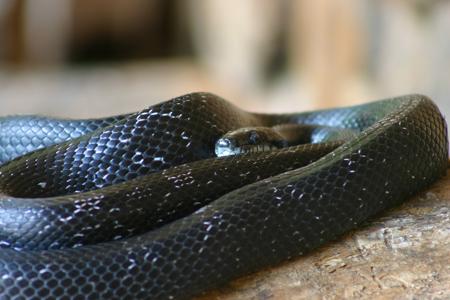
The Common Krait (Bungarus caeruleus)
Geographical Range: India, Pakistan, Sri Lanka, Bangladesh, Nepal
Attacking Strategy: When cornered, the common krait coils up with its head hidden and vibrates its body. It also lifts its tail as a warning. When it does bite, it holds on tightly so that it can deliver enough venom to kill.
Aftereffects: The lethal dose is just 2.5 mg, but the snake can inject 10 to 30 mg per bite. The bite is almost painless with no immediate symptoms, which is what makes it so deadly. Hours later, symptoms appear: tightening of facial muscles, inability to see or speak, vomiting, abdominal cramps, and progressive paralysis. Death occurs through respiratory failure.
The common krait is relatively calm during the day, but becomes highly aggressive at night, which is when most attacks on humans happen. In rural areas where people sleep on the ground, a krait may enter a home looking for food or shelter during rain. When a sleeping person rolls over it, the snake bites. Because the bite feels like no more than a mosquito or ant bite, many victims never wake up. Many snakes are more venomous or fiercer in attack, but the krait's quiet, painless lethality makes it a mysterious killer.
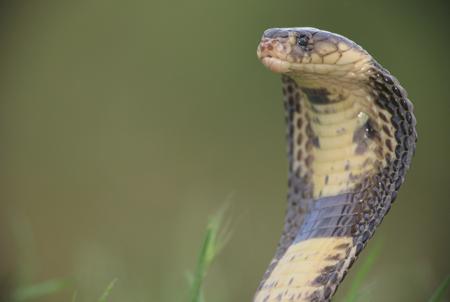
The King Cobra (Ophiophagus hannah)
Geographical Range: India, Southern China, and Southeast Asia
Attacking Strategy: It raises almost one-third of its body off the ground, meets your gaze, spreads its hood, and produces a hissing sound that can sound like a growling dog. It can advance while raised, and it strikes even when its target thinks it is safely out of range.
Aftereffects: The lethal dose is considered to be 20 mg, but a cobra can inject 200 to 500 mg (or more) in a single bite. Symptoms include extreme pain, blurred vision, drowsiness, paralysis, cardiovascular collapse, and coma. Death usually comes from respiratory failure. Massive doses of antivenin are needed immediately for a victim to have any chance.
What makes the king cobra so deadly is not the lethality of its venom alone, nor just its aggression, it's the enormous quantity of venom it delivers, and its ability to bite more than once. This is the longest venomous snake in the world, with recorded lengths of around 18 feet. It is naturally shy and avoids humans. Most fatalities occur among snake charmers who pursue and handle it. Cornered, it becomes highly aggressive. Most of its victims are probably those who tried to handle it. For a deep dive, see our full article on the king cobra.
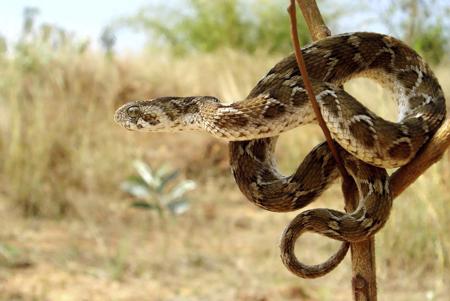
The Saw-scaled Viper (Echis carinatus)
Geographical Range: Parts of the Indian subcontinent, Middle East, and Central Asia
Attacking Strategy: It often buries itself in sand and waits. When threatened, it rubs its oblique scales together to produce a rasping hiss. It forms an S-shaped coil or a double coil resembling the figure eight, with its head poised in the center, able to release like a spring in any direction.
Aftereffects: The lethal dose for an adult is estimated at just 5 mg, and the snake releases up to 12 mg per bite. The venom causes swelling, blisters, hemorrhage, acute kidney failure, blood vomiting, and tissue loss. Without antivenin, death is inevitable.
Leaving behind the king cobra and even the feared black mamba, the saw-scaled viper is credited with the most documented human deaths of any snake. It is also a clear winner in toxicity. The inland taipan (Oxyuranus microlepidotus) is certified as the most venomous snake in the world, but as the Department of Wildlife Ecology and Conservation notes, toxicity tests were conducted on mice, those results may not accurately reflect how toxic a venom is to humans. The saw-scaled viper's aggressiveness and ill temperament add to the case that it is the most dangerous snake on the planet.
Explore More Animals
 World's Most Aggressive Snakes That'll Scare the Life Out of YouWhich is the most aggressive snake in the world? Is it the large black mamba or the small carpet viper? Let's find out...
 Types of Snakes With PicturesMeet every type of snake, from the deadliest venom-injecting cobras and vipers to record-breaking constrictors, tiny thread snakes, and ocean-going sea snakes.
 Spitting Cobra Facts: The Snake That Shoots VenomSpitting cobras spray venom straight at their predator's eyes with shocking accuracy. Learn how they do it, how far they can spit, and which is the biggest spec
 Mind-blowing Facts About Snakes That Will Leave You DumbfoundedThere's a lot more to snakes than most of us know. They are as intriguing as they are scary. An insight into the world of these fascinating reptiles proves why.
The Big Four
Our top four (the Russell's viper, common krait, king cobra, and saw-scaled viper) are no other than the snakes collectively known as "the Big Four." These four venomous snakes have earned that title by being responsible for the most snakebites in South Asia, with the majority occurring in India.
As you may have noticed, many highly venomous snakes (the Cottonmouth, Eyelash palm pit viper, Boomslang, and the Belcher's sea snake) are not on this list. These snakes can indeed kill in moments, and their venom is often more potent than those ranked above. But they are not responsible for a large share of casualties, and encountering them in normal human settlements is unlikely. That makes them venomous, but not necessarily the most dangerous to humans.

 Fun fact for today!The inland taipan is the most venomous snake in the world, yet it causes barely 2 deaths per year in Australia. That's why it's not on this list.