

Extinction of species can be traced back to times when 'man' was not even in the picture. Some species gave in to drastic changes brought about by the end of the ice age; others fell prey to catastrophic events such as a meteor collision. Things did change after Homo sapiens arrived, though, and changed for the worse. A look at the list of recently extinct animals shows that most species bore the brunt of human activities: hunting for food, poaching for body parts with huge demand in international markets, and deforestation that destroyed habitats. Whether it was human onslaught or nature's fury, we have lost some of the most amazing animals over the course of time.
10 Most Amazing Extinct Animals
From various species of dinosaurs (which became extinct somewhere around 65 million years ago) to species like the Passenger pigeon, Golden toad, and Baiji river dolphin that disappeared more recently, countless animals have vanished since life began on this planet. Even though we may not feel it directly, losing a single species puts pressure on every other species that depended on it. Below are the ten most notable animal species that became extinct over time, with a focus on the factors that drove each one to disappear.
Tyrannosaurus rex
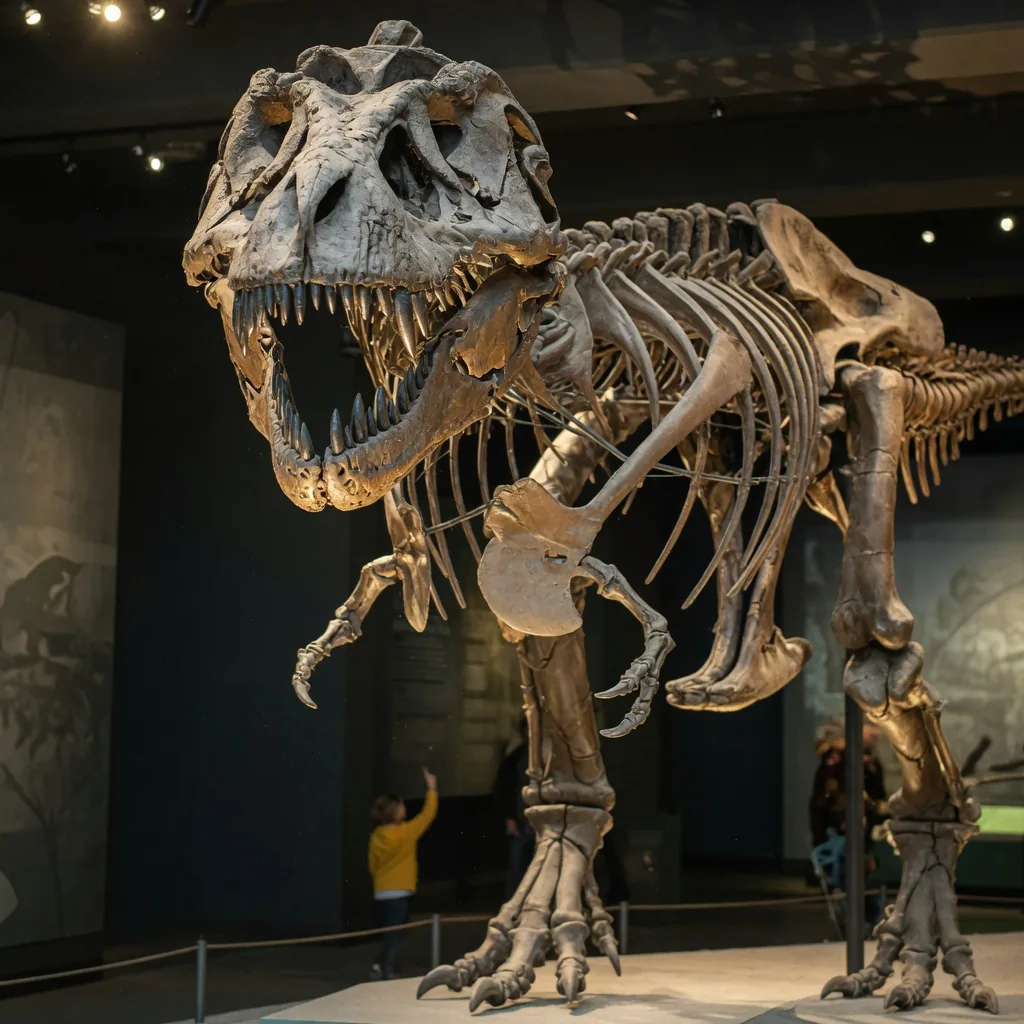
If the name Tyrannosaurus rex, often shortened to T. rex, doesn't ring a bell, think of the dinosaur that starred in the 1993 American film Jurassic Park. There is no questioning this species' popularity in popular culture, yet the actual scientific facts about Tyrannosaurus rex often go unnoticed. Most of what we know is based on fossil remains. These fossils suggest the animal's range covered much of the present-day continent of America.
One of the largest known land predators to have ever existed, T. rex stood at a towering height of 42 ft and weighed somewhere between 6 and 7 metric tons. It was one of the last dinosaur species alive before the Cretaceous-Tertiary extinction event 65 million years ago. As with many other dinosaurs, the exact cause of its extinction remains a mystery, some theories point to a meteor impact, while others suggest climate change.
Woolly Mammoth
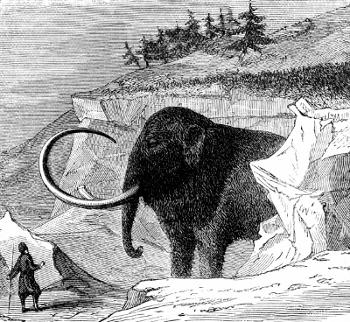
The woolly mammoth (Mammuthus primigenius) was a species of mammoth closely related to modern elephants. It lived during the Pleistocene epoch and is also known as the Tundra mammoth. It is one of the most studied prehistoric mammals because its fossils are often preserved in an organic state (not turned to stone) in the cold regions it called home. These frozen fossils reveal a lot: a full-grown woolly mammoth stood around 13 ft tall and weighed about 8 tons.
This mammoth species began disappearing from North America towards the end of the last ice age, probably due to a combination of climate change, habitat loss from glacial retreat, and hunting by prehistoric humans. Its extinction is believed to be part of a larger mass extinction of megafauna that also wiped out the woolly rhino, Smilodons, and Giant beavers. Records suggest the species mostly vanished between 10,000 BC and 8,000 BC, but a dwarf race of woolly mammoths survived on Wrangel Island until around 1,700 BC.
Dodo
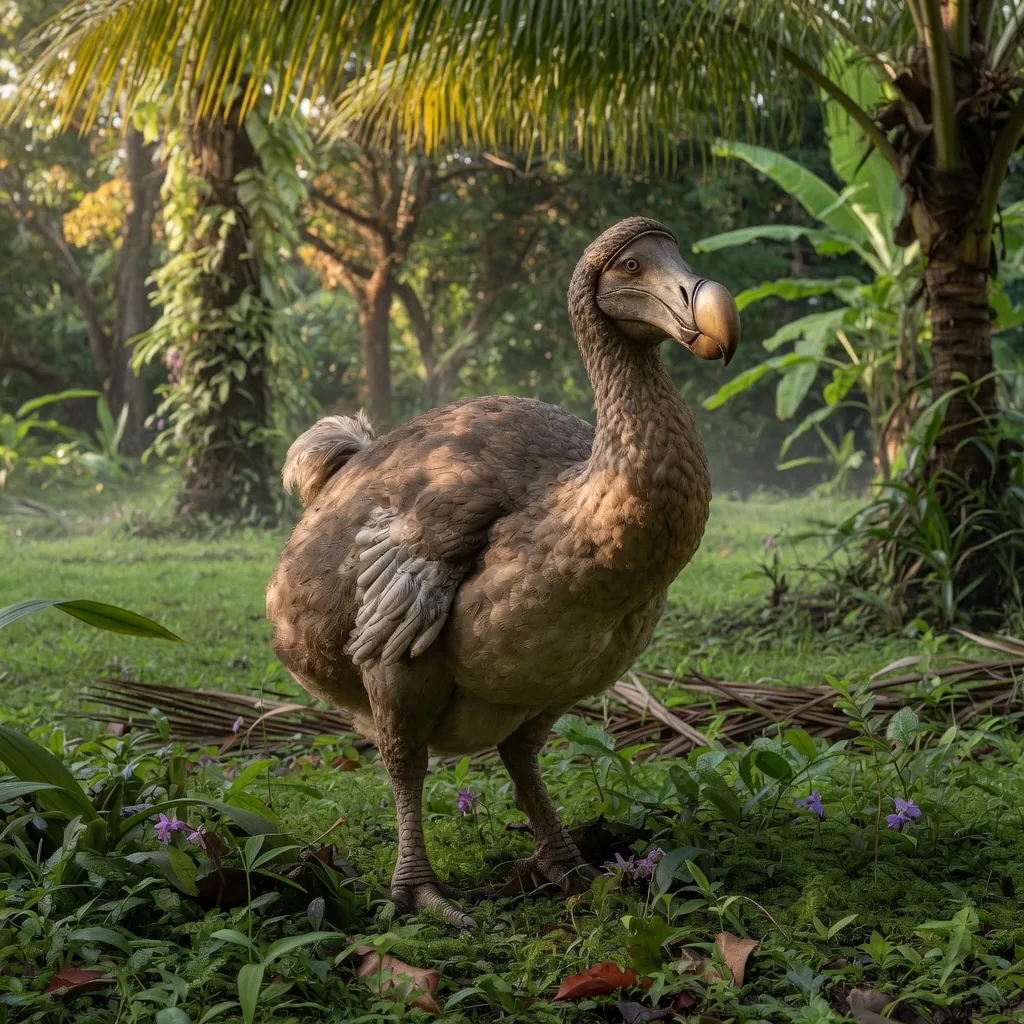
The dodo (Raphus cucullatus) was a flightless bird found in abundance on the island of Mauritius. It evolved into a flightless species because its diet of fruits and seeds was readily available on the ground, and there were no land predators in its habitat. Extinction followed fast once European sailors stopped at the island and hunted dodos in large numbers for meat. Being flightless, the dodo was an easy target.
As human settlements grew on the island, hunting became even more widespread. Domesticated animals and rats that arrived with humans also feasted on dodo eggs, every one of those pressures working together drove the species to the brink. Dodo sightings became rare by the beginning of the 17th century, and the last known individual died, marking the extinction of the dodo by 1681.
Take the Extinct Animals Quiz!
5 questions. How much do you know about the animals we've lost forever?
Smilodon
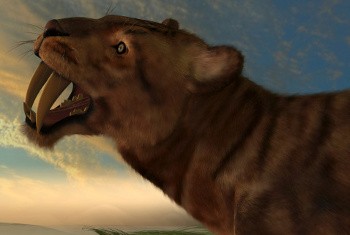
Also known as the Sabre-toothed cat, Smilodon was a large cat that lived across North America and South America during the Pleistocene epoch. The name "sabre-toothed cat" comes from its long canine teeth, which looked like sabers, stout swords with a curved blade. Smilodon fossils tell us that this species went extinct as part of the same mass extinction of megafauna that hit the end of the Pleistocene epoch.
Human encroachment (as prehistoric people moved into North America after the ice age) combined with severe food shortages drove the Sabre-toothed cats to extinction around 10,000 BC. Of the three sub-species, only Smilodon gracilis and Smilodon fatalis were left to face human pressure; Smilodon populator had already vanished long before humans arrived in its territory.
Thylacine
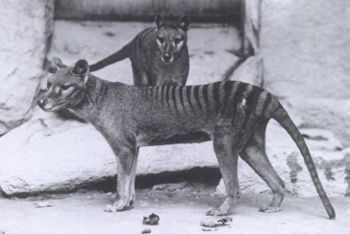
It may surprise many people to learn that the thylacine (Thylacinus cynocephalus) (also called the Tasmanian tiger or Tasmanian wolf) was neither a tiger nor a wolf. It was a carnivorous marsupial, one of the largest ever to exist on Earth, native to Australia. The word "Tasmanian" stuck because the animal was only found on the island of Tasmania in its final 2,000 years of existence, where it held on until the 1930s. Its striped back gave it the "tiger" nickname; its dog-like build gave it the "wolf" one.
Excessive hunting by farmers and bounty hunters, loss of habitat, human interference, dogs introduced by European settlers, and the extinction of its prey species all pushed the thylacine toward extinction. The last thylacine in the wild was killed by a farmer in Tasmania in 1930. The last individual in captivity died on 7th September, 1936, at the Hobart Zoo in Tasmania.
Quagga
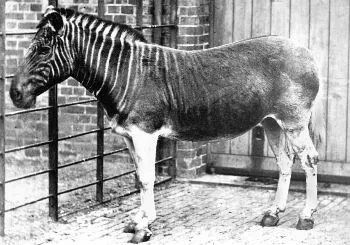
The quagga (Equus quagga quagga) was a species of plains zebra that lived on the vast grasslands of the Cape Province of South Africa. Its most distinctive feature was its unusual coat: stripes covered the front portion of its body, but they faded at the midsection and disappeared entirely by the hindquarters. Farmers in the region regarded the quagga as a pest because it grazed the same grass their cattle needed, and they hunted it heavily.
At the same time, quaggas were hunted for their meat (considered a delicacy) and for their skin, which was used in the leather industry. Hunting by Europeans and North Americans for sport caused the population to collapse. After struggling for survival, the species finally went extinct, with the last individual dying in the Amsterdam Zoo in 1883.
Woolly Rhinoceros
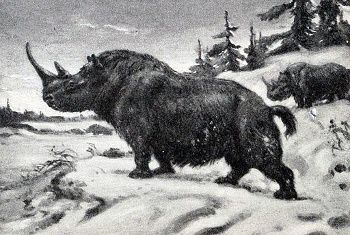
The Woolly rhino (Coelodonta antiquitatis) was a species of rhinoceros found in the Eurasian steppes during the Pleistocene epoch. As its name suggests, it had a thick coat of two different types of hair. Several theories have been proposed for its extinction, with hunting by Neanderthal humans being one of the most prominent. Other sources suggest that, like much of the Pleistocene megafauna, the woolly rhino simply could not cope with the climate changes that followed the ice age. Carbon dating of woolly rhinoceros fossils shows the species survived until around 8000 BC.
Caspian Tiger
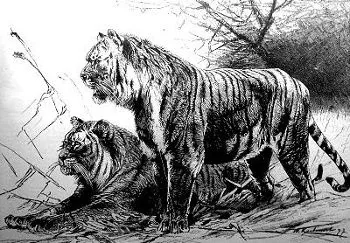
The Caspian tiger (Panthera tigris virgata) lived in Western and Central Asia until the 1950s. It is one of the most recently extinct animals, and it features on the list of animals which became extinct in the last 100 years. Its story is a textbook example of extinction caused by development. Several hundreds of tigers were deliberately killed by Russian authorities in the early 20th century as part of a land reclamation project.
Habitat loss from deforestation added further pressure, and the fragmentation of remaining forest made it hard for tigers to move around freely to find mates. It is believed the last Caspian tiger was shot dead in Iran in 1959. That put the species permanently on the International Union for Conservation of Nature (IUCN) Red List.
Explore More Animals
 These Animals Went Extinct in the Last 100 Years. Know Why?With species like the Barbary lion and western black rhino featuring in the lengthy list of animals that have become extinct in the last 100 years, it is no lon
 A List of Endangered Animals From Every ContinentFrom the Bengal tiger and giant panda to the mountain gorilla and polar bear: a continent-by-continent list of the world's endangered animals, with photos.
 Save Tigers from ExtinctionTigers are vanishing fast. Learn why only around 5,000-7,000 remain, which three subspecies are already gone, and what you can do right now to help save them.
 Types of Dinosaurs: How Each One Got Its NameMeet the different types of dinosaurs and learn the clever way each got its name, from teeth and horns to feet, armor, places and people. A fun, fact-packed gu
Irish Elk
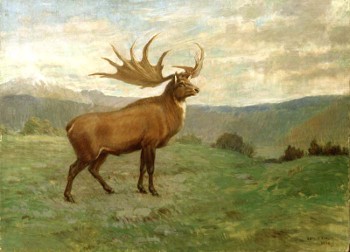
The Irish Elk (Megaloceros giganteus) was a species of deer that roamed the plains of Eurasia during the Late Pleistocene epoch. Despite its name, its habitat stretched all the way from Ireland in the west to Russia in the east. The "Irish" tag comes from the fact that most of its skeletal remains were dug up from the bogs of Ireland. Whether or not it was the largest deer species ever is debatable, but there is no doubt it had the largest antlers of any deer, ever.
The Irish elk is thought to have gone extinct because it could not survive the shifts in climate that followed the last glacial period.
Steller's Sea Cow
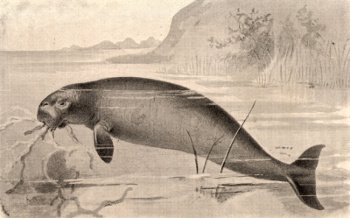
Steller's sea cow (Hydrodamalis gigas) was a large marine herbivore once found in abundance in the North Pacific Ocean. It takes its name from the German zoologist Georg Wilhelm Steller, who first described it. With an average length of 30 ft, it was considerably larger than its closest living relatives, the manatee and the dugong. Sadly, that large size made it an easy and valuable target, it was hunted mercilessly for food, skin, and subcutaneous fat.
Shockingly, Steller's sea cow was wiped off the planet within just three decades of being first described by science. The last confirmed sighting came in 1768. Unverified reports of the species being spotted have surfaced occasionally, but none have ever been confirmed.
A Warning from History
Extinction of species is not a rare event, the Earth has witnessed as many as five mass extinctions so far. Even more striking is the fact that the animals found on our planet today make up a mere 1 percent of all species that have ever existed; the remaining 99 percent have gone extinct over time. What is truly alarming is the rate at which extinctions are happening now. More than 40 species have been added to the list of extinct animals in the last 100 years alone. If this continues, it will not be long before humans face the same threat. Our casual attitude toward this crisis will eventually catch us off-guard.

 Fun fact for today!99% of all species that ever lived on Earth are now extinct!