

Before the Dinosaurs: A Quick Time Trip
The Paleozoic Era of planet Earth was about 542 to 248 million years ago. This era is today divided into the Cambrian, Ordovician, Silurian, Carboniferous, and Permian periods. Fish, followed by amphibians, reptiles, and mammal-like reptiles, were the first multicellular life forms to appear on Earth.
The Mesozoic Era came next, between 248 to 65 million years ago. This period is again divided into the Triassic, Jurassic, and Cretaceous periods. The different types of dinosaurs first came into existence during the Triassic period of the Mesozic era.
Dinosaurs evolved about 230 million years ago from primitive reptiles called the archosaurs, that were known as ruling lizards during the Mesozoic era. These lizards were smaller than the dinosaurs and had features that were much different from dinosaurs.
Another theory suggests that there were therapsids, who may have been a hybrid of mammals and reptiles. These creatures could also have been the ancestors of dinosaurs. The early dinosaurs were fleet-footed bipeds. They were either meat eaters or plant eaters. These dinosaurs were about 10-15 feet in height, according to the fossil remains found on Madagascar. The bipeds evolved into quadrupeds. These mammal-like creatures, i.e. the therapsids, declined rapidly with the evolution of dinosaurs.
The first birds appeared during the Jurassic period of the Mesozoic era. The size of the dinosaurs also increased during these evolutionary periods. About 65 million years ago, at the end of the Mesozoic era, all dinosaurs and Pterosaurs suddenly disappeared. The era that followed this end of the dino-era is known as the Cenozoic Era.
When we speak about dinosaurs, the most vivid images of these majestic creatures were created by Steven Spielberg, in the movie Jurassic Park. This movie was adapted from the fiction novel by Michael Crichton, ‘The Lost World’. People all over the world became fascinated by the creatures that once roamed freely on our planet. There were different dinosaurs that were herbivores, carnivores, and omnivores. Let us travel back in time and learn a few facts about dinosaurs.
Dinosaurs and Their Different Types
Sir Richard Owen, the British paleontologist, defined the original taxon Dinosauria in 1842. He coined the word Dinosauria, which meant ‘fearfully great lizards’ in Greek, to refer to the group of extinct reptiles. The different types of dinosaurs were named according to the different physical features of these ‘terrible lizards’. Here is how the names were chosen — group by group.
🦷 Named for Their Teeth
Some dinosaurs were named after the shape or arrangement of their teeth.
Astrodon — ‘star-tooth’
Astrodon had a long neck and was a herbivore. It was 9 meters long and lived during the Cretaceous period. This star-toothed dinosaur was named by Johnston in 1859.
Deinodon — ‘terrible tooth’
This carnivore existed during the late Cretaceous period. This dinosaur is known only from a dozen large, fossilized teeth, and was named by paleontologist J. Leidy in 1856.
Heterodontosaurus
These dinosaurs had three different kinds of teeth, and that is how they got their name. They had sharp cutting front upper teeth, cheek teeth for grinding food, and two pairs of long canine-like teeth that could fit into the sockets. Alan J. Charig and Alfred W. Crompton named this dinosaur in 1962.
Hypsilophodon — ‘high-crested tooth’
This herbivore was an Ornithopod and a fast runner. Thomas Huxley was the first to describe a Hypsilophodon, in 1870.
🪓 Named for Unusual Head Features
Horns, crests and thick skulls gave these dinosaurs their names.
Brachyceratops — ‘short-horn faced’
This dinosaur was a ceratopsian — a horned, scallop-frilled herbivore with a crest. It was found in the late Cretaceous period and was named in 1914, by C.W. Gilmore.
Homalocephale — ‘level head’
It was a pachycephalosaurid, that is, a thick-skull dinosaur. This herbivore walked on two legs and lived during the late Cretaceous period. It was named in 1974, by paleontologists Maryanska and Osmolska.
Pentaceratops — ‘five-horned-face’
This herbivore had a large bony, scalloped head frill, a snout horn, 2 large forward-facing horns, and 2 pointy horn-like cheek bones. It was named in 1923 by paleontologist Henry F. Osborn.
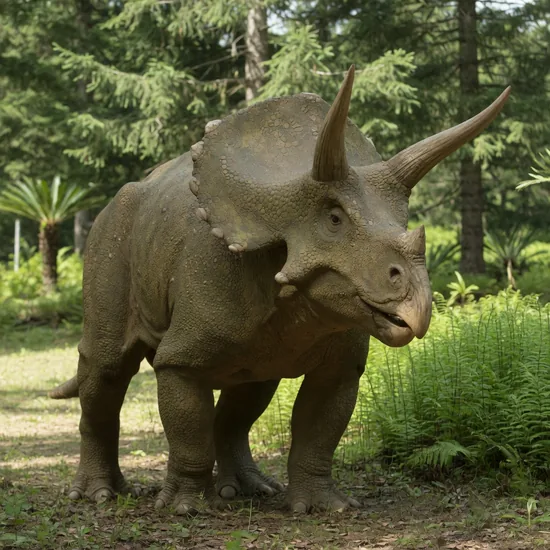
Triceratops
This rhinoceros-like dinosaur had one short horn above a parrot-like beak and two longer horns above its eyes. It was a late Ornithischian dinosaur, which was a bird-hipped, herbivorous dinosaur. It was named by paleontologist Othniel Marsh in 1889.
🦵 Named for Their Feet
Speedy, leaping or terrible — these names all point to the feet.
Brachylophosaurus
This short-crested lizard was a duck-billed dinosaur. It lived during the late Cretaceous period. It was named by paleontologist Charles M. Sternberg, in 1953.
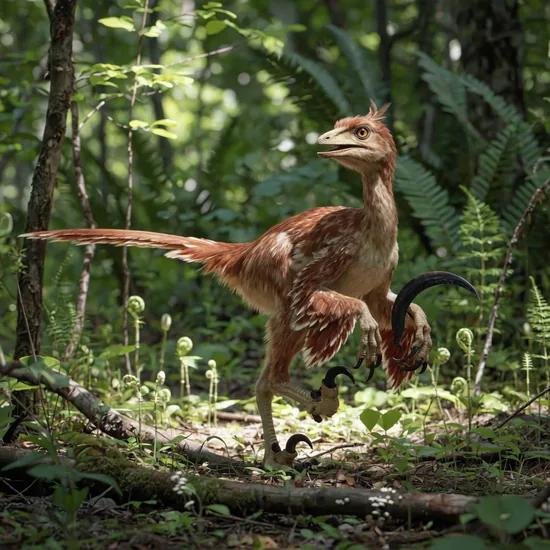
Deinonychus — ‘terrible claw’ (Deinonychus antirrhopus)
This lightly built, fast-moving, agile, bipedal, bird-like dinosaur lived in the Cretaceous period. This carnivore was built to kill. It had an IQ that was highest among the dinosaurs, and it was named by Ostrom in 1969.
Saltopus — ‘leaping foot’
This small, lightly built dinosaur was a biped. It had dozens of small sharp teeth and five fingers on its hand, but the fourth and fifth digits were very small. This carnivore was an insect-eater and may have been a scavenger. It was named by paleontologist Friedrich von Huene, in 1910.
Velocipes — ‘speedy foot’
This carnivore was from the late Triassic period. It was also named by paleontologist Friedrich von Huene, but in 1932.
🧴 Named for Unusual Body Features
Heavy claws, armor and spikes inspired this set of names.
Baryonyx — ‘heavy claw’
This dinosaur had long claws on its hand and long, narrow, crocodile-like jaws. A small crest was present on its snout. This carnivore lived during the Cretaceous period. It had a higher IQ than the other dinosaurs and was named by paleontologists Angela C. Milner and Alan J. Charig.
Deinocheirus — ‘terrible hand’
This large, long-legged biped was a carnivore. It was a Coelurosaurid ornithomimosaur theropod, and was the fastest among the dinosaurs. It was named by Osmolska and Roniewicz in 1970.
Panoplosaurus — ‘totally armored lizard’
It lived during the late Cretaceous period and was named by paleontologist L. Lambe, in 1917.
Centrosaurus — ‘pointed lizard’
It lived during the late Cretaceous period and was a herbivore. It had scalloped frills, with two hooked spikes near the center. It was also named by paleontologist L. Lambe, in 1904.
🌎 Named for the Place They Lived
These dinosaurs carry the name of the land where they were found.
Andesaurus — ‘Andes mountain lizard’
This was a long Titanosaurid sauropod — a quadrupedal, herbivorous dinosaur with a long neck and long tail. It lived during the Cretaceous period and was named by Calvo and Jose Bonaparte in 1991.
Denversaurus — ‘Denver lizard’
It was a plated, quadrupedal herbivore and was named by Robert Bakker in 1988.
Lesothosaurus — ‘lizard from Lestho, South Africa’
It was a lightly built, early dinosaur. It was an agile runner and lived from the late Triassic to the early Jurassic period. It was named by paleontologist Peter M. Galton in 1978.
Szechuanosaurus — ‘Szechuan province lizard’
This carnivore lived during the late Jurassic period. It was an Allosaurid theropod and was named in 1942.
🥇 Named for a Person
Some dinosaurs were named to honor the scientists who studied them.
Drinker
Drinker was a small, herbivorous dinosaur, named in honor of paleontologist Edward Drinker Cope. This Ornithopod lived during the late Jurassic period and was named by paleontologists Bakker, Galton, Siegwarth and Fila in 1990.
Lambeosaurus — ‘Lambe’s lizard’
It was a crested, duck-billed dinosaur. It had a forward-leaning, hollow, bony crest that may have been used to produce sounds, enhance smell, or for display during courtship. It lived during the Cretaceous period and was named by Dr. William A. Parks, in honor of Lawrence Lambe.
Othnielia
Othniella was named in honor of paleontologist Charles Othniel Marsh. It was an ornithopod with a horny beak and small skull, with self-sharpening cheek teeth. It lived during the late Jurassic period and was named by Galton in 1977.
🥭 Named for Their Behavior
What scientists thought these dinosaurs DID gave them their names.
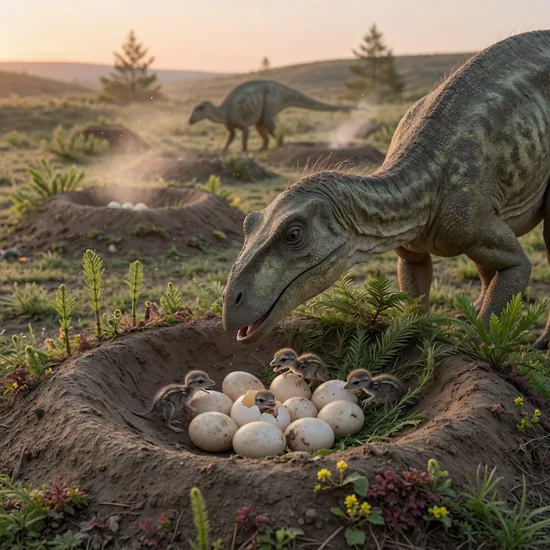
Maiasaura — ‘good mother lizard’
This was a large, duck-billed, herbivorous dinosaur. It was the first dinosaur to be found alongside its young, eggs, and nests — which should mean that it may have nurtured its offspring. It lived during the late Cretaceous period and was named by Jack R. Horner and Robert Makela in 1979.
Oviraptor — ‘Egg Robber’
It was a bipedal carnivore that had an ‘S’-shaped neck, arms with three-fingered claws, long thin legs, four toes, and clawed feet. It had a large brain compared to its body size and lived during the late Cretaceous period. It was described by Henry F. Osborn in 1924.
Take the Dinosaur Names Quiz!
5 quick questions. How well do you know your terrible lizards?
Dinosaur Names According to Their Diet
The groups above named dinosaurs according to some of their physical features or behavior. The following lists name dinosaurs based on the food they ate. This will help you recognize most of these extinct creatures — from the giant plant-eaters like long-necked sauropods to fierce hunters like Spinosaurus.
🌿 Herbivorous Dinosaurs
Plant-eaters — from armored Ankylosaurus to horned Triceratops.
- Agujaceratops
- Alamosaurus
- Anchiceratops
- Animantarx
- Ankylosaurus
- Avaceratops
- Brachiosaurus
- Camarasaurus
- Camptosaurus
- Centrosaurus
- Corythosaurus
- Diabloceratops
- Diplodocus
- Eotriceratops
- Euoplocephalus
- Gigantspinosaurus
- Giraffatitan
- Heterodontosaurus
- Hypsilophodon
- Iguanodon
- Kentrosaurus
- Kritosaurus
- Magyarosaurus
- Maiasaura
- Mamenchisaurus
- Massospondylus
- Nanyangosaurus
- Nemegtosaurus
- Ouranosaurus
- Pachyrhinosaurus
- Plateosaurus
- Prenocephale
- Protoceratops
- Psittacosaurus
- Riojasaurus
- Saichania
- Saltasaurus
- Stegosaurus
- Styracosaurus
- Talarurus
- Tarchia
- Torosaurus
- Trachodon
- Triceratops
- Tuojiangosaurus
- Ultrasaurus
- Unaysaurus
- Zalmoxes
- Zuniceratops
🦵 Carnivorous Dinosaurs
Meat-eaters — including Tyrannosaurus rex and Velociraptor.
- Acrocanthosaurus
- Adasaurus
- Afrovenator
- Albertosaurus
- Alectrosaurus
- Alioramus
- Allosaurus
- Anchiornis
- Aucasaurus
- Bambiraptor
- Baryonyx
- Buitreraptor
- Carcharodontosaurus
- Carnotaurus
- Ceratosaurus
- Coelophysis
- Coelurus
- Compsognathus
- Cryolophosaurus
- Deinonychus
- Dilong
- Dilophosaurus
- Dromaeosaurus
- Eotyrannus
- Epidexipteryx
- Giganotosaurus
- Gorgosaurus
- Guanlong
- Herrerasaurus
- Majungasaurus
- Megalosaurus
- Microraptor
- Rajasaurus
- Rugops
- Saltopus
- Scipionyx
- Sinornithoides
- Sinosauropteryx
- Spinosaurus
- Staurikosaurus
- Suchomimus
- Tarbosaurus
- Torvosaurus
- Troodon
- Tyrannosaurus rex
- Utahraptor
- Velociraptor
- Xiongguanlong
- Yangchuanosaurus
🥚 Omnivorous Dinosaurs
Some of the omnivorous dinosaurs — ones that ate both plants and animals — include Abrictosaurus, Avimimus, Caudipteryx, Gallimimus, Nomingia, Oviraptor philoceratops, Protarchaeopteryx, Sinovenator, Struthiomimus, and others.
Frequently Asked Questions
Who named the dinosaurs?
The British paleontologist Sir Richard Owen defined the group Dinosauria in 1842. The word means 'fearfully great lizards' in Greek.
When did dinosaurs live?
Dinosaurs lived during the Mesozoic Era, between 248 and 65 million years ago. They first appeared about 230 million years ago, in the Triassic period.
What are dinosaurs named after?
Dinosaurs were named for different things, their teeth, unusual head features, feet, body features, the place they were found, a person, or their assumed behavior.
Did all dinosaurs eat meat?
No. Some dinosaurs were herbivores (plant-eaters), some were carnivores (meat-eaters), and some were omnivores that ate both plants and animals.
Why did the dinosaurs go extinct?
All dinosaurs and pterosaurs disappeared about 65 million years ago, at the end of the Mesozoic Era. The exact cause is still debated by scientists and remains an open question.
The End of the Age of Dinosaurs
These were just a few of the many types of dinosaurs that once walked on our planet. They were probably the most successful group of animals that survived, evolved, and formed diverse living habits. Their extinction remains an enigmatic question, with many hypothetical answers and theories put forward by scientists, paleontologists and researchers.
The mass extinction of dinosaurs marked the end of the ‘Age of Dinosaurs’ and paved the way for the ‘Age of Mammals’. Whatever the reason, it is a game of ‘survival of the fittest’, and the dinosaurs seem to have lost the race due to some unexplained phenomenon. Dinosaurs have always fascinated the survivors in the line of evolution.
Explore More Animals
 Long-Necked Dinosaur Species: An OverviewDinosaurs, the gigantic creatures that existed on Earth millions of years ago, have always fascinated us ever since we knew of their existence. AnimalSake prese
 Triassic Period AnimalsIf reading about prehistoric creatures fascinates you, then this article on the Triassic Period animals will definitely make for an interesting read.
 Facts About Triceratops That Will Make Your Blood Run ColdTriceratops was a genus of dinosaurs that prevailed about 68 to 65 million years ago during the Late Cretaceous Period, best known for their striking resemblanc
 Top 10 Extinct AnimalsA brief write-up on the top ten extinct animals, from T. rex to Steller's sea cow, detailing how each species disappeared from the planet.

 Fun fact for today!The word Dinosauria means “fearfully great lizards” in Greek. Sir Richard Owen invented it in 1842 — long before anyone had ever dug up a whole dinosaur skeleton!