

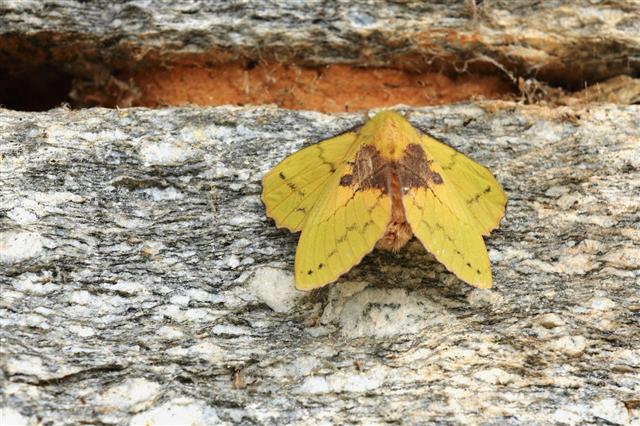
Moths and Butterflies: Relatives, Not Rivals
The scientific classification of the order Lepidoptera is:
| Kingdom | Animalia |
|---|---|
| Phylum | Arthropoda |
| Class | Insecta |
| Order | Lepidoptera |
Within the order Lepidoptera, the classification of moths is relatively vague. Butterflies are generally classified in the suborder Rhopalocera, but the complementary classification of moths into the suborder Heterocera is not usually accepted.
Butterflies are simply a subgroup that evolved from moths. Hence, moths cannot be classified into one monophyletic group while maintaining a separate monophyletic group of butterflies. In simple terms, since butterflies are part of the lineage of moths, a comprehensive taxon of moths can never be made if butterflies are to be listed as a separate taxon.
Moths are instead differentiated from butterflies by several easily visible physical markers, such as differently shaped antennae, butterflies have slender antennae clubbed at the end, whereas moths have combed antennae that superficially resemble feathers (or the usual resting position) butterflies usually rest with their wings held vertically, whereas moths rest their wings horizontally. Another, more accurate distinguishing factor is that butterflies are primarily active during the day (diurnal behavior), whereas moths are mostly active during the night (nocturnal behavior) or at either twilight (crepuscular behavior). But neither of these distinguishing characteristics is completely accurate.
Classification among moths is also relatively vague. Within the order Lepidoptera, moths are broadly classified into 9 major families, although this classification is not universally accepted:
The 9 Major Moth Families
Arctiidae, Tiger Moths and Lichen Moths
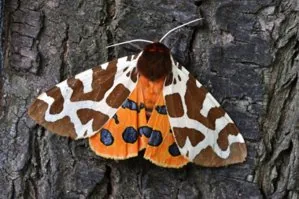
Arctiidae
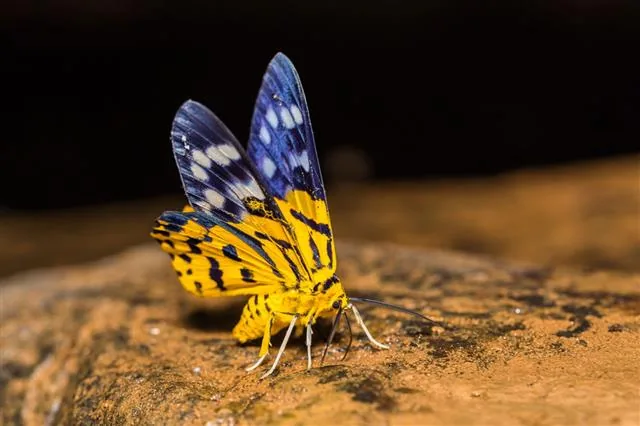
The family Arctiidae consists of more than 800 genera and more than 11,000 species, divided into 4 subfamilies: Arctiinae, Ctenuchinae, Lithosiinae and Pericopinae. Arctiids include tiger moths, lichen moths and wasp moths.
This family is characterized by the presence of sound-generating and sound-receiving organs in the thorax (chest) region. The distinguishing factor of this family is not the presence of the organs per se, but their location. The sound-generating organ helps in mating and in distracting possible predators. The garden tiger moth, Arctia caja, is the type species for the Arctiids.
Bombycidae, Silk Moths
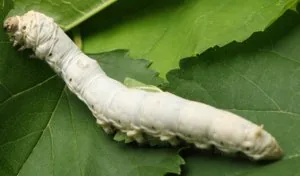
Bombycidae
The Bombycidae family contains 21 genera and 150 species, most of which are classified under the nominal subfamily Bombycinae. The family is notable for containing the much-valued silkworm, Bombyx mori.
B. mori has been domesticated after years of continuous research on ways to improve its efficiency and production of silk. The resultant, 'tame' B. mori has lost the ability to survive in the wild, because it has lost the ability to fly, and it no longer recognizes the threat its natural predators pose. It is now not found in the wild. However, a wild variant of the B. mori, the B. mandarina, is found in Asia. It is speculated that the domesticated B. mori descended from a batch of B. mandarina captured in ancient times.
Drepanidae, Hooktip Moths
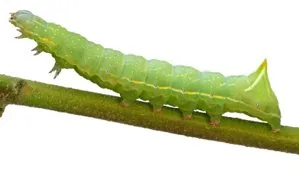
Drepanidae
There are about 120 genera and 660 species of drepanids, divided into 3 subfamilies: Drepaninae, Cyclidinae, and Thyatirinae. Many drepanids are easily recognizable by a prominent curve in their forewings, giving many species the name hooktips.
The family Thyatirinae used to be classified as a separate family, but was later merged with Drepanidae. Many members of the Thyatirinae family look like noctuid species. Most of their larvae are also distinguishable from other moth larvae by a tapering tail and a characteristic resting pose with both head and tail raised.
Geometridae, Geometer Moths and Inchworms
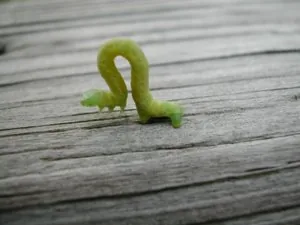
Geometridae
Geometrids are one of the largest families of Lepidoptera, with 6 subfamilies containing more than 1,500 genera and 35,000 species: Archiearinae, Ennominae, Geometrinae, Oenochrominae, Orthostixinae, and Sterrhinae.
The larvae of geometrid moths display a peculiar method of locomotion: they move in vertical loops, apparently 'measuring the earth' between each move. This gave rise to the family name: Geo (earth), meter (measurer). Geometrids are easy to confuse with butterflies, because they display both the forewings and hindwings while resting. Geometer moths are of economic importance, since many of them are significant pests.
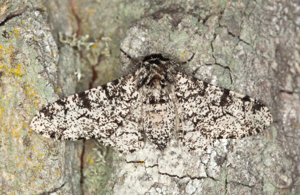
A member of this family, the peppered moth (Biston betularia) has been the subject of intense study due to a fascinating display of the process of natural selection. At the height of the industrial revolution, trees were blackened by soot. White peppered moths, who stood out against the blackened trees, underwent a drastic drop in population due to extensive natural predation. Black moths, on the other hand, grew in numbers dramatically, massively helped by the camouflage now afforded to them. After the advent of environmental regulations, which limited the amount of soot expelled into the environment, the balance was tilted, with white-colored moths now making up the lost numbers.
Take the Types of Moths Quiz!
5 quick questions. Find out how much you really know about moth families.
Lasiocampidae, Eggar Moths
Lasiocampidae
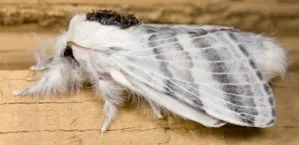
The Lasiocampidae family contains 150 genera and over 2,000 species, divided into 5 subfamilies: Chionopsychinae, Chondrosteginae, Lasiocampinae (which contains 130 of the 150 genera), Macromphalinae, and Poecilocampinae.
This family is also called 'eggars', due to the egg-like structure of the cocoons of some species, and 'snout moths', due to the nose-like mouth structures of some species. Both caterpillars and adults of Lasiocampids are large, and they exhibit a larger percentage of diurnal behavior than other moth families. These moths are generally not brightly colored; the colors are usually dull shades of brown and gray.
Lymantriidae, Tussock Moths
Lymantriidae
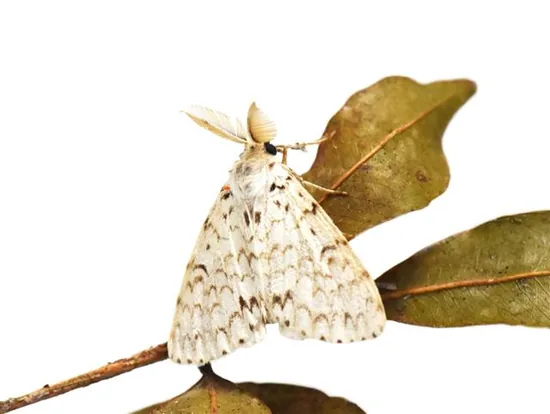
Unlike other families, Lymantriidae is divided into tribes rather than subfamilies, since the accurate evolutionary history of this family is not well-known. Lymantriidae consist of more than 2,500 species spread across 350 genera.
They are found mostly around the Equator, in South America, sub-Saharan Africa, India and Southeast Asia. Populations also exist in more northern regions, such as Europe. Some Lymantriidae, such as the gypsy moth, are considered major pests all over the world. Lymantriidae moths are often called 'tussock moths' of some sort, after the tufted appearance of their caterpillars.
Noctuidae, Owlet Moths
Noctuidae
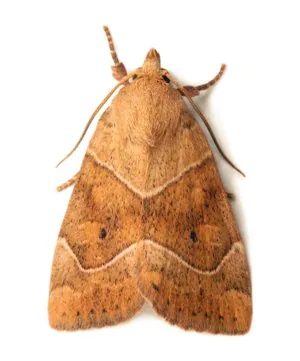
The Noctuidae family (the largest Lepidopteran family and one of the largest families in the animal kingdom) consists of more than 4,200 genera and considerably more than 35,000 species, divided into 36 subfamilies. Some have suggested that the discovery and naming of all the species in the Noctuidae family would take the number of species up to 100,000.
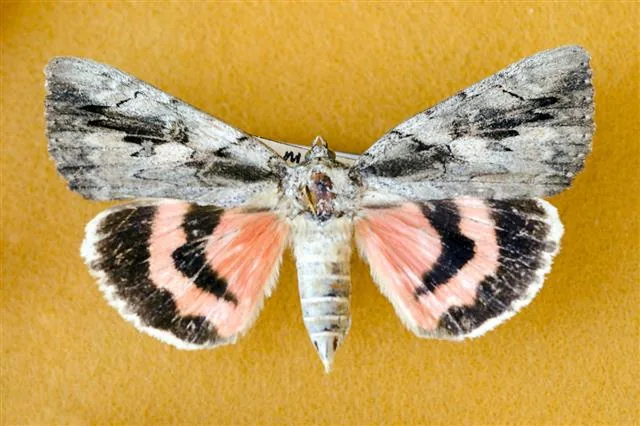
Noctuidae are the perfect illustration of the popular understanding of moths, they have dull, brownish colored forewings and brightly colored hindwings (which are hidden while resting), most are nocturnal (even the caterpillars) and many are considered pests. The caterpillars of some species are notorious pests to food crops such as brassica.
Noctuidae have many remarkable features that have helped them spread so successfully. Caterpillars of many of these moths are able to digest poisonous plants, giving them a straight advantage over others. Adult Noctuidae also possess an ability that has helped them fend off their primary predator, bats. Bats locate their prey by echolocation, a sort of biological sonar. Many noctuid moths have organs that register the sounds emitted by bats, and cause the moths' wing muscles to spasm. The moths fall out of flight with an unpredictable, uncontrolled trajectory, making it hard for the bats to precisely navigate towards them.
Explore More Animals
 A Visual Guide to Caterpillar IdentificationIdentify caterpillars by family, loopers, hornworms, woolly bears, swallowtails and more. A visual field guide to common moth and butterfly larvae and their te
 Types of Flying Insects With PicturesThe complete kids' guide to flying insects, every main order from dragonflies and beetles to bees and butterflies, how their bodies and wings work, the species
 Utterly Fascinating Information About Butterfly MetamorphosisA complete change of physical form starting from the egg, to a larva, then a chrysalis, and then a gorgeous butterfly, discover the four amazing stages of butt
 How Do Silkworms Make Silk? You'll Be Amazed to KnowHave you ever wondered what goes into the making of that fine, lustrous silk thread? Discover how silkworms spin their cocoons, the four types of natural silk,
Saturniidae, Giant Silk Moths
Saturniidae
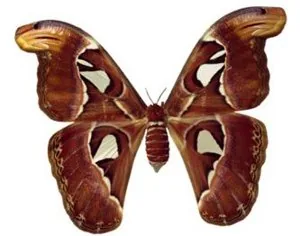
Saturniidae consist of 164 genera and more than 2,300 species, divided into 7 subfamilies: Agliinae, Arsenurinae, Cercophaninae, Hemileucinae, Oxyteninae, Salassinae, and Saturniinae.
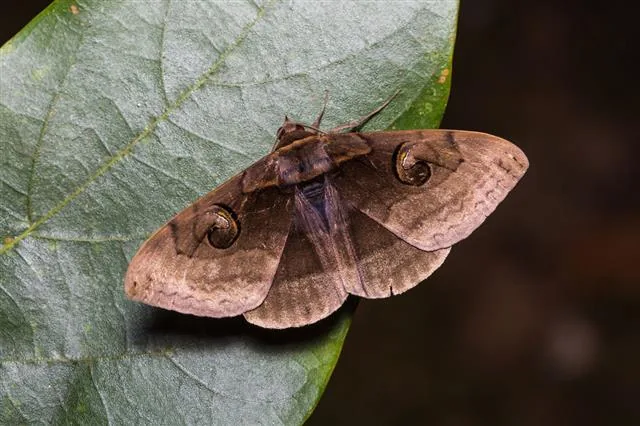
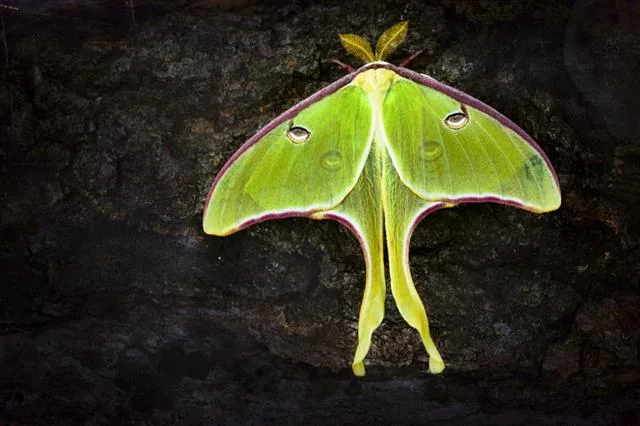
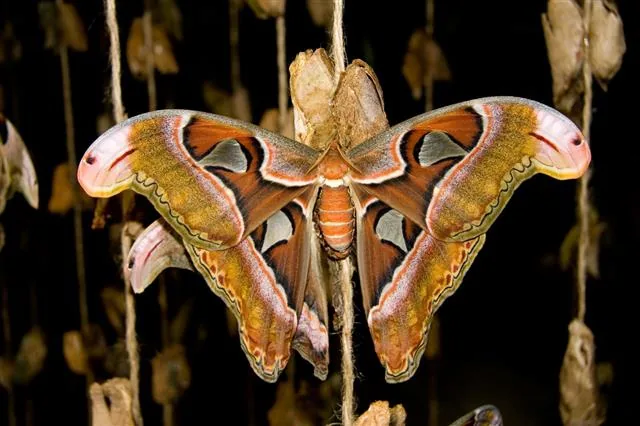
Saturniidae are some of the largest insects in the world; many species can reach a wingspan of 15 cm, whereas the atlas moth has been known to reach a wingspan of 1 foot in favorable conditions. They are centered largely in and around the tropics, although sizable populations are found in Europe and North America. These moths are well-known for the prominent 'eye-spots' on their wings, which can often be used as a marker for identification. They are largely found in and around the tropics, although the luna moth (a celebrated North American Saturniidae) is one exception.
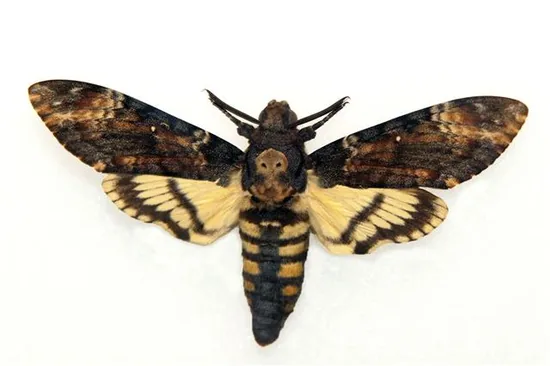
Sphingidae, Hawk-Moths
Sphingidae
The Sphingidae family contains about 200 genera and 1,400 species, divided into 3 subfamilies: Sphinginae, Smerinthinae and Macroglossinae.
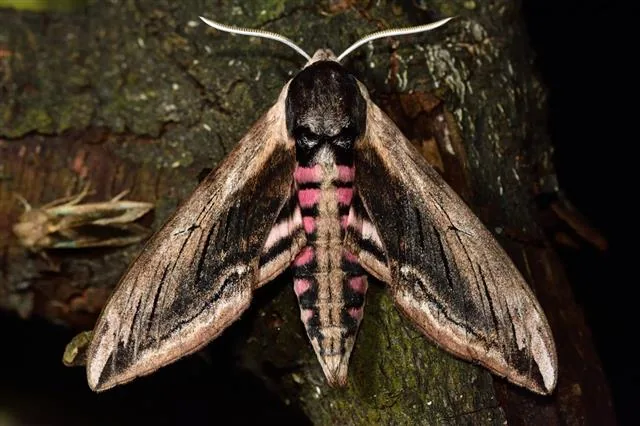
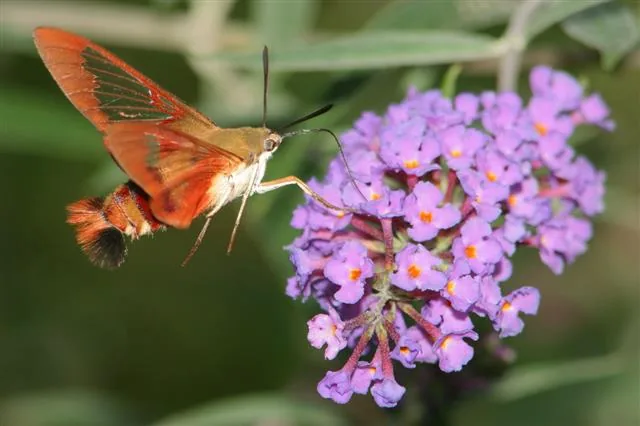
Sphingid moths are one of the few animals who have the ability to hover in midair, and are also the fastest members of Lepidoptera. The hovering behavior, also seen in hummingbirds, some bats, and hoverflies (all three are nectar-feeders as well), is an excellent example of convergent evolution, disparate species developing similar functional organs or appearances, often for a common purpose. In fact, hummingbird hawk-moths, a type of sphingid moth, have evolved into an appearance remarkably like hummingbirds, including a beak-like proboscis (the mouth part of moths and butterflies), and narrow, slender bodies with horizontally aligned wings. The remarkable mastery over flight of sphingid moths has led to extensive research into the principles of their flight.
Despite often being more strikingly beautiful than their popular cousins, butterflies, moths are misunderstood as drab, dull pests who crowd around lights. In reality, moths are wonderful creatures, and should be studied, preserved, and enjoyed.

 Fun fact for today!Silkworms (of massive commercial importance for producing silk) are actually the larvae of a moth, Bombyx mori!