

The Latin name for weasels is Mustela. They belong to the family Mustelidae, which also includes ferrets, otters, minks, badgers, tayras, and martens. Minks and ferrets are their closest relatives. Their natural predators include badgers, foxes, and birds of prey.
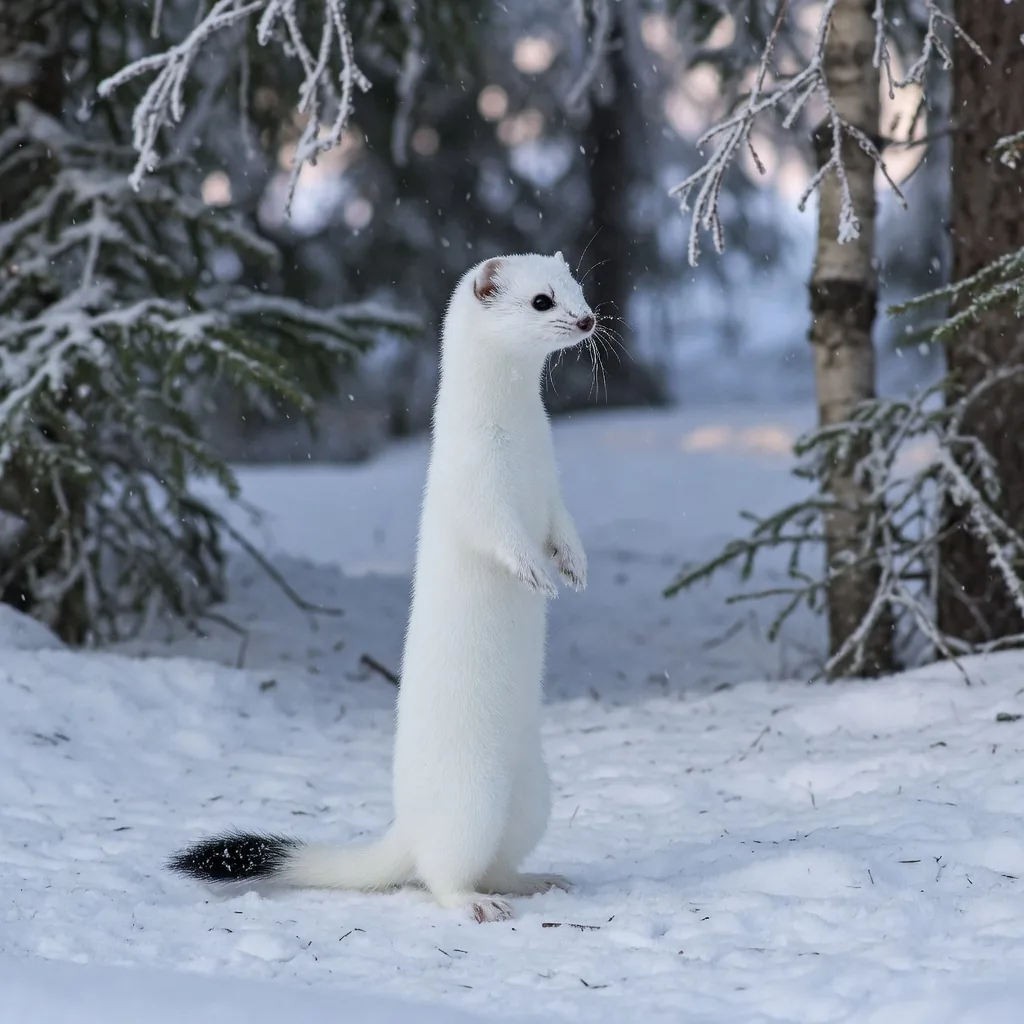
Weasels vary in color and size, but they generally share the same body plan: a slender shape, rounded ears, and short legs. Most have a reddish-brown coat on top and a yellowish-white belly.
Quick Facts
- According to the Integrated Taxonomic Information System, weasels are classified into 17 species.
- They are not naturally found in some countries. However, they have been introduced to places like New Zealand for pest control, to keep the rodent population and European rabbits under control.
- The least weasel is considered the smallest carnivore in the world. Its average body length is generally 6 to 8 inches, and the tail is about 1.5 to 2 inches long.
- Despite being so small, the least weasel can hunt down prey about 5 times its own size.
- The tropical weasel (Mustela africana), also called the Amazon weasel, is not found in Africa, despite its name.
Weasel Species at a Glance
Here are all 17 recognized weasel species, their natural range, and their current conservation status according to the IUCN Red List.
| Name | Range | IUCN Status |
|---|---|---|
| Tropical weasel (Mustela africana) | South America | LC |
| Mountain weasel (Mustela altaica) | Europe, Asia | NT |
| Stoat / Ermine / Short-tailed weasel (Mustela erminea) | Europe, Asia, North America, New Zealand | LC |
| Steppe polecat (Mustela eversmannii) | Europe, Asia | LC |
| Colombian weasel (Mustela felipei) | South America | VU |
| Long-tailed weasel (Mustela frenata) | America | LC |
| Japanese weasel (Mustela itatsi) | Japan, Sakhalin Is. (Russia) | LC |
| Yellow-bellied weasel (Mustela kathiah) | Southern Asia | LC |
| European mink (Mustela lutreola) | Europe, Northern Asia | CR |
| Indonesian mountain weasel (Mustela lutreolina) | Southern Asia | DD |
| Black-footed ferret (Mustela nigripes) | North America | EN |
| Least weasel (Mustela nivalis) | Europe, Asia, North America, NZ | LC |
| Malayan weasel (Mustela nudipes) | Southern Asia | LC |
| European polecat (Mustela putorius) | Europe, Northern Asia, NZ | LC |
| Siberian weasel (Mustela sibirica) | Europe, Asia | LC |
| Back-striped weasel (Mustela strigidorsa) | Southern Asia | LC |
| Egyptian weasel (Mustela subpalmata) | Egypt | LC |
* LC (Least Concern | EN) Endangered | CR (Critically Endangered | NT) Near Threatened | VU (Vulnerable | DD) Data Deficient
Features
- Newborn weasels are blind and open their eyes at 26 to 36 days after birth.
- Adults have a long, slender body, generally with a dark or light brown coat on the outside and white on the underside.
- Long-tailed weasels, as their name suggests, have very long tails, almost half the size of their body and head combined. Both males and females have the same color.
- The Steppe Polecat (also known as the masked polecat) is larger than the European polecat.
- The back-striped weasel has a silver streak that runs from the back of the head all the way to the tip of the tail. It also has a yellowish-white line on its belly.
Habitat
Weasels are highly adaptable and can live in many different habitats, lowlands, farmlands, woods, and hedgerows. They are usually found in areas with an abundant water supply. They mark their territories using a pungent secretion from their anal scent glands.
- Long-tailed weasels are generally found in places with a large rodent population and proximity to water.
- The mountain weasel (also known as the 'pale weasel') lives at high altitude.
- The least weasel is usually found in fields, meadows, or forests.
Behavior
Weasels are exceptional swimmers and climbers. Unlike many small mammals, they do not hibernate, they stay active through both summer and winter.
When irritated, a weasel produces a pungent odor using its scent glands. The smell is so strong it can be detected from a considerable distance. This serves as a defense mechanism, warning predators to back off.
A weasel doesn't usually dig its own burrow. It takes over the nest of its prey and lines it with leaves or fur to keep warm in winter. Long-tailed weasels make long chirps when they are ready to attack or are frightened. They also make a low trilling sound when two weasels of opposite sex meet. You may know the nursery rhyme 'Pop Goes the Weasel', but in reality, weasels make a squelching-like sound, not a pop.
Take the Weasel Facts Quiz!
5 quick questions about the world's smallest carnivore. How much do you know?
Hunting Habits and Diet
Weasels are ferocious hunters, they are often not afraid to take on animals much bigger than themselves. They are master predators: extremely quick, silent stalkers that pounce once they get close enough to their prey.
Their long, slender bodies let them chase prey deep into burrows underground. Their killing technique is precise: they bite the back of the neck.
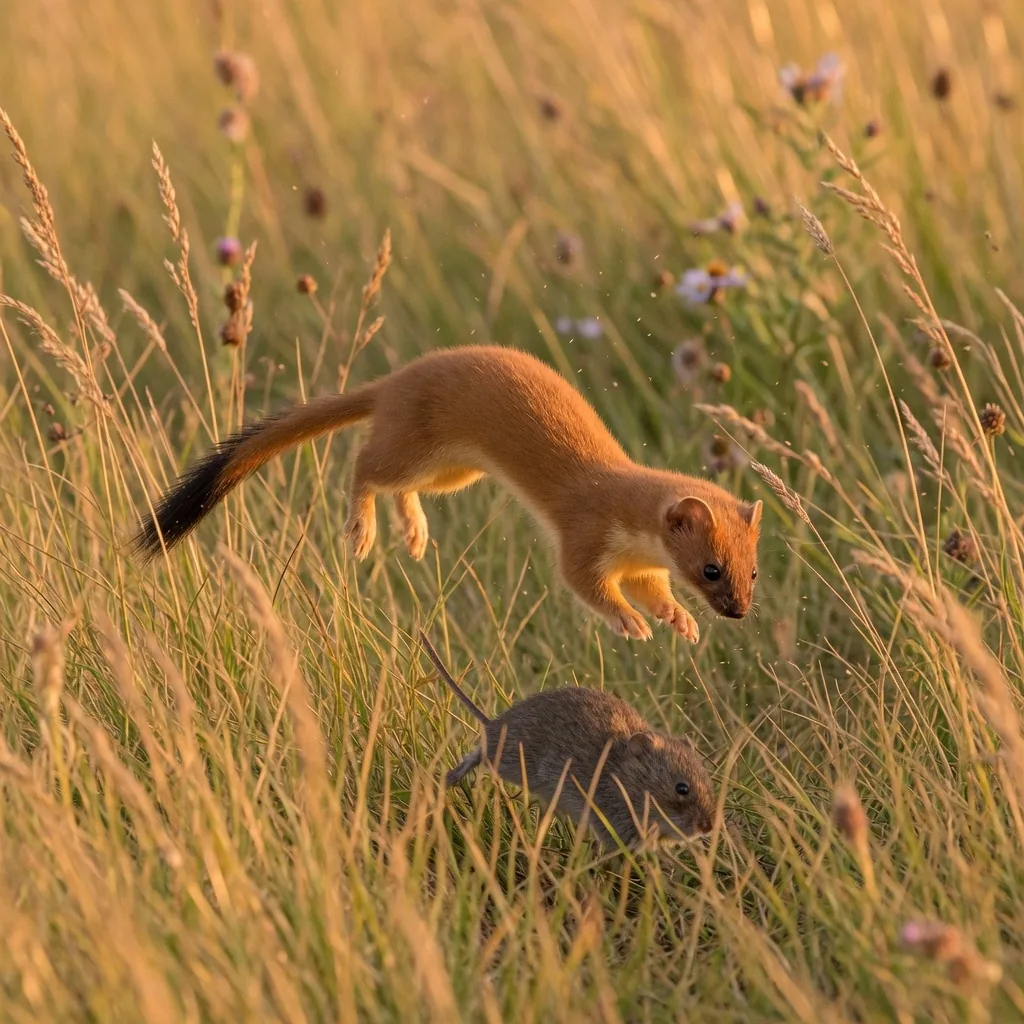
- Short-tailed weasels are excellent hunters and prey on smaller mammals like rats, rabbits, and squirrels.
- Their diet includes rodents, frogs, birds, rabbits, and eggs.
- Ermines are known for killing more than they can eat right away, so they hoard the extra prey. They never suck the blood of their prey, they lick it.
- Although they are considered nocturnal, long-tailed weasels hunt during the day as well.
Conservation and Human Interaction
Farmers often consider weasels a threat to their livestock and may trap or kill them. For centuries, weasel fur has been used to make winter jackets and parkas. Laws and restrictions on hunting weasels for fur have been put in place around the world to protect the species from extinction.
Interestingly, the black-footed ferret was declared extinct in 1979, until in 1981 a small group was discovered near Meeteetse, Wyoming. In spite of these pressures, most weasel species are listed as Least Concern by the IUCN.
Explore More Animals
 Jaw-dropping Facts About FishersFirstly, the fisher cat is not a cat. Fishers belong to the weasel family, and are known by several other names as well. More interesting facts about fishers ar
 Wolverine Animal FactsResembling a small bear, the wolverine is actually the largest species of the weasel family. Discover 10 fascinating facts about this feisty, tough-as-nails cre
 Facts about Coyote - Prairie WolfThe interesting facts about coyotes go well beyond the depiction of this species in popular culture. While there is no questioning that, what is even more inter
 Facts About SquirrelsSquirrels are small tree animals, with a very cute bushy tail and sharp teeth. They are fast, really intelligent, and always alert! It is fun to watch them and

 Fun fact for today!The least weasel is the world's smallest carnivore, yet it can hunt prey five times its own size!