

The African zebra is one of the oldest animals in the horse family, but it seems far more exotic than donkeys and quarter horses. One would imagine, then, that the zebra is an oddity, and other equine animals are closer to the origins of the species. However, today's zebra closely resembles its earliest equine ancestors.
Now, let's get to the part that interests everyone, their stripes. We'll first look at what the stripes do for these animals, then explore what color they actually are, and finally look at the differences between the three species.
Use of the Stripes
Zoologists aren't really sure why the zebra has a striped pattern on its coat. The genetic mystery of the stripes is unique, but the color pattern actually works well for the zebra in its native environment. The stripes deflect up to 70% of the heat that hits the zebra's body during the day.
The arrangement of a zebra's stripes is also mysterious, because each zebra has a totally unique coat design. The stripes on its withers (shoulders) carry the most specific markings for each individual, and every animal can tell the others apart.
Zebras travel in groups, often migrating up to 300 miles or more to graze.
People who wear zebra-print outfits on a crowded street are easy to spot, so you might think a zebra's stripes make it easy prey. But out on the open savanna, a zebra's stripes are actually good camouflage to keep it hidden from its primary predators, hyenas and lions. Since zebras travel in herds, experts believe that the huge sea of stripes confuses predators by looking like an optical illusion, blending all the animals' figures into one undulating, striped blob. A group of a dozen zebras might be too intimidating for a single lion to take on alone.
Black or White?
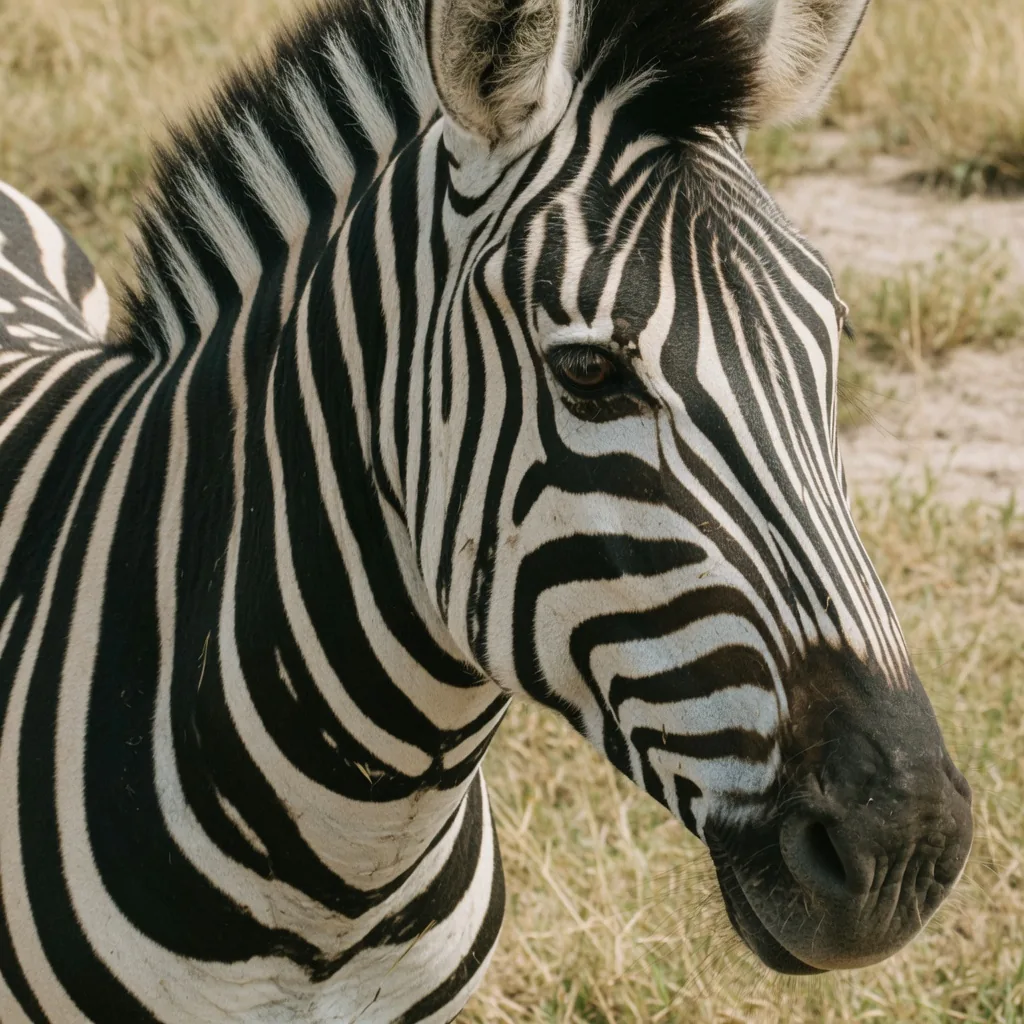
Now that we know how useful the stripes are to zebras, how can you tell whether they are white stripes on black, or black stripes on white? Genetics are the answer. The striping pattern comes from the effect of striping pigmentation. The pigments that color the fur are produced by melanocyte skin cells, and specific chemical messengers control which melanocytes give pigment to the zebra's skin. The pattern of each zebra's coloring is set during the embryonic phase, before the zebra is born.
There are many conflicting views on the black-on-white, white-on-black question. But many zoologists describe the zebra's color pattern as "black with white stripes." This makes the most sense, because the color pattern results from a process of pigment activation and inhibition, activation results in black, and inhibition results in white (lack of pigment). This means that black is the actual fur color, and the white stripes are simply areas that lack any pigmentation. The idea of white stripes on black is further supported by the fact that most zebras have dark-colored skin beneath all their black and white fur.
Frequently Asked Questions
Are zebras black with white stripes or white with black stripes?
Most zoologists say zebras are black with white stripes. Pigment activation produces black; areas where pigment is inhibited appear white. Most zebras also have dark skin beneath their fur.
What are the three species of zebra?
The three species are Grevy's zebra (largest, narrow stripes), Burchell's plains zebra (most common, broad fading stripes), and Mountain zebra (rarest, square throat flap, cream background).
Why do zebras have stripes?
Zoologists are not entirely sure, but stripes help deflect up to 70% of heat, may confuse predators when zebras are in a herd, and allow individual zebras to recognize each other by their unique pattern.
Take the Zebra Stripes Quiz!
5 quick questions. How much do you know about zebra stripes and species?
The Three Zebra Species
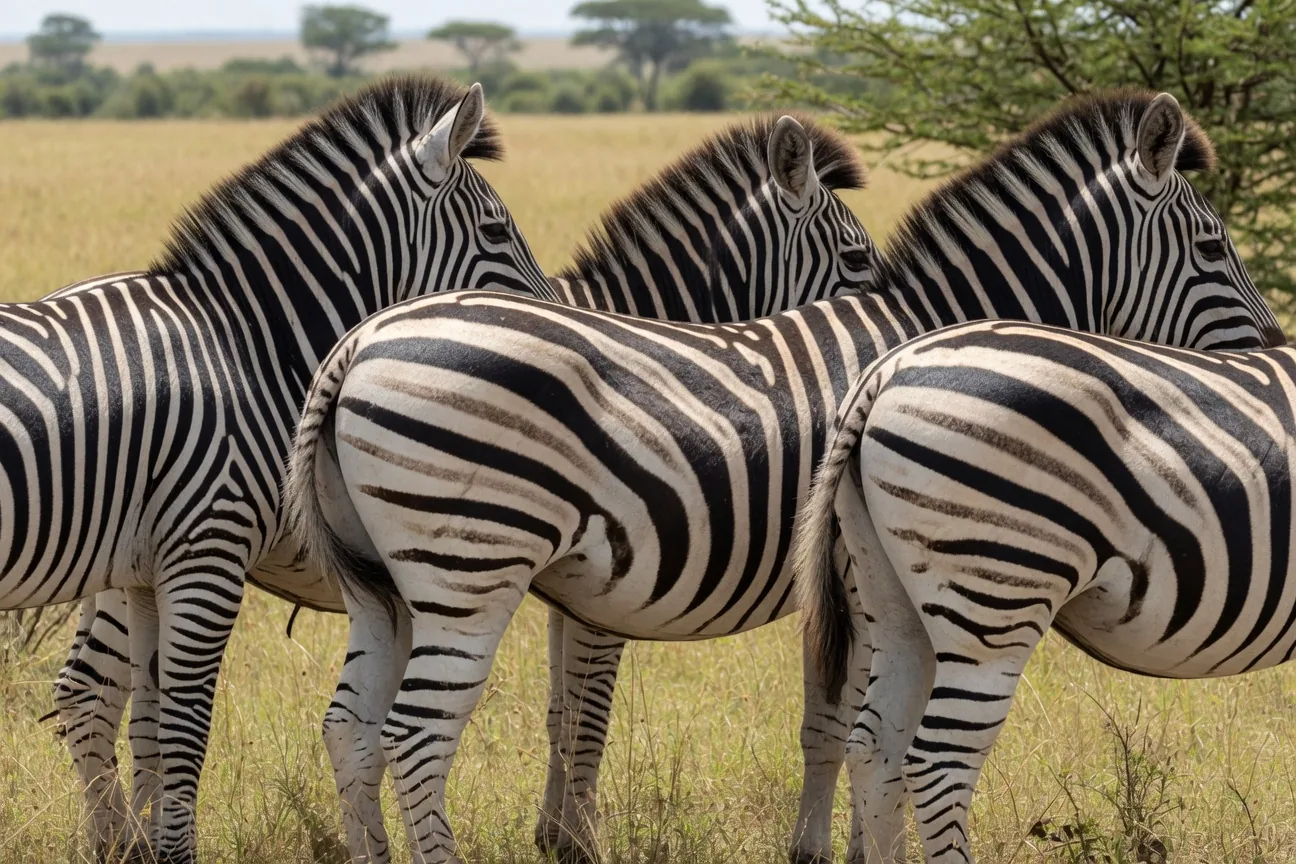
Although all zebras share the striped pattern and generally look the same, there are clear differences between the three species that exist.
Grevy's zebras are the largest of the zebra family, and their stripes are narrower. They have black stripes down their spines and white underbellies. Burchell's plains zebras are the most common species of them all, found in the northern areas of Kenya. They have broad stripes that fade to gray as they move down the body, and their legs have a lot of white. Mountain zebras are the least common species, and they are easily told apart from other species by a square skin flap on their throats. They have wide black stripes against a background that is cream-colored.
Regardless of what you think about whether zebras have black stripes on white or white stripes on black, everyone agrees on one thing, zebras are beautiful, fascinating creatures, with their own unique place in the animal kingdom.
Explore More Animals
 Zebra Adaptations & Facts: How Zebras SurviveAfrican savannas are full of predators, and zebras have remarkable adaptations to survive them. Meet all three zebra species and discover how stripes, speed, he
 A Stunning List of 20 Black-and-White AnimalsBlack-and-white animals go way beyond zebras and pandas: meet 20 striking species (orcas, skunks, lemurs, penguins, magpies and more) and learn how their two-
 What Do Zebras Eat? Diet, Habits & the Three Species ComparedZebras are grazers. They eat grass. But their diet is more interesting than you might think, discover how the Plains, Grevy's, and Mountain zebra each feed dif
 Zebra Swallowtail Butterfly FactsThese butterflies have stripes like zebras and tailed wings like swallows. Discover fascinating facts about the zebra swallowtail butterfly, from its life cycle

 Fun fact for today!Every zebra has a completely unique stripe pattern, no two are ever the same!