

Anacondas are dreaded and feared by many people. These creatures belong to the aquatic boa species, which is further classified under snakes. The anaconda is the world's largest snake, and it has been in the news all thanks to two Hollywood hits (Anaconda and Anaconda 2) that painted them in a completely different light.
Their habitats are found in the depths of forests and swampy areas. Although these snakes seem menacing, their numbers are actually on a rapid decline, which may come as a surprise. No matter how fearsome they appear, these creatures are unique in their own way. Let's take a closer look at what anacondas eat, and learn more about this mighty snake.
Anaconda Diet
Anacondas always hunt only when hungry. They can eat any animal they can manage to capture.

Young anacondas prefer prey such as fish, frogs, and rodents. Adult anacondas, however, can overpower many different kinds of prey. They can eat turtles, sheep, dogs, jaguars, bird eggs, and smaller sized mammals.
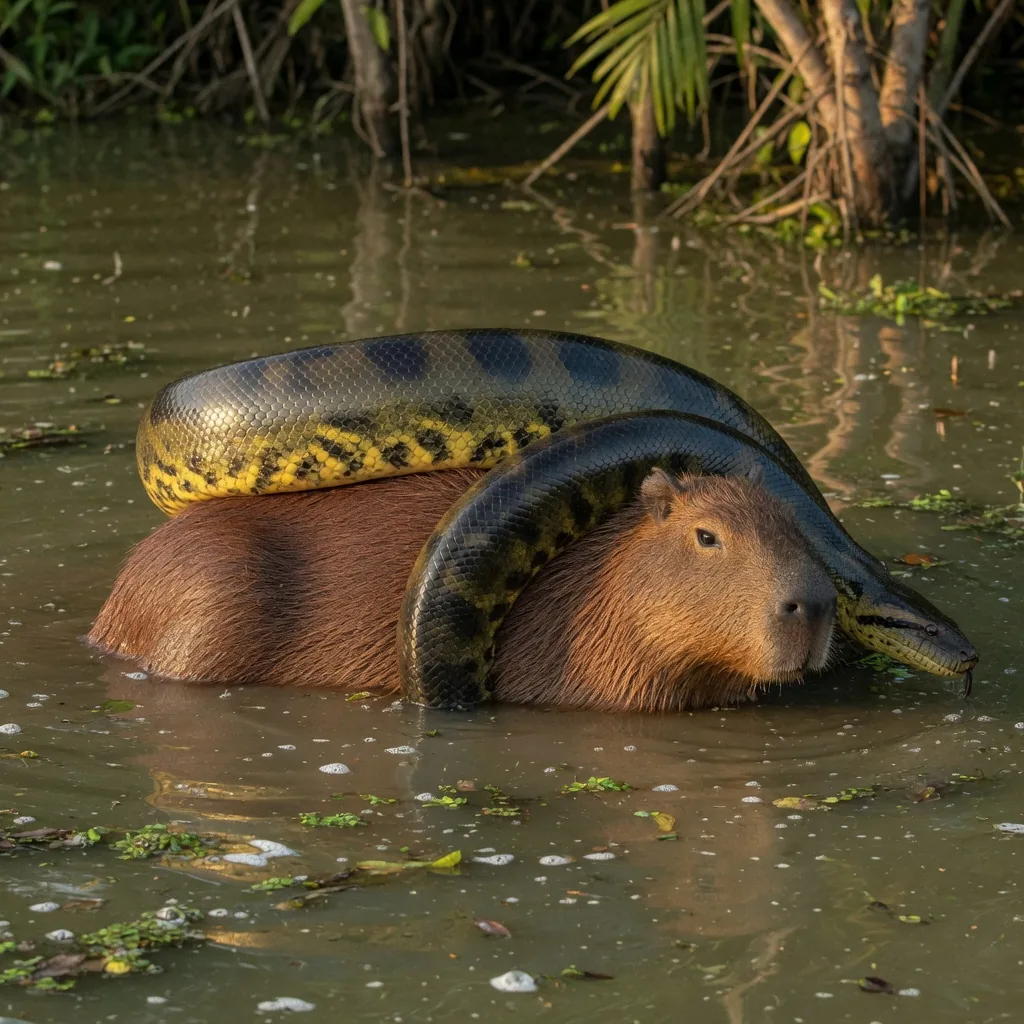
They are also known to prey on other aquatic animals, including fish, river fowl, caiman, and capybaras.
There have been a few isolated incidents of anacondas preying on domestic animals such as goats that venture too close to the water.
Test Your Anaconda Knowledge!
5 quick questions about what anacondas really eat.
Anacondas and Humans
Contrary to what is shown in the movies, anacondas do not really attack humans unless provoked. Reports do not reveal a large number of attacks on humans. You can rest assured that anacondas are not particularly on the hunt for humans for their daily meals.
These creatures rank among the most misunderstood animals in the world. Although they can be menacing, anacondas (like other snake species) do not actively seek human contact. Most cases of human fatalities can be attributed to the animal acting in self-defense. That fact also matches their rapidly declining numbers: they are being hunted by humans for various reasons, and their numbers are now under serious threat.
Explore More Animals
 What Do Garden Snakes Eat? It's Not What You ImaginedWith the blooming of spring flowers, you may have noticed a garden snake slip by and wondered what these pretty reptiles eat. Find out here!
 Tropical Rainforest Animals List: A Guide to the Jungle's WildlifeFrom jaguars and harpy eagles to poison dart frogs, orangutans and sloths, meet the astonishing animals of the world's tropical rainforests, the richest habita
 A List of the World's Biggest Snakes With Stunning PicturesMeet the biggest snakes on Earth, from the record-setting reticulated python (and Medusa, the longest in captivity) to the heavyweight green anaconda and the b
 What Do Alligators Eat? It's Not What You ImaginedAn alligator's jaw can snap the neck of prey weighing more than 900 kg in one bite. Discover what alligators eat, how often they hunt, and the terrifying death

 Fun fact for today!Anacondas only eat when they are hungry, and a big meal can keep an adult fed for weeks!